Creamy cauliflower soup only works when the cauliflower is cooked until it’s falling apart and the base is blended until it loses every trace of graininess. Done right, it’s silky, pale, and rich without tasting heavy, with a gentle sweetness from the cauliflower that carries all the way through the finish. The roasted garnish adds the part most soups like this miss: texture.
This version leans on a simple but important sequence. The onions soften first, the garlic goes in just long enough to lose its raw edge, and the broth gives the cauliflower time to turn spoon-tender before any cream touches the pot. That order matters. Cream added too early can mute the flavor and make the soup feel flat instead of layered.
Below, I’ve included the small details that make this soup worth repeating, from the right way to roast the reserved florets to how to keep the final texture smooth and bright instead of dull or gluey.
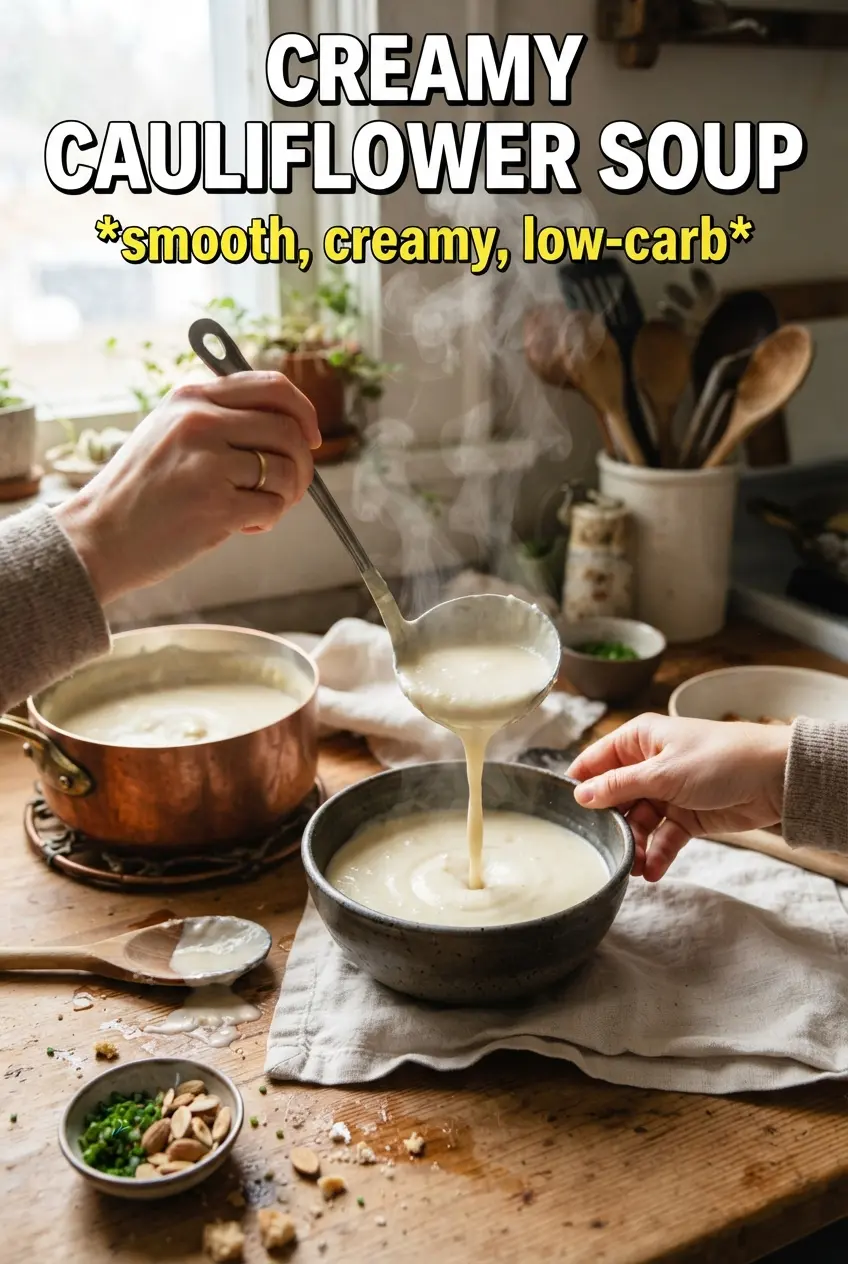
The soup blended up completely smooth, and the roasted cauliflower on top gave it just enough bite to keep every spoonful interesting. The truffle oil and chives made it feel restaurant-worthy without adding much extra work.
Creamy cauliflower soup with roasted florets, truffle oil, and chives is the kind of bowl that looks elegant but comes together fast.
The Trick to Creamy Cauliflower Soup That Stays Silky
Cauliflower has a tendency to turn watery if it’s undercooked or bland if the base never gets enough seasoning. The fix is simple: cook the florets until a knife slips through them without resistance, then blend them longer than you think you need to. That long blend is what gives the soup its velvet texture instead of a loose, thin purée.
The other common failure is a soup that tastes dull after the cream goes in. Nutmeg and white pepper wake it up without making it taste spiced, and the roasted cauliflower garnish gives each bowl a contrast that makes the whole thing feel finished. You don’t need a long ingredient list here. You need the right order and enough heat to build flavor before blending.
What Each Ingredient Is Doing in the Bowl

- Cauliflower — This is the body of the soup, and it needs to be very tender before blending. The reserved florets are worth keeping because roasted cauliflower gives the finished bowl a little crunch and a deeper flavor than the soup base alone.
- Onion and garlic — These build the savory base. Cook the onion until it’s soft and translucent, then add the garlic for just a minute so it stays sweet instead of turning bitter.
- Broth — Use vegetable broth for a fully vegetarian soup or chicken broth for a slightly fuller, rounder flavor. A good broth matters here because cauliflower on its own is mild and needs help carrying the seasoning.
- Heavy cream — This finishes the soup and gives it that lush, spoon-coating texture. Half-and-half works in a pinch, but the soup will be thinner and less plush.
- Butter and olive oil — The butter adds richness, while the oil helps the onion cook without browning too fast. Using both gives the base a little more depth than either one alone.
- Nutmeg and white pepper — Nutmeg brings warmth without reading as sweet, and white pepper keeps the color clean while adding a quiet heat. If you only have black pepper, use it sparingly so the soup doesn’t get speckled and sharp.
Building the Soup in the Right Order
Roasting the Cauliflower Garnish First
Toss the reserved florets with olive oil and roast them at 425°F until the edges are browned and the tips are crisp. You want color, not just tenderness, because pale cauliflower on top makes the bowl taste flatter than it should. If the florets are crowded on the pan, they’ll steam instead of caramelize, so spread them out with space between each piece.
Softening the Onion Without Browning It
Melt the butter in a large pot, add the onion, and cook it until it turns soft and glossy. If the heat is too high, the onion will take on color before it sweetens, and that stronger browned flavor can overpower the delicate cauliflower. Add the garlic only after the onion has softened, and cook it just until fragrant.
Simmering Until the Cauliflower Breaks Down
Add the remaining cauliflower and broth, bring it up to a boil, then lower the heat and simmer until the cauliflower is completely tender. The pieces should collapse easily when pressed with a spoon. If they still hold their shape in the center, the soup will blend up slightly grainy no matter how long you puree it later.
Blending and Finishing the Texture
Use an immersion blender and keep blending until the soup looks smooth and glossy, not just mostly smooth. Stir in the cream, nutmeg, and white pepper after blending so the dairy stays silky and doesn’t get overcooked. If the soup looks thicker than you want, loosen it with a splash of broth before serving; if it looks thin, let it simmer a few minutes longer uncovered.
How to Adjust This Soup Without Losing the Creamy Texture
Make it dairy-free
Swap the butter for olive oil and the heavy cream for full-fat coconut milk or a plain unsweetened oat cream. Coconut milk gives the best body, but it adds a faint coconut note, while oat cream keeps the flavor cleaner and a little lighter.
Make it lighter without losing body
Use half-and-half instead of heavy cream and blend the soup a little longer to help it feel fuller. It won’t be quite as rich, but the texture stays smooth if the cauliflower is cooked all the way through.
Make it vegetarian or keep it fully plant-based
Use vegetable broth and skip any garnish that includes dairy. The soup still tastes complete because the roasted cauliflower, onion, garlic, and cream build enough savory depth on their own.
Storage and Reheating
- Refrigerator: Store for up to 4 days. It may thicken a little as it chills.
- Freezer: It freezes well, but the texture can shift slightly because of the cream. Freeze without the garnish and thaw overnight in the fridge before reheating.
- Reheating: Warm it gently over low heat and stir often. Don’t let it boil after the cream has been added, or the texture can turn grainy.
Questions I Get Asked About This Recipe
Creamy Cauliflower Soup
Ingredients
Equipment
Method
- Toss the reserved cauliflower florets with 2 tbsp olive oil. Roast at 425F for 20-25 minutes until golden, then set aside for garnish.
- Melt 3 tbsp unsalted butter in a large pot over medium heat. Sauté the diced onion for 5 minutes until softened.
- Add the minced garlic and cook for 1 minute. Stir constantly so it becomes fragrant but not browned.
- Add the remaining cauliflower and 4 cups vegetable or chicken broth to the pot. Bring to a boil, then simmer for 20 minutes until very tender.
- Blend the soup completely smooth with an immersion blender until silky with no visible chunks. Keep blending until the texture looks uniform.
- Stir in 1 1/2 cups heavy cream, nutmeg, and white pepper. Mix until the color turns ivory and the spices are fully incorporated.
- Season with salt to taste. Serve hot with the roasted cauliflower, truffle oil drizzle, and chives.