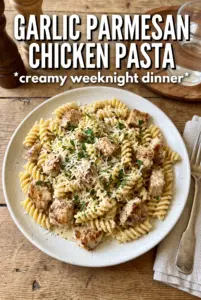
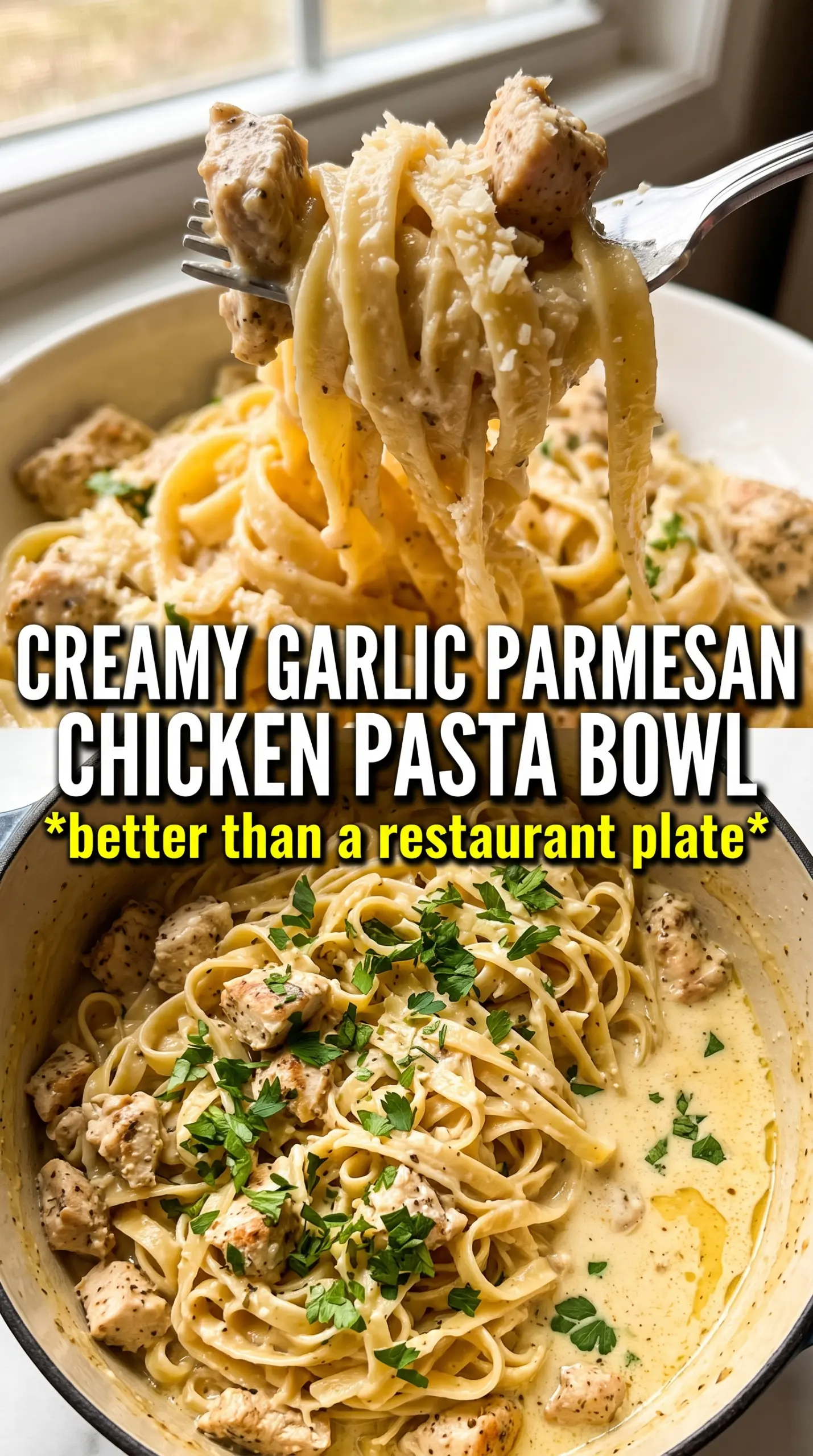
Silky garlic Parmesan sauce clings to every strand of pasta, and the sliced chicken on top gives this bowl enough substance to stand on its own. What keeps it from tasting heavy is the balance: enough butter for depth, enough broth to keep the cream moving, and enough pasta water to turn everything glossy instead of gluey.
The trick is cooking the chicken separately until it gets a real golden crust, then using the same skillet for the sauce so the browned bits turn into part of the flavor base. Freshly grated Parmesan matters here because pre-shredded cheese can leave the sauce grainy or stubbornly thick. Once the pasta goes in, a splash of reserved pasta water helps the sauce settle into a smooth coating without breaking.
Below, you’ll find the cues that tell you when the sauce is ready, the one adjustment that fixes a sauce that feels too tight, and a few smart ways to adapt the dish without losing that creamy garlic finish.
The sauce turned out silky instead of heavy, and the pasta water made it coat every strand. I also liked that the chicken stayed juicy after slicing — my husband asked if I could put this in the regular dinner rotation.
Save this garlic Parmesan chicken pasta for the nights when you want a creamy skillet dinner that coats the pasta without turning heavy.
The Reason This Sauce Stays Silky Instead of Turning Heavy
The main mistake with cream-based pasta is pushing the heat too hard after the cheese goes in. Parmesan tightens fast when it gets overheated, and that’s when you end up with a sauce that looks broken or feels grainy on the tongue. Keeping the simmer gentle gives the cream time to thicken on its own, which is what makes this dish taste smooth instead of greasy.
Another detail that matters is the order. The garlic blooms in butter first, then the cream and broth go in before the cheese. That gives the garlic a chance to perfume the sauce without browning bitter, and it keeps the dairy from shocking in all at once. Once the Parmesan melts, the sauce should coat the back of a spoon and still loosen when you drag in a little pasta water.
What Each Ingredient Is Actually Doing in the Pan
- Chicken breasts — Lean chicken works well here because the sauce carries the richness. Slice them after resting so the juices stay in the meat instead of running into the pan.
- Fresh garlic — This is one place where fresh matters. Minced garlic gives the sauce its backbone; jarred garlic can taste flat and a little harsh after simmering.
- Heavy cream — This is what makes the sauce plush. Half-and-half will work in a pinch, but the sauce will be thinner and needs a little more pasta water restraint.
- Chicken broth — It keeps the sauce from tasting one-note and helps thin the cream without watering it down. Use a broth you’d actually drink; bland broth makes a bland sauce.
- Freshly grated Parmesan — Pre-grated cheese often has anti-caking starch that can make the sauce sandy or stubborn. Grating it fresh gives you the smoothest melt and the cleanest salty finish.
- Pasta water — The starch in it is what helps the sauce cling to the noodles. Add it a splash at a time until the sauce goes from thick and sticky to glossy and coat-like.
Building the Chicken and Sauce in the Right Order
Searing the Chicken First
Season the chicken well and cook it in olive oil over medium-high heat until it has a deep golden crust and reaches 165°F in the thickest part. If the pan is crowded, the chicken will steam before it browns, so work in batches if you need to. Let it rest before slicing. That pause keeps the meat juicy and gives you cleaner slices for serving.
Starting the Garlic Base
Use the same skillet and lower the heat to medium before the butter and garlic go in. You want the garlic to smell fragrant, not toasted, which takes about a minute. If it starts to brown hard, the sauce will pick up a bitter edge that the cream can’t hide. Stir constantly and move fast once the butter melts.
Letting the Cream Reduce Gently
Pour in the cream and broth, then let the mixture simmer until it thickens slightly and looks a little more cohesive around the edges. Small bubbles are good; a hard boil is not. That aggressive heat can separate the dairy before the Parmesan ever gets a chance to melt in. Keep the simmer steady and patient.
Finishing with Cheese and Pasta
Take the pan off the hottest part of the burner if needed, then stir in the Parmesan, Italian seasoning, and red pepper flakes until the sauce turns smooth. Toss in the cooked pasta and add reserved pasta water only as needed. If the sauce starts out tight, that isn’t a failure — it usually just needs one or two splashes to loosen into a silky coating. Finish with the sliced chicken, basil, and more Parmesan.
How to Adapt This Pasta Without Losing the Creamy Garlic Finish
Make it gluten-free
Swap in your favorite gluten-free spaghetti or fettuccine and cook it just to al dente. Gluten-free pasta tends to soften fast once it hits the sauce, so pull it from the water a minute early and add the sauce quickly so it doesn’t go mushy.
Make it lighter without making it thin
Use half-and-half instead of heavy cream and keep the simmer very gentle. The sauce won’t feel quite as rich, but the broth and pasta water still help it cling. If it looks loose at the end, let it sit for a minute off the heat before adding more liquid.
Make it spicier
Double the red pepper flakes or add a pinch of cayenne with the Parmesan. That gives the sauce a sharper finish that cuts through the cream. Add the heat at the end so it stays bright instead of turning muted during the simmer.
Storage and Reheating
- Refrigerator: Store leftovers in an airtight container for up to 3 days. The sauce thickens as it chills, so the pasta will look a little tighter the next day.
- Freezer: Cream sauces don’t freeze well. The dairy can separate when thawed, and the pasta usually loses its texture.
- Reheating: Warm gently on the stove over low heat with a splash of broth or water. The common mistake is blasting it in the microwave until the sauce splits; slow heat brings it back without breaking the Parmesan.
Answers to the Questions Worth Asking
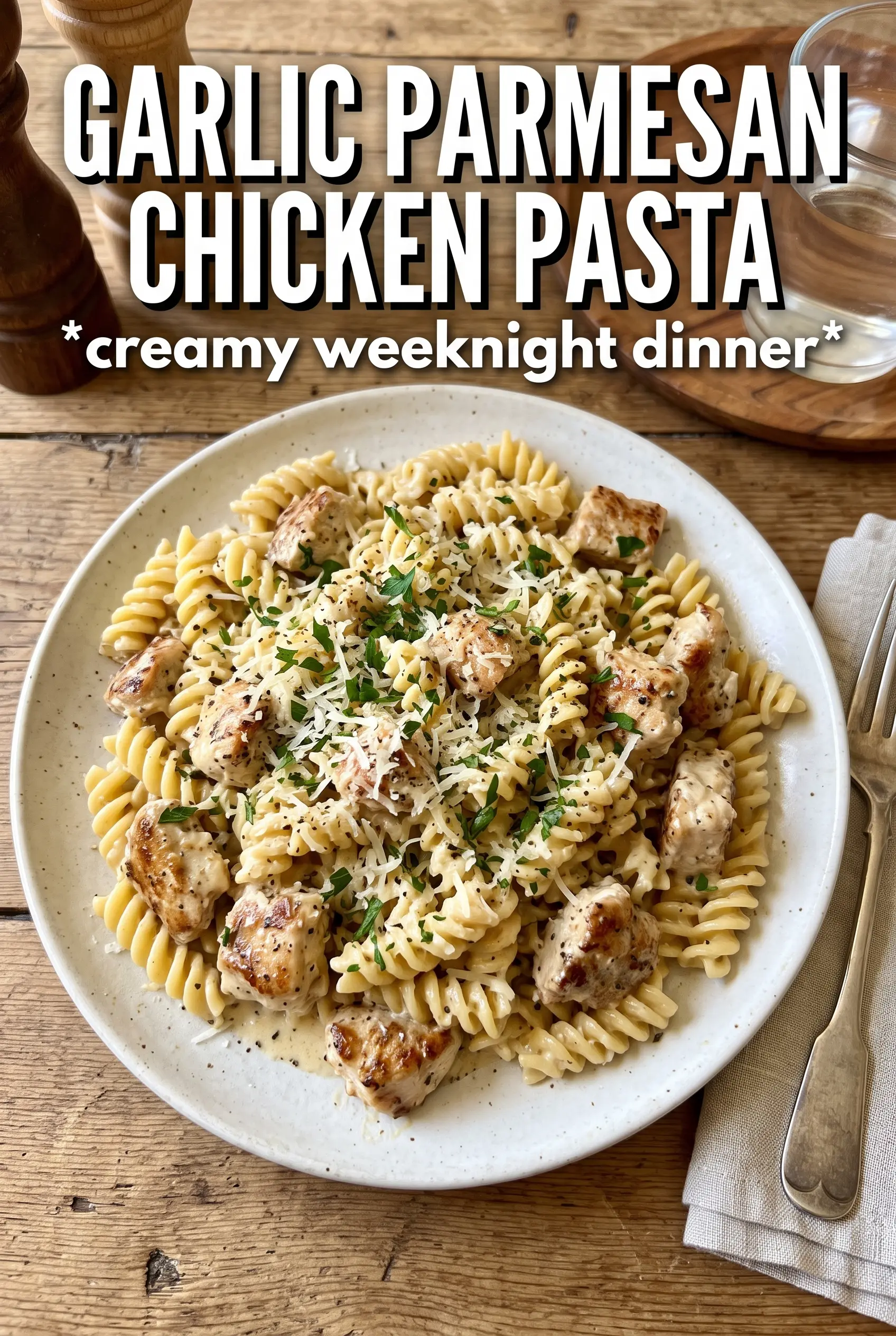
Garlic Parmesan Chicken Pasta
Ingredients
Equipment
Method
- Season the chicken breasts with salt, pepper, garlic powder, and Italian seasoning. Heat olive oil in a large skillet over medium-high heat and cook the chicken for 5-6 minutes per side until golden and cooked through to 165°F.
- Rest the cooked chicken, then slice it thin. Arrange the sliced chicken for topping once the pasta is sauced.
- In the same skillet, cook the minced garlic in butter over medium heat for 1 minute. Pour in the heavy cream and chicken broth.
- Simmer the mixture for 4-5 minutes until slightly thickened. Stir to keep the sauce moving so it stays smooth.
- Stir in the Parmesan cheese, 1 teaspoon Italian seasoning, and red pepper flakes until smooth. Add reserved pasta water as needed for consistency.
- Toss the cooked spaghetti or fettuccine in the garlic Parmesan sauce until coated. Let it sit for 30 seconds so the sauce clings to the pasta.
- Divide the pasta among plates and top each portion with the sliced chicken. Garnish with fresh basil and extra Parmesan.