Ginger garlic chicken noodle soup lands in the bowl with a clear, golden broth, tender shreds of chicken, and noodles that stay springy instead of turning mushy. The ginger gives it a warm, clean heat, while the garlic and sesame oil round everything out so it tastes comforting without feeling heavy.
What makes this version work is the order of the build. The vegetables soften first, then the garlic and ginger bloom just long enough to perfume the pot, and the chicken simmers in the broth until it’s juicy enough to shred easily. The soy sauce adds depth, while the rice vinegar goes in at the end to wake up the broth without making it taste sour.
Below, you’ll find the small timing details that keep the noodles from overcooking and the broth from tasting flat. I’ve also included a few swaps and storage notes, since this is the kind of soup people like to make once and eat for days.
The broth stayed clear and the ginger-garlic flavor came through without tasting sharp. I added the noodles at the end like you said, and they held up all the way through lunch the next day.
Save this ginger garlic chicken noodle soup for a brothy, comforting bowl with tender chicken and noodles that stay just right.
The Reason the Broth Stays Clean Instead of Muddy
The broth in a noodle soup like this gets muddy when the pot boils too hard or the noodles cook too long in the main pot. A gentle simmer keeps the chicken tender and the vegetables intact, which matters because overcooked carrot and celery release a dull sweetness that flattens the broth. Keeping the noodles separate until the end is the other safeguard: they need only a few minutes, and if they sit in the soup while it rests, they soak up broth and turn bloated.
Ginger and garlic need just enough heat to become fragrant, not browned. Once they start to color, the flavor shifts from bright and savory to bitter, and that bitterness shows up fast in a clear soup. The end result should taste lifted and clean, not greasy or heavy.
What Each Ingredient Is Actually Doing in This Soup

- Chicken breast or thighs — Breasts give you a leaner soup, while thighs stay a little juicier and more forgiving if the simmer runs long. Either works, but thighs are the better choice if you like richer broth and softer shredded chicken.
- Fresh ginger and garlic — These are the backbone of the soup, and fresh is worth using here. Ground ginger won’t give you the same warm lift, and jarred garlic can taste flat once it simmers.
- Chicken broth — Use a broth you’d actually sip on its own, because this is the base of the whole dish. If yours is low-sodium, you’ll have more control over the final salt level.
- Soy sauce and rice vinegar — Soy sauce adds depth and color without making the broth cloudy, and rice vinegar sharpens everything at the end. Don’t add the vinegar early; it tastes fresher when stirred in right before serving.
- Ramen or egg noodles — Ramen gives a slightly springier bite, while egg noodles make the soup feel a little more classic and soft. Cook them at the end so they don’t drink up all the broth.
Building the Soup So the Noodles Stay Springy
Softening the Vegetables First
Start by cooking the onion, carrots, and celery in a little oil until the onion turns translucent and the edges of the carrots look glossy. That short head start gives the soup a sweeter, more rounded base. If the vegetables stay raw-looking, the broth can taste thin even after the chicken cooks.
Waking Up the Ginger and Garlic
Add the garlic and ginger after the vegetables have softened and cook them just until they smell strong and aromatic. Two minutes is enough in most pots. If the garlic starts to brown, lower the heat immediately; browned garlic makes the whole soup taste harsh.
Simmering the Chicken in the Broth
Pour in the broth, soy sauce, and chicken, then bring it just to a boil before dropping it down to a steady simmer. You want small bubbles, not a rolling boil, so the chicken stays tender instead of stringy. Once it reaches doneness, pull the chicken out, shred it, and return it to the pot before the noodles go in.
Cooking the Noodles at the End
Add the noodles only when the chicken is shredded and back in the soup. They usually need just 3 to 5 minutes, and they should still have a little bite when you turn off the heat. If you cook them all the way soft in the pot, they’ll keep absorbing broth and lose that clean noodle texture.
Finishing With Sesame Oil and Vinegar
Stir in the sesame oil and rice vinegar after the heat is off or turned very low. That keeps the sesame oil from tasting flat and lets the vinegar brighten the broth instead of cooking off. Taste at the end and season with salt and pepper only after the noodles are in, since broth and soy sauce can change how salty the soup tastes once everything comes together.
How to Adapt This When You Need a Different Bowl
Use thighs for a richer, more forgiving soup
Chicken thighs hold up better if the soup simmers a little longer, and they shred into softer, more succulent pieces. If you want a fuller-bodied bowl, choose thighs over breast. The broth will taste a little deeper, even without changing anything else.
Make it gluten-free with rice noodles or gluten-free noodles
Swap the ramen or egg noodles for rice noodles or a gluten-free noodle that can handle hot broth. Cook them separately if the package says they’re delicate, because many gluten-free noodles break down fast in the pot. The soup stays just as comforting, but the texture gets a little softer depending on the noodle you choose.
Make it lower-sodium without losing depth
Use low-sodium broth and start with less soy sauce, then taste at the end. The ginger, garlic, and sesame oil do a lot of work here, so you don’t need a salty broth to make the soup feel complete. This is the easiest way to keep the flavor clean instead of briny.
Add vegetables without watering down the broth
Mushrooms, bok choy, or spinach fit in well if you want more greens. Add sturdy vegetables with the carrots and celery, then toss in tender greens during the last few minutes so they stay bright. If you overload the pot, the broth gets crowded and loses its clarity.
Storage and Reheating
- Refrigerator: Store the soup for up to 4 days. The noodles will continue to soften, so the broth will look a little thicker the next day.
- Freezer: Freeze the soup without the noodles for the best texture. Noodles get mushy after thawing, so add a fresh batch when you reheat.
- Reheating: Warm it gently on the stove over medium-low heat until steaming. If it’s thickened in the fridge, add a splash of broth or water before heating; a hard boil will overcook the chicken and break up the noodles.
Questions I Get Asked About This Recipe
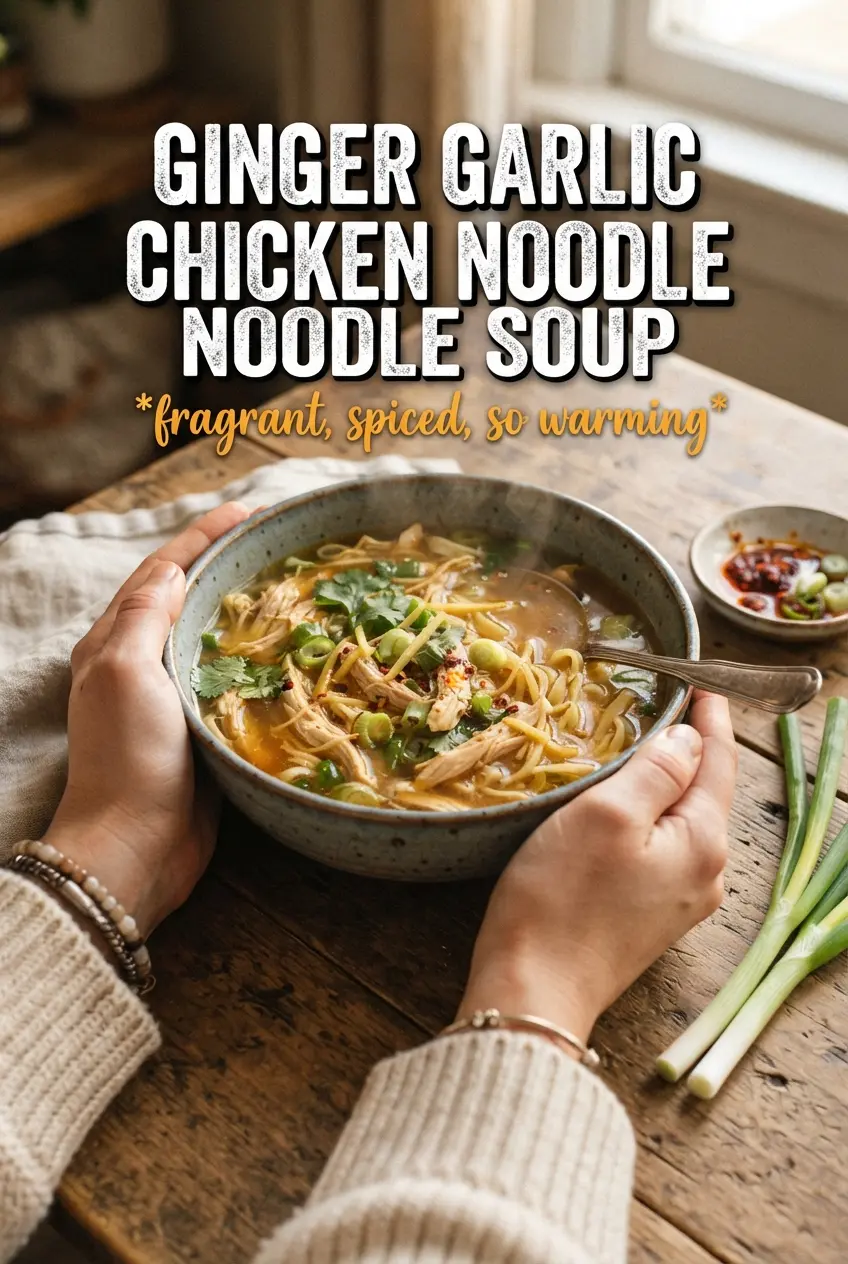
Ginger Garlic Chicken Noodle Soup
Ingredients
Equipment
Method
- Heat 1 tablespoon sesame oil in a large pot over medium-high heat, then sauté the onion, carrots, and celery for 4 minutes until the onion softens and the vegetables start to turn tender.
- Add the garlic and grated ginger, and cook for 2 minutes until very fragrant.
- Pour in the chicken broth and add soy sauce and the chicken, then bring the pot to a boil.
- Reduce to a simmer and cook for 20 minutes until the chicken is cooked through and tender.
- Remove the chicken from the pot and shred it, then return the shredded chicken back into the broth.
- Add the ramen noodles or egg noodles and cook for 3-5 minutes until tender.
- Stir in the sesame oil and rice vinegar, then season with salt and pepper to taste.
- Top with green onions, cilantro, and sesame seeds before serving.