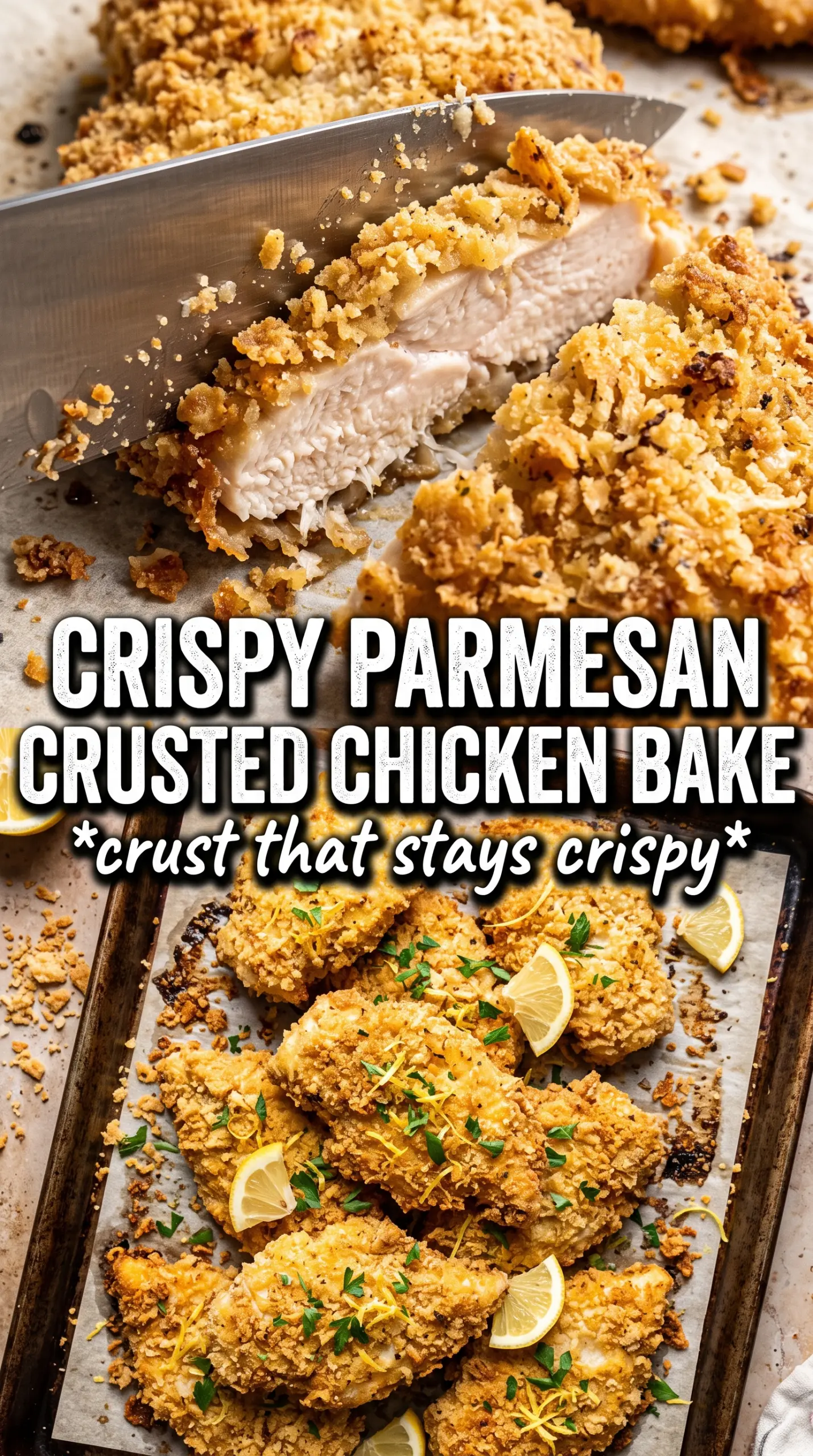
Thick chicken breasts with a shatteringly crisp Parmesan crust are the kind of dinner that disappears fast. The coating bakes into a deep golden shell that crackles when you cut into it, and the chicken underneath stays juicy instead of drying out. It feels like something you’d order at a restaurant, but it comes together on a weeknight without a skillet of splattering oil.
The trick is layering the breading so each part has a job. Flour gives the egg something to cling to, the egg acts like glue, and the panko mixed with freshly grated Parmesan creates the crunchy, savory crust. A little olive oil on top helps the coating turn evenly golden in the oven, which matters more than people think. Without it, the crumbs can bake up pale and dusty instead of crisp and toasted.
Below, I’ve included the small details that keep the crust from sliding off, plus a few easy ways to adapt this for different diets and leftovers.
The crust came out shatteringly crisp in the oven, and the Parmesan tasted nutty instead of greasy. I served it with lemon like suggested and it brightened the whole dish.
Save this Parmesan Crusted Chicken for the nights when you want a crisp, golden chicken dinner without frying.
The Bake That Keeps the Crust Crisp, Not Soggy
The biggest mistake with breaded chicken is putting it straight onto a flat pan. The bottom traps steam and the crust softens before it has a chance to set. A wire rack changes that completely by letting hot air move around the chicken, so both sides stay dry enough to turn crisp.
Pounding the chicken to an even thickness matters just as much. Thick spots need more time, and by the time they cook through, the thinner ends are already overdone. Even thickness means the whole breast finishes at the same moment, with a crust that stays intact and chicken that stays juicy.
- Wire rack: This is what keeps the underside from steaming.
- Panko: Regular breadcrumbs won’t give you the same airy crunch.
- Fresh Parmesan: Pre-grated cheese can work, but it often contains anti-caking agents that make the crust less crisp and less evenly browned.
- Olive oil: A light drizzle or spray helps the coating toast instead of baking up dry.
What Each Ingredient Is Doing in the Crust
- Chicken breasts: Boneless, skinless breasts give you that classic thick cutlet feel. If they’re much larger than average, slice them horizontally after pounding so they cook before the crust gets too dark.
- Flour: This is the first layer that dries the surface and helps the egg grip. You don’t need a thick coat; a light dusting is enough.
- Eggs: The egg is the glue. Beat them until no streaks remain so the coating goes on evenly.
- Panko: The airy crumb is what gives the crust lift. If you swap in regular breadcrumbs, the texture gets denser and less crisp.
- Parmesan: Freshly grated Parmesan melts into the crumbs and adds the savory, nutty edge this dish needs. The finer the grate, the more evenly it distributes through the coating.
- Italian seasoning, garlic powder, smoked paprika: These season the crust itself, which is where the flavor needs to be. Paprika also helps the coating brown to a richer color.
Pressing the Coating So It Stays Put in the Oven
Set Up the Breading Line
Arrange the flour, beaten eggs, and Parmesan-panko mixture in shallow dishes before you touch the chicken. Dry hands stay on one side, wet hands on the other. That keeps the coating from turning gummy and clumped in your fingers. Season the chicken before it goes into the flour, because once the crust is on, salt won’t reach the meat the same way.
Dredge, Dip, and Press
Dust each breast in flour first, then shake off the extra so you don’t end up with a pasty layer. Dip it in egg, let the excess drip off, then press it firmly into the crumb mixture. Don’t just lay it in the crumbs and flip it; press with your fingertips so the coating actually bonds to the surface. Any loose spots will fall off in the oven.
Bake Until the Crust Turns Deep Gold
Set the chicken on the rack, drizzle or spray the top with olive oil, and bake at 425°F until the crust is deep golden and the thickest part hits 165°F. If the chicken is browning too fast before it’s cooked through, your breasts were probably too thick or the rack sat too close to the heat. Let it rest for 3 minutes before cutting so the juices settle back into the meat instead of running onto the plate.
Make It Gluten-Free with a Crisp Crumb
Swap the all-purpose flour for rice flour or a gluten-free blend, and use gluten-free panko. The texture stays light and crunchy, but gluten-free crumbs can brown a little faster, so watch the last few minutes closely.
Dairy-Free Crust with a Different Kind of Savory
Use a dairy-free Parmesan-style topping or nutritional yeast in place of the cheese. You’ll lose a little of the classic nutty melt, but you’ll still get a salty, toasty crust with good browning.
Turn It Into Cutlets for Faster Weeknight Cooking
Slice each breast in half horizontally after pounding if you want thinner pieces. They’ll cook faster and give you a higher crust-to-chicken ratio, which is great if you like the coating to be the star.
Storage and Reheating
- Refrigerator: Store leftovers for up to 3 days. The crust softens a bit, but it still reheats well.
- Freezer: It freezes better after baking than before breading. Freeze on a tray until solid, then wrap tightly for up to 2 months.
- Reheating: Reheat on a rack in a 375°F oven or air fryer until hot and crisp again. The mistake people make is microwaving it, which turns the crust limp and steamy.
Questions I Get Asked About This Recipe
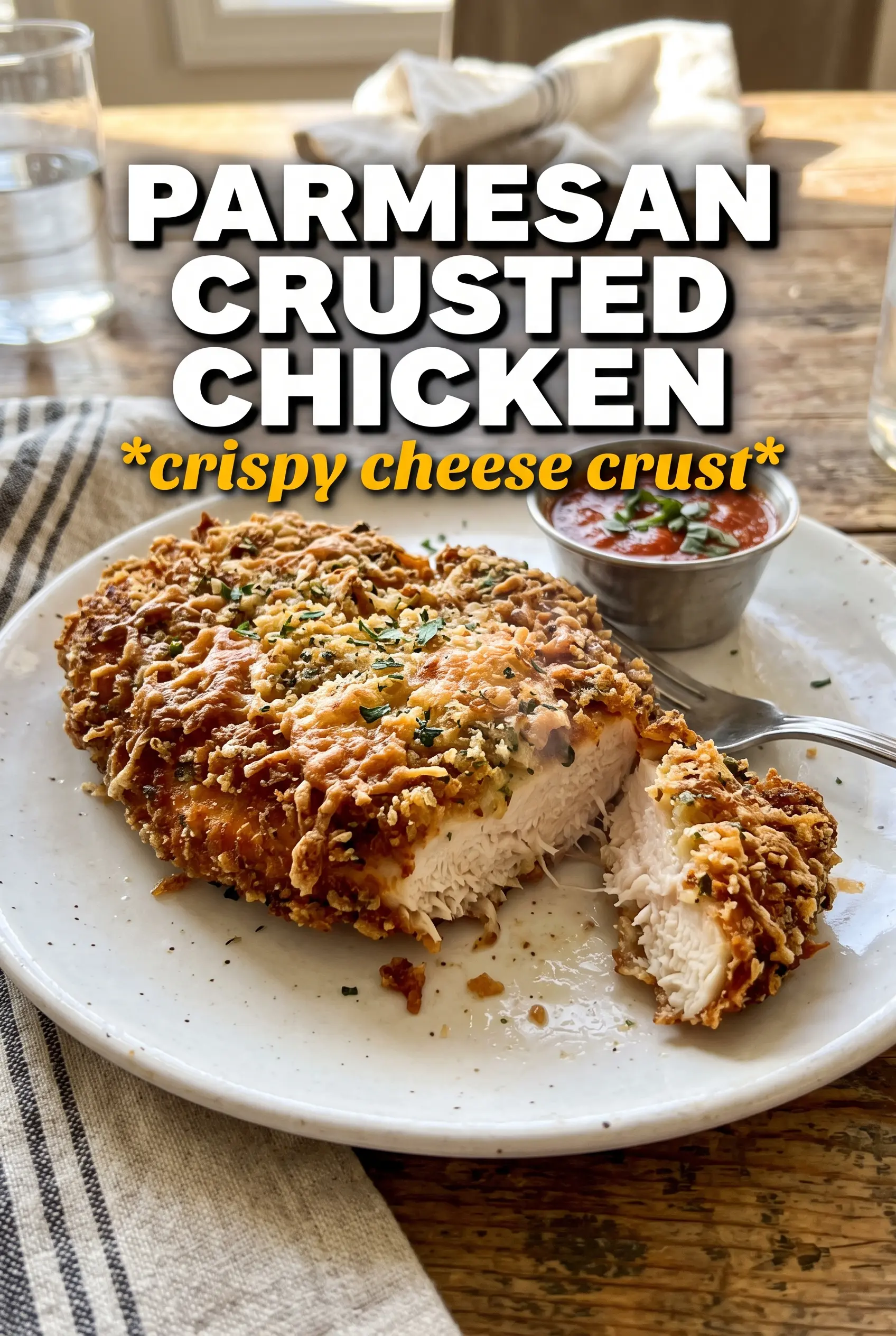
Parmesan Crusted Chicken
Ingredients
Equipment
Method
- Preheat the oven to 425°F and line a baking sheet with a wire rack; spray with cooking spray so the crust stays crisp underneath.
- Season the chicken breasts with salt, pepper, and garlic powder, then set up a three-station breading line with flour, beaten eggs, and panko mixed with Parmesan, Italian seasoning, garlic powder, and smoked paprika.
- Dredge each chicken breast in the flour, dip into the beaten eggs, then press firmly into the Parmesan panko to coat all sides for maximum crunch.
- Drizzle or spray the olive oil over the breaded chicken and place it on the prepared rack.
- Bake for 20-22 minutes until the crust is deep golden and the internal temperature reaches 165°F, with a visibly crackly, set cheese crust.
- Rest the chicken for 3 minutes so juices settle and the crust firms up slightly.
- Garnish with fresh parsley and serve with lemon wedges for a bright finish.