Tuscan chickpea soup lands in that sweet spot between hearty and light. The broth tastes slow-simmered even though it comes together fast, and the chickpeas give it enough body to eat like a main dish without feeling heavy. A little rosemary, garlic, and tomato go a long way here, and the final hit of lemon wakes up the whole pot.
What makes this version work is the layering. The onion softens first, the garlic and red pepper flakes bloom briefly in oil, and then the broth picks up flavor from the tomatoes, rosemary, and parmesan rind if you have one. Mashing a portion of the chickpeas at the end thickens the soup without flour or cream, so the texture stays rustic and spoonable instead of turning muddy.
Below, you’ll find the one step that keeps the broth from tasting flat, plus a few smart swaps if you want to make it dairy-free, a little richer, or use what’s already in the pantry.
The broth got thick and silky after I mashed a few chickpeas, and the lemon at the end kept it from tasting heavy. Even my husband, who usually wants bread with soup, went back for a second bowl without asking for anything else.
Love a bowl of Tuscan Chickpea Soup with silky broth and lemony finish? Save it to Pinterest for an easy meatless dinner that eats like a full meal.
The Trick to Thickening Chickpea Soup Without Cream
The biggest mistake with chickpea soup is leaving it all broth and no body. If you stop after the simmer, it tastes fine but thin. The fix is simple: mash or blend a portion of the chickpeas after they’ve had time to soften, then stir them back into the pot. That gives the soup a naturally creamy texture without making it heavy or muting the rosemary and tomato.
Don’t rush the simmer just to get to that step. The chickpeas need enough time in the broth to pick up flavor first, and the kale should go in only at the end so it stays green and tender instead of drab and soft. If the soup gets too thick after sitting, a splash of broth or water brings it back easily.
What Each Ingredient Is Actually Doing in This Bowl
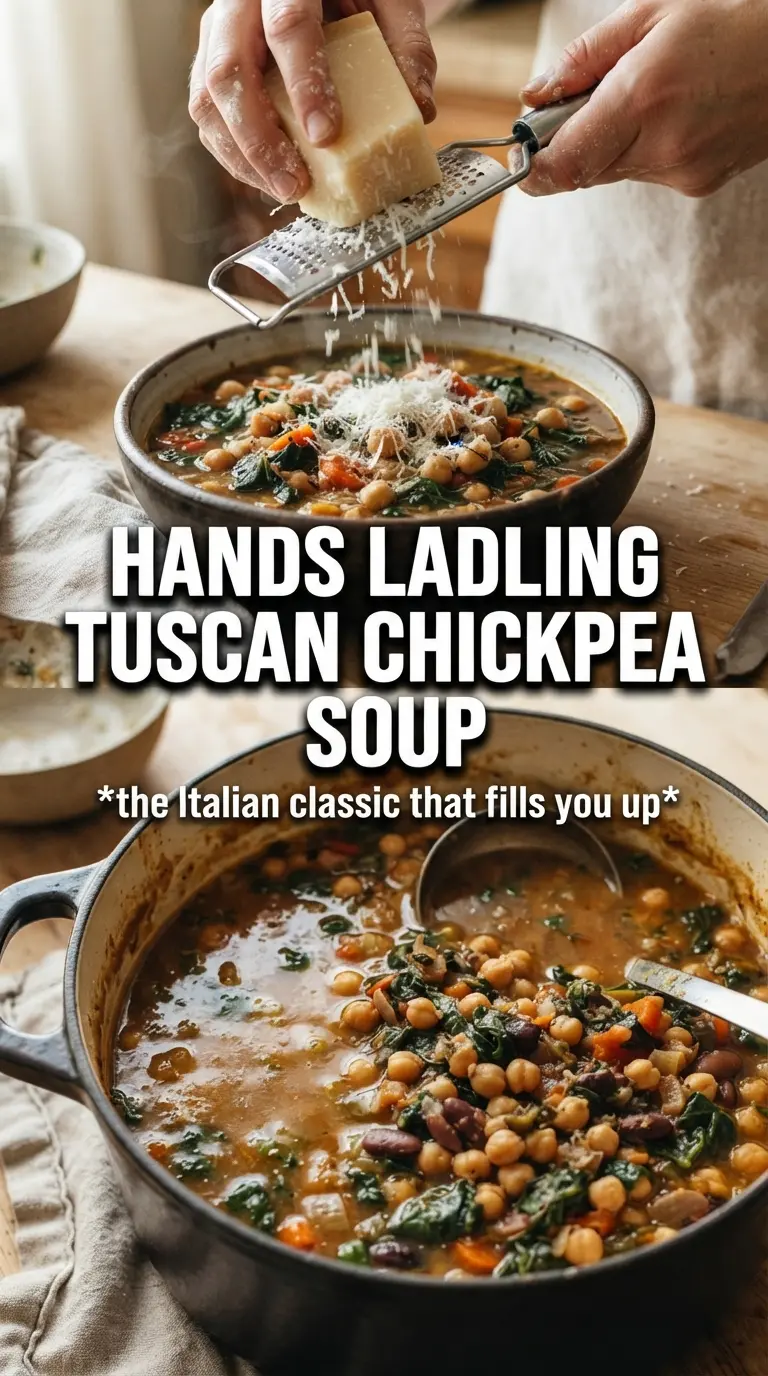
- Chickpeas — These are the backbone of the soup. They hold their shape well, but a portion of them gets mashed to create that creamy, thickened broth. Canned chickpeas work perfectly here; just drain and rinse them well so the broth stays clean tasting.
- Fire-roasted diced tomatoes — They bring depth and a little smoky sweetness that plain diced tomatoes won’t quite match. If you only have regular diced tomatoes, the soup still works, but the finished bowl will taste a touch brighter and less rounded.
- Fresh rosemary — This is the note that makes the soup taste distinctly Tuscan instead of just vegetable-forward. Fresh is best because dried rosemary can get woody and overpowering in a soup like this. If you must use dried, use a small pinch and remove it early.
- Parmesan rind — Optional, but worth using if you have one in the fridge. It melts flavor into the broth without making it cheesy or salty in an obvious way. Skip it for a dairy-free version, then finish with extra olive oil and lemon to bring the same richness back.
- Kale — Add it at the end so it stays vibrant and a little chewy. If you cook it too long, it turns dull and soft. Lacinato kale is especially good here, but regular curly kale works fine as long as you strip out the thick stems.
Building the Broth in the Right Order
Softening the Onion First
Start with the onion in olive oil and give it the full five minutes. You’re looking for translucence and just a hint of gold at the edges, not browning. If the onion stays crunchy, the soup tastes sharp instead of rounded, and the garlic won’t have enough support later.
Letting the Garlic and Red Pepper Bloom
Add the garlic and red pepper flakes for a short cook in the oil before the liquid goes in. The kitchen should smell fragrant and warm, not bitter. If the garlic starts to brown, pull the pot off the heat right away; burnt garlic will carry through the whole broth.
Simmering for Depth
Once the chickpeas, tomatoes, broth, rosemary, seasoning, and parmesan rind are in, bring everything to a boil and then lower it to a steady simmer. The soup should move gently, with a few lazy bubbles breaking the surface. This is where the flavor settles into the broth, and the chickpeas soften enough to mash later without turning to paste.
Finishing with Kale, Lemon, and Olive Oil
Stir in the kale only after the broth has already developed its flavor. Five minutes is usually enough for it to wilt and lose its raw edge while keeping some texture. Finish with salt, pepper, and a good squeeze of lemon, then drizzle olive oil over each bowl. If the soup tastes flat at the end, it usually needs more acid, not more salt.
Three Ways to Make This Soup Fit Your Kitchen
Dairy-Free Version
Skip the parmesan rind and the cheese garnish. Finish each bowl with extra olive oil and lemon instead, which keeps the soup bright and satisfying without losing the rich mouthfeel. The broth will taste a little cleaner and more vegetable-forward, but still full and complete.
Make It Even Thicker
Mash closer to half the chickpeas if you want a heartier, stew-like bowl. You can also simmer the soup a few extra minutes after blending to reduce the broth a little more. The tradeoff is that the kale will soften more, so add it only at the very end.
Use Spinach Instead of Kale
Spinach works if that’s what you have, and it melts into the soup much faster than kale. Stir it in during the last minute or two, just until wilted. The finished soup will be softer and less hearty, but still balanced and fresh.
Add Pasta for a Bigger Meal
Small pasta like ditalini or elbow macaroni turns this into a more filling dinner. Cook the pasta separately and add it to each bowl before ladling in the soup so it doesn’t soak up all the broth. If you cook it directly in the pot, expect the soup to thicken fast as it sits.
Storage and Reheating
- Refrigerator: Store for up to 4 days. The broth thickens as it sits, especially if you’ve mashed the chickpeas.
- Freezer: Freezes well for up to 3 months. Cool it completely first and leave a little room in the container because the broth expands.
- Reheating: Warm it gently on the stovetop over medium-low heat with a splash of broth or water. Don’t boil it hard, or the kale can turn drab and the chickpeas can break down too much.
Questions I Get Asked About This Recipe
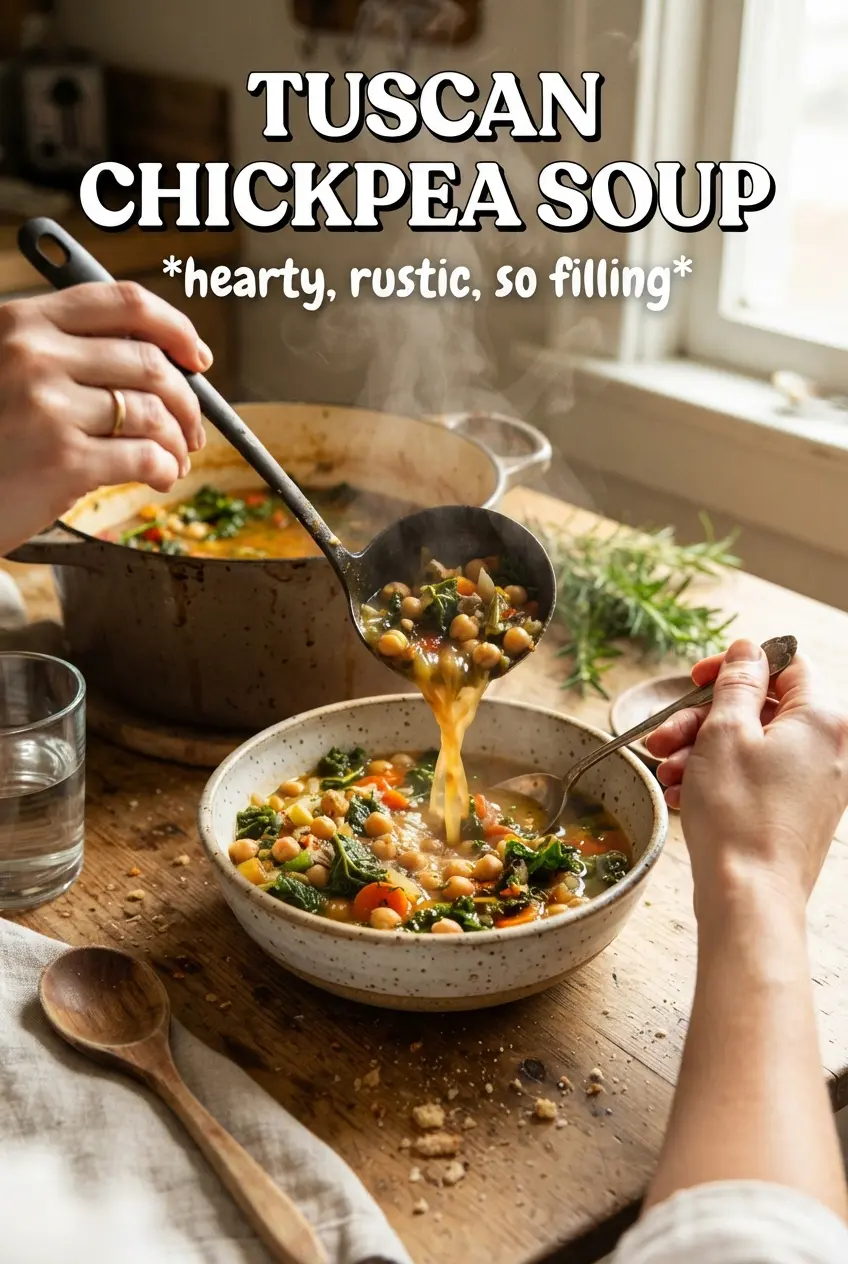
Tuscan Chickpea Soup
Ingredients
Equipment
Method
- Heat 2 tablespoons olive oil in a large pot over medium heat, then sauté the onion for 5 minutes until softened and lightly translucent.
- Add the minced garlic and red pepper flakes and cook for 2 minutes, stirring, until fragrant.
- Add chickpeas, fire-roasted diced tomatoes, vegetable broth, rosemary sprigs, Italian seasoning, and the parmesan rind to the pot.
- Bring the mixture to a boil, then reduce to a gentle simmer for 20 minutes.
- After simmering, remove the rosemary and the parmesan rind.
- Mash or blend about a third of the chickpeas to thicken the soup while keeping some whole beans for texture.
- Add the chopped kale and cook for 5 minutes until wilted and bright green.
- Season with salt and black pepper, then stir in lemon to taste; drizzle with olive oil and top with parmesan before serving.