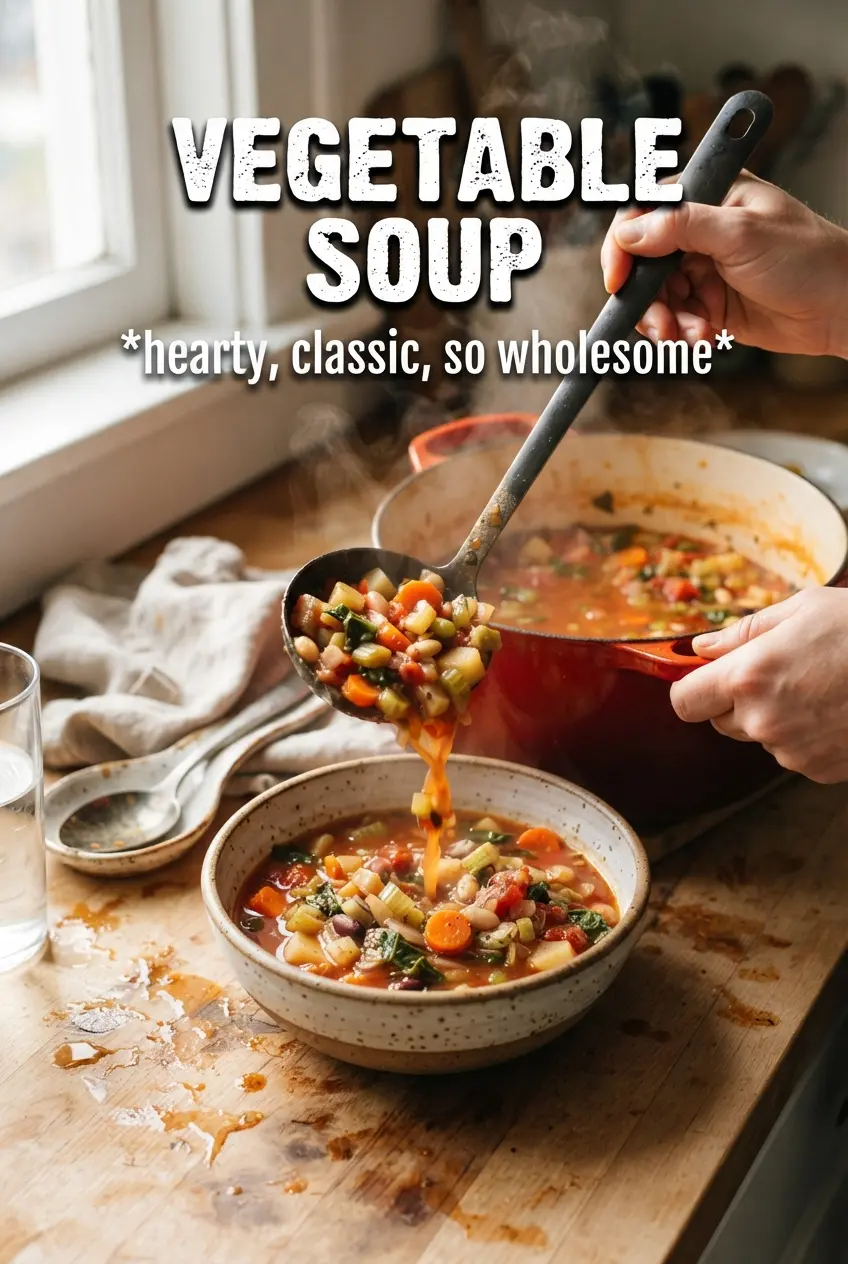
Clear broth, tender potatoes, and a full pot of vegetables make this vegetable soup the kind of meal that disappears fast. The broth stays light and savory instead of turning muddy, and every spoonful gets a little different combination of carrot, green bean, tomato, corn, and pea. It eats like a complete dinner, not a side dish pretending to be one.
The difference here is in the order. The onions, carrots, and celery cook first so the pot starts with a sweet, aromatic base, then the potatoes simmer until they’re just tender before the quicker vegetables go in. That keeps the green beans from going dull and the peas from falling apart. A simple broth only works when each vegetable gets the right amount of time.
Below, I’ve included the small timing details that keep the vegetables bright and the broth balanced, plus a few swaps for using what you already have in the kitchen.
The potatoes got perfectly tender without turning mushy, and the broth tasted even better the next day after the thyme and parsley had time to settle in.
Like this vegetable soup? Save it to Pinterest for a broth that stays clear, colorful, and loaded with tender vegetables.
The Vegetable Soup Mistake That Makes Everything Taste Flat
Vegetable soup goes flat when everything simmers together from the start. The potatoes may get soft, but the green beans lose their snap and the peas turn dull and starchy. This version avoids that by giving the base vegetables time to soften first, then layering in the firmer and faster-cooking vegetables in stages.
The other mistake is boiling the soup hard after the vegetables are in. A hard boil breaks down the potatoes at the edges and clouds the broth faster than you want. Keep it at a steady simmer once the broth goes in. You’re looking for small bubbles, not a rolling boil.
- Onion, carrots, and celery — This is the flavor base. Cook them until the onion turns translucent and the carrots start to lose their raw edge.
- Potatoes — Starchy potatoes help give the soup body. Cut them evenly so they finish at the same time.
- Frozen peas and corn — Add these at the end. They only need a few minutes, and too much simmering drains the color right out of them.
- Vegetable broth — Use one you’d actually drink on its own. Since this soup doesn’t rely on meat for flavor, the broth matters more than usual.
What Each Vegetable Is Doing in the Pot

- Potatoes — They thicken the broth slightly as they cook. Russets will soften more and make the soup a little cloudier; Yukon Golds hold their shape better.
- Carrots and celery — They build sweetness and depth before the broth even goes in. If you chop them too large, they won’t soften in time.
- Diced tomatoes — These add acidity and a little brightness. Use the juice in the can too; that liquid carries flavor into the broth.
- Dried thyme and parsley — Thyme gives the soup its savory backbone, while parsley keeps it from tasting heavy. Fresh parsley at the end is worth keeping if you have it.
- Green beans, peas, and corn — These are the finishing vegetables. They bring color and texture, and they need the shortest cooking time so they stay lively.
Building the Soup in the Right Order
Softening the Aromatics
Start by cooking the onion, carrots, and celery in olive oil until the onion looks glossy and the vegetables smell sweet instead of sharp. That first five minutes is where the broth’s flavor begins, so don’t rush it. If the pot starts to brown too quickly, lower the heat; you want gentle sweating, not frying.
Letting the Potatoes Set the Tempo
Once the garlic goes in for just a minute, add the broth, tomatoes, potatoes, thyme, parsley, and bay leaf. Bring the pot to a boil, then drop it right down to a simmer. The potatoes should be almost tender before you add the green beans, because they need more time than the other vegetables and they’re what keeps the soup from feeling thin.
Finishing Without Turning the Vegetables to Mush
Add the green beans and simmer until the potatoes and beans are tender, then stir in the corn and peas for the last few minutes. This is the part that decides whether the soup tastes fresh or overcooked. Pull it from the heat as soon as the peas are hot and bright, then remove the bay leaf and season with salt, pepper, and parsley.
How to Adapt This Soup for What’s in Your Kitchen
Make it heartier with beans
Stir in a can of drained white beans or kidney beans with the potatoes. They add body and protein without changing the soup’s clean, vegetable-forward taste, and they make the bowl feel more like a full meal.
Gluten-free and naturally dairy-free
The base recipe already fits both without any changes. Just check that your broth is certified gluten-free if that matters for your kitchen, since some brands use additives you wouldn’t expect.
Swap the green beans for what you have
Zucchini, chopped spinach, or small cauliflower florets all work, but they need less time than green beans. Add zucchini in the last 5 minutes, spinach in the last minute, and cauliflower with the potatoes if you want it fully tender.
Storage and Reheating
- Refrigerator: Store for up to 4 days. The potatoes will absorb some broth as it sits, so expect the soup to thicken a little.
- Freezer: It freezes well, though the potatoes soften more after thawing. Cool it completely, portion it into containers, and leave a little headspace for expansion.
- Reheating: Warm it gently on the stove over medium-low heat until steaming. Don’t boil it hard or the vegetables will break apart and the broth will turn cloudy.
Answers to the Questions Worth Asking
Vegetable Soup
Ingredients
Equipment
Method
- Heat olive oil in a large pot, then sauté onion, carrots, and celery over medium heat for 5 minutes until starting to soften and look glossy.
- Add garlic and cook for 1 minute, stirring constantly until fragrant but not browned.
- Add vegetable broth, diced tomatoes, potatoes, thyme, dried parsley, and bay leaf, then stir to combine.
- Bring the soup to a boil over high heat, then reduce to a steady simmer.
- Simmer for 15 minutes, stirring once or twice, until the potatoes begin to turn tender.
- Add green beans and simmer for 8 minutes, cooking until the potatoes and beans are tender.
- Add frozen corn and frozen peas, then simmer for 3 more minutes until hot throughout and vividly colored.
- Remove the bay leaf, then season with salt and pepper to taste.
- Garnish with fresh parsley and serve hot, letting the flavors settle for a moment before eating.