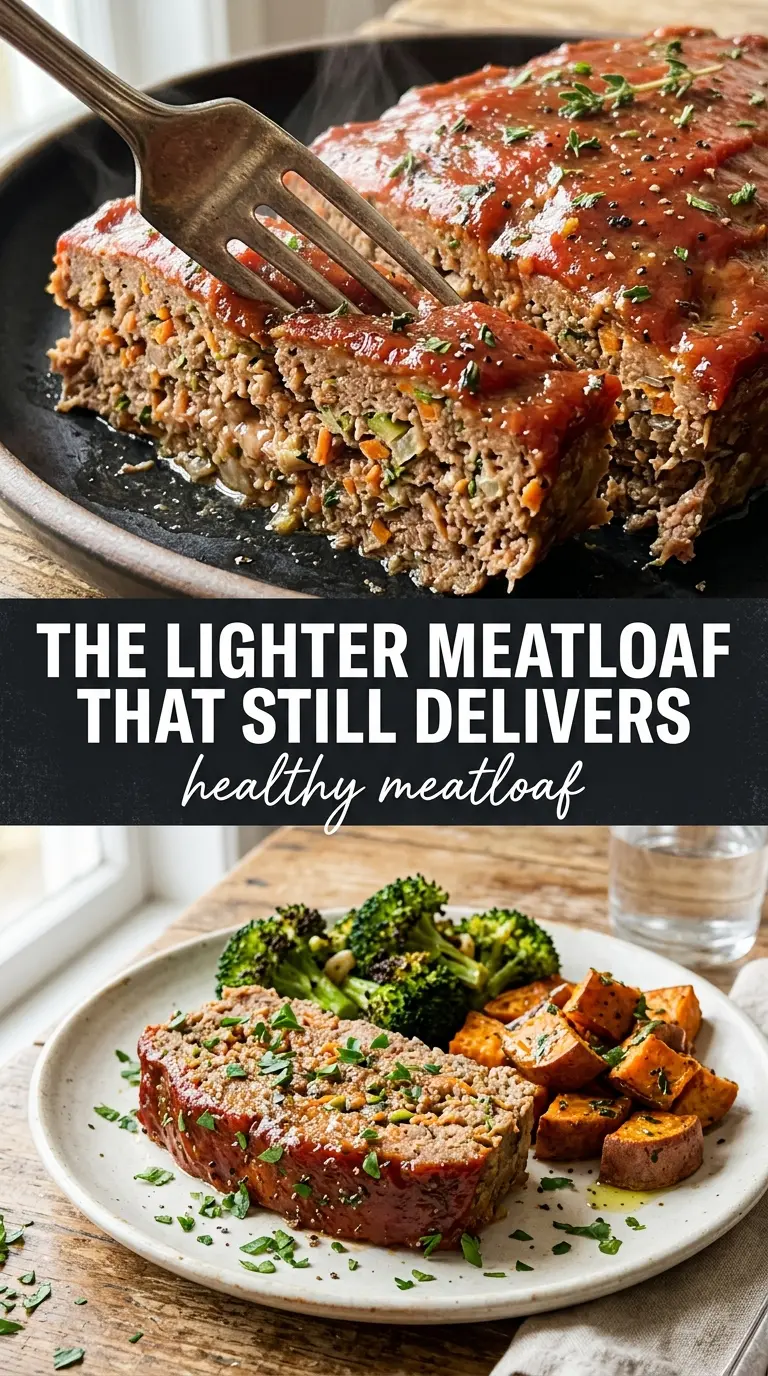
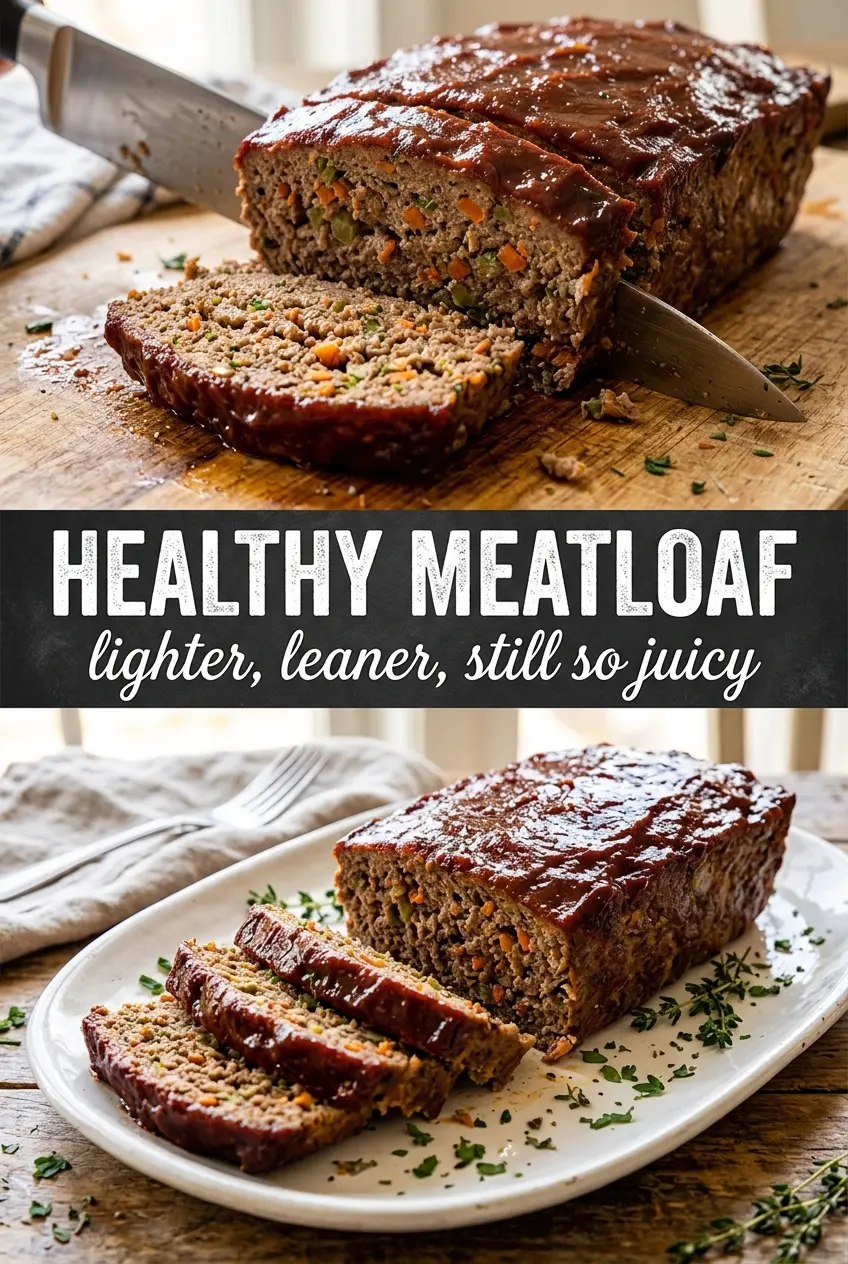
Lean, vegetable-packed meatloaf comes out tender, sliceable, and full of the kind of old-school comfort that holds together on the plate instead of crumbling apart. The tomato glaze bakes into a sticky, savory top with just enough sweetness to balance the richer meat and the grated vegetables tucked inside.
What makes this version work is the way the vegetables are handled. The onion goes in grated so it melts into the loaf, the carrot adds subtle sweetness, and the zucchini gets squeezed dry so it doesn’t water everything down. Oats stand in for breadcrumbs and give the loaf structure without making it heavy, which is especially helpful if you’re using ground turkey.
Below you’ll find the small details that keep the texture right, plus a few smart swaps if you’re working with what you already have in the kitchen. The difference between a dense meatloaf and a great one usually comes down to moisture, mixing, and letting it rest before slicing.
The loaf held together beautifully and stayed juicy even with the lean beef. The glaze set up with a nice tang, and the grated zucchini disappeared into the meat in the best way.
Like this lean, vegetable-packed healthy meatloaf? Save it to Pinterest for the nights when you want classic comfort food with a lighter finish.
The Moisture Balance That Keeps Lean Meatloaf From Turning Dense
Healthy meatloaf gets tricky when people cut the fat but keep the same mixing habits. Lean beef or turkey needs help staying tender, and the help comes from a careful balance of milk, eggs, oats, and vegetables that hold moisture without turning the loaf mushy. The biggest mistake is overmixing, which squeezes the meat tight and gives you a rubbery slice instead of a soft one.
Grating the onion and carrot matters more than it sounds. Small pieces blend into the loaf and keep every bite seasoned and juicy, while larger chunks create weak spots. The zucchini adds moisture and body, but only after you squeeze it dry; otherwise the loaf steams instead of baking cleanly and the center can go soft.
- Ground beef or ground turkey — Use 90/10 beef if you want a little more richness, or turkey if you want the lightest version. Turkey needs the extra moisture from the milk and vegetables most, so don’t skip those.
- Rolled oats — These replace breadcrumbs and give the loaf structure without making it bready. Quick oats work in a pinch, but old-fashioned oats hold up better and keep the texture a little more open.
- Zucchini — This is the ingredient that sneaks in moisture without making the loaf taste like vegetables. Squeeze it hard in a clean towel or paper towels until it stops dripping.
- Worcestershire sauce — A small amount deepens the savory flavor and makes lean meat taste fuller. There isn’t a perfect substitute for it, but soy sauce or tamari can stand in if that’s what you have.
What Each Ingredient Is Actually Doing in This Recipe
- Primary ingredient (the star) — Quality matters most. Choose the best you can find.
- Cooking medium (oil, butter, or broth) — This carries flavors and prevents dryness.
- Seasonings (salt, pepper, spices, herbs) — Layer flavors so nothing overpowers. Build depth gradually.
- Aromatics (garlic, onion, herbs) — Cook with fat to bloom flavors. Become the foundation.
- Supporting ingredients — Complement the main ingredient without overpowering it.
- Sauce or liquid (if applicable) — Brings flavors together. Balance richness with acid.
- Acid (lemon, vinegar, wine, or other) — Brightens and prevents flat-tasting results.
- Final finish (garnish, glaze, or sauce) — Prevents one-dimensional taste and adds visual appeal.
Building the Loaf So It Slices Cleanly
Mix the base without working it too hard
Combine the meat, oats, eggs, milk, onion, carrot, zucchini, garlic, Worcestershire, thyme, salt, and pepper in a large bowl and mix just until everything looks evenly distributed. The mixture should look cohesive but still soft. If you keep stirring after that point, the meat tightens up and the finished loaf turns compact. A fork, clean hands, or a silicone spatula all work; use the one that helps you stop mixing sooner.
Shape and glaze before baking
Press the mixture into a parchment-lined loaf pan and level the top so it bakes evenly. Don’t pack it down hard. Pressing too firmly leaves you with a heavy texture and a greasy edge instead of a tender slice. Stir the tomato paste, honey, and apple cider vinegar together, then spread it over the top all the way to the edges so the glaze can caramelize as the loaf bakes.
Bake to temperature, not just time
Bake at 350°F until the center reaches 160°F, which usually takes 55 to 65 minutes. The top should look set, the glaze should darken slightly, and the edges should pull away from the pan just a little. If the top starts browning too fast, lay a loose piece of foil over it for the last stretch. Use the thermometer; lean meatloaf can look done before the center actually is.
Rest before you slice
Let the loaf rest for 10 minutes after it comes out of the oven. This is the difference between neat slices and a pile of crumbs on the cutting board. The juices settle back into the meat as it cools slightly, and the texture firms just enough to hold its shape. Slice with a sharp knife and a gentle sawing motion.
How to Adapt This Healthy Meatloaf Without Losing the Texture
Ground turkey version
Use ground turkey in place of the beef for a lighter loaf with a softer bite. Turkey dries out faster, so keep the milk and vegetables in the mix and pull it from the oven as soon as it reaches 160°F.
Gluten-free adjustment
Rolled oats are naturally gluten-free if you use certified oats. They give the same binding job as breadcrumbs, and the texture stays tender instead of cakey.
Dairy-free swap
Replace the milk with unsweetened plain almond milk, oat milk, or another neutral non-dairy milk. You won’t taste the difference after baking, and the loaf still gets the moisture it needs.
Make it ahead
You can mix and shape the loaf a few hours ahead, then keep it covered in the fridge until baking time. The glaze can wait on the counter for the same stretch, which makes dinner much easier on a busy night.
Storage and Reheating
- Refrigerator: Store slices in an airtight container for up to 4 days. The texture stays moist, and the glaze gets even more savory after a night in the fridge.
- Freezer: This freezes well. Wrap individual slices tightly and freeze for up to 3 months, or freeze the whole loaf after it cools completely.
- Reheating: Warm slices covered in the oven at 325°F with a splash of water or broth nearby to keep them from drying out. The common mistake is blasting them in the microwave until the edges turn tough.
Answers to the Questions Worth Asking
Healthy Meatloaf with Tomato Glaze
Ingredients
Equipment
Method
- Preheat the oven to 350°F and line a loaf pan with parchment, creating a nonstick base. Place the pan on a stable spot so the loaf can be filled quickly.
- In a mixing bowl, combine lean ground beef (90/10) or ground turkey, rolled oats, eggs, whole milk, grated onion, grated carrot, squeezed-dry zucchini, minced garlic, Worcestershire sauce, dried thyme, and salt and pepper. Mix until evenly speckled throughout with no dry oat pockets.
- Press the mixture into the prepared pan, packing it firmly into an even loaf shape. Smooth the top so the glaze will spread evenly.
- In a small bowl, stir tomato paste, honey, and apple cider vinegar until glossy and pourable. Spread the glaze over the top and let it cling in a thin layer with no bare spots.
- Bake at 350°F for 55–65 minutes, until the internal temperature reaches 160°F. Look for a set center and a glaze that darkens slightly at the edges.
- Rest the meatloaf for 10 minutes before slicing and serving. This allows the juices to settle so the slices hold together instead of crumbling.