Steaming dumplings, springy ramen noodles, and a miso-soy broth make this dumpling ramen bowl the kind of dinner that disappears fast. It eats like something you’d order out, but it comes together in one pot with a few smart shortcuts that keep the broth clean-tasting and the toppings lively. The soft-boiled egg and chili oil finish it off with the kind of richness that makes the whole bowl feel complete.
The key is treating each part on its own terms. Frozen dumplings go straight into the simmering broth so they stay tender and soak up flavor, but the noodles cook separately so they don’t gum up the soup. White miso brings body without turning the broth heavy, and a little mirin rounds out the saltiness with just enough sweetness to keep the bowl balanced.
Below, I’ll walk through the small details that keep the broth smooth, the dumplings intact, and the toppings looking as good as they taste. There’s also a simple storage note for making the components ahead without losing texture.
The broth stayed clear and the dumplings held together perfectly, and adding the noodles separately kept the bowl from turning starchy. My husband went back for seconds and asked me to add more chili oil next time.
Save this dumpling ramen bowl for the nights when you want a fast miso broth, tender dumplings, and a topping-packed bowl that eats like takeout.
The Broth Stays Clean If You Don’t Boil the Miso
White miso has a soft, rounded saltiness, but it can taste flat or grainy if it hits hard boiling water. Keep the broth at a gentle simmer and whisk the miso in until it dissolves completely. That gives you a smooth base instead of tiny clumps floating through the bowl.
The other thing that keeps this recipe from going muddy is timing. Dumplings need enough heat to cook through, but if they boil too aggressively they can split and dump starch into the broth. A lazy simmer is enough to warm them evenly and keep the filling intact.
What the Miso, Mirin, and Dumplings Are Actually Doing Here
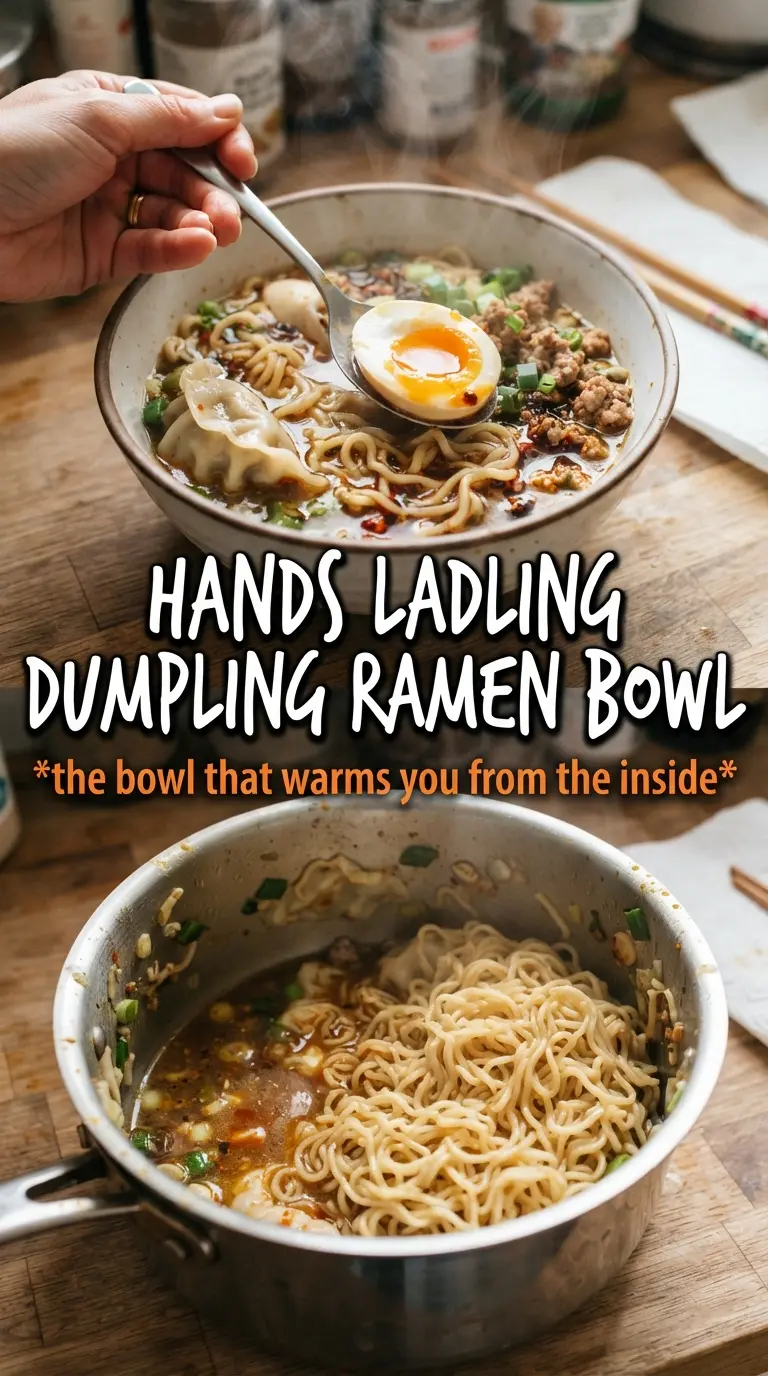
- White miso paste — This is the base flavor and the thing that gives the broth a little body. Red miso will work, but it tastes deeper and saltier, so use less and expect a more assertive bowl.
- Frozen dumplings — Frozen dumplings are the right shortcut here because they stay intact and cook right in the broth. Fresh dumplings can work too, but they cook faster, so watch closely once they float and look plump.
- Ramen noodles — Fresh ramen gives the best chew and spring, and it’s worth seeking out if you can. Instant ramen noodles can stand in, but drain them well and keep them separate until serving so the broth stays clear.
- Bok choy and corn — These two keep the bowl from feeling one-note. Bok choy softens fast and brings a fresh green bite, while corn adds sweetness that plays nicely against the salty broth.
- Sesame oil and chili oil — Sesame oil rounds out the broth before serving, and chili oil gives the bowl its final lift. Use a light hand with both at the stove; the serving bowl is where the bigger drizzle belongs.
Building the Bowl Without Overcooking the Dumplings
Start With the Broth Base
Bring the chicken broth to a gentle simmer, then whisk in the miso, soy sauce, mirin, and sesame oil until the broth looks unified and glossy. If the miso goes in while the liquid is boiling hard, it can clump and lose some of its sweetness. Keep the heat modest and taste before adding salt, since soy sauce and miso already bring plenty.
Cook the Dumplings in the Broth
Add the dumplings and let them simmer until they’re cooked through and puffed, usually 5 to 7 minutes depending on size. They should feel tender when pressed, not doughy in the center. If the broth is boiling vigorously, the wrappers can split before the filling is done, so a gentle simmer matters here more than speed.
Wilt the Greens, Then Hold Them
Stir in the bok choy near the end and cook just until the stems turn bright and the leaves collapse, usually 2 to 3 minutes. Overcooked bok choy goes dull and limp fast, and it keeps softening once it’s in the hot broth, so pull the pot from the heat as soon as it looks just tender. Cook the noodles separately while this happens so everything lands in the bowls at the same time.
Assemble the Bowls at the Last Minute
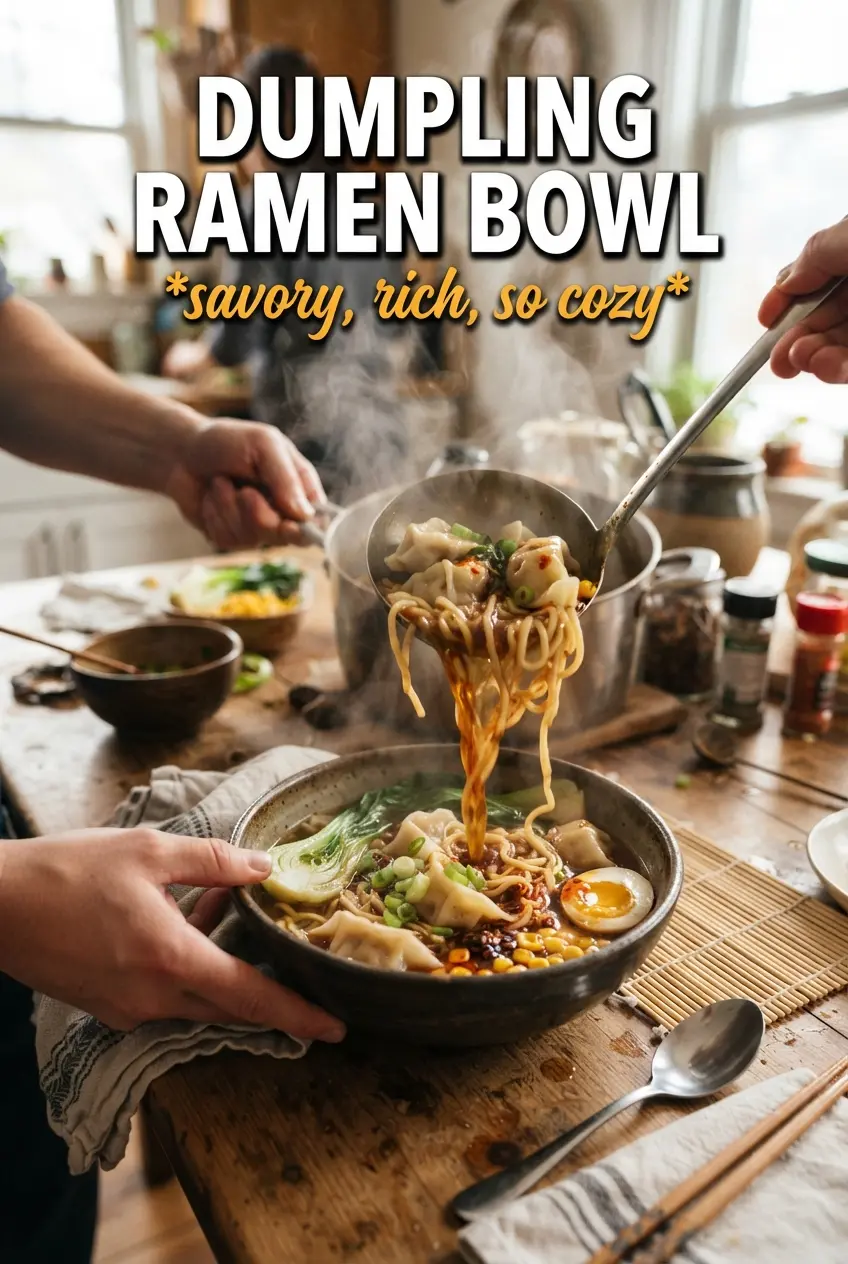
Divide the drained noodles among bowls, ladle over the broth and dumplings, then top with halved eggs, corn, green onions, nori, sesame seeds, and chili oil. The noodles should be sauced by the broth, not sitting in it for long before serving, or they’ll soak up too much liquid and soften. This bowl is best when the noodles still have bounce and the egg yolk runs into the broth as soon as you cut into it.
How to Tweak This Bowl for What’s in Your Kitchen
Make It Vegetarian
Swap the chicken broth for a good vegetable broth and use vegetable dumplings. The miso still gives the bowl enough depth, but taste carefully at the end because vegetable broth can be either bland or saltier than expected depending on the brand.
Make It Gluten-Free
Use gluten-free dumplings and gluten-free tamari in place of soy sauce. Check the ramen noodles carefully, because most standard ramen noodles contain wheat, and rice noodles or gluten-free ramen are the cleanest swap if you still want a slurpable noodle bowl.
Use What You Have for the Toppings
Spinach can stand in for bok choy, frozen peas can replace corn, and a jammy fried egg works if you don’t want to soft-boil eggs. The bowl will still eat like ramen, but each swap shifts the texture slightly: spinach melts into the broth, peas stay sweeter, and fried eggs give you crisp edges instead of the silky egg white you get from boiling.
Storage and Reheating
- Refrigerator: Store the broth and dumplings separately from the noodles for up to 3 days. The noodles will keep absorbing liquid if they sit in the soup.
- Freezer: The broth and dumplings can be frozen together, but the noodles, eggs, and bok choy don’t freeze well. Freeze the soup base in airtight containers for up to 2 months.
- Reheating: Reheat the broth gently on the stove until steaming, then add fresh or separately stored noodles just before serving. Don’t hard-boil the broth or the dumplings can split and the miso can lose its smooth texture.
Questions I Get Asked About This Recipe
Dumpling Ramen Bowl
Ingredients
Equipment
Method
- Bring the chicken broth to a simmer in a Dutch oven, then whisk in the white miso paste, soy sauce, mirin, and sesame oil until smooth. Keep it gently simmering so the flavor stays consistent.
- Add the frozen pork or chicken dumplings to the simmering broth and cook for 5-7 minutes until cooked through. Look for dumplings that are heated in the center and hold their shape.
- Add the halved bok choy to the broth and cook for 2-3 minutes, until wilted. You should see the leaves brighten and soften.
- Cook the fresh ramen noodles separately according to the package instructions, then drain well. Stop cooking early enough that they stay springy in the hot broth.
- Divide the drained ramen noodles between 4 bowls. Keep the noodles centered so toppings sit neatly.
- Ladle the soy-miso broth and dumplings over the noodles. Make sure each bowl gets both dumplings and some bok choy.
- Top each bowl with halved soft-boiled eggs, placing the yolk side up for a runny center. Add corn, green onions, nori, sesame seeds, and chili oil over the top.
- Taste the broth and add salt to taste if needed. Adjust in small pinches, then serve immediately while hot.