Gyoza soup lands in that sweet spot between cozy and light: a clear, savory broth, dumplings that stay tender instead of waterlogged, and just enough vegetables to make the bowl feel complete. The broth tastes layered fast because the ginger, garlic, soy, mirin, and rice vinegar build depth before the dumplings even go in, so you’re not relying on the gyoza alone for flavor.
What makes this version work is timing. The mushrooms get a head start so they can release their flavor into the broth, the gyoza cook right in the simmering liquid instead of in a separate pan, and the bok choy goes in at the end so it stays crisp-tender. A splash of sesame oil after the heat is off keeps the aroma bright instead of muddy.
Below you’ll find the small details that matter most here: how to keep the broth clear and balanced, which gyoza work best, and the one finishing move that makes each bowl taste like it came from a restaurant kitchen.
The dumplings stayed intact and the broth picked up so much flavor from the ginger and mushrooms. I used frozen gyoza and they cooked through perfectly in the simmering broth.
Save this gyoza soup for nights when you want a clear ginger-garlic broth, tender dumplings, and fast comfort in one bowl.
The Part Most People Get Wrong: Treating the Dumplings Like Pasta
The big mistake with gyoza soup is boiling the dumplings hard, which makes the wrappers split and the filling turn dense before the bowl is even assembled. A gentle simmer keeps the gyoza intact and gives the broth time to move through the dumplings without tearing them apart.
The other thing that matters is layering. If you add everything at once, the vegetables go soft before the broth tastes like anything. Here, the mushrooms get time to deepen the base, and the bok choy goes in only after the dumplings are nearly done so it stays bright and a little crisp.
- Keep the broth at a simmer, not a boil — boiling agitates the dumplings and can break the wrappers. You want small bubbles around the edges, not a rolling churn.
- Add the gyoza into seasoned broth — they absorb flavor as they cook, which gives you a soup that tastes built, not diluted.
- Finish with sesame oil off the heat — heat mutes sesame oil fast, so stir it in at the end for the cleanest aroma.
What Each Ingredient Is Actually Doing in This Bowl
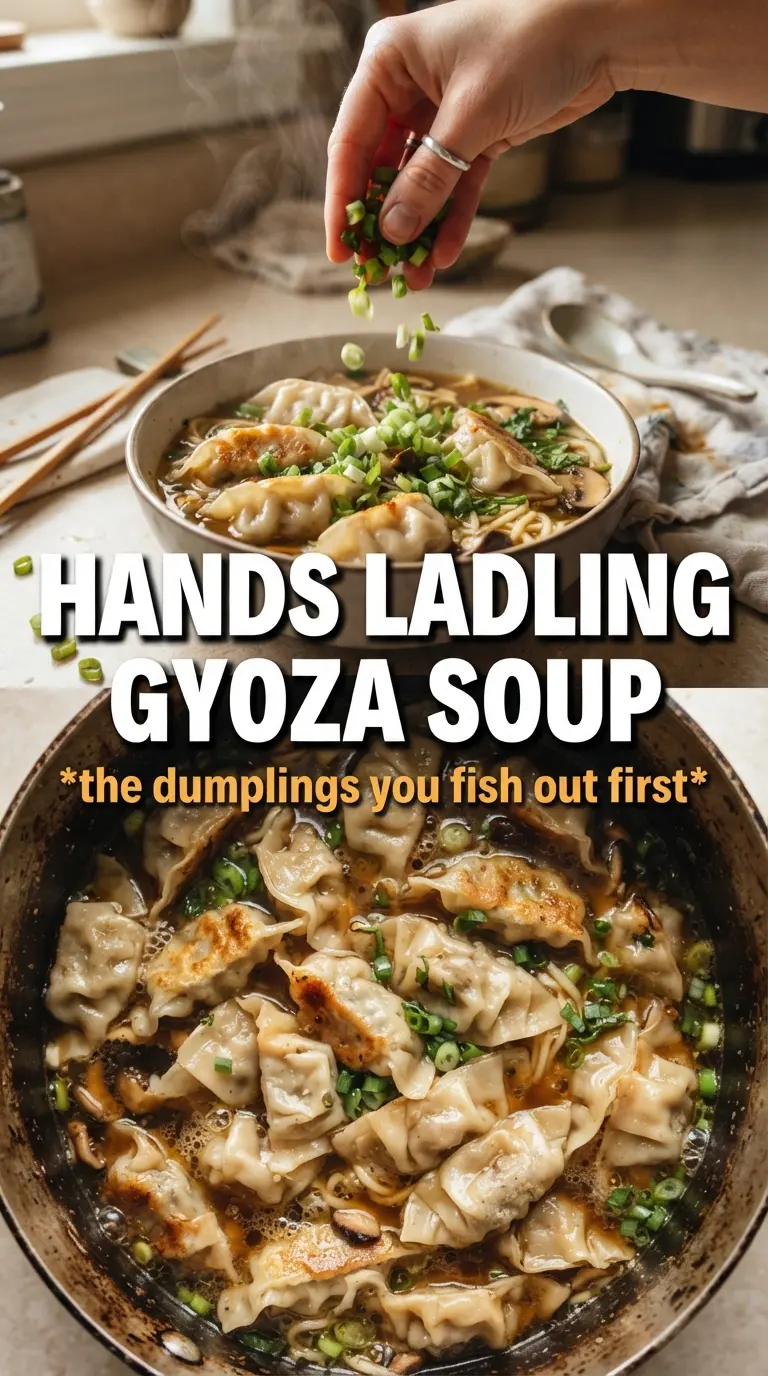
- Gyoza or potsticker dumplings — frozen dumplings work well here because they hold their shape and keep the soup fast. Fresh dumplings cook a touch faster, so start checking them a minute early.
- Chicken broth — this is the backbone, so use a broth you’d happily sip. If yours tastes flat, the soy sauce and mirin help, but they won’t fix a weak base completely.
- Ginger and garlic — these are what give the broth that warm, savory lift. Fresh grated ginger matters more than garlic here; dried ginger won’t give the same clean finish.
- Mushrooms and bok choy — shiitakes add depth and a little earthiness, while bok choy brings freshness and texture. If you swap in another green, add it late so it doesn’t collapse.
- Sesame oil, chili oil, and sesame seeds — sesame oil rounds out the broth, while chili oil and sesame seeds finish the bowl with heat and texture. Leave the chili oil off until serving so the surface doesn’t turn greasy.
Building the Broth, Then Letting the Dumplings Finish the Job
Waking Up the Aromatics
Bring the broth to a gentle simmer first, then stir in the garlic, ginger, soy sauce, mirin, and rice vinegar. This gives the broth a head start and keeps the flavor even from the first spoonful. If you add the gyoza before the broth tastes seasoned, the dumplings absorb a bland base and the whole bowl falls flat.
Letting the Mushrooms Deepen the Base
Add the shiitake mushrooms and give them a few minutes in the simmering broth. They’ll soften and release their flavor into the liquid, which makes the soup taste fuller without getting heavy. If you rush this stage, the mushrooms stay slippery instead of savory.
Cooking the Gyoza Gently
Slide the gyoza into the simmering broth and cook them according to the package directions, usually 5 to 7 minutes. Keep the heat steady and gentle so the wrappers stay intact. If you’re using fresh dumplings, they may finish sooner; frozen ones usually just need a little longer, but either way the filling should be hot all the way through and the dumplings should float and look plump.
Finishing with Greens and Aroma
Stir in the bok choy and cook just until wilted, about 2 to 3 minutes. Turn off the heat, then add the sesame oil and taste for salt. The bok choy should still have some bite, and the sesame oil should smell fresh and nutty the second it hits the bowl.
How to Adapt This Gyoza Soup Without Losing the Point
Make it vegetarian with vegetable broth and veggie gyoza
Use a rich vegetable broth and vegetarian dumplings. The soup stays just as comforting, but the broth needs a little extra help from the ginger, garlic, and mushrooms, so don’t skimp on those.
Swap in napa cabbage or spinach for the bok choy
Napa cabbage gives you a softer, sweeter bite; spinach melts in almost instantly and makes the broth feel lighter. Add either near the very end so it doesn’t overcook and disappear.
Use gluten-free dumplings and tamari
If you need a gluten-free version, use dumplings made with a gluten-free wrapper and replace the soy sauce with tamari. The broth keeps the same savory backbone, though the wrapper texture may be a little softer than classic gyoza.
Make it spicier without changing the broth
Add chili oil at the table instead of in the pot so each bowl can be adjusted individually. That keeps the broth clear and lets the sesame and ginger stay front and center while the heat builds on top.
Storage and Reheating
- Refrigerator: Store for up to 3 days, but the dumplings will soften as they sit in the broth.
- Freezer: The finished soup doesn’t freeze well because the gyoza wrappers turn mushy. Freeze the broth base without dumplings if you want to prep ahead.
- Reheating: Warm it gently on the stove over low heat until the broth is steaming. Don’t boil it again, or the dumplings can break apart and the bok choy will lose all texture.
Answers to the Questions Worth Asking
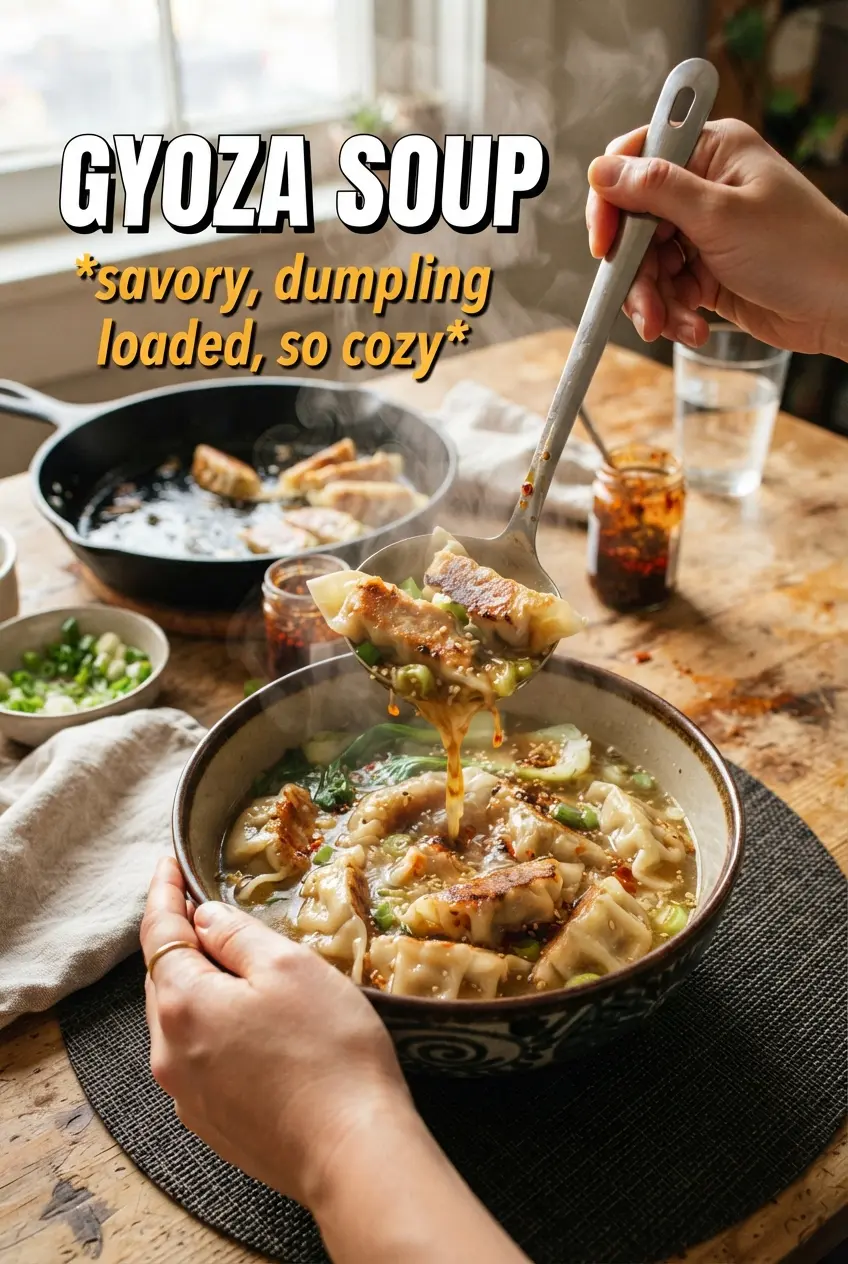
Gyoza Soup
Ingredients
Equipment
Method
- Bring the chicken broth to a simmer in a large pot over medium-high heat, then add the minced garlic, grated ginger, soy sauce, mirin, and rice vinegar.
- Simmer for 5 minutes to meld the flavors, keeping the broth at a steady gentle bubbling.
- Add the sliced shiitake mushrooms and simmer for 3-4 minutes, until tender and fragrant.
- Add the gyoza directly to the simmering broth and cook according to package directions (usually 5-7 minutes) until cooked through and heated in the center.
- Add the chopped bok choy and cook for 2-3 minutes, until wilted but still bright green.
- Stir in the sesame oil, then taste and season with salt to taste.
- Ladle into bowls and top with sliced green onions, sesame seeds, and chili oil for serving.