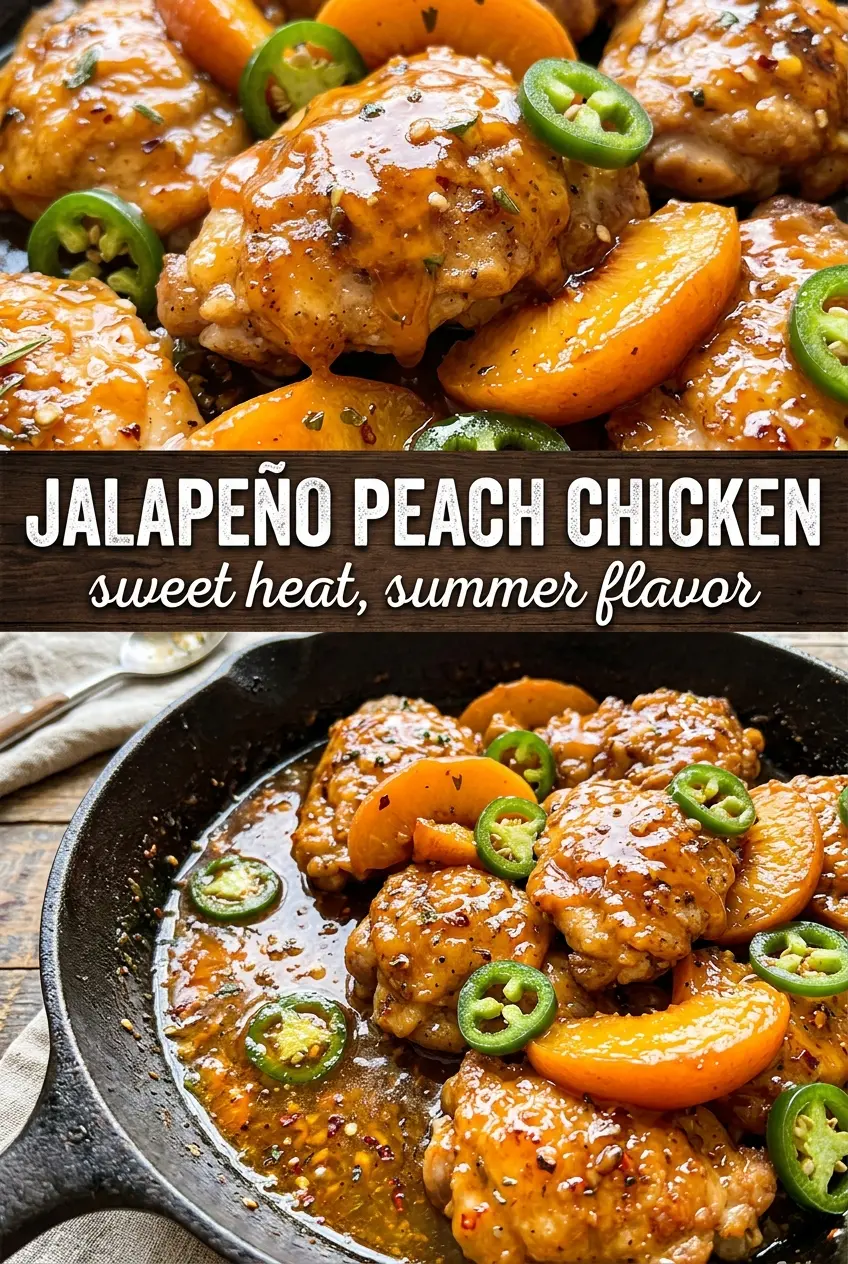
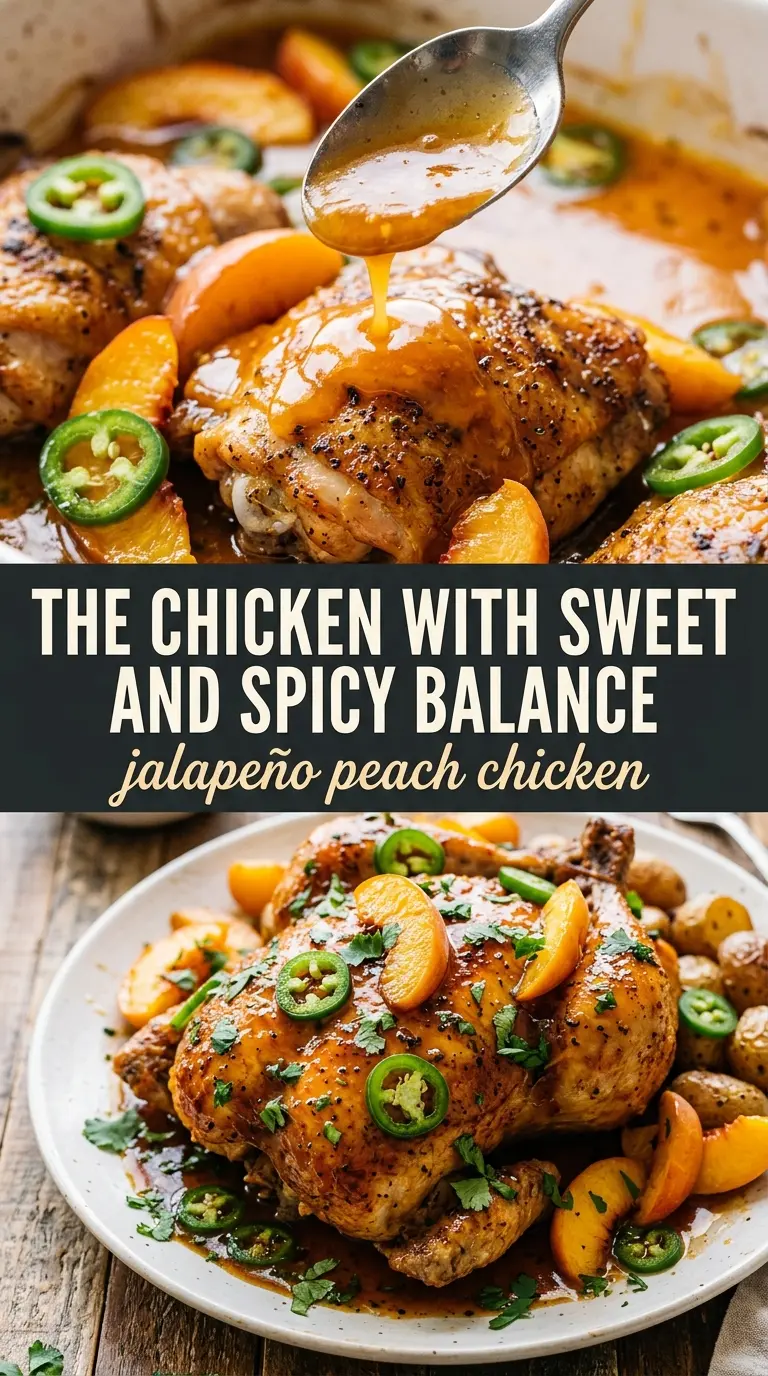
Golden-seared chicken breasts with a jalapeño peach glaze hit that sweet-heat balance that keeps people coming back for seconds. The sauce turns sticky and glossy in the skillet, clinging to the chicken instead of sliding off, and the peach chunks soften just enough to melt into the pan without disappearing completely.
What makes this version work is the contrast. The chicken gets a deep seasoned crust first, then the glaze is built in the same pan so every browned bit ends up in the sauce. Peaches bring body and sweetness, jalapeños bring clean heat, and a little vinegar keeps the whole thing from tasting flat or syrupy.
Below, I’ve included the small details that matter most: how to keep the sauce from going watery, what to do if your peaches aren’t quite ripe, and a few smart ways to adapt the dish depending on what’s in your kitchen.
The sauce thickened up beautifully and coated the chicken instead of pooling in the skillet. I used two jalapeños and it had just enough heat with the sweet peaches.
Like this sweet-spicy skillet dinner? Save Jalapeño Peach Chicken for the nights when you want sticky glaze, juicy chicken, and minimal cleanup.
The Glaze Only Turns Sticky When the Pan Isn’t Crowded
The most common mistake with this dish is rushing the sauce before the peaches have had time to break down. If the skillet is packed or the heat is too low, the fruit just sits there and the sauce stays thin and watery. Give the mixture room to bubble, and let the liquid reduce until it looks glossy and slightly syrupy around the spoon.
The chicken also needs that first sear to do more than add color. Those browned bits are the backbone of the glaze, and they only dissolve properly once the peaches, honey, vinegar, and broth go into the same skillet. If you move the chicken too early or wipe out the pan, you lose the deepest flavor in the whole dish.
- Peaches — Ripe peaches soften into the sauce and give it body. If yours are firm, dice them a little smaller and cook a minute or two longer so they break down.
- Jalapeños — Seeded jalapeños bring warmth without burying the fruit. Leave a few seeds in if you want more bite, but don’t add extra peppers unless you like the glaze leaning hot.
- Honey — This gives the sauce its sticky finish. Maple syrup works in a pinch, but it reads darker and less bright than honey.
- Chicken broth — It stretches the glaze just enough to simmer the peaches down without burning the sugar. Water works only if you have to, but the sauce will taste flatter.
What Each Ingredient Is Actually Doing in This Recipe
- Primary ingredient (the star) — Quality matters most. Choose the best you can find.
- Cooking medium (oil, butter, or broth) — This carries flavors and prevents dryness.
- Seasonings (salt, pepper, spices, herbs) — Layer flavors so nothing overpowers. Build depth gradually.
- Aromatics (garlic, onion, herbs) — Cook with fat to bloom flavors. Become the foundation.
- Supporting ingredients — Complement the main ingredient without overpowering it.
- Sauce or liquid (if applicable) — Brings flavors together. Balance richness with acid.
- Acid (lemon, vinegar, wine, or other) — Brightens and prevents flat-tasting results.
- Final finish (garnish, glaze, or sauce) — Prevents one-dimensional taste and adds visual appeal.
Building the Chicken and Glaze in the Same Skillet
Seasoning for a Real Crust
Pat the chicken dry before seasoning it. Moisture on the surface keeps it from browning well, and that browned surface is what gives the finished dish depth. Season both sides generously with salt, pepper, garlic powder, and smoked paprika so the chicken tastes complete even before the glaze goes on. If the chicken pieces are uneven in thickness, pound the thick ends lightly so they cook at the same pace.
Getting the Sear Without Steaming
Heat the olive oil until it shimmers, then lay the chicken in the pan and leave it alone. If you move it too soon, it will tear instead of releasing cleanly. You’re looking for a deep golden crust and chicken that lifts easily from the skillet, not pale edges and pooled liquid. Cook the first side long enough to build color, then flip and finish until the internal temperature hits 165°F.
Turning the Pan Drippings into Sauce
After the chicken comes out, the jalapeños and garlic go into the same skillet. Cook them just until fragrant; garlic burns fast, and burnt garlic makes the glaze bitter. Add the peaches, honey, vinegar, soy sauce, and broth, then let the mixture simmer until the peaches slump and the sauce coats the back of a spoon. If it still looks thin after 10 minutes, keep simmering. The sauce should be bubbling in thick, slow pops before you bring the chicken back.
Finishing the Dish
Return the chicken to the skillet and spoon the glaze over the top so every piece gets coated. Let it sit in the sauce for a minute or two; that last bit of heat helps the chicken absorb the glaze without overcooking. Finish with fresh thyme and red pepper flakes for a little lift and a clean hit of heat at the end.
Ways to Bend This Recipe Without Losing What Makes It Work
Make it dairy-free and naturally gluten-free
This recipe already leans that way. Just use a gluten-free soy sauce or tamari if you need to keep the dish fully gluten-free. The texture and glaze stay the same, so you don’t lose anything in the swap.
Use chicken thighs for a richer, more forgiving version
Boneless thighs work well if you want more juiciness and a little extra cushion against overcooking. They take a few minutes longer than breasts, but they stay tender and soak up the glaze beautifully.
Swap in nectarines or apricots when peaches aren’t great
Nectarines behave almost the same as peaches and don’t need peeling. Apricots are tarter, so the glaze will taste sharper and less lush, which is nice if you want the sweet heat to lean brighter.
Storage and Reheating
- Refrigerator: Store leftovers in an airtight container for up to 3 days. The sauce will thicken as it chills.
- Freezer: Freeze for up to 2 months, but the peach pieces will soften more after thawing. It still works well for a future dinner, just expect a looser texture.
- Reheating: Warm gently in a skillet over low heat with a splash of broth or water. High heat can tighten the chicken and scorch the sugars in the glaze before the center is hot.