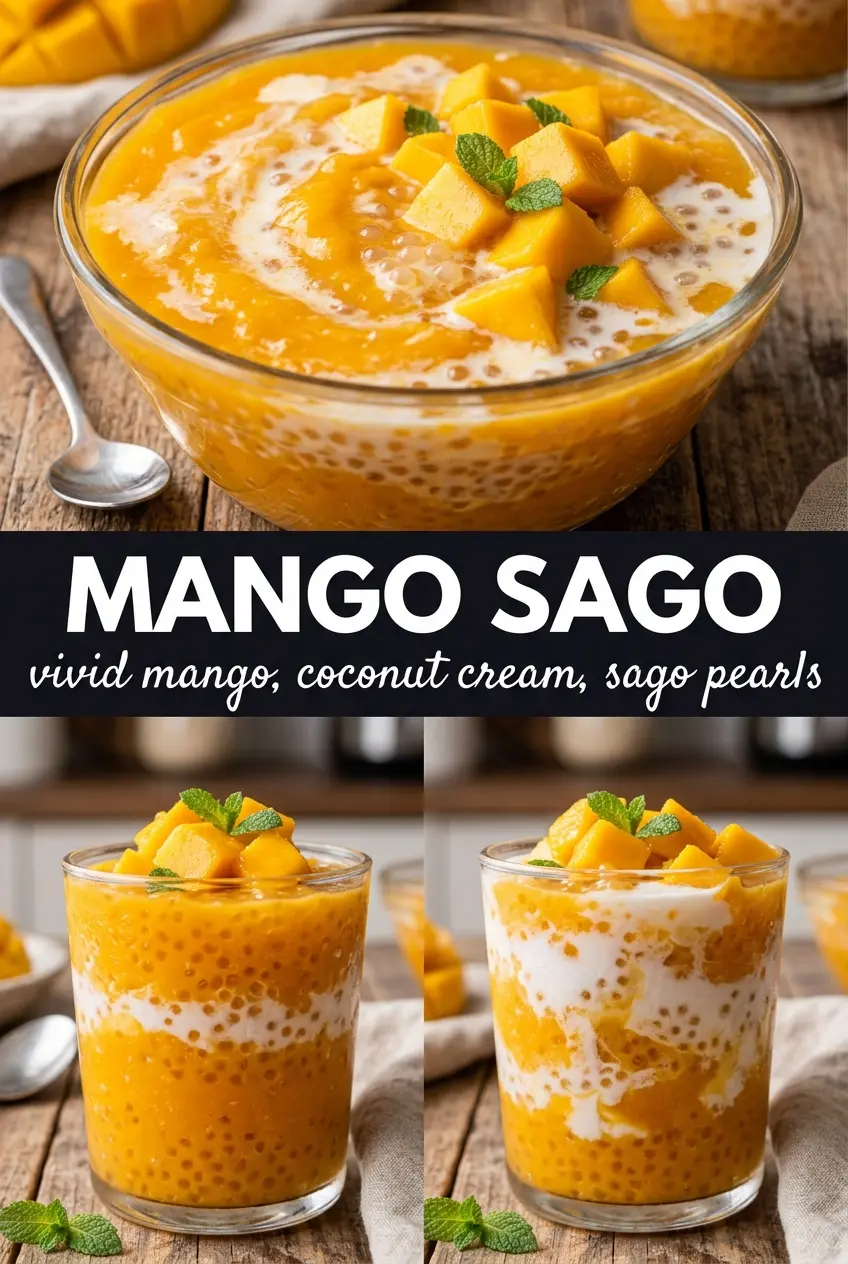
Silky mango puree, chewy sago pearls, and cool coconut milk come together here in a dessert that feels light on the spoon but still rich enough to stand on its own. The best bowls have that contrast right down the middle: creamy and tropical at first taste, then dotted with little pearls and fresh mango cubes that keep every bite interesting.
What makes this version work is the balance. One mango gets blended into the base so the coconut milk turns lush and fragrant, while the second mango stays in small cubes for freshness and texture. The sago is cooked until fully translucent, then rinsed so it doesn’t keep thickening the bowl into a gummy mess. That small extra step matters more than anything else here.
Below you’ll find the timing that keeps the pearls bouncy, the ingredient notes that help you choose ripe mangoes, and a few simple ways to adapt the dessert if you want it dairy-free or a little lighter.
The sago stayed perfectly chewy after chilling, and the mango-coconut base was smooth and never icy. I loved that the fresh mango cubes on top kept it from feeling too rich.
Save this mango sago recipe for a chilled dessert with creamy coconut mango puree and bouncy sago pearls.
The Part That Makes Sago Stay Chewy Instead of Turning Gluey
Mango sago sounds simple, but the texture falls apart fast if the pearls are overcooked or left sitting in their starchy water. The goal is translucent sago with a tiny tender center gone, not mush. Once they hit that point, draining and rinsing under cold water stops the cooking and washes away the excess starch that would otherwise thicken the dessert into paste.
The second place this recipe succeeds is the chill time. The coconut-mango base tastes good right away, but an hour in the fridge lets the flavors settle and the pearls absorb just enough of the creaminess without losing their bite. If the dessert seems loose at first, that’s fine; it tightens slightly as it chills.
What Each Ingredient Is Actually Doing in the Bowl

- Small tapioca pearls — These give mango sago its signature chew. Use the small pearls here, not the larger bubble-tea style ones, because they cook faster and stay delicate in the chilled coconut base.
- Ripe mangoes — You need mangoes that smell fragrant at the stem end and yield slightly when pressed. One gets blended for body and sweetness, while the other stays diced so the finished dessert has fresh fruit in every bowl.
- Full-fat coconut milk — This is what gives the dessert its lush, silky texture. Light coconut milk will taste thinner and more watery, so use the full-fat can if you want the base to coat the sago properly.
- Condensed milk and sugar — The sugar lifts the mango, and the condensed milk adds roundness without making the dessert heavy. If your mangoes are exceptionally sweet, you can reduce the sugar a little, but don’t skip both or the coconut can taste flat.
- Whole milk — This loosens the coconut milk just enough so the dessert isn’t too thick after chilling. If you need a dairy-free version, replace it with more coconut milk or an unsweetened oat milk, knowing the finish will be slightly richer or softer depending on what you use.
Building the Creamy Base Without Overcooking the Pearls
Cooking the Sago
Bring a large pot of water to a full boil before adding the sago. Stir during the first few minutes so the pearls don’t cling together, then keep the water at a gentle boil until they turn mostly translucent with only the tiniest dot in the center. If you stop too early, the pearls will feel hard in the middle after chilling; if you go too long, they lose their bounce.
Blending the Mango Coconut Mixture
Add one mango, the coconut milk, sugar, condensed milk, and whole milk to a blender and run it until the mixture is completely smooth. You want a thick, pourable base with no mango fibers or sugar grains left behind. If your mango is a little stringy, blend it longer rather than straining it, since straining can thin the dessert too much.
Combining and Chilling
Stir the drained sago into the mango mixture, then fold in the diced mango cubes if you want them throughout the dessert or save them for the top if you prefer a cleaner look. Chill the bowl for at least an hour so the flavors meld and the pearls firm up slightly. If you serve it warm, the coconut tastes flat and the texture feels unfinished, so don’t skip the rest time.
How to Adapt Mango Sago for Different Kitchens and Diets
Dairy-Free Mango Sago
Swap the whole milk and condensed milk for extra coconut milk plus a spoon of sugar or maple syrup. The dessert turns a little richer and more coconut-forward, which works well with very sweet mangoes, but you’ll lose the slight dairy roundness that condensed milk brings.
Lighter Mango Sago
Use half coconut milk and half whole milk, then reduce the condensed milk a little. The result is still creamy, but the mango comes forward more sharply and the finish feels less heavy after a full meal.
Extra Thick, Spoonable Dessert Cups
If you want a thicker, pudding-like bowl, use a little less whole milk and chill it longer. The sago will continue to absorb liquid, so this version is best served the same day before it gets too dense.
Storage and Reheating
- Refrigerator: Store covered for up to 2 days. The pearls keep absorbing liquid, so the dessert will thicken as it sits.
- Freezer: I don’t recommend freezing it. The coconut base separates and the sago turns unpleasantly tough once thawed.
- Reheating: Don’t reheat this dessert. Serve it cold straight from the fridge, and if it gets too thick, stir in a splash of milk before serving.
The Questions Worth Asking Before You Chill It
Mango Sago
Ingredients
Equipment
Method
- Bring a large pot of water to a rolling boil, then cook small tapioca pearls (sago) for 12-15 minutes, stirring, until translucent and no white centers remain. Visual cue: pearls look glassy and slightly plump.
- Drain the sago and rinse under cold water to stop the cooking. Visual cue: pearls stay separate and glossy, not sticky.
- Drain well, then set the sago aside at room temperature while you make the mango puree.
- In a blender, puree one mango with coconut milk, granulated sugar, condensed milk, and whole milk until completely smooth. Visual cue: texture turns uniformly orange and silky.
- Dice the second mango into small cubes. Visual cue: pieces are bite-size and clearly distinct from the puree.
- Stir the cooked sago pearls into the mango coconut mixture until evenly distributed. Visual cue: white pearls are visible throughout the orange base.
- Refrigerate for at least 1 hour until chilled, covered if possible to prevent skin from forming. Visual cue: the mixture thickens slightly and feels cold through the glass.
- Serve the mango sago in bowls or glasses topped with fresh mango cubes and a mint sprig. Visual cue: vivid mango cubes sit on top and contrast with the pale-white pearls.