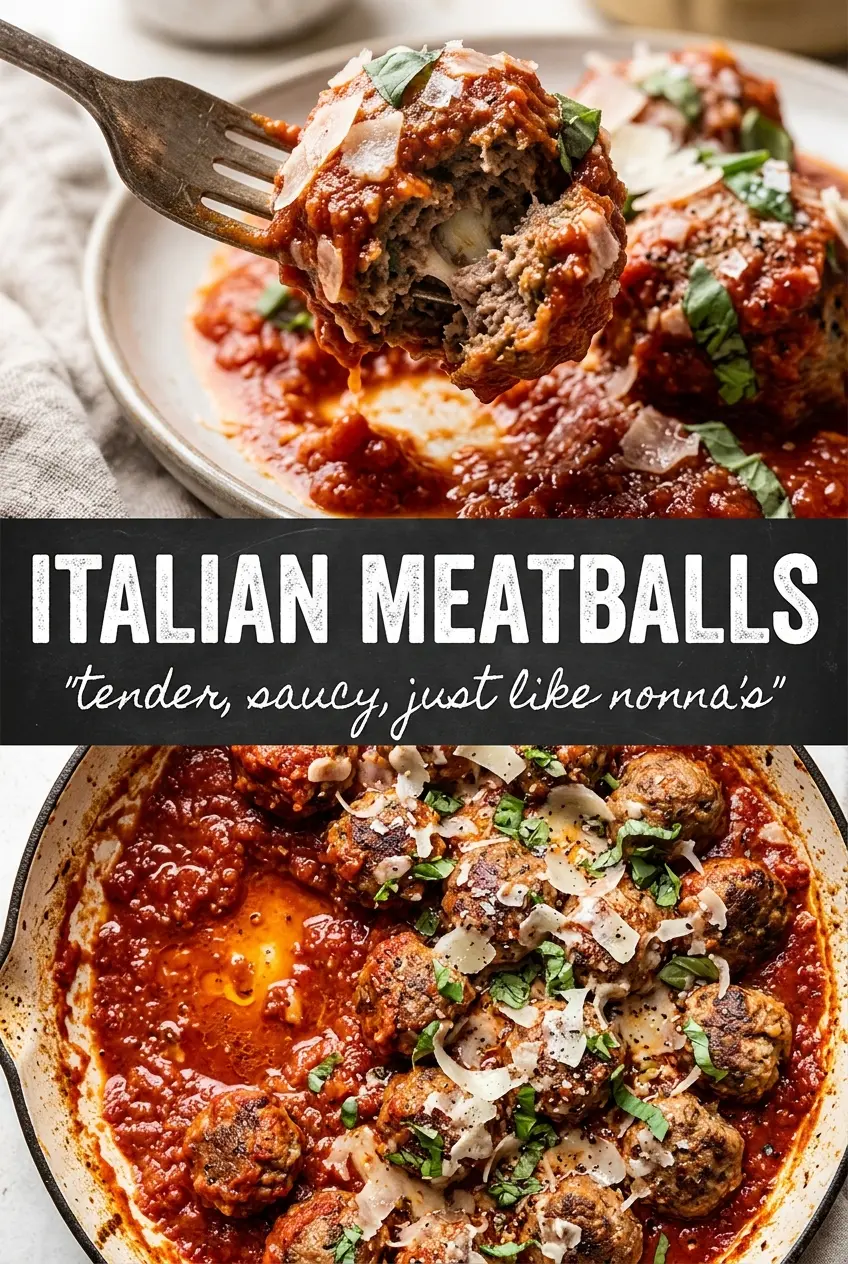
These Italian meatballs stay tender in the center, hold a deep golden crust on the outside, and finish in marinara that clings to every ridge instead of sliding off. The mix of beef and pork gives them enough richness to taste like the kind of meatballs people remember, while the soaked breadcrumbs keep the texture soft without turning mushy.
The trick here is gentle mixing and a quick browning before the simmer. That first sear builds flavor on the surface, and the short braise in sauce finishes the meatballs without drying them out. If you’ve had meatballs come out dense or rubbery before, it usually comes down to overworking the mixture or cooking them too hot for too long.
Below, I’ve included the ingredient details that matter most, plus the stage where people usually rush and end up with tough meatballs. There’s also a few variations for making these your own without losing the texture that makes them work.
I followed the mix-and-barely-touch-it tip and the meatballs stayed tender instead of turning dense. Browning them first made the sauce taste like it had cooked all day, and my kids kept stealing them from the pan.
Save these browned Italian meatballs for the night when you want a marinara sauce that tastes slow-cooked without the wait.
The Reason These Meatballs Stay Tender Instead of Tight and Bouncy
Meatballs get tough when the proteins in the meat are worked too hard before they hit the pan. That’s why the mixing method matters as much as the ingredients. You want everything evenly combined, but not kneaded into a paste. The soaked breadcrumbs do more than stretch the mixture; they hold moisture and help the meatballs stay soft after browning and simmering.
The other mistake is rushing the browning. If the skillet is crowded, the meatballs steam and lose that deep crust that makes the sauce taste richer. Brown them in batches so the pan stays hot and the surface has room to color. The simmer in marinara finishes the center gently, which keeps the outside from drying out before the inside is done.
What Each Ingredient Is Actually Doing in These Italian Meatballs

- Ground beef and ground pork — Beef brings structure and flavor, while pork adds fat and a softer bite. Use both if you can. If you swap in all beef, the meatballs will still work, but they’ll be firmer and a little less juicy.
- Fresh breadcrumbs and milk — This is the panade, and it’s what keeps the texture tender. Fresh breadcrumbs soak up the milk fast and melt into the mixture more smoothly than dry crumbs. If you need to use dry breadcrumbs, use a little less and give them time to fully absorb the milk before mixing.
- Parmesan — Grated parmesan adds salt, savoriness, and a little body. The finely grated stuff blends right into the meatball mixture, while a chunkier shred can leave little pockets instead of seasoning the whole batch evenly.
- Garlic, parsley, oregano, and basil — These are doing the Italian-American heavy lifting here. Fresh parsley keeps the mixture from tasting flat, and the dried herbs hold up well through browning and simmering. Fresh basil can be added at the end, but dried basil belongs in the mix.
- Marinara sauce — Use a sauce you already like eating from the jar, because it becomes the backbone of the finished dish. The meatballs season the sauce as they simmer, but they won’t rescue a bland one.
Brown First, Then Let the Sauce Finish the Job
Soaking the Breadcrumbs
Stir the breadcrumbs into the milk and let them sit until the liquid disappears and the mixture looks like a soft paste. That step matters because dry crumbs won’t distribute evenly and can leave the meatballs grainy. If the mixture still looks dry after five minutes, give it another minute instead of adding more breadcrumbs right away.
Mixing Without Overworking
Add the beef, pork, soaked crumbs, eggs, parmesan, garlic, herbs, salt, and pepper, then use your hands to gently fold everything together. Stop as soon as you no longer see streaks of egg or pockets of plain meat. If the mixture starts looking sticky and glossy like sausage paste, it’s already been handled too much.
Browning in a Hot Skillet
Roll the meatballs into even balls so they cook at the same rate, then brown them in olive oil over medium-high heat. You’re looking for a deep golden crust, not a full cook-through at this stage. If they stick at first, give them another minute; they usually release once the surface has browned. Work in batches so the oil stays hot and the meatballs sear instead of steam.
Finishing in Marinara
Once the sauce goes in, nestle the browned meatballs into the pan, cover, and drop the heat to a gentle simmer. The sauce should bubble lazily around the edges, not boil hard. That slow finish keeps the meatballs juicy and gives the sauce time to pick up the browned bits from the pan. They’re done when the centers reach 160°F and the sauce has thickened enough to coat a spoon.
Three Ways to Adjust These Meatballs Without Losing the Texture
Gluten-Free Version
Swap the fresh breadcrumbs for gluten-free breadcrumbs or very fine crushed gluten-free crackers. Keep the milk step the same so the mixture still stays tender. The texture will be nearly identical if the crumbs are fine; larger crumb pieces can make the meatballs a little more fragile.
All-Beef Meatballs
If you only have ground beef, use an 80/20 blend so there’s enough fat to keep them juicy. The flavor will be a little leaner and less rich than the beef-and-pork version, so don’t skip the parmesan or the browned crust. These are still excellent with marinara and pasta.
Lighter Dairy-Free Option
Use unsweetened plain dairy-free milk in place of the whole milk and skip the parmesan, then add a little extra salt and a spoonful of nutritional yeast if you want a similar savory edge. The meatballs will be a touch less rich, but the breadcrumb soak still keeps them tender. Use a sauce with good body so the finished dish doesn’t taste thin.
Storage and Reheating
- Refrigerator: Store the meatballs and sauce together for up to 4 days. They usually taste even better the next day once the flavors settle.
- Freezer: Freeze cooked meatballs in sauce for up to 3 months. Cool them first, then pack them into airtight containers so they don’t pick up freezer burn.
- Reheating: Reheat gently on the stovetop over low heat or in the microwave at short intervals. High heat dries out the meat and can make the sauce separate, so warm them slowly until heated through.
The Questions People Run Into With Italian Meatballs
Italian Meatballs
Ingredients
Equipment
Method
- Soak the fresh breadcrumbs in the whole milk for 5 minutes until absorbed, keeping the mixture thick and creamy.
- Combine the ground beef, ground pork, soaked breadcrumbs, eggs, parmesan cheese, garlic, parsley, oregano, dried basil, salt, and black pepper, mixing gently until just combined to avoid tough meatballs.
- Roll the mixture into 1.5–2 inch balls so they cook evenly and stay juicy inside.
- Heat the olive oil in a large skillet over medium-high heat and brown the meatballs on all sides for about 6–8 minutes, working in batches for proper golden-browning.
- Pour the marinara sauce into the pan, nestle the meatballs in, cover, and simmer on medium-low for 15–18 minutes until cooked through.
- Serve the giant Italian meatballs over pasta or with crusty bread, topped with fresh basil and extra parmesan for a classic finish.