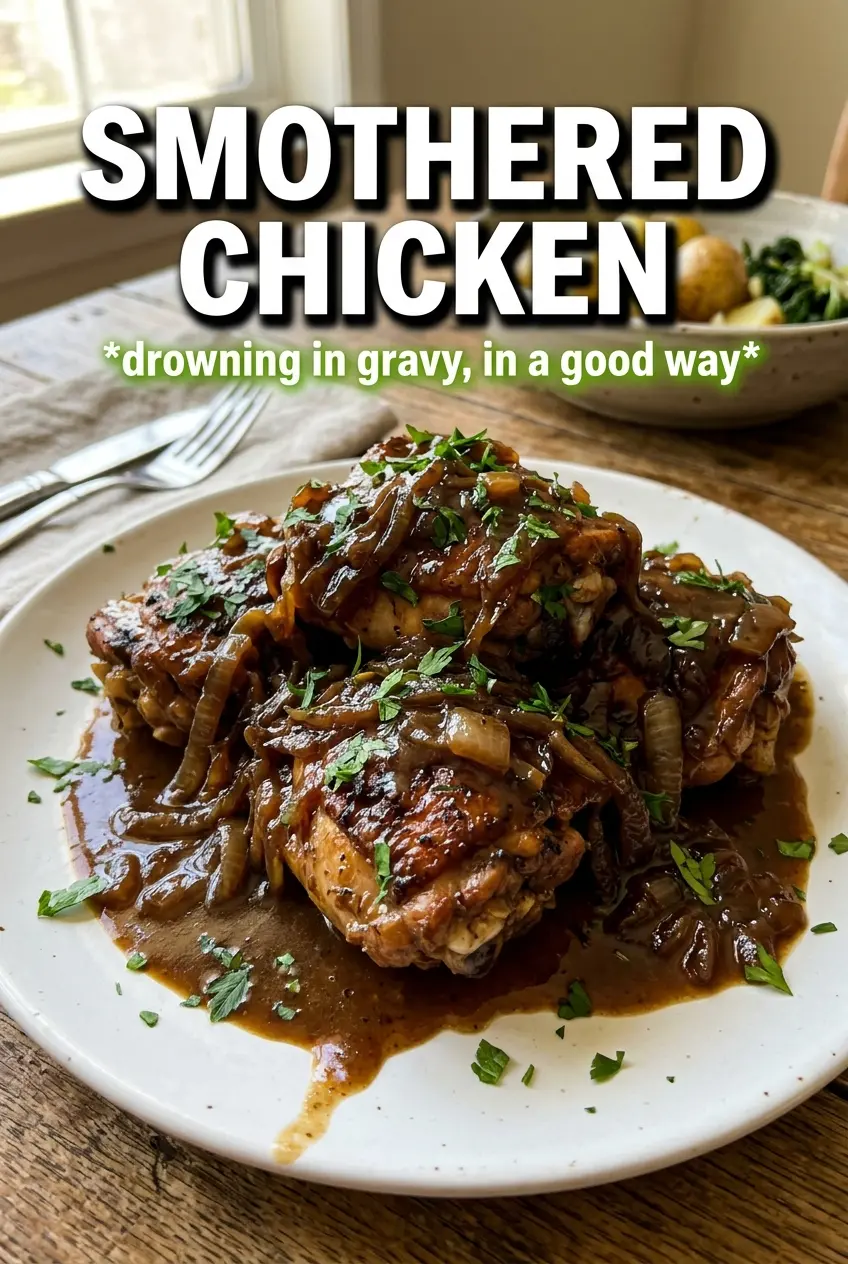
Smothered chicken earns its spot in the rotation because it gives you crisp-skinned thighs, deep onion flavor, and gravy that tastes like it cooked all afternoon without actually asking for it. The chicken stays juicy under a blanket of dark, savory sauce, and the mushrooms melt into the onions instead of sitting there as an afterthought. It’s the kind of skillet dinner that lands on the table looking humble and eats like a payoff.
The part that makes this version work is the order. You sear the chicken first, then build the gravy in the same pan so every browned bit gets pulled into the sauce. The onions need enough time to take on color before the flour goes in, because pale onions make a thin, flat gravy. A little cream rounds everything out at the end, but the backbone is still chicken broth, thyme, and Worcestershire.
Below you’ll find the exact visual cues I use for the sear, the point where the onions have gone far enough, and a few smart swaps if you need to adapt the dish for what’s in your kitchen.
The gravy turned out silky and dark, and the chicken stayed juicy even after simmering. I served it over mashed potatoes, and the sauce soaked in perfectly without getting watery.
Save this smothered chicken with onion-mushroom gravy for the nights when you want a skillet dinner that tastes slow-cooked but comes together in 40 minutes.
The Reason the Gravy Gets Deep Instead of Bland
The difference between good smothered chicken and chicken in pale gravy comes down to three things: a hard sear, properly browned onions, and deglazing the pan instead of starting fresh. If you rush the onions, the sauce tastes thin even if it’s seasoned well. If you skip scraping the skillet, you leave the best part behind.
Bone-in, skin-on thighs bring more flavor than boneless pieces and give you a better margin for error. They can simmer without drying out, and the skin helps protect the meat while the gravy finishes. The mushrooms are there for body and earthiness, not as a garnish, so let them cook until they give off their moisture and pick up a little color before the flour goes in.
- Chicken thighs — Bone-in, skin-on thighs stay juicy through the simmer and contribute more flavor to the gravy than breasts. If you use boneless thighs, shorten the simmer and check them early so they don’t go stringy.
- Cremini mushrooms — These add a deeper, meatier note than white mushrooms. If you only have white buttons, they still work, but cook them until their liquid evaporates or the gravy will taste diluted.
- Chicken broth — Use a broth you’d actually sip; this is the backbone of the sauce. Low-sodium is the safest choice because the pan drippings and Worcestershire already bring salt.
- Heavy cream — This doesn’t make the gravy taste like cream sauce; it softens the edges and gives it that glossy finish. Half-and-half can work in a pinch, but the sauce will be lighter and a little less rich.
What Each Ingredient Is Actually Doing in This Recipe

- Primary ingredient (the star) — Quality matters most. Choose the best you can find.
- Cooking medium (oil, butter, or broth) — This carries flavors and prevents dryness.
- Seasonings (salt, pepper, spices, herbs) — Layer flavors so nothing overpowers. Build depth gradually.
- Aromatics (garlic, onion, herbs) — Cook with fat to bloom flavors. Become the foundation.
- Supporting ingredients — Complement the main ingredient without overpowering it.
- Sauce or liquid (if applicable) — Brings flavors together. Balance richness with acid.
- Acid (lemon, vinegar, wine, or other) — Brightens and prevents flat-tasting results.
- Final finish (garnish, glaze, or sauce) — Prevents one-dimensional taste and adds visual appeal.
How to Keep the Chicken Juicy While the Gravy Builds
Seasoning the Thighs
Pat the chicken dry first so the spices cling and the skin has a chance to crisp. A dry surface gives you better browning than a damp one, which would steam in the pan. Season both sides generously, then let the chicken sit while the skillet heats so the seasoning starts to settle in.
Getting the First Sear Right
Lay the thighs skin-side down in hot oil and leave them alone until the skin turns deeply golden and releases without sticking, about 6 to 7 minutes. If the pan is too cool, the skin renders slowly and turns rubbery instead of crisp. Flip only long enough to brown the other side, then pull the chicken out before the center is cooked through; it finishes later in the gravy.
Cooking the Onions Until They Taste Like the Dish
The onions need time to soften, then color, then turn sweet and jammy. Stir them occasionally and watch the edges darken; that’s the flavor you’re after. Add the mushrooms after the onions have started to caramelize so they don’t dump all their moisture into the pan too early. Once the garlic goes in, give it only a minute or two or it can burn and turn bitter under the gravy.
Building the Gravy Without Lumps
Sprinkle the flour over the vegetables and cook it for a minute so it loses that raw, dusty taste. Then whisk in the broth slowly, scraping the bottom of the pan as you go. If you dump it all in at once, the flour can clump before it loosens into the sauce. Keep whisking until the gravy looks smooth and lightly thickened, then stir in the cream, Worcestershire, and thyme.
Finishing Under a Cover
Return the chicken skin-side up so it stays above the surface as much as possible while still soaking up flavor. Cover the skillet and simmer gently until the chicken hits 165°F and the meat feels tender when pierced, about 15 minutes. If the heat is too high, the gravy can reduce too fast and the chicken can tighten up, so keep it at a low simmer rather than a hard bubble.
Small Changes That Still Keep It Smothered
Make it dairy-free
Swap the heavy cream for unsweetened canned coconut milk or an unsweetened oat cream. Coconut milk gives the sauce a slightly rounder flavor, while oat cream stays closer to the original taste. Use the full-fat version either way so the gravy still finishes with body.
Make it gluten-free
Replace the all-purpose flour with a 1:1 gluten-free flour blend. You’ll still get that classic silky gravy, though some blends thicken a little faster than wheat flour, so add the broth gradually and stop once the sauce lightly coats a spoon.
Use boneless chicken thighs
Boneless thighs work well if that’s what you have, but they cook faster and won’t give the gravy quite the same richness. Sear them for less time, then simmer until just cooked through so they stay tender and don’t shrink up in the sauce.
Skip the mushrooms
You can leave the mushrooms out and still get a solid onion gravy. Add an extra half onion if you want more volume in the skillet, and let the onions go a little longer so the sauce still tastes full and savory instead of sparse.
Storage and Reheating
- Refrigerator: Store covered for up to 4 days. The gravy will thicken as it chills, which is normal.
- Freezer: It freezes well for up to 2 months, though the cream may look a little separated when thawed. Stir it well while reheating and it usually comes back together.
- Reheating: Warm gently on the stove over low heat with a splash of broth or water. High heat can tighten the chicken and make the gravy split.
Questions I Get Asked About This Recipe
Smothered Chicken
Ingredients
Equipment
Method
- Season bone-in skin-on chicken thighs with garlic powder, onion powder, smoked paprika, salt, and cracked black pepper to taste.
- Pat the seasoning in so it clings to the skin for better browning.
- Heat vegetable oil in a cast iron skillet over medium-high heat and place chicken skin-side down; sear 6-7 minutes until deeply golden, without moving.
- Flip and sear the other side for 4 minutes until browned, then remove the chicken to a plate.
- In the same skillet, cook large onion over medium heat for 6-7 minutes until deeply caramelized.
- Add cremini mushrooms and garlic and cook 4-5 minutes until the mushrooms release moisture and the mixture smells fragrant.
- Sprinkle all-purpose flour over the vegetables and stir for 1 minute to cook out the raw flour taste.
- Gradually whisk in chicken broth while scraping up browned bits from the bottom of the skillet.
- Stir in heavy cream, Worcestershire sauce, and dried thyme until the gravy looks smooth and dark.
- Return the chicken skin-side up to the skillet and pour any juices back into the gravy.
- Cover and simmer 15 minutes until the chicken is cooked through and the gravy thickens to pool around the edges.
- Garnish with fresh parsley and serve over mashed potatoes or rice.