Golden seared chicken tucked into smoky black beans, sweet corn, and tomatoes with green chiles makes this Santa Fe Chicken Skillet feel like a full dinner without turning the kitchen into a project. The chicken stays juicy because it finishes gently in the simmering sauce instead of cooking all the way through in a hard sear, and the cheddar on top melts into the broth just enough to turn everything rich and spoonable.
The trick here is giving the chicken a real crust before anything else goes into the pan. That browned surface adds the deep, savory flavor that keeps this skillet from tasting like plain chicken in a tomato sauce. I also like using undrained diced tomatoes with green chiles because the extra liquid helps build the sauce while the chiles bring the right amount of heat without needing a long ingredient list.
Below you’ll find the small details that matter most: how to keep the chicken from drying out, why the skillet shouldn’t be crowded, and a few smart ways to change this up for what you have on hand.
The chicken browned up beautifully and the sauce thickened just enough around the beans and corn. I added a squeeze of lime at the end and my husband said it tasted like a restaurant skillet.
Save this Santa Fe Chicken Skillet for a fast Tex-Mex dinner with golden chicken, smoky beans, and melted cheddar.
The Sear Is Doing More Than Browning the Chicken
The biggest mistake in skillet chicken is rushing past the sear and relying on the sauce to carry the whole dish. Once the chicken goes into the pan, leave it alone long enough to pick up a deep golden crust. That crust is where the flavor starts, and it also helps the chicken hold its shape when it finishes under the lid. If you move it too early, it sticks, tears, and turns pale instead of savory.
The other thing that matters here is keeping the heat under control once the chicken comes back to the skillet. The broth and tomatoes should simmer gently, not boil hard. A hard boil pulls moisture out of the chicken and makes the sauce thin and aggressive instead of cohesive. You want the vegetables bubbling around the chicken while the lid traps enough steam to finish the meat without stripping it dry.
What the Taco Seasoning and Rotel Are Really Doing Here

- Taco seasoning — This is the backbone of the whole dish. It seasons the chicken before it hits the pan, and it also carries cumin, garlic, and chile notes into the sauce. A homemade blend works fine if it’s salt-forward and not all heat, but a bland seasoning packet will make the skillet taste flat.
- Diced tomatoes with green chiles — Use the undrained can. The liquid helps build the skillet sauce, and the chiles bring brightness and gentle heat that plain diced tomatoes can’t match. If you only have plain diced tomatoes, add a small can of green chiles or a pinch of cayenne so the dish doesn’t lose its signature edge.
- Black beans — These give the skillet body and make the sauce feel like a real meal instead of chicken in a pan sauce. Rinse them well so the sauce stays clean and savory, not murky. Canned pinto beans work in a pinch, but they’re softer and less sturdy.
- Cheddar cheese — Shred it yourself if you can. Pre-shredded cheese works, but it melts less smoothly because of the anti-caking coating. A sharp cheddar gives the best payoff because it cuts through the smoky broth instead of disappearing into it.
Building the Skillet So Nothing Turns Watery
Season and Sear the Chicken First
Rub the chicken breasts with taco seasoning on both sides, then get them into hot olive oil right away. The pan should be hot enough that the chicken sizzles the moment it lands. Give it 4 to 5 minutes per side, just until the outside turns deep golden and releases cleanly. If the chicken sticks, it needs another minute; if the pan smokes hard, lower the heat slightly so the seasoning doesn’t burn before the inside has a chance to catch up.
Build the Sauce in the Same Pan
Pull the chicken out and add the black beans, corn, tomatoes with green chiles, and chicken broth to the same skillet. Scrape up the browned bits on the bottom as the liquid starts to simmer. That fond is where the chicken flavor lives, and it disappears if you wash the pan or move to a fresh one. Let the mixture come to a real simmer before the chicken goes back in so the sauce starts with enough heat to finish the meat evenly.
Finish Gently Under the Lid
Nestle the chicken into the bean and corn mixture, then cover the pan and cook over medium heat until the thickest part reaches 165°F. You want the liquid bubbling softly around the chicken, not splashing hard. If the skillet runs dry before the chicken is done, add a splash more broth; if it looks soupy at the end, uncover it for a minute or two to tighten up before the cheese goes on.
Melt the Cheese at the Very End
Sprinkle the cheddar over the top and cover the pan for just long enough to melt it. Two minutes is usually enough. Any longer and the cheese can turn greasy or separate. The goal is a soft blanket of melted cheese that still lets the chicken and beans show through, not a hard baked layer.
Ways to Adjust This Without Losing the Point
Make It Dairy-Free
Skip the cheddar and finish with avocado, cilantro, and a squeeze of lime. You’ll lose the creamy melted top, but the skillet still tastes complete because the broth and tomatoes carry the sauce. A spoonful of dairy-free sour cream at the table gives back some of the richness if you want it.
Use Chicken Thighs Instead of Breasts
Boneless skinless thighs stay juicier and tolerate a little more cooking time, which makes them forgiving if your heat runs high. They bring a richer flavor and a softer bite, though they won’t slice as neatly as breasts. Keep the final simmer gentle so the fat stays silky instead of greasy.
Turn It Into a Gluten-Free Dinner Bowl
This skillet is naturally gluten-free as long as your taco seasoning and broth are certified gluten-free. Serve it over rice or spoon it straight into bowls with extra lime. The texture stays best when you keep the chicken pieces whole instead of slicing them too early.
Add Extra Heat
Stir in chopped jalapeño with the beans and corn, or add a pinch of cayenne to the chicken seasoning. That gives the skillet a sharper finish without changing the texture. Hot sauce at the table works too, but adding heat to the pan makes the whole dish taste more integrated.
Storage and Reheating
- Refrigerator: Store leftovers in an airtight container for up to 4 days. The chicken stays tender, though the cheese will firm up once chilled.
- Freezer: Freeze the chicken, beans, corn, and sauce without the fresh toppings for up to 2 months. The cheese is better added after reheating, because melted cheese can turn grainy after thawing.
- Reheating: Warm gently on the stovetop over low heat with a splash of broth to loosen the sauce. The common mistake is blasting it in the microwave until the chicken tightens up and the sauce splits.
Answers to the Questions Worth Asking
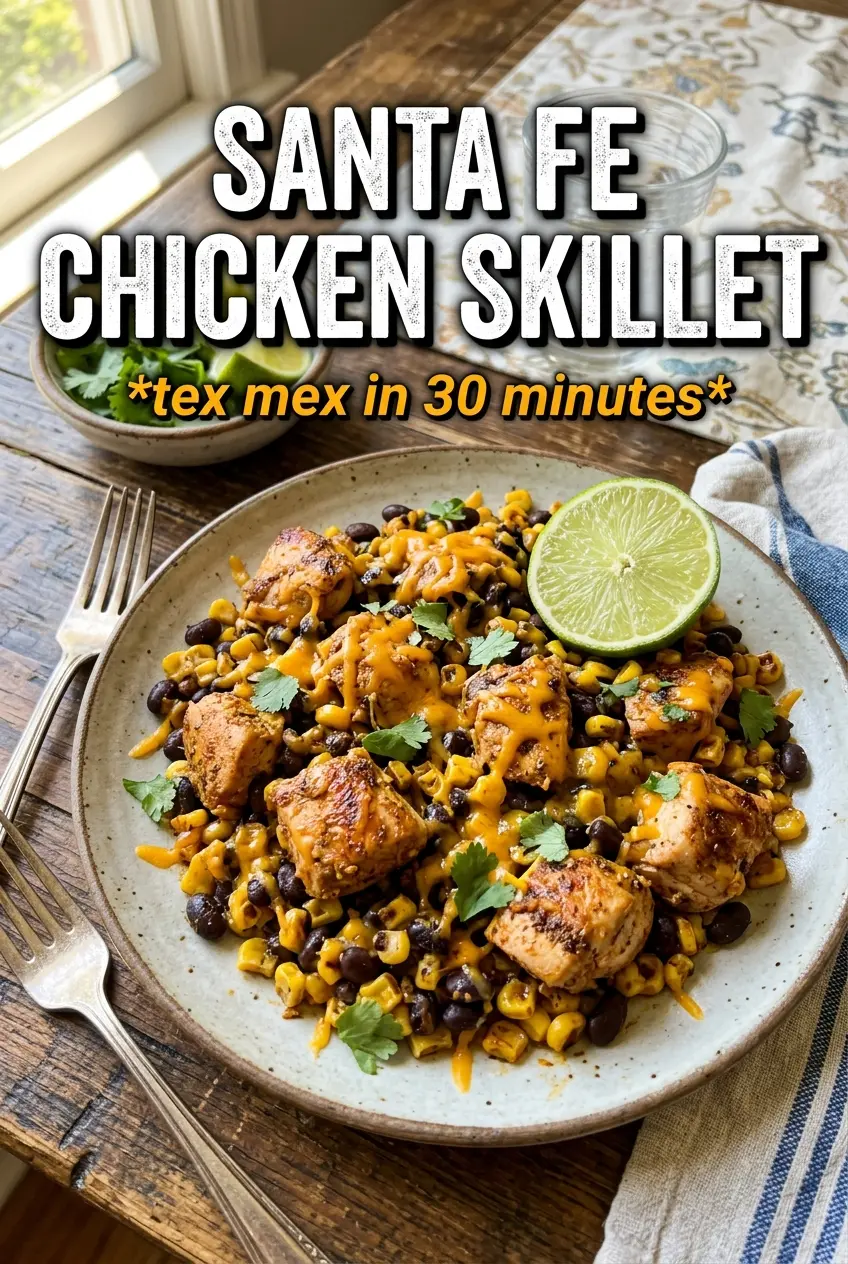
Santa Fe Chicken Skillet
Ingredients
Equipment
Method
- Rub the chicken breasts with taco seasoning on both sides.
- Heat olive oil in a large cast iron skillet over medium-high heat and sear the chicken for 4-5 minutes per side until golden; remove.
- Add black beans, corn, Rotel, and chicken broth to the skillet, stir, and bring to a simmer.
- Nestle the chicken breasts into the bean and corn mixture, cover, and cook over medium heat for 8-10 minutes until the chicken reaches 165°F.
- Sprinkle shredded cheddar cheese over the top and cover for 2 minutes until melted.
- Garnish with fresh cilantro, sour cream, avocado, and lime wedges.