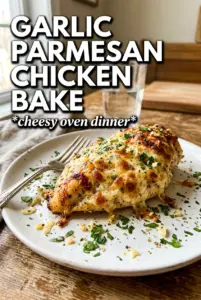
Golden, puffy Parmesan topping and tender chicken underneath is the kind of dinner that disappears fast. The mayo keeps the chicken breast from drying out, while the cheese and seasonings bake into a savory crust that turns bronzed at the edges and stays creamy in the middle. It lands somewhere between comfort food and a low-effort dinner that looks like you paid closer attention than you did.
The key here is that the mayonnaise mixture goes on thick and evenly, all the way to the edges of each breast. That layer acts like a moisture shield, but it also carries the flavor, so every bite tastes seasoned instead of just coated. Freshly grated Parmesan matters more than the jarred stuff because it melts more smoothly and browns better. A little lemon juice keeps the topping from tasting heavy.
Below, I’ve laid out the one detail that keeps the crust from turning greasy, the ingredient swaps that still work, and the timing cues that matter most when the chicken is in the oven.
The topping browned evenly and the chicken stayed juicy all the way through. I used thick breasts and they still cooked in right around 28 minutes without drying out.
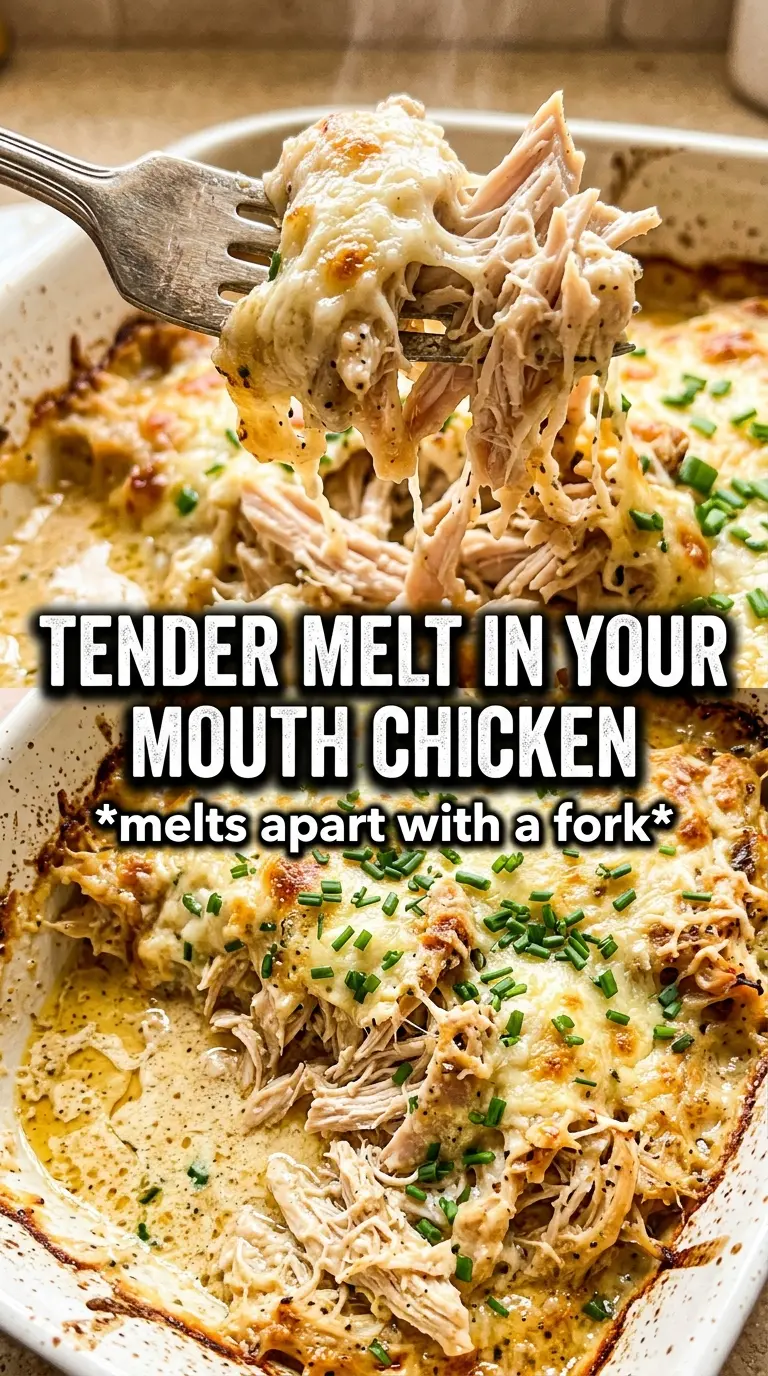
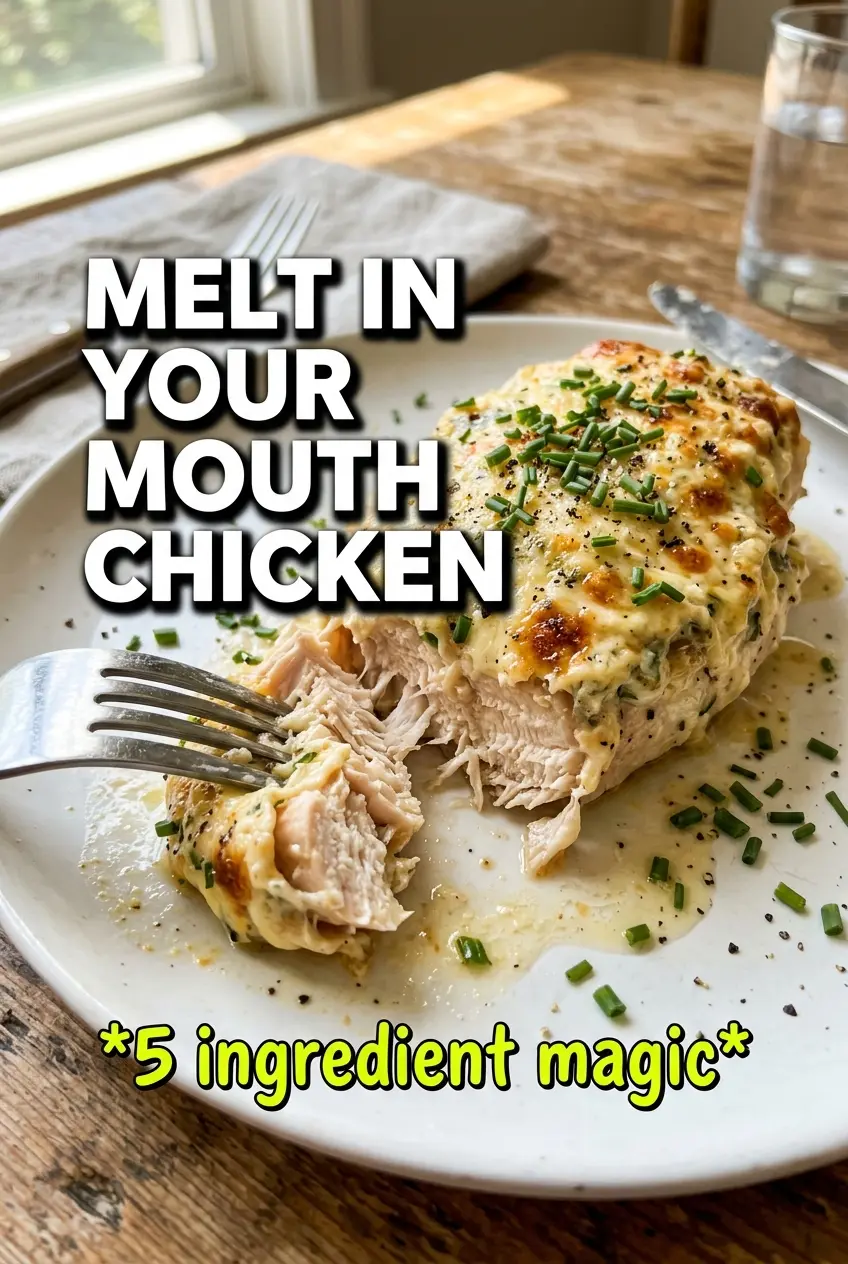
Save this Melt In Your Mouth Chicken for nights when you want a golden Parmesan mayo crust and juicy baked chicken without extra work.
The Thin Topping That Keeps Chicken Breast from Drying Out
The mistake with baked chicken breast is usually the same: people season the meat well, then cover it with something that bakes into a heavy cap instead of a protective layer. Here, the mayo and Parmesan mixture does both jobs at once. It insulates the chicken so the surface doesn’t overcook too fast, and it browns into a crust that clings to the meat instead of sliding off.
That topping should go on generously, but not in clumps. If it’s patchy, the thinner spots dry out before the rest of the breast is done. The oven temperature matters too. At 375°F, the chicken has enough heat to cook through while the cheese topping turns golden instead of scorched. If your breasts are especially thick, the best fix is to pound them to an even thickness before baking so one end doesn’t overcook while the center catches up.
What Each Ingredient Is Actually Doing in This Recipe
- Primary ingredient (the star) — Quality matters most. Choose the best you can find.
- Cooking medium (oil, butter, or broth) — This carries flavors and prevents dryness.
- Seasonings (salt, pepper, spices, herbs) — Layer flavors so nothing overpowers. Build depth gradually.
- Aromatics (garlic, onion, herbs) — Cook with fat to bloom flavors. Become the foundation.
- Supporting ingredients — Complement the main ingredient without overpowering it.
- Sauce or liquid (if applicable) — Brings flavors together. Balance richness with acid.
- Acid (lemon, vinegar, wine, or other) — Brightens and prevents flat-tasting results.
- Final finish (garnish, glaze, or sauce) — Prevents one-dimensional taste and adds visual appeal.
What the Parmesan, Mayo, and Lemon Juice Are Each Doing Here
- Mayonnaise — This is the moisture insurance. It melts into the top layer of the chicken and keeps the meat tender while it bakes. Full-fat mayo gives the best texture and browning. Light mayo works in a pinch, but the topping won’t be quite as rich or stable.
- Freshly grated Parmesan — This brings salt, depth, and the crust. Pre-grated cheese often contains anti-caking agents that keep it from melting as smoothly, so the topping can turn gritty instead of plush. If you need to substitute, finely grated Pecorino Romano gives a sharper bite.
- Lemon juice — A small amount keeps the topping from tasting flat. It doesn’t make the dish lemony. It just brightens the cheese and mayonnaise so the finished chicken tastes balanced instead of heavy.
- Smoked paprika — This adds warmth and color. If you only have regular paprika, use it. The dish will still work; it just loses that faint smoky edge that makes the crust taste a little more rounded.
Spreading the Topping So It Browns, Not Slides
Season and Set the Chicken First
Lay the chicken breasts in a greased 9×13 dish and season them lightly with salt and pepper before the topping goes on. That first layer of seasoning matters because the crust does a lot of the flavor work, and the meat underneath still needs its own salt. If the breasts are uneven or very thick, flattening them slightly helps them cook at the same rate and keeps the center from staying underdone while the top turns brown.
Mix the Topping Until It Looks Smooth
Stir the mayonnaise, Parmesan, garlic powder, onion powder, smoked paprika, and lemon juice until the mixture is fully combined and spreadable. It should look thick and creamy, not loose or oily. If it seems too stiff to spread easily, let it sit for a minute so the Parmesan softens into the mayo. Dry clumps of cheese on top bake unevenly and can leave you with pale spots instead of a full crust.
Bake Until the Edges Bubble and the Center Reaches Temperature
Spread the mixture over each breast in a thick, even layer, then bake until the topping is golden and the chicken hits 165°F in the thickest part. The visual cue matters: the crust should look puffed and lightly browned, with some bubbling at the edges. If the topping is browning before the chicken is done, loosely cover the dish with foil for the last few minutes. Pull it from the oven as soon as it reaches temperature so the chicken stays juicy instead of tightening up.
Let It Rest for a Few Minutes Before Serving
This chicken is best served right away, but it still needs a short rest so the juices settle back into the meat. Cut too soon and the center will look drier than it really is because the juices run onto the plate. A couple of minutes is enough. Finish with parsley for color and a little fresh lift against the rich topping.
How to Adjust the Crust for Different Eaters and Pantry Situations
Use Greek yogurt for a lighter version
Swap half or all of the mayonnaise for full-fat Greek yogurt if you want a tangier, lighter crust. It still protects the chicken, but the topping will brown a little less deeply and taste a touch sharper. I’d keep at least some mayo in the mix if you want the classic melt-in-your-mouth texture.
Make it gluten-free without changing the method
This recipe is naturally gluten-free as written, so there’s nothing special to change. Just check the label on your Parmesan and seasonings if you’re cooking for someone sensitive to cross-contamination. The texture and baking time stay the same.
Use chicken thighs for a richer result
Boneless skinless thighs work well here and stay even juicier than breasts. They usually need a few extra minutes in the oven, and the topping may not spread quite as neatly because thighs have a more uneven shape. The flavor is deeper, though, and they’re forgiving if you accidentally leave them in a minute too long.
Storage and Reheating
- Refrigerator: Store leftovers in an airtight container for up to 3 days. The crust softens a little, but the chicken stays flavorful.
- Freezer: It freezes, but the mayonnaise topping changes texture a bit after thawing. If you do freeze it, wrap tightly and freeze for up to 2 months, then thaw in the refrigerator overnight.
- Reheating: Reheat covered in a 325°F oven until warmed through. The biggest mistake is blasting it in the microwave, which makes the chicken rubbery and turns the topping greasy. Add a splash of water to the dish if it looks dry, then uncover for the last few minutes if you want the top to firm up again.
Answers to the Questions Worth Asking
Melt In Your Mouth Chicken
Ingredients
Equipment
Method
- Preheat the oven to 375°F and grease a 9x13 baking dish. Make sure the oven is fully heated before baking for the right crust texture.
- Season the chicken breasts lightly with salt and cracked black pepper, then place them in the prepared dish. Arrange them with space between so they bake evenly.
- Mix together mayonnaise, Parmesan, garlic powder, onion powder, smoked paprika, and lemon juice until smooth. Stir until the mixture looks creamy and uniform with no dry Parmesan clumps.
- Spread the Parmesan mayonnaise mixture generously over the top of each chicken breast, covering completely. Press lightly so the topping adheres and bakes into a puffy layer.
- Bake at 375°F for 25-30 minutes, until the topping is golden and bubbly and the internal temperature reaches 165°F. Look for visible bubbling and a browned, set crust.
- Garnish with fresh parsley and serve immediately. The crust is best right after baking while it stays crackly.