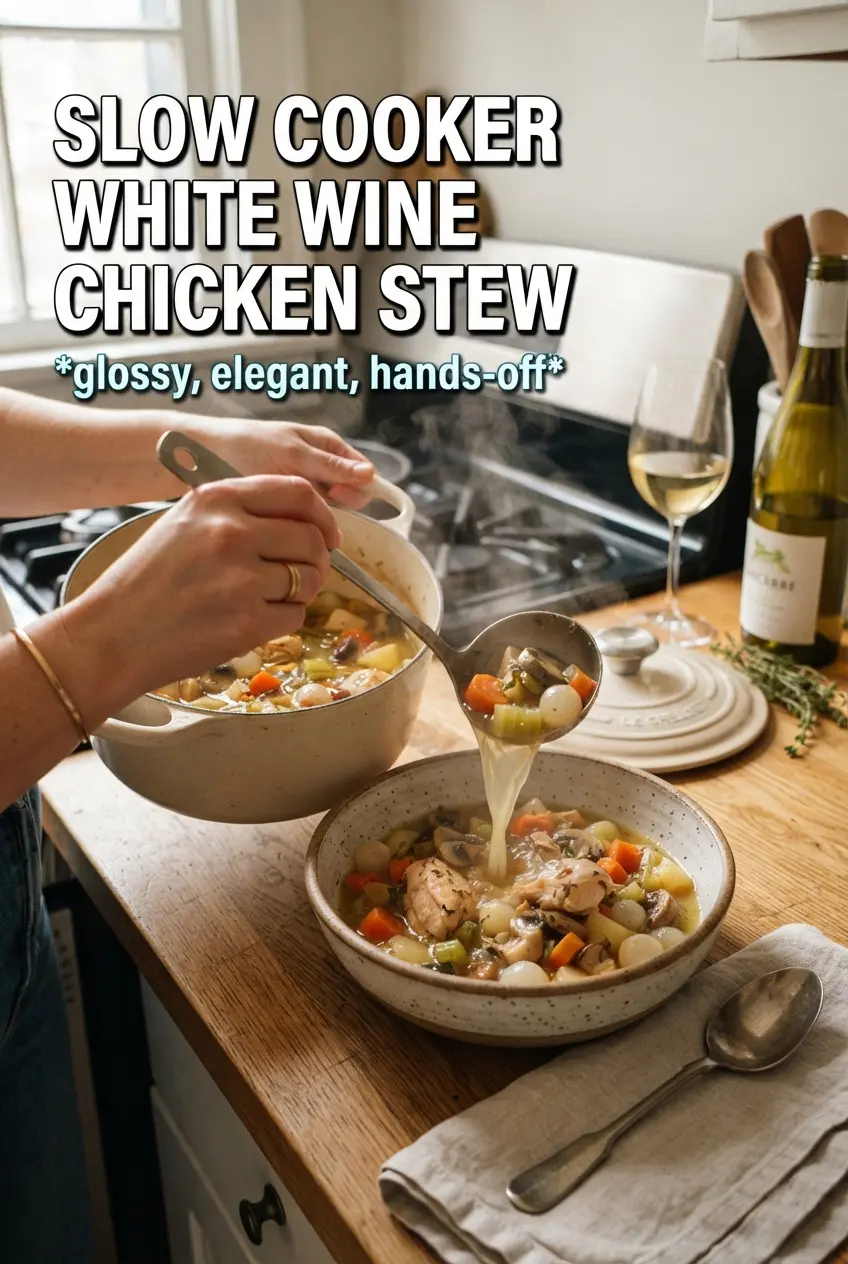
Slow cooker white wine chicken stew comes out with tender chicken that falls apart at the touch of a fork, mushrooms that soak up the broth, and a sauce that tastes like it simmered all afternoon on the stove. The slow cooker does the gentle work here, but the stew still needs a few smart moves to keep the broth bright and the chicken from tasting flat.
Dry white wine gives the base a clean, sharp edge, while tomato paste and Dijon add just enough backbone to keep the broth from tasting thin. I like using bone-in thighs because they stay juicy through the long cook and add more body to the stew. The cornstarch slurry goes in near the end, after the chicken is already tender, so the sauce thickens without turning gluey.
Below, I’ll walk through the small details that make this stew taste rich instead of watery, plus a few simple swaps if you need to work around what’s in your kitchen.
The broth thickened up beautifully at the end, and the white wine flavor stayed clean without taking over. My husband went back for seconds and asked if I could add this to our regular rotation.
Save this slow cooker white wine chicken stew for the nights when you want tender chicken, mushrooms, and a silky thyme broth with almost no hands-on work.
The Broth Needs to Taste Good Before It Ever Thickens
The biggest mistake with slow cooker stews is waiting until the end to build flavor. If the liquid tastes flat when it goes in, it usually tastes flat at the finish, just thicker. Here, the wine, broth, tomato paste, and Dijon are mixed together before cooking so the chicken has something seasoned to braise in from the start.
Tomato paste matters more than it looks. It gives the broth color and a little depth without making the stew taste like tomato sauce. Dijon does the same kind of work in a different direction, adding sharpness that keeps the wine from reading sour or thin.
- Bone-in chicken thighs stay juicy through the long cook and give the broth more body than boneless pieces.
- Dry white wine should be something you’d actually drink; it doesn’t need to be expensive, but it should taste clean.
- Cremini mushrooms hold their shape better than white button mushrooms and give the stew a deeper, earthier finish.
- Pearl onions add sweetness and a little elegance, and frozen ones work well if you don’t want to peel fresh.
What Each Ingredient Is Actually Doing in This Stew

- Chicken thighs are the backbone of the dish. Breast meat dries out too easily in a six-hour slow cook, while thighs stay tender and forgiving.
- White wine gives the stew its signature brightness. Use a dry Sauvignon Blanc, Pinot Grigio, or another crisp white; sweet wine will make the broth taste off.
- Thyme and rosemary infuse the broth slowly. Use whole sprigs, not chopped herbs, so you can remove them cleanly before serving and keep the texture smooth.
- Cornstarch slurry is the safest way to thicken the stew at the end. Stir it in once the chicken is fully cooked, then give it heat on High so it turns glossy instead of chalky.
- Butter finishes the sauce and rounds out the sharp edges from the wine and mustard. Add it after thickening so it stays silky instead of disappearing into the liquid.
How to Keep the Chicken Tender and the Sauce Silky
Building the Slow Cooker Base
Season the chicken first, then layer it into the slow cooker with the vegetables underneath and around it. The vegetables create a bed that keeps the chicken from sitting flat in a puddle, and they release enough moisture to help the broth stay balanced. Mix the wine, broth, tomato paste, and Dijon until the paste is fully dissolved; if you leave little streaks of paste, those flavor pockets never spread evenly.
Letting the Slow Cooker Do the Gentle Work
Cook on Low for the best texture. High works in a pinch, but low heat gives the thighs time to turn tender without tightening up. The chicken is ready when it pulls apart easily at the bone and the carrots are soft through the center. If the stew looks a little thin at this stage, that’s normal; the thickening happens later.
Thickening Without Making It Gummy
Stir the cornstarch slurry in only after the chicken is fully cooked. Then cook on High for about 20 minutes, which gives the slurry enough heat to thicken the broth properly. If you add it too early, the sauce can go dull and pasty by the time dinner is ready. Pull out the herb sprigs before the final stir, then finish with butter and taste for salt and pepper.
Make It Dairy-Free
Skip the butter at the end and finish with a drizzle of good olive oil instead. You’ll lose a little of the rounded richness, but the stew still tastes complete because the wine, mushrooms, and Dijon already build depth.
Use Boneless Chicken Thighs
Boneless thighs cook faster and are easier to serve, but they won’t enrich the broth quite as much as bone-in pieces. Start checking them about an hour earlier, because they can go from tender to overly soft if they sit too long.
Skip the Wine
Replace the wine with extra chicken broth plus 1 tablespoon of lemon juice. The stew will still be savory and bright, though it won’t have the same subtle acidity and depth that the wine brings.
Storage and Reheating
- Refrigerator: Store for up to 4 days. The sauce will thicken a little more as it sits.
- Freezer: This freezes well for up to 3 months, though the mushrooms soften a bit after thawing.
- Reheating: Warm gently on the stove over low heat or in the microwave at medium power. Add a splash of broth if the sauce has tightened up, and don’t boil it or the chicken can turn stringy.
Questions I Get Asked About This Recipe
Slow Cooker White Wine Chicken Stew
Ingredients
Equipment
Method
- Season the bone-in chicken thighs with salt and pepper, then place them in the slow cooker along with the halved cremini mushrooms, pearl onions, sliced carrots, and minced garlic.
- Whisk together the dry white wine, chicken broth, tomato paste, and Dijon mustard, then pour the mixture over the chicken and vegetables.
- Add the thyme and rosemary sprigs to the slow cooker so they steep in the broth as it cooks.
- Cook on Low for 6–7 hours (or High for 3–4 hours) until the chicken is very tender and the stew smells fragrant.
- Stir the cornstarch slurry into the stew, then cook on High for 20 minutes until the broth visibly thickens and coats the chicken.
- Remove the thyme and rosemary sprigs, then stir in the unsalted butter until melted and the stew looks glossy.
- Taste and adjust seasoning with salt and pepper, then serve hot with fresh parsley and crusty bread for dipping.