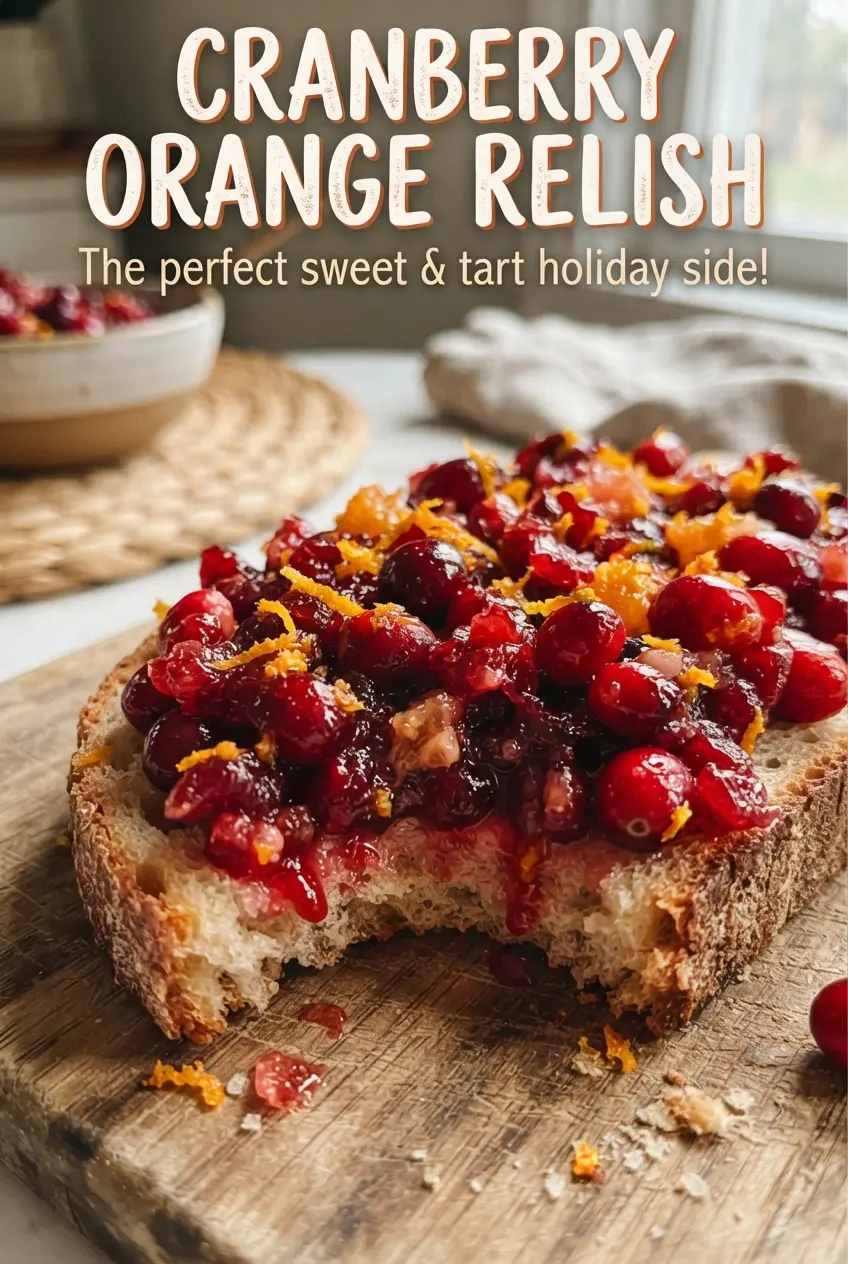
Bright, punchy cranberry orange relish cuts through rich holiday food with a clean snap of tart berries, sweet citrus, and just enough sugar to round everything out. The texture matters here: it should be finely chopped and juicy, not smooth like jam and not chunky like salsa. When it sits for a few hours, the sugar pulls out the cranberry juices and the whole mixture turns glossy, spoonable, and a little jewel-like.
This version keeps the orange peel in the mix, which adds a deeper citrus note and a little bitterness that balances the sugar. A food processor does the heavy lifting, but the trick is to stop before it turns to puree. If you’ve ever had cranberry relish that tasted flat or turned watery, it was usually chopped too much or served too soon.
Below, you’ll find the small details that make this relish worth repeating, including the best texture cues, the easiest swap if you don’t want to use orange liqueur, and how long it holds in the fridge after the flavors come together.
I loved how the cranberries stayed textured and the orange zest came through after chilling. It got even better the next day, and the relish was the first thing gone from the table.
Save this Cranberry Orange Relish for the table when you want something bright, tart, and make-ahead friendly.
The Texture Mistake That Turns Cranberry Relish Watery
The biggest failure with cranberry orange relish is overprocessing. Cranberries break down fast, and once they cross the line from finely chopped to fully broken down, you lose that fresh, bright texture and end up with something closer to sauce. Pulse in short bursts and stop as soon as the cranberries are tiny and the orange is evenly scattered through the bowl.
The other key is patience after mixing. The sugar needs time to draw out the natural juices from the fruit, and that resting time is what gives the relish its glossy finish and balanced flavor. If it tastes sharp right after mixing, that’s normal. After a few hours in the fridge, the edges soften and everything comes together.
- Fresh cranberries — Use fresh, firm berries for the cleanest flavor and best pop. Frozen cranberries can work straight from the freezer, but they release more liquid and tend to soften faster.
- Navel orange, unpeeled — The peel is part of the point. It brings citrus oil and a slight bitter edge that keeps the relish from tasting one-note. Seed it well before processing, or you’ll end up with a bitter bite from the pith and seeds.
- Sugar — This does more than sweeten. It pulls moisture from the fruit and mellows the tartness. Cutting it much lower changes the balance enough that the relish can taste harsh instead of bright.
- Orange liqueur or orange juice — Liqueur adds a deeper orange aroma and a little complexity, but plain orange juice still gives you enough moisture and flavor to finish the bowl. Use juice if you want a non-alcoholic version; the relish will be slightly lighter and less rounded.
How to Pulse, Chill, and Stop Before It Turns to Sauce
Breaking Down the Fruit
Pulse the cranberries and orange chunks in a food processor in short bursts, scraping down once or twice if needed. You want finely chopped pieces that still hold their shape, not a puree with foam on top. If you keep the machine running, the cranberries go from bright and textured to wet and mushy in a matter of seconds.
Mixing in the Sweetener
Transfer the chopped fruit to a bowl and stir in the sugar, orange liqueur or juice, and salt. The mixture will look dry at first, then turn glossy as the sugar starts pulling out the juices. Stir until the sugar disappears into the fruit, but don’t beat it hard or you’ll crush the berries further.
Letting the Flavors Settle
Cover the bowl and chill for at least 4 hours, though overnight gives the best texture and the most even flavor. This resting time softens the sharp edges of the cranberries and lets the orange peel mellow into the mix. If you taste it too early, it can seem aggressively tart; that usually fixes itself by the next day.
Finishing for the Table
Give the relish a good stir before serving because the juices settle at the bottom. Spoon it into a bowl and top with fresh mint for a clean, fragrant finish. The mint should stay fresh and bright, so add it right before the relish goes out.
How to Adapt This for Different Tables
Non-Alcoholic Version
Use orange juice instead of orange liqueur. You’ll get a slightly lighter, cleaner citrus note, and the relish still sets up beautifully because the sugar and fruit do the real work. If the orange you use isn’t very sweet, add a teaspoon or two more sugar after the first chill.
Lower-Sugar Relish
You can reduce the sugar a little, but don’t cut it too hard or the relish turns sharply tart and the texture won’t soften as nicely. The finished bowl will be looser and more brisk in flavor, which works if you’re serving it alongside rich foods.
Cranberry Apple Variation
Swap in a peeled apple for part of the orange if you want a softer, fruitier relish with less bite. The result is milder and a little more crowded in texture, so it works best when you want something closer to a sweet-tart chutney.
Storage and Reheating
- Refrigerator: Store covered for up to 5 days. The flavor deepens after the first day, and the texture stays pleasantly juicy.
- Freezer: It freezes well for about 2 months. Thaw overnight in the refrigerator and stir well before serving, since some liquid separation is normal.
- Reheating: No reheating needed. Serve it cold or at cool room temperature; warming it dulls the fresh citrus notes and softens the texture too much.
Answers to the Questions Worth Asking
Cranberry Orange Relish
Ingredients
Equipment
Method
- Pulse fresh cranberries and unpeeled orange chunks in a food processor until finely chopped but not pureed, stopping to scrape down the sides as needed.
- Transfer the finely chopped cranberry-orange mixture to a bowl.
- Stir in sugar, orange liqueur or orange juice, and a pinch of salt until the sugar dissolves.
- Cover and chill in the refrigerator for at least 4 hours or overnight.
- Stir well before serving.
- Garnish with fresh mint before serving.