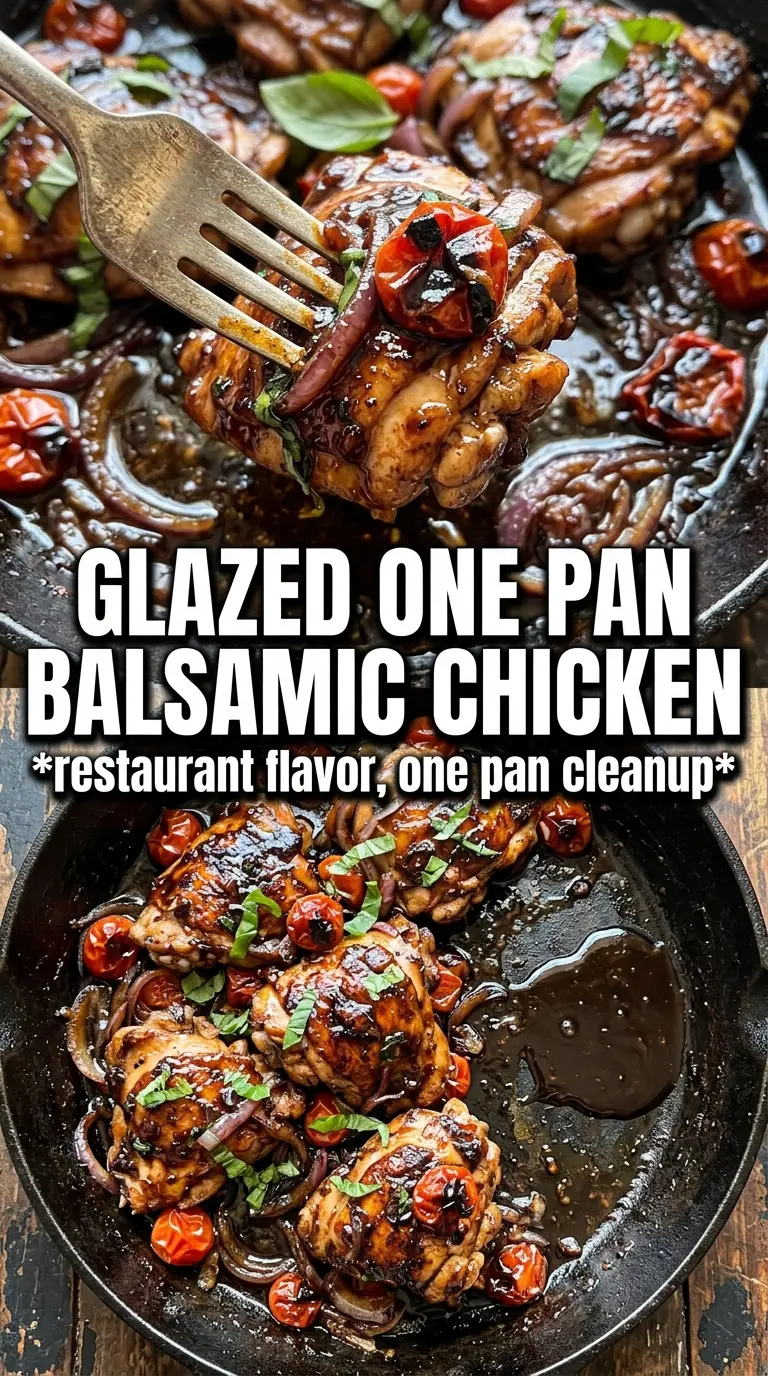
Golden chicken thighs with a glossy balsamic glaze and burst cherry tomatoes earn a permanent spot in the weeknight rotation because they land somewhere between effortless and special. The skin goes deeply crisp in the skillet, the sauce reduces into a dark, sticky glaze, and the tomatoes soften just enough to collapse into the pan without turning to mush.
The key is keeping the cooking in one pan and giving the balsamic time to reduce after the broth goes in. That first sear leaves browned bits on the bottom, and those bits turn into the backbone of the sauce when you scrape them up. Bone-in, skin-on thighs also give you a lot more forgiveness than chicken breasts; they stay juicy while the glaze finishes.
Below, you’ll find the little details that keep the sauce from tasting sharp or thin, plus a few smart swaps if you need them. Once you’ve made it this way, it’s easy to see why this is the kind of skillet dinner people keep coming back to.
The chicken skin turned out crackly, and the balsamic glaze thickened up beautifully without getting sour. I spooned the extra sauce over rice and my husband asked if I could make it again next week.
Save this skillet balsamic chicken for the nights when you want glossy pan sauce, crisp chicken skin, and almost no cleanup.
The Trick to Keeping Balsamic Glaze Deep, Not Sharp
Balsamic sauce can go from glossy to harsh if it never gets the chance to reduce. The honey softens the vinegar, but the real work happens when the liquid simmers long enough to lose that raw edge and turn syrupy around the chicken. If the pan is crowded or the heat is too low, the sauce stays thin and tastes more like dressing than dinner.
The other thing that matters here is the sear. You want a dark golden skin before anything wet hits the pan, because that browning is what gives the glaze depth. If the chicken steams instead of searing, the sauce will still work, but it won’t have the same rich, almost sticky finish.
- Chicken thighs — Bone-in, skin-on thighs hold up best during the simmer and keep the skillet from drying out. Boneless thighs work in a pinch, but they cook faster and the sauce won’t cling to them quite the same way.
- Balsamic vinegar — Use a balsamic you’d actually taste on a salad. A cheap, thin vinegar can turn too sharp after reduction, while a decent bottle gives you sweetness and body without needing extra sugar.
- Honey — This rounds out the acidity and helps the glaze lacquer the chicken. Maple syrup can replace it, but the flavor will read a little darker and less classic.
- Chicken broth — This keeps the sauce from reducing into a sticky burn too fast and gives the glaze something savory to hold onto. Water works only if that’s all you have, but the finished sauce will taste flatter.
What Each Ingredient Is Actually Doing in This Recipe
- Primary ingredient (the star) — Quality matters most. Choose the best you can find.
- Cooking medium (oil, butter, or broth) — This carries flavors and prevents dryness.
- Seasonings (salt, pepper, spices, herbs) — Layer flavors so nothing overpowers. Build depth gradually.
- Aromatics (garlic, onion, herbs) — Cook with fat to bloom flavors. Become the foundation.
- Supporting ingredients — Complement the main ingredient without overpowering it.
- Sauce or liquid (if applicable) — Brings flavors together. Balance richness with acid.
- Acid (lemon, vinegar, wine, or other) — Brightens and prevents flat-tasting results.
- Final finish (garnish, glaze, or sauce) — Prevents one-dimensional taste and adds visual appeal.
How to Get the Skillet to Do the Heavy Lifting
Seasoning and Searing the Chicken
Coat the chicken generously on both sides so the skin and meat are seasoned, not just the surface. When the oil shimmers in the cast iron, lay the thighs skin-side down and leave them alone for 7 to 8 minutes. If you try to move them early, they’ll stick and tear instead of releasing cleanly once the skin is crisp and browned. Flip them for just a few minutes on the second side, then pull them out while they still look underdone in the center.
Softening the Garlic and Tomatoes
Whole garlic cloves and cherry tomatoes go into the rendered fat after the chicken comes out. Let them sizzle just long enough for the tomatoes to blister and the garlic to lose its raw bite. If the garlic starts to brown hard, the pan is too hot and the sauce will pick up bitterness, so drop the heat a touch before adding the liquid.
Reducing the Balsamic Sauce
Pour in the balsamic vinegar, honey, and broth, then scrape the pan well. Those brown bits are what keep the sauce from tasting one-note. Once the chicken goes back in skin-side up, let the sauce bubble gently until it clings to the spoon and the chicken hits 165°F. If it still looks loose, keep simmering; if it turns too thick, splash in a little broth and stir.
Finishing with Butter and Basil
Butter goes in at the end off a high flame, which gives the glaze a smoother finish and a little sheen. Stir until it melts completely, then scatter basil over the top right before serving. Add it too early and the herbs wilt into the sauce instead of staying bright against the dark glaze.
How to Adapt This Skillet Dinner Without Losing the Good Part
Make It with Chicken Breasts
Chicken breasts work if that’s what you have, but they need a gentler hand. Sear them just until golden, then start checking early because they dry out faster than thighs and won’t stay juicy through the full simmer.
Make It Dairy-Free
Leave out the butter and finish the sauce with an extra teaspoon of olive oil instead. You’ll lose a little richness, but the glaze will still be glossy and balanced from the reduced balsamic and chicken fat.
Lower-Sugar Version
Cut the honey to 1 tablespoon if you want a sharper, less sweet glaze. The sauce will reduce a little faster and taste more tangy, which works well if you’re serving it with mashed potatoes or rice.
Storage and Reheating
- Refrigerator: Store leftovers in an airtight container for up to 4 days. The skin softens, but the sauce holds up well.
- Freezer: Freeze for up to 2 months, though the tomatoes will turn softer after thawing. Wrap the chicken well and freeze it with plenty of sauce so it doesn’t dry out.
- Reheating: Rewarm gently in a covered skillet over low heat with a splash of broth. High heat will tighten the chicken and can push the glaze from glossy to sticky-scorched.
Questions I Get Asked About This Recipe
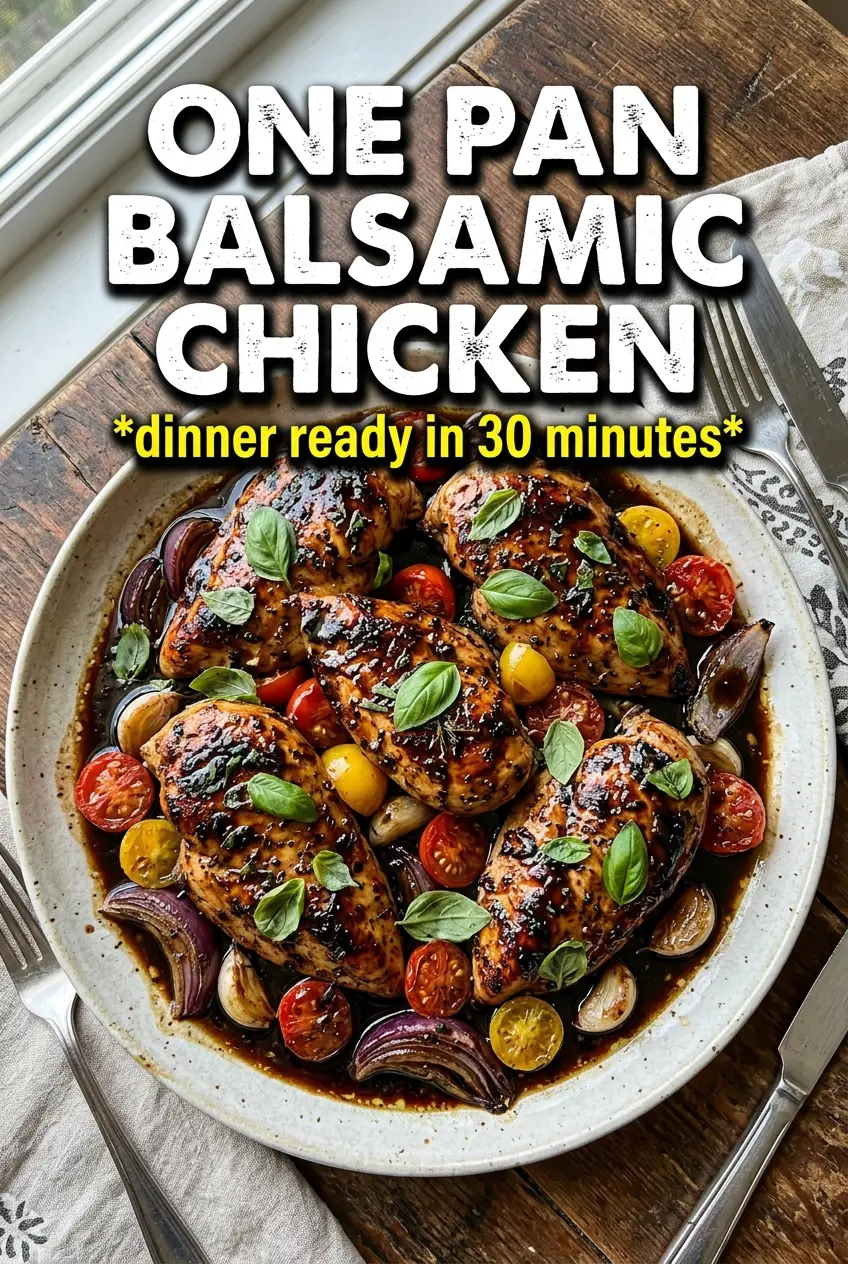
One Pan Balsamic Chicken
Ingredients
Equipment
Method
- Season the chicken thighs generously on both sides with salt, pepper, garlic powder, and Italian seasoning.
- Heat olive oil in a large cast iron skillet over medium-high heat, then sear chicken skin-side down for 7-8 minutes until skin is deeply golden and crispy; flip and sear 3 more minutes, then remove.
- Add whole garlic cloves and cherry tomatoes to the skillet and cook for 2 minutes until tomatoes begin to blister.
- Pour in balsamic vinegar, honey, and chicken broth, stir, and bring to a boil, scraping up any browned bits.
- Return chicken skin-side up and cook over medium heat for 12-15 minutes until chicken reaches 165°F and the balsamic sauce reduces to a thick glaze.
- Stir in butter until melted, scatter fresh basil over the top, and serve straight from the skillet.