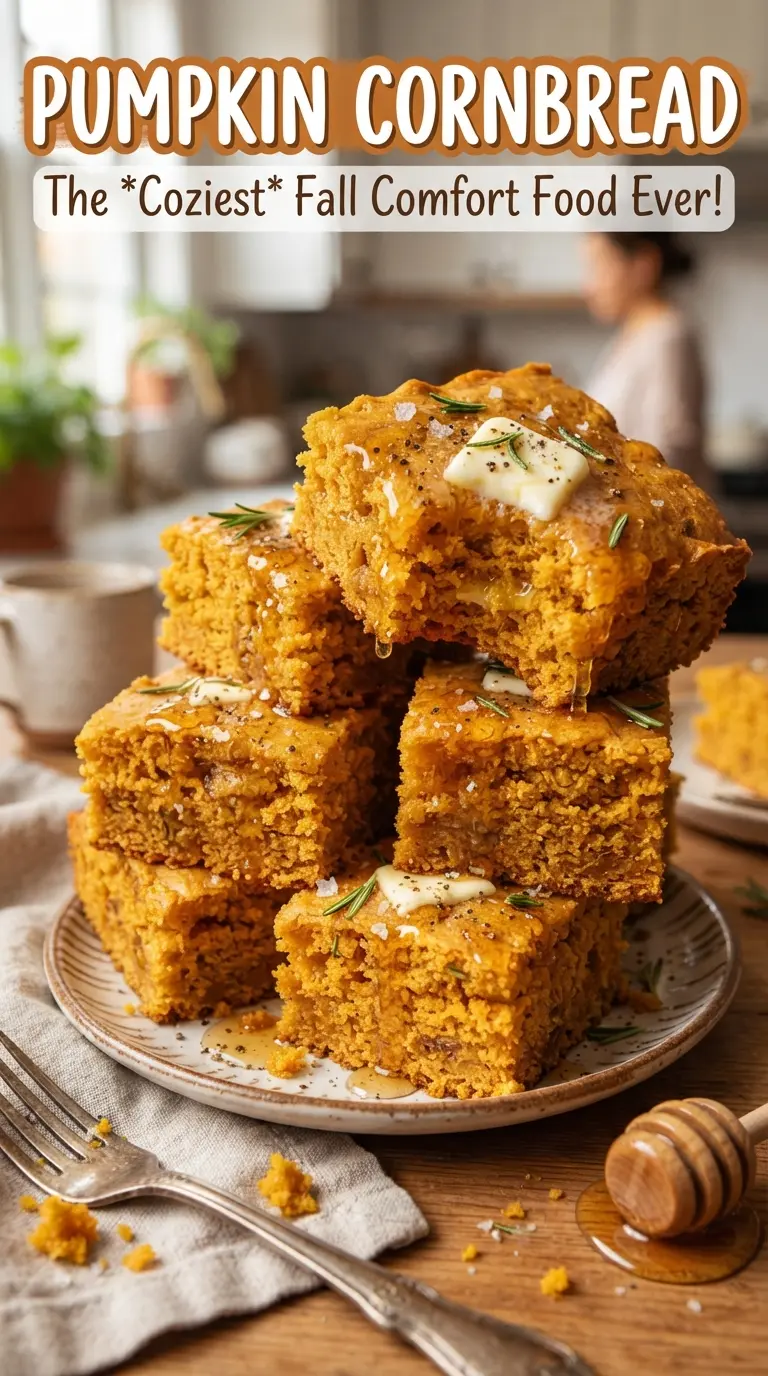
Pumpkin cornbread lands with that rare balance of tender crumb and sandy cornmeal bite, and this version keeps both sides in play. The pumpkin brings moisture and a soft orange color without turning the bread cakey, while the maple syrup rounds out the edges instead of making it taste like dessert. It bakes up with crisp corners in a skillet or a soft, even edge in a square pan, and it’s just as good alongside chili as it is split open with butter at the table.
The trick is keeping the batter loose enough to spread but not overworking it once the wet and dry ingredients meet. Cornbread toughens fast when it’s stirred like muffin batter for too long, and pumpkin can hide that overmixing until the center turns dense. Buttermilk adds the tang that keeps the flavor from falling flat, and melted butter gives the crumb a richer finish than oil ever does.
Below, you’ll find the small details that make the difference here: how to keep the pumpkin from muting the corn flavor, why a hot oven matters, and the best way to get that browned top without drying out the middle.
The top baked up with little crisp edges and the center stayed moist without getting gummy. I served it warm with maple butter and everyone went back for a second piece.
Save this pumpkin cornbread for the side dish that brings golden edges, a soft center, and just enough maple sweetness.
The Reason Pumpkin Cornbread Stays Tender Instead of Heavy
Pumpkin cornbread can go wrong in one of two directions: dry and crumbly, or soft in a way that feels oddly damp. The balance here comes from using just enough pumpkin puree to add moisture and body without pushing the batter into quick-bread territory. The cornmeal still needs room to give the bread its character, so the flour stays high enough to hold everything together while the pumpkin keeps the crumb supple.
The other detail that matters is the oven temperature. A hot 400F oven helps the edges set fast, which gives you a better rise and a little browning before the center overbakes. If the pan goes in before the oven is fully heated, the bread tends to sit and steam, and that’s when the texture loses its clean cornmeal bite.
What Each Ingredient Is Doing in This Pumpkin Cornbread
- Yellow cornmeal — This is what gives the bread its grainy, old-fashioned cornbread texture. A medium grind works best here; fine cornmeal will make it more cake-like, and coarse cornmeal will need a little more time to soften in the oven.
- All-purpose flour — Flour provides the structure that pumpkin alone can’t. You can swap in a 1:1 gluten-free blend if needed, but the crumb will be a touch more delicate and may brown a little differently.
- Pumpkin puree — Use plain pumpkin puree, not pumpkin pie filling. Pie filling already has sugar and spices added, which throws off the balance and makes the bread taste overly sweet and muddled.
- Buttermilk — The acidity sharpens the flavor and keeps the crumb tender. If you don’t have it, mix 3/4 cup milk with 2 teaspoons vinegar or lemon juice and let it sit for 5 minutes before using.
- Brown sugar and maple syrup — These bring gentle sweetness and a deeper note that plays well with pumpkin pie spice. You can reduce the sugar a little if you want a more savory cornbread, but don’t cut both sweeteners at once or the flavor turns flat.
- Melted butter — Butter adds richness and helps the top bake up with a softer, more even crumb. Let it cool for a minute before whisking it into the wet ingredients so it doesn’t scramble the eggs.
Mixing the Batter Without Losing the Cornbread Texture
Get the dry mix evenly combined first
Whisk the cornmeal, flour, brown sugar, baking powder, salt, and pumpkin pie spice until the color looks uniform and there are no clumps of baking powder hiding in the bowl. That even distribution matters because pumpkin batter doesn’t give you much forgiveness once it’s mixed. If the leavening isn’t evenly spread out, the bread will rise unevenly and the top can dome in one corner while the center stays low.
Whisk the wet ingredients until smooth
Stir the pumpkin puree, eggs, buttermilk, melted butter, and maple syrup together until the mixture looks glossy and thick but pourable. Small streaks of pumpkin are fine, but you don’t want cold butter pieces floating around, since they can firm up in the batter and leave pockets after baking. If your butter is too hot, let it sit for a minute or two before adding it so the eggs don’t curdle.
Stop mixing as soon as the batter comes together
Fold the wet into the dry just until the flour disappears and the batter looks shaggy but cohesive. A few streaks are better than a overmixed bowl, because the batter keeps hydrating in the oven. Overmixing tightens the crumb and turns cornbread into something more like a dense snack cake, which is not what you want here.
Bake until the center is set and the edges pull cleanly
Spread the batter into a greased 8×8-inch pan or a well-greased 10-inch cast iron skillet and bake until the top is golden and a toothpick comes out clean, about 22 to 25 minutes. The center should spring back when pressed lightly, and the edges should look just a shade darker than the middle. If the top browns too fast, the oven is running hot; loosely tent it for the last few minutes instead of lowering the temperature halfway through.
Make it more savory
Cut the brown sugar down to 2 tablespoons and keep the maple syrup. The bread will lose some dessert-like sweetness and read more like a true side dish, especially next to chili or roasted chicken. The texture stays the same, but the pumpkin flavor comes forward a little more.
Dairy-free version
Use melted vegan butter or neutral oil and swap the buttermilk for unsweetened plant milk mixed with 2 teaspoons vinegar. The bread will still rise and brown well, but the crumb will be a little less rich and the flavor a little cleaner. Oil gives the softest result; vegan butter gives the closest match to the original.
Cast iron skillet edges
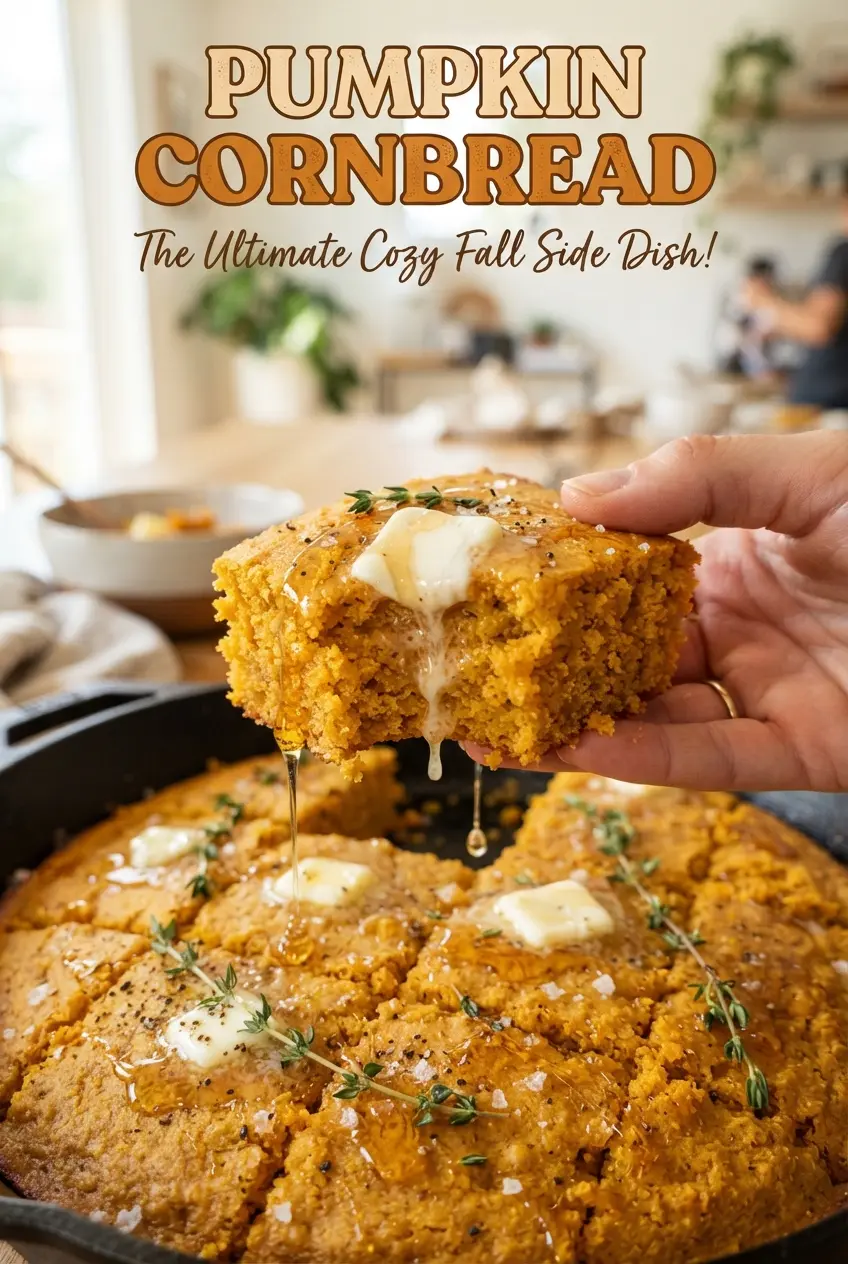
Bake it in a preheated, well-greased cast iron skillet if you want a darker crust and crisp edges. The skillet holds heat better than a square pan, so the bottom and sides brown more deeply. That extra color brings more flavor, but it also means the bread can overbake faster, so start checking at 22 minutes.
Storage and Reheating
- Refrigerator: Store covered for up to 4 days. The crumb firms up a bit in the fridge, but the flavor stays good.
- Freezer: Freeze slices tightly wrapped for up to 2 months. Thaw at room temperature or overnight in the fridge before reheating.
- Reheating: Warm slices in a 300F oven for 8 to 10 minutes or toast them lightly in a skillet. Microwaving works in a pinch, but it softens the crust and makes the texture a little gummy.
Questions I Get Asked About This Pumpkin Cornbread
Pumpkin Cornbread
Ingredients
Equipment
Method
- Preheat oven to 400F, then grease an 8x8-inch pan or a 10-inch cast iron skillet. Visual cue: a thin, even coating so the cornbread releases easily.
- Whisk yellow cornmeal, all-purpose flour, brown sugar, baking powder, salt, and pumpkin pie spice in a bowl until evenly combined. Visual cue: the mixture looks speckled and uniform.
- Whisk pumpkin puree, eggs, buttermilk, melted butter, and maple syrup together until smooth. Visual cue: no streaks of egg or pumpkin remain.
- Stir the wet mixture into the dry just until combined, avoiding overmixing. Visual cue: thick batter with a few small lumps is fine.
- Spread the batter into the prepared pan and smooth the top. Visual cue: an even layer reaching the corners.
- Bake for 22-25 minutes at 400F until golden and a toothpick comes out clean. Visual cue: the edges pull slightly away from the pan.
- Serve warm with butter. Visual cue: softened butter melting into the warm cornbread surface.