Grilled salmon earns its spot in the regular dinner rotation when the skin turns crisp, the flesh stays tender, and the whole fillet lifts off the grates without falling apart. The best versions taste clean and bright, with just enough char to bring out the richness of the fish instead of covering it up.
This method keeps the seasoning simple on purpose. Olive oil helps the salmon brown and keeps the surface from sticking, while lemon juice and garlic add enough flavor to wake it up without making the exterior wet or muddy. The 15-minute rest gives the salt time to season the fish all the way through, but not so long that the acid starts changing the texture before it hits the grill.
Below you’ll find the small details that matter most: how to keep the skin intact, when to flip, and how to tell when the salmon is done without drying it out.
The skin crisped up beautifully and the salmon stayed moist all the way through. I followed the 15-minute rest and the lemon-garlic seasoning was just right without overpowering the fish.
Save this grilled salmon for the nights when you want crisp skin, tender fish, and a fast dinner that still feels special.
The One Thing That Keeps Grilled Salmon From Sticking
Most grilled salmon fails for one of two reasons: the grill isn’t hot enough, or the fish is moved before the skin has had time to set. Salmon needs direct heat and a little patience. When it first goes on, the skin should sizzle immediately, then relax into the grates as it crisps. If you try to pry it up too soon, it tears and leaves half the fillet behind.
The other mistake is overhandling the fish once it’s on the grill. Skin-on fillets have enough structure to hold together if you leave them alone. Oil the grates well, place the salmon skin-side down, and let the heat do the work. By the time the skin is crisp and the flesh has turned opaque about halfway up the side, it’s ready to flip.
- High heat — Medium-high heat gives the skin a chance to crisp before the interior overcooks.
- Dry surface — Patting the salmon dry is the difference between searing and steaming.
- Skin-on fillets — The skin protects the flesh and makes flipping much easier.
- One careful flip — Too much turning breaks the crust and dries out the fish.
What the Oil, Lemon, and Garlic Are Doing Here
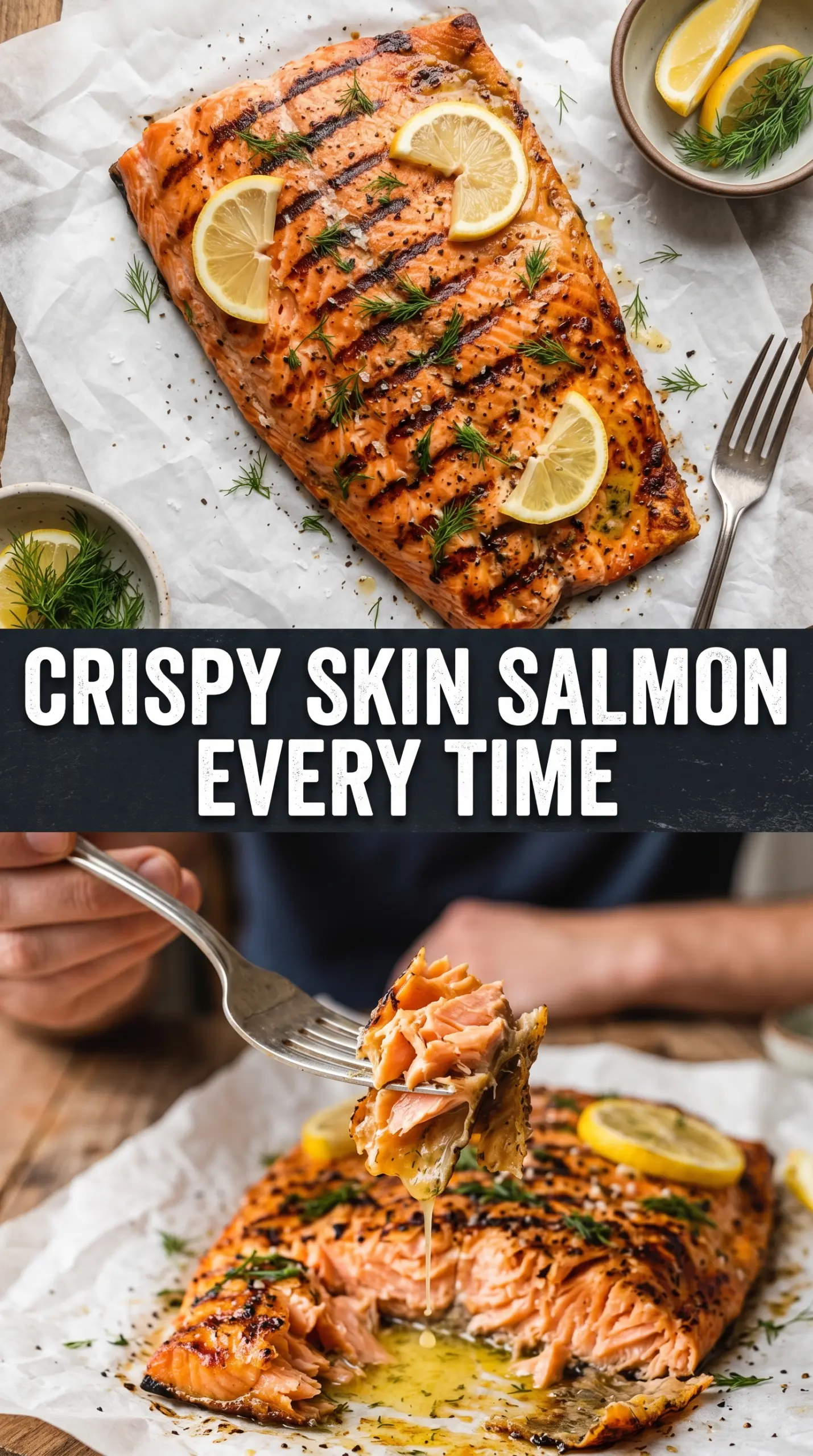
- Salmon fillets — Skin-on fillets hold together better on the grill and give you that crisp bottom layer everyone wants. If your fillets are very thin, shave a minute or two off the second side so they don’t dry out.
- Olive oil — This helps the salmon brown and keeps the seasonings from burning. A neutral oil works too, but olive oil adds a little richness that fits the fish.
- Lemon juice — Lemon brightens the finished salmon, but keep the marinating time short. If it sits too long in the acid, the outside starts to cure and turn soft.
- Garlic — Fresh minced garlic gives the fish a sharp, savory edge. Very fine mincing matters here because big pieces can scorch on the grill.
- Dill — Fresh dill brings the clean finish that makes salmon taste complete. Dried dill won’t give you the same lift, so save that one for another dish if you can.
Getting the Skin Crisp Before the Fish Overcooks
Dry, Oil, and Season First
Pat the salmon dry with paper towels before anything else. Moisture on the surface is the enemy of browning, and it also makes the fish more likely to stick. Brush the fillets with the olive oil, lemon juice, and garlic mixture, then season with salt and pepper and let them sit for 15 minutes. That short rest seasons the fish without giving the lemon enough time to soften the surface.
Preheat the Grill Like You Mean It
Heat the grill to medium-high and clean the grates well, then oil them generously right before the salmon goes on. If the grates aren’t hot enough, the skin clings and tears when you try to move the fillets. You want an immediate sizzle when the fish hits the bars. That sound tells you the surface is setting instead of steaming.
Leave the First Side Alone
Place the salmon skin-side down and don’t move it for 6 to 8 minutes. The skin needs time to firm up and release naturally. If the fish resists when you lift it, give it another minute. A properly seared skin will release cleanly with a thin spatula, and the flesh will look opaque about halfway up the sides.
Finish the Flip Gently
Turn the fillets carefully and grill for 2 to 3 minutes more, just until they reach your preferred doneness. Pull them before the center dries out; salmon keeps cooking after it comes off the heat. For medium, 145°F is the target, but a slightly lower temperature still works if you want the middle a little softer. Serve right away with dill and lemon wedges.
How to Adapt This for Different Grills and Diets
No Fresh Dill on Hand
Use chopped parsley or chives for a different kind of freshness. You’ll lose that classic salmon-and-dill pairing, but you’ll still get a clean finish that keeps the fish from tasting flat.
Dairy-Free, Gluten-Free, and Naturally Light
This recipe already fits both dairy-free and gluten-free eating without any changes. That’s one reason it works so well for a mixed dinner table: the flavor comes from the fish, citrus, herbs, and fire, not from a heavy sauce or coating.
Using a Cedar Plank
A cedar plank gives the salmon a gentle smoky note and makes it easier to cook over live fire without sticking. Soak the plank first, then grill the salmon until the flesh flakes and the edges are opaque; you’ll get a softer exterior than direct grilling, but a little extra flavor.
Leftover Salmon
Flake leftover salmon over salads, grain bowls, or scrambled eggs. It won’t keep the same crisp skin after storage, so treat leftovers as a second meal ingredient rather than trying to reheat them back to their original grilled state.
Storage and Reheating
- Refrigerator: Store in an airtight container for up to 3 days. The skin will soften, but the fish stays flavorful.
- Freezer: It freezes okay, but the texture changes a bit after thawing. Wrap tightly and freeze for up to 2 months.
- Reheating: Warm gently in a low oven or a covered skillet over low heat. High heat dries salmon out fast, so don’t blast it in the microwave unless you’re using it flaked into another dish.
Answers to the Questions Worth Asking
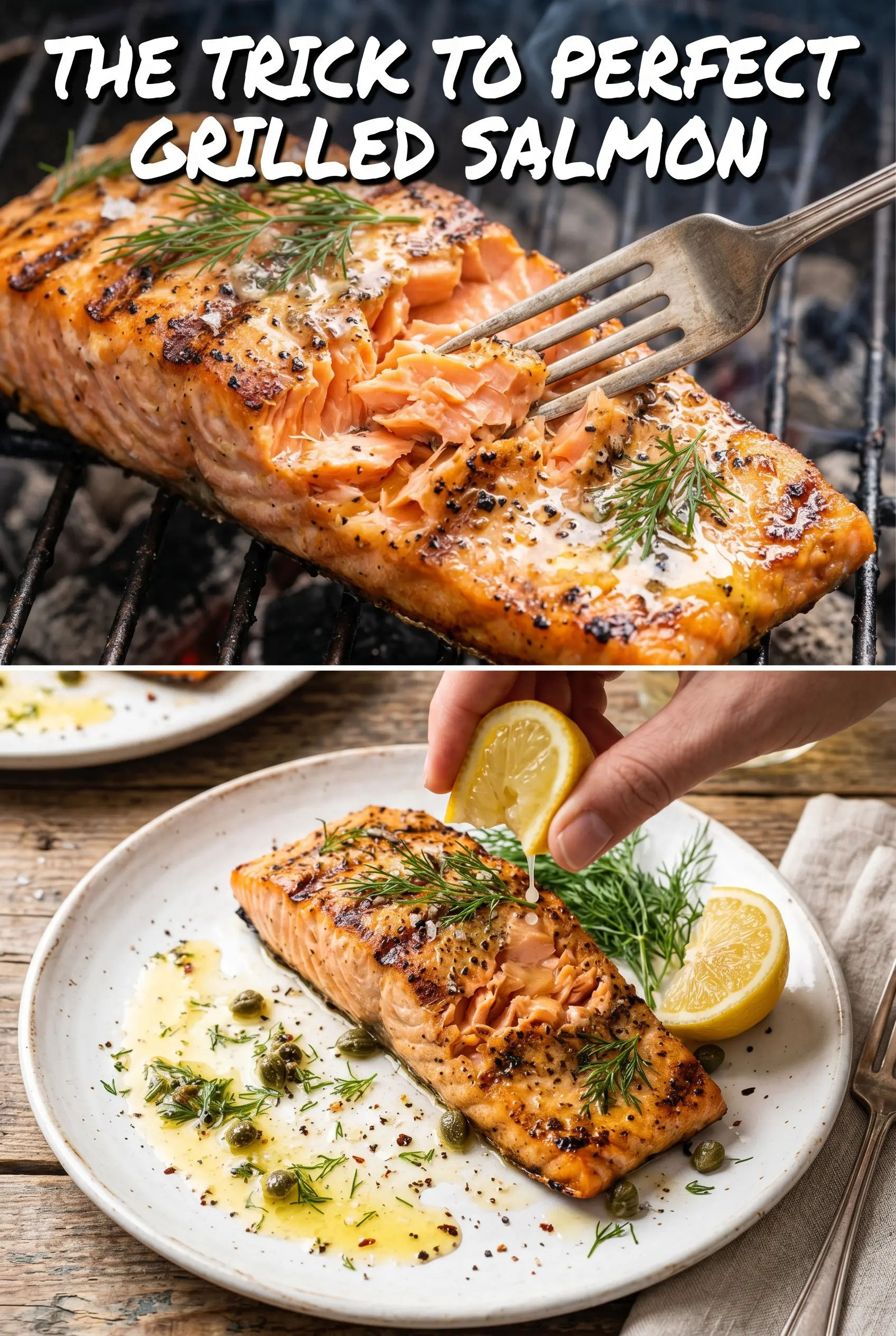
How To Make The Best Grilled Salmon
Ingredients
Equipment
Method
- Pat the salmon dry, then brush it with the mixture of olive oil, lemon juice, and minced garlic.
- Season the salmon generously with salt and pepper, then let it sit for 15 minutes.
- Preheat the grill to medium-high and oil the grates well.
- Place the salmon on the grill skin-side down and cook for 6-8 minutes without moving.
- Carefully flip the salmon and grill for 2-3 minutes more, until it reaches 145°F for medium doneness.
- Serve the grilled salmon immediately with fresh dill and lemon wedges.