Grilled salmon kebabs come off the grates with crisp edges, juicy centers, and just enough char to make the lemon and dill pop. The salmon stays tender because it cooks fast, right alongside the vegetables, so nothing dries out while the rest of the skewers catch up. When the cubes are cut evenly and the marinade is kept short, you get fish that tastes bright and clean instead of harsh or overcooked.
The trick is using the grill as a quick finish, not a long cook. Salmon only needs a short soak in the lemon-garlic marinade, and that acid is working fast; leave it in too long and the outside starts to turn firm before it ever hits the heat. The vegetables are there for more than color, too. Zucchini, bell pepper, and red onion bring moisture, sweetness, and structure, which helps the skewers stay balanced and cook at the same pace.
Below, I’ve included the timing that keeps the salmon soft, the ingredient swap that matters most if you’re working with frozen fish, and a few variations that make these kebabs easy to adapt without losing that fresh, grilled finish.
The salmon stayed tender on the grill and the lemon-dill marinade gave it a fresh, clean flavor without overpowering the fish. The zucchini browned nicely too, which made the skewers taste like something from a good restaurant.
Save these grilled salmon kebabs for the nights when you want tender fish, charred vegetables, and a 10-minute grill dinner that still feels special.
The One Mistake That Turns Salmon Kebabs Dry
Salmon dries out fast when it sits over heat too long, and skewers make that risk even higher because the outside pieces tend to cook first. The fix is to cut the salmon into even cubes, thread it with vegetables that can handle the same quick grill time, and keep the heat at medium-high instead of blazing hot. You want the fish to reach just-cooked doneness while the vegetables pick up a little blistering and the marinade turns glossy.
Another failure point is overmarinating. Lemon juice is great here, but it starts changing the texture of the fish almost immediately. Thirty minutes is enough to season the salmon and sharpen the flavor; much longer, and the surface can go from silky to tight before it ever sees the grill.
- Even salmon cubes — Cut the fish into the same size pieces so every skewer finishes at the same time. Big chunks leave you with raw centers, and tiny pieces dry out before the vegetables are done.
- Medium-high grill heat — This gives you quick browning without blasting the fish into toughness. If the grates are screaming hot, the outside will darken before the middle turns opaque.
- Short marinating time — Thirty minutes is the sweet spot for flavor. The acid in the lemon does the work without starting to cure the salmon.
- Vegetables with structure — Zucchini, bell pepper, and red onion all hold up to fast grilling. Softer vegetables turn mushy before the salmon is ready.
What the Marinade Is Doing to the Fish and Vegetables
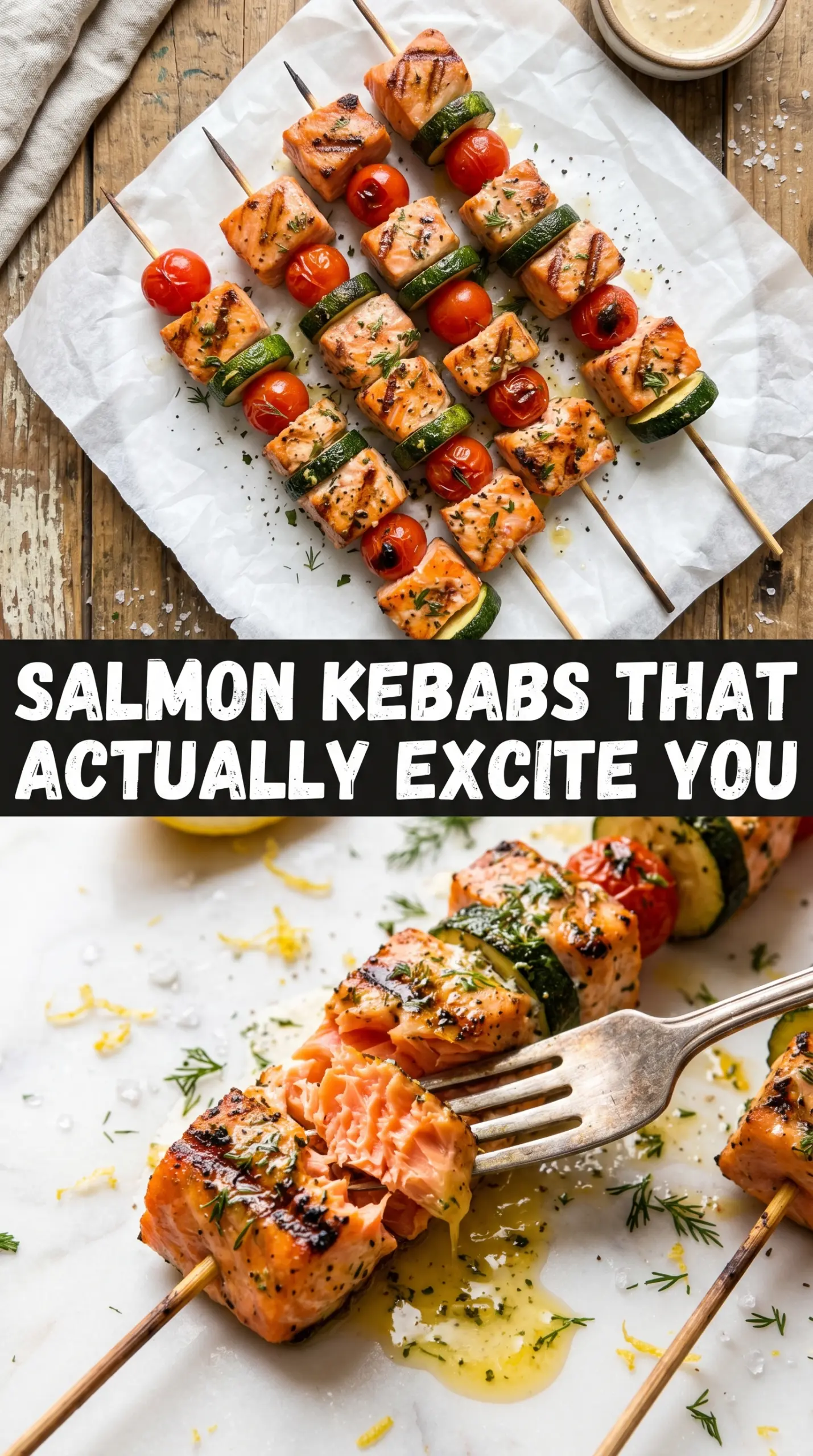
- Olive oil — It carries the lemon and garlic across the salmon and keeps the surface from sticking to the grill. Use a decent olive oil here because it’s one of the main flavors, not just a background ingredient.
- Lemon juice — This brightens the fish and gives the kebabs that clean, Mediterranean edge. Fresh lemon is worth it; bottled juice tastes flat and can push the marinade in the wrong direction.
- Garlic and dill — Garlic gives the marinade backbone, while dill brings the fresh, grassy note that salmon loves. Dried dill works in a pinch, but use less because it comes on stronger and less fragrant than fresh.
- Zucchini, bell pepper, and red onion — These aren’t filler. They add moisture, sweetness, and color, and they also help protect the salmon from direct heat so the skewers stay juicy.
- Wooden skewers — Soaking them keeps them from burning before the salmon is done. If you use metal skewers, skip the soak and let the fish and vegetables sit closer to the grill for even cooking.
Building the Skewers So They Cook Evenly
Mixing the Marinade
Whisk the olive oil, lemon juice, garlic, dill, salt, and pepper until the mixture looks slightly emulsified and speckled with herbs. You’re not making a thick sauce here; you want a loose coating that clings to the fish. If the garlic sits in a puddle at the bottom, whisk a little longer so every bite gets seasoned evenly.
Marinating Without Curing the Salmon
Cut the salmon into 1-inch cubes and toss them gently in the marinade for 30 minutes. That timing matters more than people think. The lemon is there to wake up the flavor, not “cook” the salmon ahead of time, and after about 30 minutes the texture starts to tighten at the edges. Keep the bowl in the fridge while it marinates so the fish stays cold and safe.
Threading for Balanced Cooking
Alternate salmon, zucchini, bell pepper, and red onion on the skewers, leaving a little space between pieces so the heat can move around them. Packed-together skewers steam; slightly spaced ones grill. If your salmon cubes are cut evenly, they’ll finish at the same pace as the vegetables instead of falling apart before everything else is done.
Grilling to Just-Cooked
Place the skewers over medium-high heat and grill for 3 to 4 minutes per side. The salmon should release fairly cleanly when it’s ready to turn, and the edges will look opaque while the centers still look just barely translucent. Pull them off as soon as the fish turns opaque all the way through; waiting for it to look dry is how kebabs lose their tenderness.
Dairy-Free and Naturally Light
This recipe is already dairy-free, which makes the lemon-herb marinade the main source of richness. If you want to keep it extra light, don’t add a creamy sauce on top; serve it with more lemon wedges and let the salmon shine on its own.
Low-Carb Serving Ideas
The kebabs fit a low-carb meal as written. If you want to stretch them further, serve them over cauliflower rice or a big cucumber salad instead of grains. The salmon brings enough fat and protein that the plate still feels complete.
Using Shrimp Instead of Salmon
Shrimp works if you want a faster version, but it cooks even quicker than salmon and can turn rubbery in a hurry. Thread the shrimp with the vegetables and grill just until they turn pink and opaque, usually 2 to 3 minutes per side depending on size. The flavor stays bright, but the texture is lighter and less rich.
Storage and Reheating
- Refrigerator: Store leftovers in an airtight container for up to 2 days. The salmon will still be tasty, but the vegetables soften a bit after chilling.
- Freezer: I don’t recommend freezing the cooked kebabs. Salmon and grilled vegetables both lose texture after thawing, and the skewers won’t eat like a fresh batch.
- Reheating: Warm them gently in a 300°F oven until just heated through, or use low power in the microwave in short bursts. High heat is the mistake here; it tightens the fish and dries out the edges fast.
Questions I Get Asked About This Recipe
Grilled Salmon Kebabs
Ingredients
Method
- Whisk olive oil, lemon juice, garlic, fresh dill, salt, and black pepper until smooth and evenly combined (no lumps of garlic). Visual cue: the mixture looks glossy and uniformly green-flecked.
- Marinate the salmon for 30 minutes (not longer), keeping it refrigerated while it soaks. Visual cue: salmon pieces look slightly opaque on the edges.
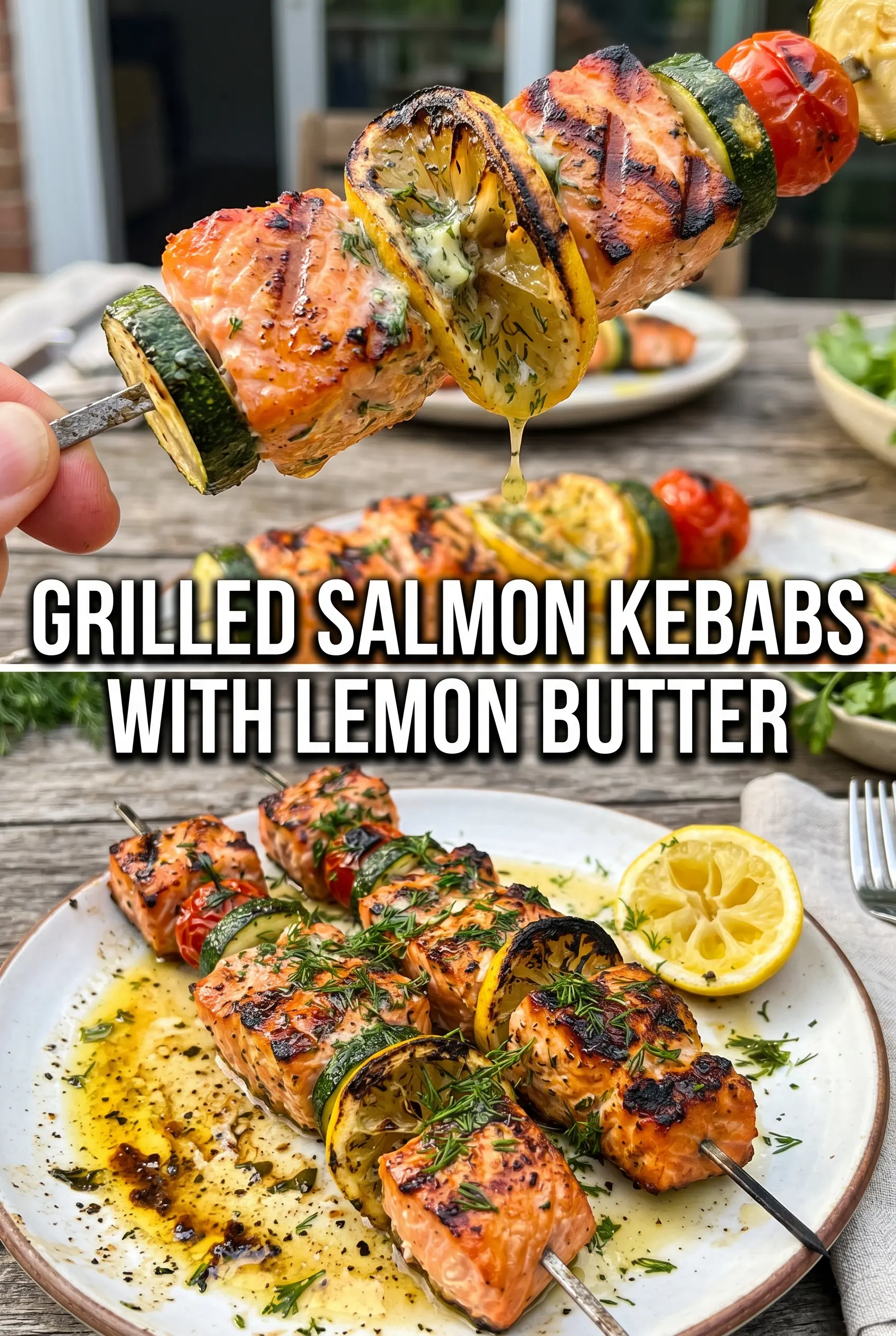
- Thread salmon cubes and zucchini, red bell pepper, and red onion alternately onto soaked wooden skewers, leaving a little space between pieces. Visual cue: colorful vegetables alternate between pink salmon chunks.
- Grill the kebabs over medium-high heat for 3 to 4 minutes per side until the salmon is cooked through. Visual cue: salmon turns from translucent to opaque and flakes with light pressure.
- Serve immediately with lemon wedges and fresh dill. Visual cue: a bright lemon wedge and a final sprinkle of dill over the hot kebabs.