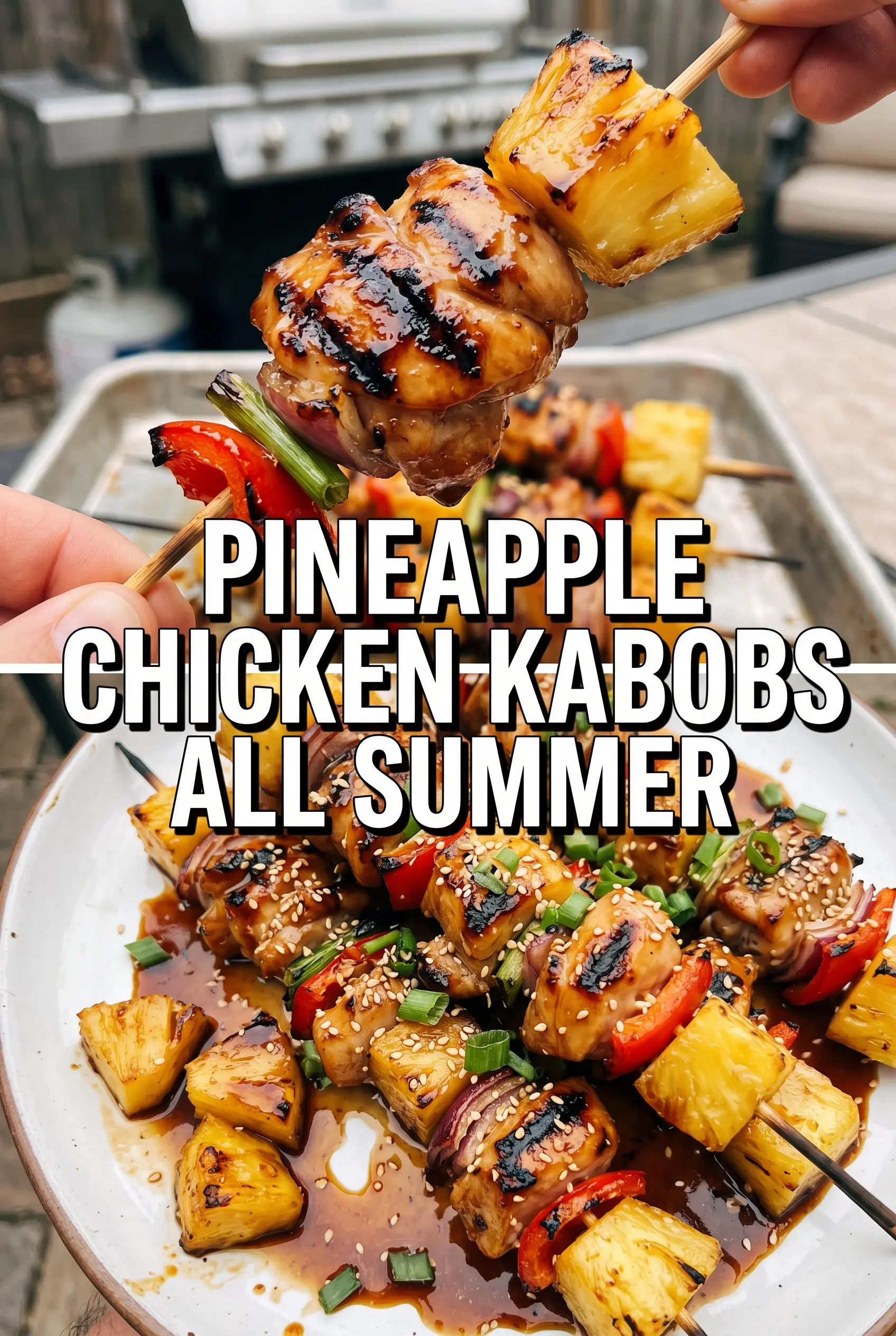
Pineapple Chicken Kabobs come off the grill with sticky edges, juicy chicken, and that sweet-savory glaze that clings to every bite. The pineapple softens and caramelizes just enough to taste like dessert without losing its brightness, and the peppers and onion pick up a little char that keeps the whole skewer from turning one-note. This is the kind of dinner that disappears fast because every bite has a little smoke, a little sweetness, and a clean, fresh finish.
What makes these work is the marinade. Pineapple juice brings acid and natural sweetness, soy sauce handles salt and depth, and a little honey helps the kabobs lacquer instead of drying out on the grill. I keep the chicken in even cubes so it cooks at the same pace as the fruit and vegetables, and I don’t let the marinade go too long or the surface can get soft instead of nicely browned.
Below you’ll find the small details that matter here: how to keep the skewers from sticking, how to avoid undercooked chicken with charred pineapple, and a few smart swaps if you need to use what’s already in your kitchen.
The pineapple caramelized beautifully and the chicken stayed juicy even after grilling. I followed the timing exactly and the skewers were done in about 12 minutes with just the right amount of char.
Juicy pineapple chicken kabobs with caramelized edges are worth keeping handy for the next grill night.
The Mistake That Keeps Kabobs Pale Instead of Caramelized
The biggest failure with chicken kabobs is crowding too much onto the skewer and treating the grill like an oven. If the pieces are packed tightly, they steam each other and the pineapple never gets those browned edges that make this recipe taste finished. Give the ingredients a little space and keep the grill at medium-high so the glaze can catch and darken without burning before the chicken cooks through.
- Even chicken cubes — Cut the chicken breasts into pieces that are close to the same size as the pineapple and peppers. Small pieces cook too fast and dry out before the fruit caramelizes; oversized pieces leave you with mixed doneness on one skewer.
- High-sugar marinade balance — The honey and pineapple juice help the kabobs brown, but they can also scorch if the heat is too aggressive. Medium-high is the sweet spot here: hot enough for color, not so hot that the outside blacks before the center reaches 165°F.
- Fresh pineapple — Fresh pineapple holds its shape better than canned and caramelizes in a cleaner way. Canned pineapple can work in a pinch, but it’s softer and more likely to fall apart on the grill.
- Soaked wooden skewers — If you’re using wood, soak them long enough that they don’t catch fire at the ends. Dry skewers can burn before the chicken is done, which makes the whole batch harder to manage.
What Each Ingredient Is Doing on the Skewer

- Chicken breasts — Chicken breast stays lean and picks up the marinade well, but it only works if you stop cooking the moment it reaches 165°F. Chicken thighs are the easiest swap if you want a little more forgiveness and a richer bite.
- Pineapple — Pineapple gives the kabobs their signature sweet-tart pop and helps the surface brown. It’s not just a garnish; it’s part of the glaze effect on the grill.
- Bell peppers and onion — These add structure, color, and a little sharpness so the skewers don’t taste like sweet chicken on repeat. Red, yellow, or orange peppers all work; the important part is cutting them large enough to stay on the skewer and not collapse over the heat.
- Soy sauce — This brings salt and savory depth. If you need a gluten-free version, use tamari in the same amount and the kabobs will still taste balanced.
- Pineapple juice — It reinforces the fruit flavor and adds a little acid to help the chicken absorb seasoning. Fresh or bottled both work, but avoid anything with added sugar if you want better control over the glaze.
- Honey and olive oil — Honey helps with browning, while olive oil keeps the marinade moving and helps the chicken stay juicy on the grill. If you skip the oil, the kabobs tend to look dry before they’re actually done.
Building the Glaze So It Sticks Without Burning
Mix the marinade first
Whisk the soy sauce, pineapple juice, honey, olive oil, and garlic until the honey disappears and the mixture looks glossy. If the honey is left in ribbons at the bottom, the chicken won’t season evenly. That first whisk also tells you if the marinade tastes balanced before it ever touches the meat.
Marinate with a time limit
Add the cubed chicken and refrigerate for 1 to 4 hours. Less than an hour and the flavor stays on the surface; much longer than 4 hours and the pineapple juice can start to make the texture a little soft. If you need to marinate overnight, skip the pineapple juice and add it just before grilling.
Thread with a little breathing room
Alternate chicken, pineapple, peppers, and onion on the skewers without packing them tight. A little space between pieces helps the hot air and grill marks do their work, and it keeps one heavy ingredient from shielding another. Start and end each skewer with chicken or pepper rather than pineapple so the softer fruit doesn’t burn too quickly at the tips.
Grill and glaze at the same time
Cook over medium-high heat for 5 to 6 minutes per side, turning once and basting with the marinade as the kabobs cook. The chicken should feel firm with a little give, the pineapple should have browned edges, and the onions should soften just enough to bend at the corners. Don’t brush on raw marinade that touched uncooked chicken unless you boil it first; use a separate portion for basting or set some aside before marinating.
Finish when the chicken is done, not when the color looks right
Pull the kabobs when the thickest piece of chicken reaches 165°F. Grill marks can be misleading here because pineapple caramelizes faster than chicken cooks through. If the outside looks finished before the center is ready, move the skewers to a cooler spot on the grill and let them come up gently.
How to Adapt These Kabobs for Different Grills and Diets
Gluten-Free Version
Swap the soy sauce for tamari or coconut aminos. Tamari gives the closest flavor to the original; coconut aminos taste a little sweeter and softer, so you may want a small pinch of salt in the marinade if you use them.
Thighs Instead of Breasts
Chicken thighs stay juicier and are a little more forgiving if your grill runs hot. They take roughly the same grill time in this size, but they won’t dry out as quickly if you get distracted for a minute.
No Grill, Same Finish
Use a grill pan or broil the kabobs on a foil-lined sheet pan, turning once halfway through. You’ll lose a little smoky flavor, but the pineapple still caramelizes and the marinade still tightens into a glossy glaze.
Make-Ahead Storage
- Refrigerator: Store cooked kabobs for up to 3 days in an airtight container. The pineapple will soften a bit, but the flavor holds well.
- Freezer: Freeze the cooked chicken and vegetables off the skewers for up to 2 months. Pineapple gets softer after thawing, so the texture is best for leftovers, bowls, or wraps rather than a second round of skewers.
- Reheating: Reheat gently in a 325°F oven or in a covered skillet over low heat with a splash of water. High heat dries out the chicken fast and makes the pineapple go mushy before the center is warm.
Answers to the Questions Worth Asking
Pineapple Chicken Kabobs
Ingredients
Equipment
Method
- Mix soy sauce, pineapple juice, honey, olive oil, and garlic until fully combined, then set aside for basting.
- Add cubed chicken breasts to the marinade and marinate for 1-4 hours in the refrigerator.
- Thread chicken, pineapple, peppers, and onion onto soaked wooden skewers in a colorful alternating pattern.
- Preheat the grill to medium-high heat and grill the kabobs for 5-6 minutes per side, basting with the reserved marinade.
- Continue grilling until the chicken reaches 165°F and the pineapple is caramelized with browned edges.