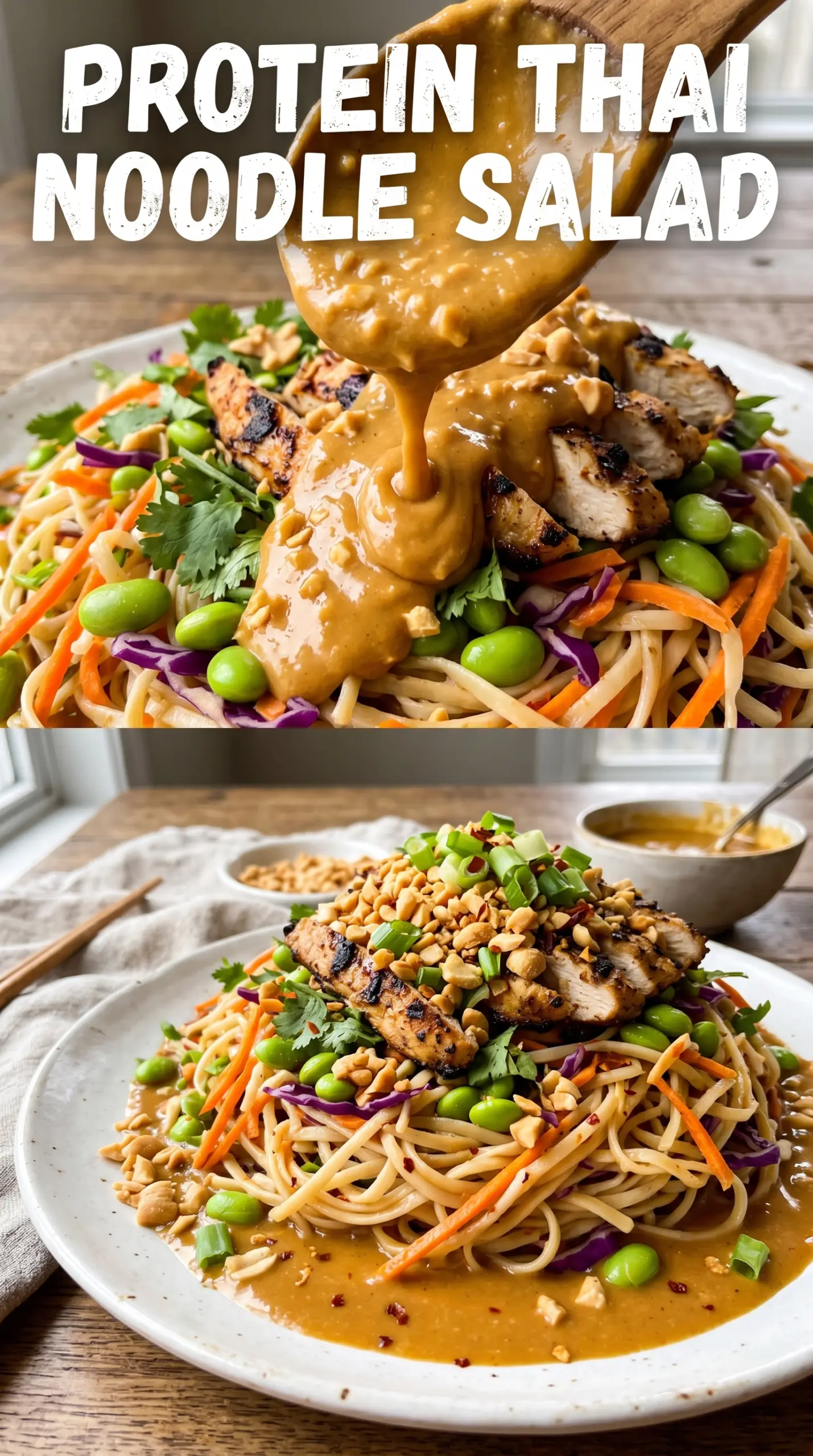
Protein packed Thai pasta salad hits that sweet spot between fresh and filling. The peanut-ginger dressing clings to every twist of pasta, the cabbage stays crisp, and the chicken turns it into a main dish that actually holds you through lunch without feeling heavy. The best bowls have a little crunch from the peanuts, a little brightness from lime, and just enough heat from ginger and garlic to keep each bite interesting.
What makes this version work is the balance. Protein pasta can go gummy if it sits warm or gets overdressed, so rinsing it cold and chilling it before serving keeps the texture clean. The dressing also leans on peanut butter, soy sauce, rice vinegar, and honey in a way that tastes round and savory instead of flat or cloying. Add the water slowly. Peanut butter goes from thick to silky fast, and the right consistency is what lets it coat the salad instead of clumping at the bottom of the bowl.
Below, I’ve included the small adjustments that matter most, plus the substitutions I’d use if you need this gluten-free, dairy-free, or a little easier to meal prep for the week.
The peanut dressing coated everything evenly, and after an hour in the fridge the pasta was still tender without getting mushy. I added extra lime at the table and it tasted even better the next day.
Save this protein packed Thai pasta salad for meal prep when you want a creamy peanut-ginger lunch that stays crisp and satisfying.
The Trick to Keeping Protein Pasta Firm Instead of Soft
Protein pasta behaves differently from regular wheat pasta. It can turn sticky if it sits in hot water too long, and it can take on too much dressing if you toss it while it’s still warm. Rinsing it under cold water after draining does more than cool it down; it stops the cooking fast and washes away surface starch that would otherwise make the salad gluey.
The other thing that matters here is rest time. This salad needs at least an hour in the fridge so the dressing can settle into the noodles and the chicken can absorb some of the peanut sauce without the vegetables losing their snap. If you serve it right away, it tastes fine. After chilling, it tastes complete.
What the Peanut Dressing Is Doing to Every Bite
- Protein pasta — Edamame or chickpea pasta gives the salad its body and keeps it firmly in main-dish territory. Chickpea pasta is a little milder and softer; edamame pasta is a touch firmer with a green, nutty edge. Either one works, but cook it just until tender and don’t skip the cold rinse.
- Peanut butter — This is the backbone of the dressing, not a background note. Natural peanut butter works well, but if it’s very stiff, warm it slightly before whisking so it doesn’t fight the rest of the dressing. Avoid sweetened peanut butter if possible; it throws off the balance.
- Rice vinegar and lime — Rice vinegar gives the dressing clean acidity, while the lime wedges at the end wake everything up. If you only use vinegar, the salad tastes flatter. If you only use lime, the dressing loses some of its roundness.
- Shredded cabbage and carrots — These hold up in the fridge better than tender greens and keep the salad crunchy after it’s dressed. Pre-shredded cabbage is fine here if you want to save time, but cut the carrots thin so they blend in instead of eating like raw sticks.
- Shredded chicken — This is what makes the salad filling enough for lunch or dinner. Rotisserie chicken works in a pinch, but plain cooked breast gives you a cleaner base for the dressing. Shred it finely so it catches more sauce.
Building the Salad So the Dressing Clings, Not Slides
Whisking the Dressing
Start by whisking the peanut butter, soy sauce, rice vinegar, honey, ginger, and garlic until the mixture looks thick and grainy, then add water a tablespoon at a time. The goal is a pourable sauce that still feels rich. If you dump in too much water at once, it turns thin before you realize it, and you lose the body that helps it coat the pasta.
Tossing the Base
Combine the pasta, chicken, cabbage, carrots, and bell pepper in a large bowl before adding the dressing. That order matters because it gives the sauce more surface area to grab. Toss with a big spoon or clean hands until everything looks evenly glossed. If you see dressing pooling at the bottom, the sauce is too thick, not too thin.
Chilling Before Serving
Refrigerate the salad for at least an hour. That pause lets the flavors settle and the pasta absorb some of the sauce. Give it one more toss before serving because the dressing will tighten up in the fridge, and a final squeeze of lime brings it back to life.
How to Adjust It for Different Diets and Different Lunchboxes
Make It Vegetarian
Skip the chicken and add extra cabbage, shredded carrots, and cubed baked tofu or edamame. You’ll lose some of the meaty heft, but the salad stays satisfying because the peanut dressing already carries a lot of the flavor and richness.
Make It Gluten-Free
Use a gluten-free protein pasta and swap in tamari for the soy sauce. Regular soy sauce can sneak gluten into the dressing, and tamari keeps the same savory depth without changing the texture of the sauce.
Make It Lower Carb
Swap the pasta for shredded cabbage, extra bell pepper, and cucumber if you want a lighter bowl. The dressing still works, but the dish shifts from a pasta salad to a crunchy chopped salad with the same peanut-ginger character.
Storage and Reheating
- Refrigerator: Store covered for up to 4 days. The vegetables soften a little over time, but the flavor gets better by day two.
- Freezer: I don’t recommend freezing this salad. The pasta texture changes and the vegetables lose their crunch once thawed.
- Reheating: This salad is meant to be eaten cold or close to room temperature. If it feels tight after chilling, let it sit out for 10 to 15 minutes and loosen it with a splash of water or lime juice instead of microwaving it.
Questions I Get Asked About This Recipe
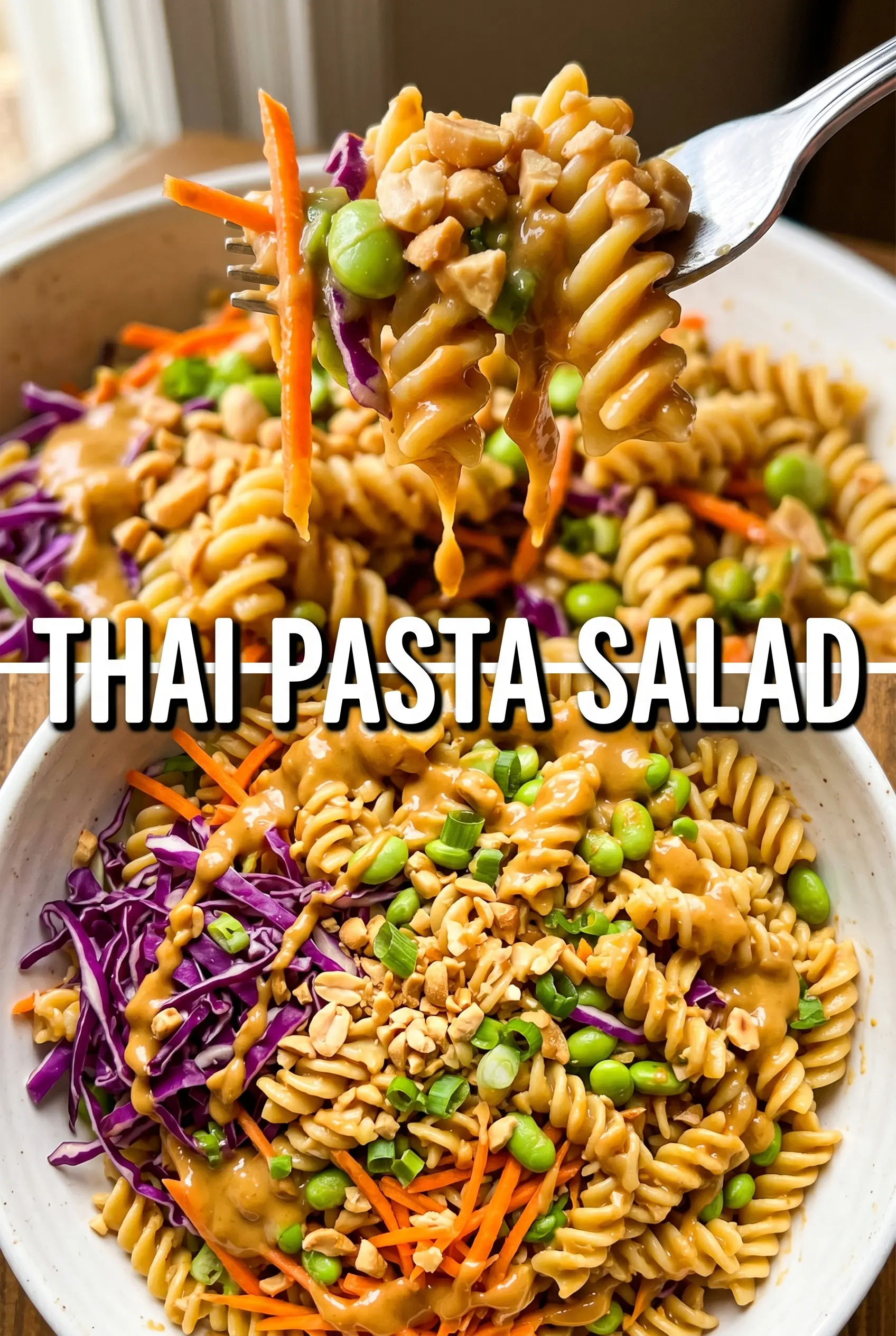
Protein Packed Thai Pasta Salad
Ingredients
Equipment
Method
- Cook the protein pasta according to package directions, then drain and rinse with cold water to stop the cooking and keep it from sticking.
- Refrigerate the assembled salad for at least 1 hour so the vegetables soften slightly and the peanut dressing clings to every bite.
- Whisk together peanut butter, soy sauce, rice vinegar, honey, ginger, and garlic, adding water a little at a time to reach a pourable, creamy consistency.
- Combine pasta, chicken, red cabbage, carrots, and red bell pepper in a large bowl.
- Pour the peanut dressing over the salad and toss thoroughly until the pasta and vegetables look evenly coated.
- Top with crushed peanuts and chopped cilantro right before serving, and serve with lime wedges for squeezing over the top.