Asian pasta salad lands in that sweet spot between crisp and satisfying. The noodles carry the sesame-ginger dressing all the way through the bowl, while the cabbage, carrots, edamame, and bell pepper keep every bite bright and crunchy. It tastes like the kind of side dish people go back for before the main course even hits the table.
What makes this version work is the balance. The dressing is bold enough to season a full pound of pasta, but the rice vinegar and honey keep it from tasting flat or heavy. Rinsing the noodles under cold water stops the cooking fast and keeps the salad from turning sticky, and chilling it gives the ginger, garlic, and sesame time to settle into the pasta instead of sitting on the surface.
Below, I’ve included the small details that matter here: how to keep the noodles from clumping, which swaps hold up well, and what to do if you want a little more crunch or a little less sweetness.
The dressing soaked in after an hour in the fridge and the noodles stayed chewy instead of soggy. I brought it to a cookout and the bowl was scraped clean.
Save this sesame-ginger Asian pasta salad for potlucks, cookouts, and make-ahead lunches that need crunch and color.
The Dressing Needs Time to Sink In, Not Just Coat the Noodles
Asian pasta salad can taste sharp and separate if the dressing only sits on the surface. The fix is chilling time. Once the noodles and vegetables are tossed, the pasta absorbs some of the sesame-ginger dressing and the cabbage softens just enough to turn the bowl cohesive without losing crunch.
The other thing people miss is temperature. Warm pasta soaks up flavor unevenly and can leave the vegetables limp. Rinse the noodles cold, drain them well, then toss everything together only after the dressing is fully whisked smooth. If the salad tastes a little muted straight from the bowl, that usually means it needs another 15 to 20 minutes in the fridge, not more dressing.
- Spaghetti or linguine — Long noodles hold the dressing better than short pasta here. Breaking them into thirds makes the salad easier to toss and serve, and it helps the vegetables distribute more evenly.
- Sesame oil — This is the ingredient you don’t want to cheap out on. A little goes a long way, so use toasted sesame oil for the deepest flavor; plain sesame oil won’t give the same nutty finish.
- Rice vinegar — It keeps the dressing bright without turning it harsh. If you need a swap, use apple cider vinegar in a smaller amount, then taste and adjust because it’s sharper.
- Edamame, cabbage, carrots, and bell pepper — These bring the crunch and color that make the salad feel complete. Shred the cabbage and carrots finely so they mingle with the noodles instead of falling to the bottom of the bowl.
Building the Bowl So the Pasta Stays Slick, Not Sticky
Cooking and Cooling the Noodles
Boil the pasta just until it is tender with a little bite left in the center. Overcooked noodles go soft after chilling, and that’s when the salad starts feeling heavy. Drain them, then rinse under cold water until they stop steaming and feel cool to the touch. Shake off as much water as you can, because excess water dilutes the dressing.
Whisking the Sesame-Ginger Dressing
Combine the soy sauce, rice vinegar, sesame oil, honey, ginger, garlic, salt, and pepper until the honey disappears and the dressing looks glossy. If you taste a grainy or uneven dressing, the honey wasn’t fully dissolved yet. Grating the ginger fresh matters here; dried ginger tastes flat and won’t give the same clean bite.
Tossing Everything Together
Add the pasta, edamame, cabbage, carrots, and bell pepper to the bowl before the dressing goes in. That gives you a better read on how the vegetables are distributed and keeps the noodles from clumping at the bottom. Toss until every strand looks lightly coated and the cabbage starts to bend without collapsing. The salad should look glossy, not wet.
Chilling and Finishing
Let the salad rest in the fridge for at least an hour so the flavor can settle. Just before serving, add the green onions and sesame seeds so they stay fresh and nutty instead of soft. If the salad has tightened up in the fridge, loosen it with a small splash of rice vinegar or a teaspoon of sesame oil and toss again.
Add shredded chicken for a fuller meal
Toss in cold cooked chicken, either rotisserie or poached, and the salad turns into a sturdy lunch or main-dish dinner. The dressing is strong enough to season the meat without drowning the vegetables.
Make it gluten-free with rice noodles or gluten-free pasta
Rice noodles give you a lighter, softer texture, while gluten-free pasta holds up better if you want the salad to feel more like the original. Use tamari in place of soy sauce so the dressing stays balanced without the wheat.
Lean vegetarian with extra crunch
The edamame already carries a lot of the protein, but you can add thin cucumber, snap peas, or shredded lettuce right before serving for more freshness. Skip extra soft vegetables if you want the salad to keep its crunch after chilling.
Adjust the sweetness to suit your table
If you like a sharper salad, cut the honey back slightly and add a touch more rice vinegar. If the dressing tastes too assertive after chilling, a pinch more honey softens it without making the bowl sticky.
Storage and Reheating
- Refrigerator: Keeps for 3 to 4 days in a covered container. The noodles soften a little as it sits, but the flavor stays strong.
- Freezer: Don’t freeze this salad. The vegetables lose their crunch and the pasta turns unpleasant after thawing.
- Reheating: This salad is meant to be served cold. If it’s been chilled hard, let it sit at room temperature for 10 to 15 minutes and toss before serving instead of warming it, which can make the dressing greasy and the vegetables limp.
Questions I Get Asked About This Recipe
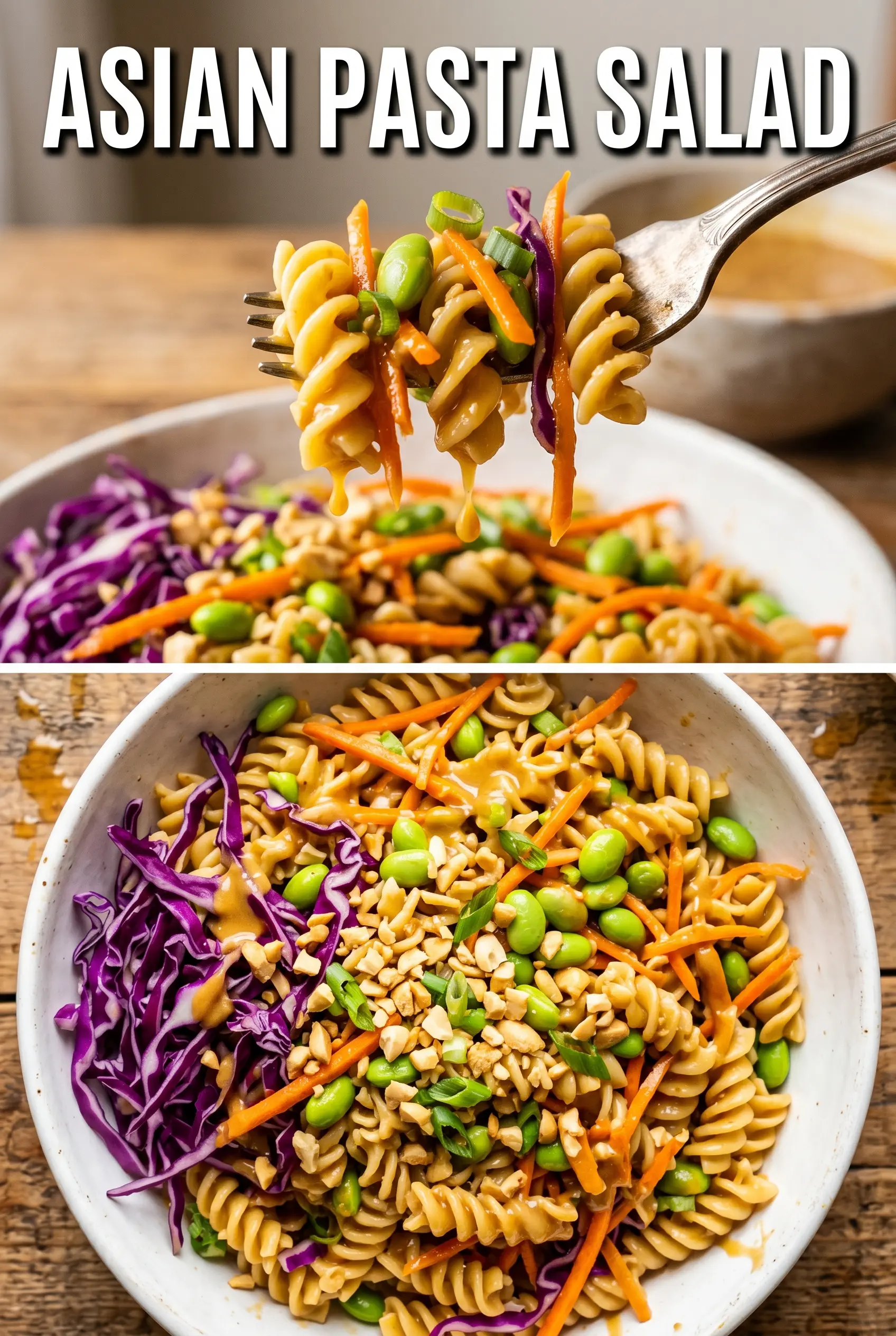
Asian Pasta Salad
Ingredients
Method
- Cook the spaghetti or linguine according to package directions until tender, then drain and rinse with cold water to cool it quickly and stop cooking.
- Visual cue: pasta should look fully cooked but no longer steaming after the cold-water rinse.
- Whisk together soy sauce, rice vinegar, sesame oil, honey, grated ginger, minced garlic, salt, and pepper until the honey dissolves and the dressing looks glossy.
- Visual cue: the mixture should be evenly colored with no honey streaks.
- Combine pasta, edamame, shredded red cabbage, shredded carrots, and thinly sliced red bell pepper in a large bowl.
- Pour the dressing over the salad and toss thoroughly until everything is coated, with vegetables and pasta evenly distributed.
- Refrigerate the salad for at least 1 hour so the flavors meld and the vegetables stay crisp.
- Top with sliced green onions and sesame seeds right before serving.