Smoked mac and cheese earns its place on the table because it hits three things at once: a sauce that clings to every noodle, a smoky edge that keeps each bite from tasting flat, and a crisp top that gives way to a creamy center. The trick is balancing all of that without turning the pasta mushy or the sauce grainy, which is where a lot of baked versions go sideways.
This version leans on sharp cheddar for bite and smoked Gouda for depth, then keeps the heat gentle while the sauce comes together. The smoker does the finishing work, not the heavy lifting, so the cheese sauce stays smooth and the pasta keeps its shape. Panko on top brings the crunch that makes each spoonful feel complete.
Below, I’m walking through the parts that matter most: how to keep the sauce silky, why the pasta should be just shy of fully tender before it goes into the pan, and what to watch for when the top is set and the edges start bubbling.
The sauce stayed creamy all the way through the smoke, and the panko top got that perfect crisp layer without drying out the pasta underneath. I used the full 90 minutes and it came out bubbling at the edges with a great smoky finish.
Save this smoked mac and cheese for the side dish that brings creamy pasta, sharp cheddar, and a crisp smoky topping together.
The Sauce Breaks When the Heat Runs Too Hot
The biggest mistake with smoked mac and cheese is treating the cheese sauce like it can take the same heat as soup or gravy. It can’t. Once the milk and cream thicken, the pan needs to stay low before the cheese goes in, or the proteins tighten and the sauce turns grainy instead of glossy. Pulling the pan off the heat for the cheese gives you a smoother melt and a sauce that stays velvety after the smoke does its work.
Another place people lose the texture is with overcooked pasta. The noodles keep softening in the smoker, so they should be cooked just to al dente, with a little firmness left in the center. That way the finished dish lands creamy, not soggy. The panko matters here too, because it gives you contrast against all that richness instead of another soft layer.
What Each Ingredient Is Actually Doing in This Dish

- Sharp cheddar — This is the backbone of the sauce. It melts well and brings the tang you need so the dish doesn’t taste heavy and one-note. Pre-shredded cheddar works in a pinch, but block cheese melts smoother because it doesn’t carry the anti-caking starch that can make the sauce thick in a gritty way.
- Smoked Gouda — This is where the smoke and mellow richness come from. You still get a smoky result from the smoker itself, but Gouda adds a deeper, rounder flavor that tastes built-in instead of layered on top. If you swap it, use another good melting cheese like fontina, but you’ll lose some of that signature smoky sweetness.
- Milk and heavy cream — The milk gives the sauce enough body to coat the pasta, while the cream keeps it lush through the long smoke. You can use all milk if you want a lighter dish, but the sauce won’t cling as luxuriously and it will set a little firmer after resting.
- Panko breadcrumbs — Regular breadcrumbs can work, but panko gives you a lighter, crunchier top that stays crisp longer. Tossing them with melted butter before they hit the pan is what helps them brown instead of drying out.
How to Build the Creamy Base Before It Goes Into the Smoker
Starting the Roux
Melt the butter over medium heat, then whisk in the flour and cook it just long enough for the raw flour smell to fade. You’re looking for a pale paste that loosens slightly in the pan, not a browned roux, because this sauce should stay light in color and taste clean. If the roux looks sandy or lumpy, the heat was too high or the flour wasn’t whisked in fully.
Adding the Dairy Without Scrambling the Sauce
Pour in the milk and cream gradually while whisking so the roux can absorb the liquid without forming clumps. The sauce will look thin at first, then suddenly start to coat the whisk when it warms up. Keep the heat gentle. If it boils hard before the cheese goes in, the base can tighten too fast and turn a little gluey.
Melting in the Cheese
Take the pan off the burner before you add the cheddar and Gouda. Stir until the cheese disappears into the sauce and the surface looks glossy. If you see little flecks instead of a smooth finish, the pan was still too hot. A lower temperature gives the cheese time to melt evenly instead of seizing.
Smoking Until the Top Sets
Combine the pasta and sauce in the aluminum pan, then spread the panko topping evenly over the surface. The smoker should sit at 225°F so the dish heats through without blasting the sauce apart. You want bubbling around the edges and a golden top with some darker spots, which usually takes 60 to 90 minutes depending on your smoker and the depth of the pan.
Make it sharper
Swap part of the cheddar for extra-sharp cheddar if you want a more pronounced cheese bite. The result is less mellow and more savory, which stands up well if the mac is serving next to brisket or ribs.
Go gluten-free
Use a gluten-free all-purpose flour blend for the roux and a gluten-free breadcrumb for the topping. The sauce still thickens properly, though the topping may brown a little differently depending on the brand.
Make it ahead for a crowd
Assemble the mac and cheese in the pan, cover it, and refrigerate it before smoking. Let it sit at room temperature while the smoker comes to temp so it doesn’t go in icy cold, which can stretch the cook and dry the edges before the center is hot.
Use a milder smoke profile
If your smoker runs heavy on smoke, use a lighter wood and keep the lid closed only as much as needed. The dish already has smoked Gouda, so too much smoke can crowd out the cheese and leave a bitter edge.
Storage and Reheating
- Refrigerator: Store leftovers in an airtight container for up to 4 days. The sauce will thicken as it chills.
- Freezer: It freezes, but the texture is less creamy after thawing. Freeze in portions, tightly wrapped, for up to 2 months if you don’t mind a slightly looser sauce after reheating.
- Reheating: Reheat covered in the oven at 325°F with a splash of milk stirred in first. The mistake is blasting it in the microwave until the cheese splits and the pasta dries out.
Answers to the Questions Worth Asking
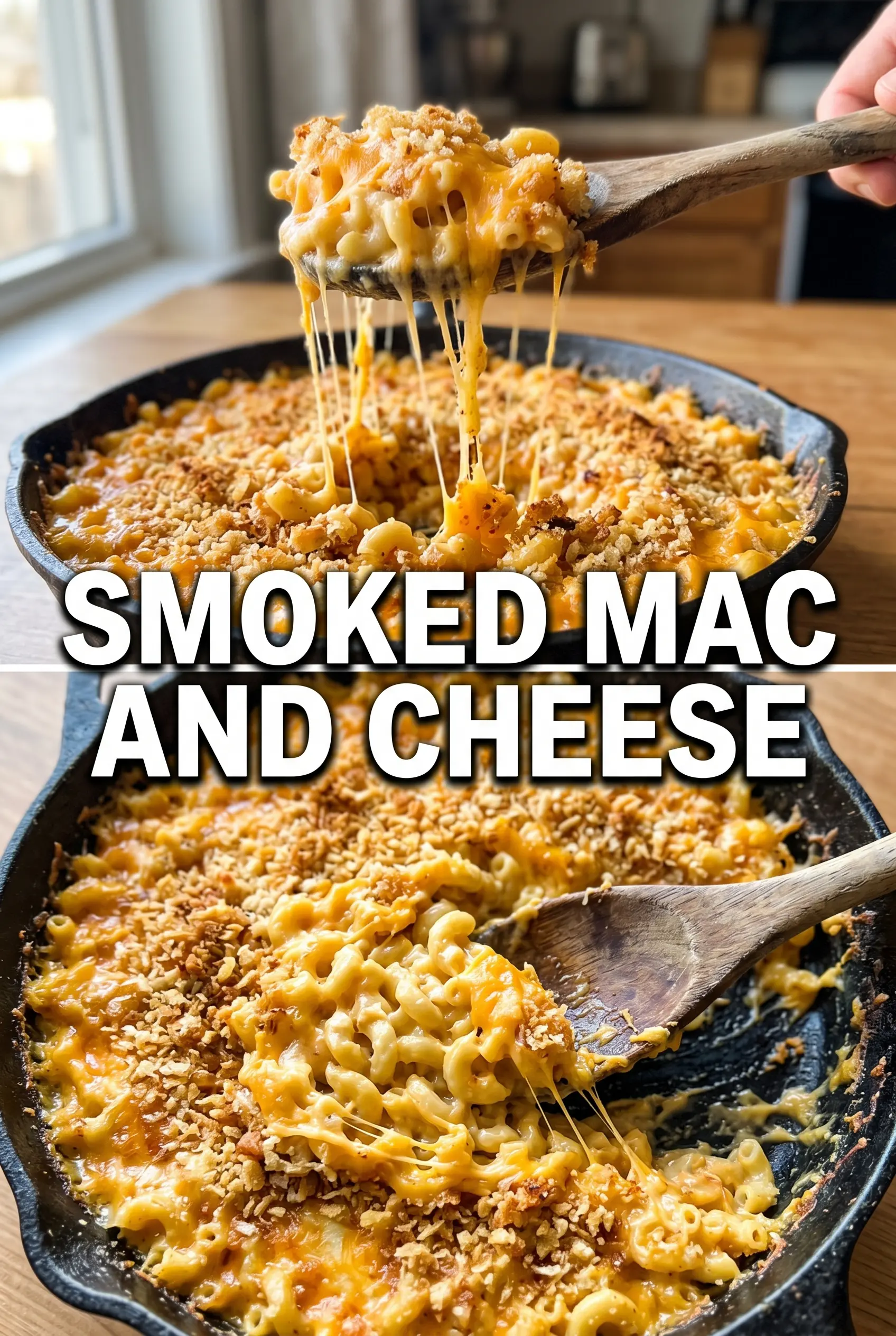
Smoked Mac And Cheese
Ingredients
Equipment
Method
- Prepare the smoker to 225°F and let it stabilize before cooking.
- Melt butter in a saucepan over medium heat until fully liquefied.
- Add flour and whisk for 1-2 minutes until smooth and slightly thickened.
- Slowly whisk in milk and heavy cream, keeping the mixture smooth as it warms.
- Bring the sauce to a gentle simmer and cook 3-5 minutes, whisking, until thick enough to coat a spoon.
- Stir in sharp cheddar and smoked Gouda until melted and glossy, then whisk in garlic powder and season with salt and pepper.
- Mix cooked elbow macaroni with the cheese sauce in an aluminum pan until evenly coated.
- Combine panko breadcrumbs with melted butter, then sprinkle evenly over the top.
- Smoke at 225°F for 60-90 minutes until the mac and cheese is bubbling and the top is golden.
- Let the smoked mac and cheese rest 10 minutes before serving so it sets up and slices cleanly.