Sticky, glossy Korean BBQ meatballs earn their place fast because they hit the sweet spot between party food and weeknight dinner. The glaze clings to every bite, the centers stay tender, and the spicy mayo cools everything down just enough to keep you coming back for one more meatball. Served hot from the oven, they have that lacquered finish that looks like you worked on them all day, even though the whole tray comes together in under an hour.
The key is building flavor in layers: ginger, garlic, sesame oil, and soy sauce go straight into the meat so the meatballs taste seasoned all the way through, not just on the outside. Then the gochujang glaze simmers long enough to thicken slightly before it hits the hot meatballs, which helps it coat instead of sliding off. If you’ve ever ended up with dry meatballs or a glaze that turned watery on the platter, this version fixes both problems.
Below you’ll find the timing that keeps the meatballs juicy, the one glaze cue that matters, and a couple of smart swaps if you need to work with what you already have in the fridge.
The glaze thickened up just enough to coat every meatball, and the spicy mayo was the perfect contrast. I served these as an appetizer and they disappeared before I could set out the second plate.
Like these Korean BBQ meatballs with spicy mayo dip? Save them to Pinterest for the nights when you want a sticky gochujang glaze and a crowd-pleasing appetizer that disappears fast.
The Step That Keeps the Glaze on the Meatballs Instead of in the Pan
Most glazed meatball recipes fail in the same place: the sauce looks perfect in the saucepan, then turns thin the second it meets the meat. Here, the fix is simple. Bake the meatballs until they’re cooked through and the surface has set, then toss them while both the glaze and the meatballs are still hot. That heat helps the glaze cling and turn shiny instead of pooling at the bottom of the bowl.
Gochujang brings heat, salt, and a little funk, but it needs honey and soy sauce to round it out. Rice vinegar keeps the glaze from tasting flat, and sesame oil gives it that toasted finish that makes the whole dish read Korean-American instead of just spicy-sweet. If your glaze seems too loose after simmering, give it another minute; it should coat a spoon in a thin layer, not turn into syrup.
What Each Ingredient Is Actually Doing in These Meatballs
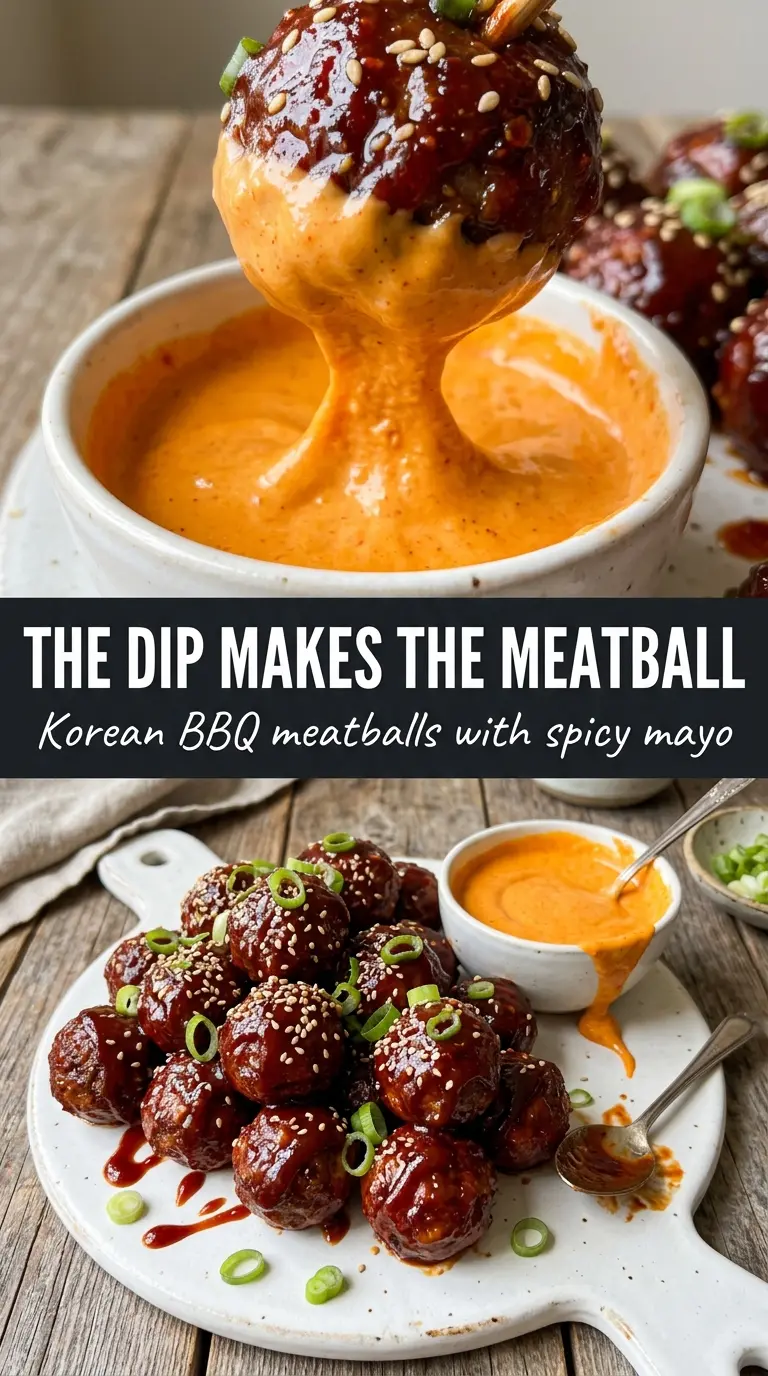
- Ground beef or pork — Beef gives a deeper, meatier bite; pork stays a little softer and richer. Either works, but avoid extra-lean meat because it dries out fast once the meatballs bake.
- Panko breadcrumbs and egg — This is the structure that keeps the meatballs tender instead of dense. Panko makes a lighter crumb than regular breadcrumbs, and the egg holds everything together without turning the mixture paste-like.
- Gochujang — This is the flavor anchor in the glaze. There isn’t a real substitute that tastes the same, but if you need to soften the heat, use a little less and add another teaspoon of honey rather than replacing it with chili sauce.
- Fresh ginger, garlic, and green onions — These build the fresh edge that keeps the meatballs from tasting heavy. Use fresh ginger if you can; dried ginger won’t give you the same brightness or aroma.
- Mayonnaise, sriracha, and lime juice — The dip should taste creamy, spicy, and sharp. Lime juice matters here because it cuts through the richness; lemon works in a pinch, but lime fits the rest of the dish better.
How to Get Tender Meatballs and a Sticky Finish in the Same Batch
Mix the Meat Gently
Combine the meat with the panko, egg, garlic, ginger, soy sauce, sesame oil, and green onions just until the mixture holds together. Overmixing tightens the meat and gives you bouncy, heavy meatballs instead of tender ones. The mixture should look evenly combined but still loose enough to shape without pressing hard.
Shape for Even Baking
Roll the mixture into 24 meatballs of similar size so they bake at the same pace. If some are much larger than others, the small ones dry out while the larger ones still need time in the oven. Line the pan with foil so the glaze cleanup later is painless, but leave a little space between the meatballs so they brown instead of steam.
Simmer the Glaze Until It Coats
Whisk the gochujang, soy sauce, honey, rice vinegar, sesame oil, and garlic in a small saucepan, then let it bubble gently for just a few minutes. You want a slight thickening, not a hard reduction. If it boils aggressively, the honey can take over and make the glaze taste dull instead of balanced.
Toss While Everything Is Hot
Move the baked meatballs straight into the warm glaze and toss until every surface is glossy. If you wait too long, the glaze starts to set in the pan and won’t coat as evenly. Finish with sesame seeds and sliced green onions while the glaze is still tacky so the garnish sticks.
How to Adapt These Korean BBQ Meatballs for Different Needs
Use pork for a richer, softer bite
Ground pork makes the meatballs a little juicier and gives the glaze something rounder to cling to. The flavor lands a touch sweeter and fattier than beef, which works nicely if you’re serving these as an appetizer with drinks.
Make them gluten-free without losing the texture
Swap the panko for a gluten-free breadcrumb blend and use a gluten-free soy sauce or tamari. The meatballs still hold together well, but the crumb will be a little finer, so don’t pack the mixture tightly when shaping.
Turn down the heat without losing the glaze
Use less gochujang and let honey and soy sauce carry more of the balance. You still get the savory-sweet coating, just with a milder finish that works better for kids or anyone who doesn’t want much spice.
Make the spicy mayo ahead for serving
The dip tastes even better after it sits in the fridge for 30 minutes because the heat from the sriracha settles into the mayonnaise. If it thickens too much, whisk in a few drops of lime juice or water until it dips cleanly.
Storage and Reheating
- Refrigerator: Store the meatballs and glaze in an airtight container for up to 4 days. The sauce will thicken as it chills, which is normal.
- Freezer: The cooked meatballs freeze well for up to 2 months. Freeze them without the glaze if possible, then make the sauce fresh for the best texture.
- Reheating: Warm the meatballs gently in a covered skillet with a splash of water or extra glaze over low heat. Microwaving on high tends to make them rubbery and can tighten the sauce too much.
Answers to the Questions Worth Asking
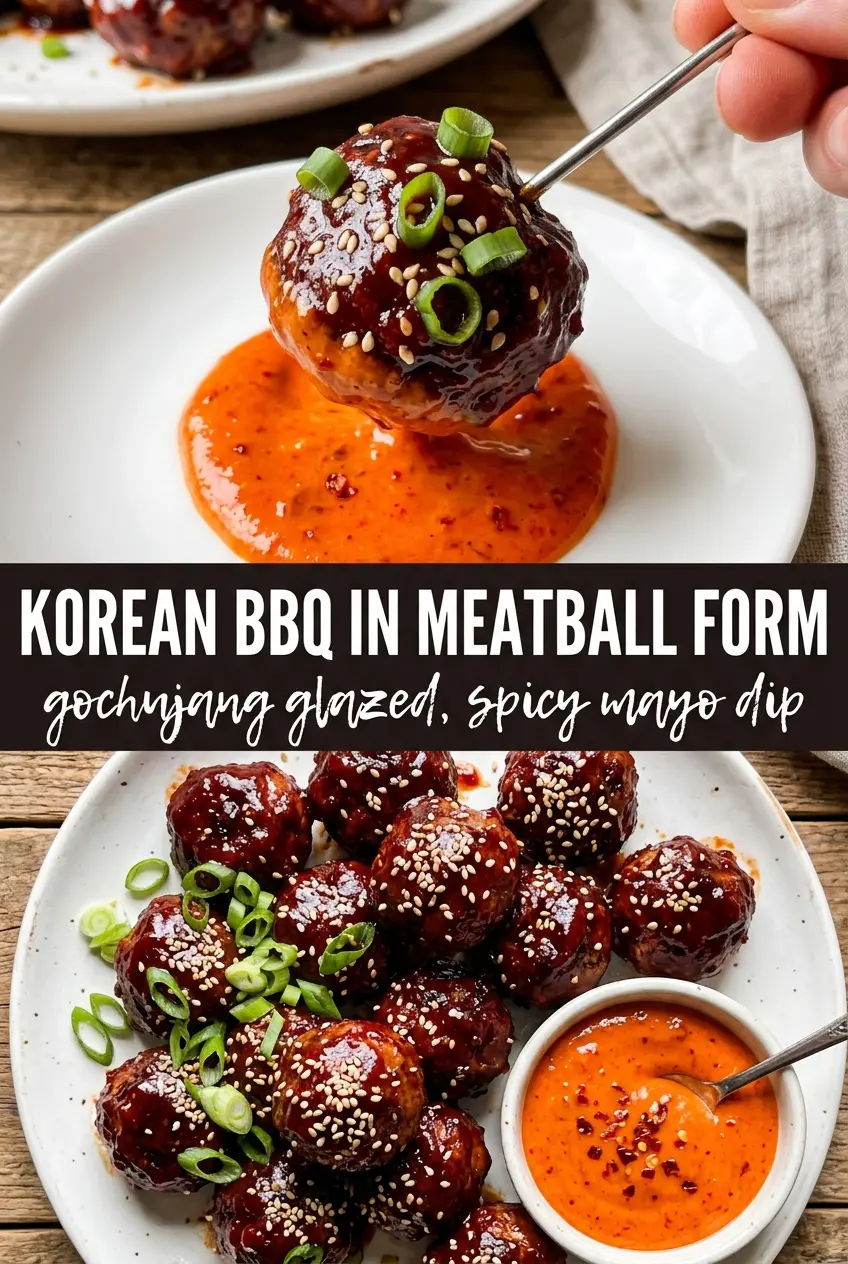
Korean BBQ Meatballs with Spicy Mayo Dip
Ingredients
Equipment
Method
- Whisk together mayonnaise, sriracha, and lime juice until smooth, then cover and refrigerate for 5 minutes to thicken.
- Preheat the oven to 400°F and line a sheet pan with foil.
- Combine ground beef or pork, panko breadcrumbs, egg, minced garlic, grated ginger, soy sauce, sesame oil, and green onions, then form into 24 meatballs.
- Bake at 400°F for 18-20 minutes until the meatballs are cooked through and no longer pink in the center.
- In a small saucepan, whisk gochujang, soy sauce, honey, rice vinegar, sesame oil, and minced garlic.
- Simmer over medium heat for 2-3 minutes, stirring, until the glaze looks slightly thickened and glossy.
- Toss the hot meatballs in the Korean BBQ glaze until fully coated and glistening.
- Arrange on a platter and garnish with sesame seeds and green onions, then serve immediately with the spicy mayo dip.