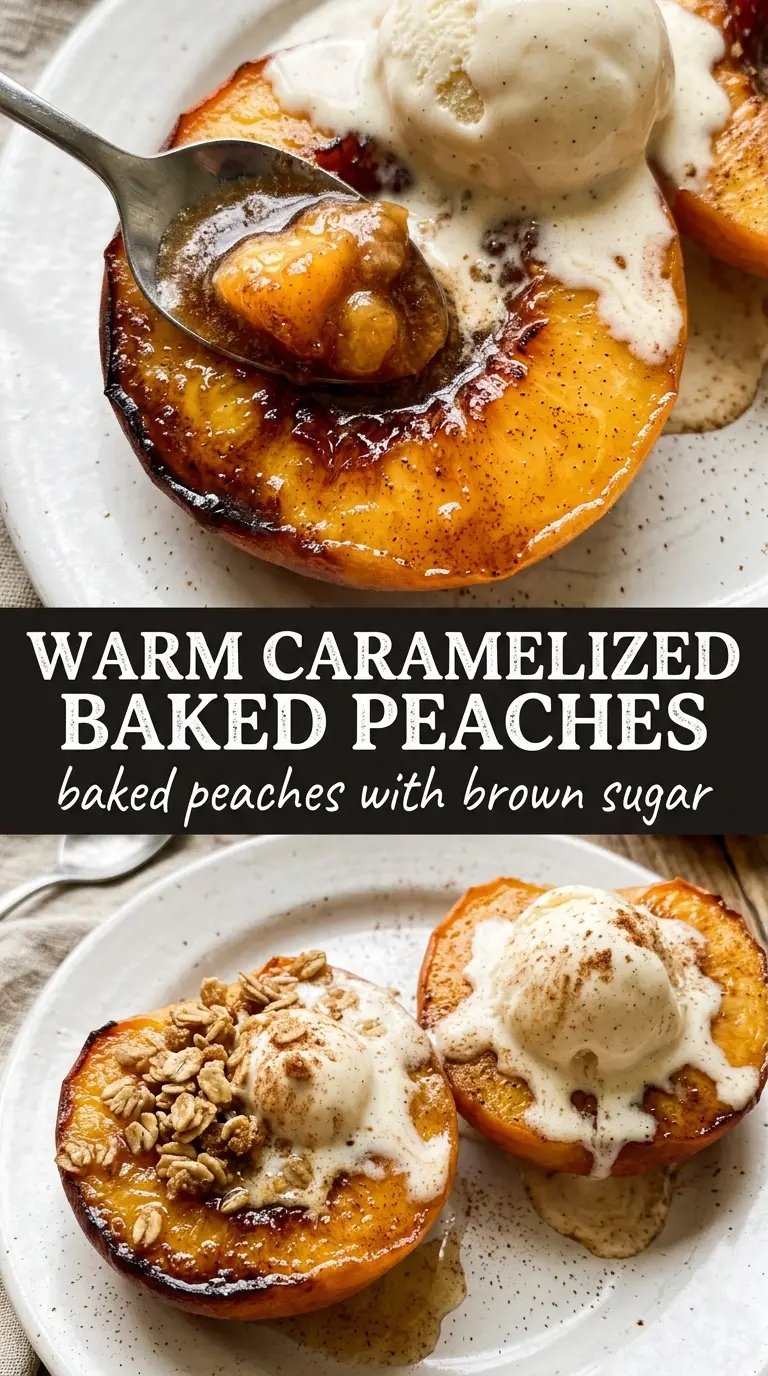
Warm baked peaches turn into something close to dessert syrup: tender, jammy fruit with caramelized edges and a glossy brown sugar glaze that collects in the center of each half. The short bake time keeps the peaches intact while the heat draws out their juice, so you get soft fruit instead of a collapsed mess. A scoop of ice cream melting into the pan juices is the kind of simple finish that makes this feel special without asking much from you.
The small details matter here. Ripe peaches are sweet enough to carry the dessert, but they still need enough structure to hold their shape in the oven. Brown sugar and butter melt together with cinnamon, nutmeg, and a little vanilla, then bubble into a sauce that thickens as the peaches soften. If the peaches are underripe, they stay firm and the sugar burns before the fruit turns luscious. Too ripe, and they can fall apart before the center gets properly caramelized.
Below, I’ll show you how to tell when the peaches are ready to come out, which swaps still give you that glossy finish, and how to serve them warm without losing the caramel in the pan.
The brown sugar melted into the peaches instead of running all over the dish, and the centers turned jammy without getting mushy. I added vanilla ice cream on top and my husband said it tasted like peach cobbler without the crust.
Save these baked peaches for the night you want a fast dessert with caramelized fruit, cinnamon, and melting ice cream.
The Trick to Keeping Baked Peaches Tender Instead of Watery
The biggest mistake with baked peaches is treating them like fruit that can sit in the oven forever. Once they soften, they move fast. If you bake until they look collapsed, the juices flood the dish and the sugar turns thin instead of syrupy. The goal is tender flesh with edges that still hold their shape, plus a center that has enough structure to trap the melting butter and sugar.
Cut-side up is the right call here because it creates a little basin for the glaze. That basin catches the butter as it melts and helps the brown sugar form a caramelized pool instead of sliding off the fruit. A baking dish with enough snugness also matters; if the peaches are too spread out, the juices evaporate instead of concentrating.
- Peaches — Choose ripe peaches that yield slightly when pressed, but don’t feel fragile. They’ll soften in the oven, and that small amount of firmness is what keeps them from turning mushy.
- Brown sugar — This does the heavy lifting for the glaze. White sugar will sweeten, but it won’t give you the same molasses depth or the darker syrupy finish.
- Butter — The butter helps the sugar melt into a glossy sauce and keeps the top from drying out. Cut it into small pieces so it melts evenly into each peach half.
- Cinnamon, nutmeg, and vanilla — Cinnamon leads, nutmeg rounds out the spice, and vanilla makes the whole pan taste warmer and more dessert-like. Don’t skip the vanilla if you want that baked cobbler feel without making an actual topping.
What Each Ingredient Is Actually Doing in This Recipe
- Primary ingredient (the star) — Quality matters most. Choose the best you can find.
- Cooking medium (oil, butter, or broth) — This carries flavors and prevents dryness.
- Seasonings (salt, pepper, spices, herbs) — Layer flavors so nothing overpowers. Build depth gradually.
- Aromatics (garlic, onion, herbs) — Cook with fat to bloom flavors. Become the foundation.
- Supporting ingredients — Complement the main ingredient without overpowering it.
- Sauce or liquid (if applicable) — Brings flavors together. Balance richness with acid.
- Acid (lemon, vinegar, wine, or other) — Brightens and prevents flat-tasting results.
- Final finish (garnish, glaze, or sauce) — Prevents one-dimensional taste and adds visual appeal.
How to Pull Off the Glaze Without Burning the Fruit
Building the Sugar Blanket
Mix the brown sugar, cinnamon, nutmeg, vanilla, and salt before it hits the peaches so the seasoning spreads evenly. Sprinkle it over the cut sides, then tuck a small piece of butter into the center of each half. That butter should melt into the sugar as the peaches bake, not sit on top in a greasy puddle, so keep the pieces small and place them right in the cavity.
Watching for the Right Kind of Tender
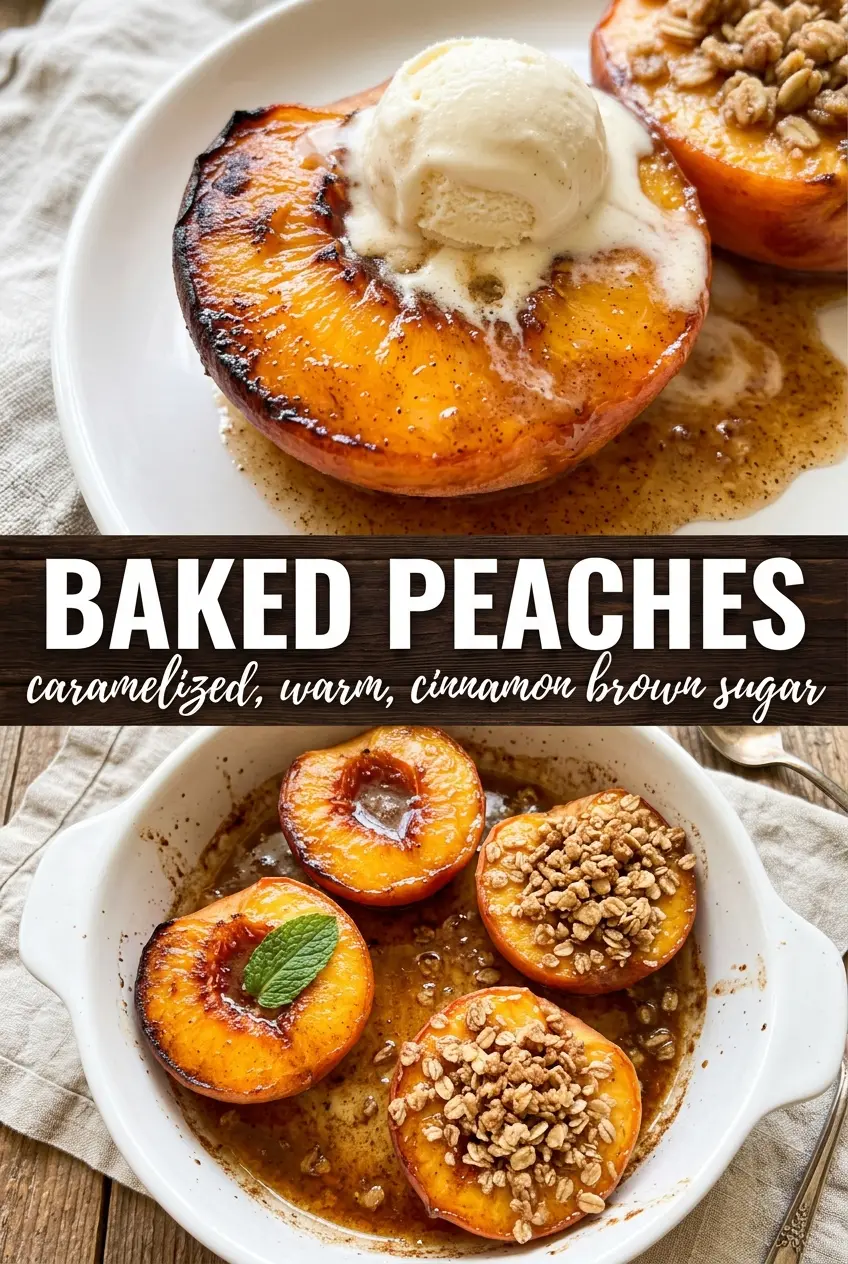
Bake at 375°F until the peaches are soft when pierced with a fork and the sugar has turned into a dark golden glaze, usually 18 to 22 minutes. If the edges start to blacken before the fruit softens, the peaches were probably under-ripe or the dish is too shallow and the syrup is reducing too quickly. Pull them when the centers still look glossy and the fruit gives easily; they’ll keep softening as they cool.
Finishing With the Pan Juices
Let the peaches rest for about 5 minutes before serving. That short pause lets the juices settle and thicken slightly, which makes it easier to spoon the caramelized syrup over the top instead of losing it to the bottom of the pan. Serve them warm with ice cream, Greek yogurt, or whipped cream, and add mint at the end so it stays fresh and bright.
Small Changes That Still Give You That Caramelized Finish
Make it dairy-free
Swap the butter for coconut oil or a plant-based butter and the peaches will still caramelize, though the sauce will taste a little cleaner and less rich. Coconut oil adds a faint tropical note that works well with peaches, while a neutral vegan butter keeps the flavor closest to the original.
Use maple syrup for a deeper sweetness
Replace half the brown sugar with maple syrup if you want a looser, more fragrant glaze. It won’t set up quite as thick, but it adds a rounder sweetness and pairs especially well with vanilla ice cream.
Add a little crunch
A spoonful of chopped pecans or sliced almonds over the top before baking gives the dessert more texture and a toasted edge. The nuts brown fast, so keep them tucked into the sugar rather than scattered loosely across the pan.
Storage and Reheating
- Refrigerator: Store leftovers in an airtight container for up to 3 days. The peaches soften a bit more as they sit, but the flavor stays great.
- Freezer: Freezing isn’t ideal. The fruit turns mushy after thawing, and the glaze loses its clean caramel texture.
- Reheating: Warm gently in a 325°F oven or in short bursts in the microwave until just heated through. Don’t blast them at high heat or the sugars can tighten and the peaches can collapse.
Questions I Get Asked About This Recipe
Baked Peaches
Ingredients
Equipment
Method
- Preheat oven to 375°F, then place the peach halves cut-side up in a baking dish (or on a sheet pan).
- Arrange the peach halves so their cut centers face up, ready to hold the caramelizing glaze.
- Stir together brown sugar, cinnamon, nutmeg, vanilla extract, and salt until evenly combined.
- Sprinkle the spiced brown sugar mixture evenly over each peach half so it covers the cut surface.
- Place a small piece of butter in the center of each peach half.
- Bake for 18-22 minutes at 375°F until the peaches are tender and the sugar turns into a dark golden glaze.
- Watch for blistered, caramelized edges and a glistening pooled syrup in each center cavity.
- Let the peaches cool for 5 minutes to slightly thicken the caramelized pan juices.
- Spoon the caramelized pan juices over each peach half so the glaze coats the softened flesh.
- Serve warm with vanilla ice cream (or Greek yogurt, or whipped cream) and scatter fresh mint over the top.