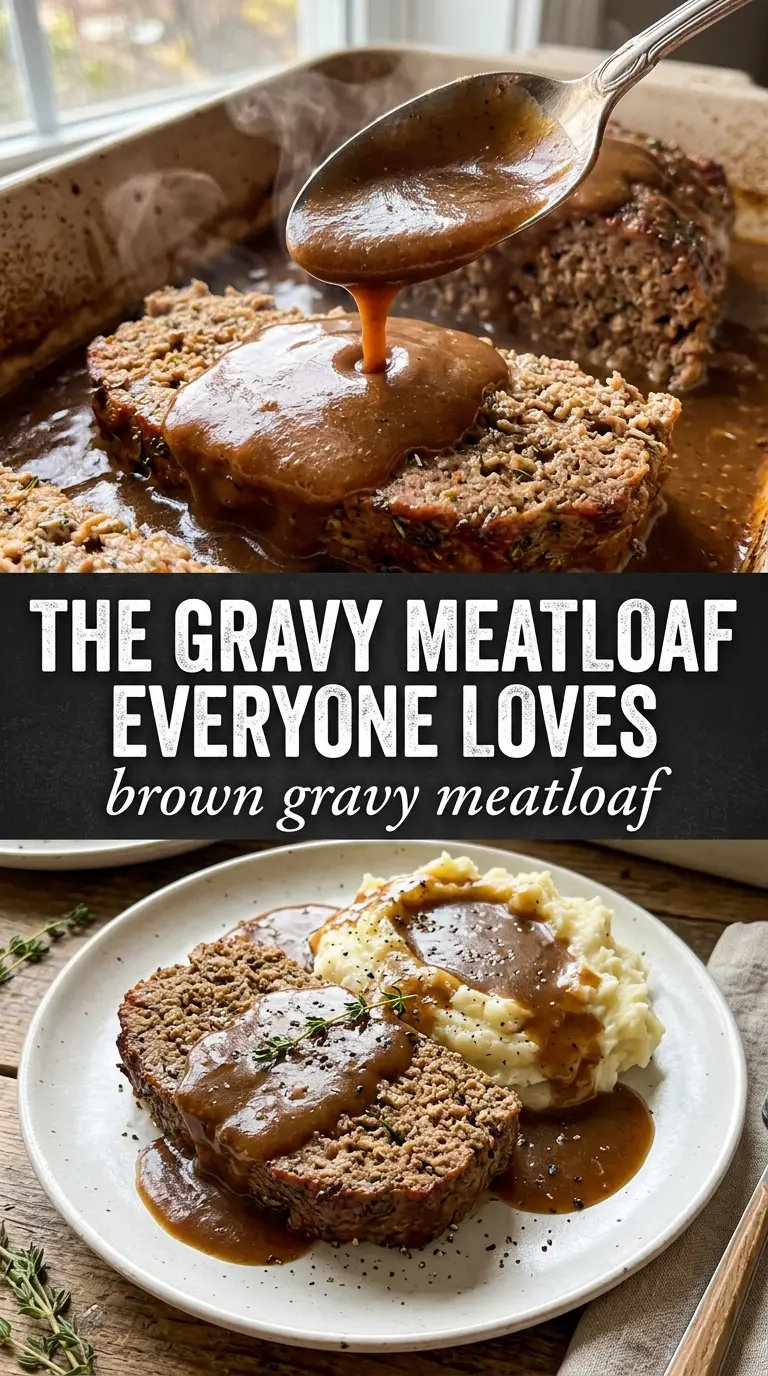
Brown gravy meatloaf lands on the table with a deep savory flavor and the kind of slice that holds together when you cut into it. The beef stays tender, the top gets a little crusty around the edges, and the gravy gives every bite that old-school diner comfort people keep coming back for. It tastes like the kind of dinner that doesn’t need anything fancy beside it, just mashed potatoes and a spoon for extra gravy.
What makes this version work is that the meatloaf itself is seasoned enough to stand on its own, but not so heavily that it fights the gravy. Grated onion melts into the mixture instead of leaving big raw pieces behind, and the milk-and-breadcrumb combo keeps the texture soft without turning it mushy. The gravy uses the pan drippings if you have them, which is where that dark, beefy depth comes from.
Below, I’m walking through the small details that matter most: how to keep the loaf tender, how to avoid a grainy gravy, and what to change if you need to make it ahead or swap ingredients.
The gravy thickened up beautifully and the grated onion kept the meatloaf so tender. I used the drippings from the pan and it tasted like a real diner meal.
Brown gravy meatloaf with that rich pan-dripping gravy is the kind of dinner worth keeping close for rainy nights and Sunday suppers.
The Trick to Keeping Meatloaf Tender Instead of Dense
The biggest mistake with meatloaf is packing it like you’re making a brick. Once the beef is mixed with the breadcrumbs, milk, eggs, and seasonings, stop as soon as everything looks evenly combined. Overmixing compresses the meat and gives you a tight, chewy loaf instead of one that slices cleanly and stays tender.
Grated onion matters here because it disappears into the mixture and gives you moisture plus flavor without big pockets of raw onion. If you only have finely minced onion, that works too, but grated onion is better because it melts into the loaf as it bakes. The pan shape also helps. A loaf pan gives you neat slices and catches the drippings you’ll want for the gravy.
What the Breadcrumbs and Drippings Are Doing Here
- Ground beef — Use 80/20 if you can. Leaner beef will work, but it won’t stay as juicy, and you’ll lose some of the flavor that makes this worth serving with gravy.
- Breadcrumbs — They hold onto the milk and juices so the loaf doesn’t dry out. Plain breadcrumbs are best because seasoned crumbs can push the salt level too far.
- Eggs — These bind the loaf without making it rubbery. Two eggs is the right balance for 2 pounds of beef; fewer and the loaf can crumble, more and it starts to feel bouncy.
- Milk — This softens the breadcrumbs before they hit the oven, which is what gives you a tender slice. Whole milk is ideal, but 2% works fine.
- Worcestershire — This is where a lot of the beefy depth comes from. Don’t skip it unless you have to, because the gravy depends on that same savory note.
- Pan drippings — If you get them, use them. They turn a basic gravy into one that tastes like it came straight from the roast pan, and there’s no substitute that gives the same result.
Building the Loaf and Whisking the Gravy Without Ruining Either
Mixing the Meatloaf Base
Combine the beef, breadcrumbs, eggs, milk, grated onion, garlic, Worcestershire, salt, and pepper in a large bowl and mix just until you don’t see dry streaks. The mixture should look cohesive but still loose, not pasty. If it feels sticky and tight, it’s been worked too much. Press it into the loaf pan without compacting it hard.
Baking Until the Center Reaches 160°F
Bake at 350°F for 60 to 70 minutes, then check the center with a thermometer. You’re looking for 160°F, not just a browned top. If the top darkens before the center is done, tent it loosely with foil. Let it rest for 10 minutes before slicing so the juices stay in the loaf instead of flooding the cutting board.
Making the Brown Gravy
Melt the butter in a saucepan, whisk in the flour, and cook it for 1 to 2 minutes until it smells nutty and turns a light golden color. That short cook keeps the gravy from tasting raw. Whisk in the broth slowly so the mixture stays smooth, then add Worcestershire, garlic powder, and any drippings. If the gravy looks lumpy, keep whisking over medium-low heat until it smooths out.
Slicing and Serving
Cut the meatloaf into thick slices and spoon the gravy over the top while everything is still warm. The loaf holds together best if you use a sharp knife and wipe it between cuts. Serve it over mashed potatoes, rice, or buttered noodles if you want something to catch the extra gravy.
How to Adapt This for a Smaller Crowd, a Different Protein, or No Dairy
Make-Ahead Meatloaf for Busy Nights
You can mix and shape the loaf up to 24 hours ahead, cover it tightly, and refrigerate it until baking time. The flavor actually settles in a little more overnight, and the loaf slices well after a full rest. Let the pan sit at room temperature for about 20 minutes before it goes into the oven so the center doesn’t start cold.
Dairy-Free Version
Swap the milk for an unsweetened non-dairy milk like oat or soy, and use a dairy-free butter substitute for the gravy. The loaf texture stays close to the original because the milk is there for moisture, not richness. Keep the broth flavorful, since the gravy will carry most of the final taste.
Using Ground Turkey or a Beef-Pork Blend
A beef-pork blend gives you a richer, softer loaf, while ground turkey makes it lighter but easier to dry out. If you use turkey, don’t reduce the milk or breadcrumbs, and check the temperature carefully so you don’t overbake it. The gravy becomes even more important with turkey because it adds back the beefy depth.
Storage and Reheating
- Refrigerator: Store the sliced meatloaf and gravy separately for up to 4 days. The loaf stays moist, but the gravy thickens as it chills.
- Freezer: Meatloaf freezes well for up to 3 months. Wrap slices tightly and freeze the gravy in a separate container so you can thaw just what you need.
- Reheating: Warm slices covered in the oven at 325°F with a splash of broth or water, then heat the gravy on the stove until smooth. Don’t blast it in the microwave uncovered or the edges dry out before the center is hot.
Answers to the Questions Worth Asking
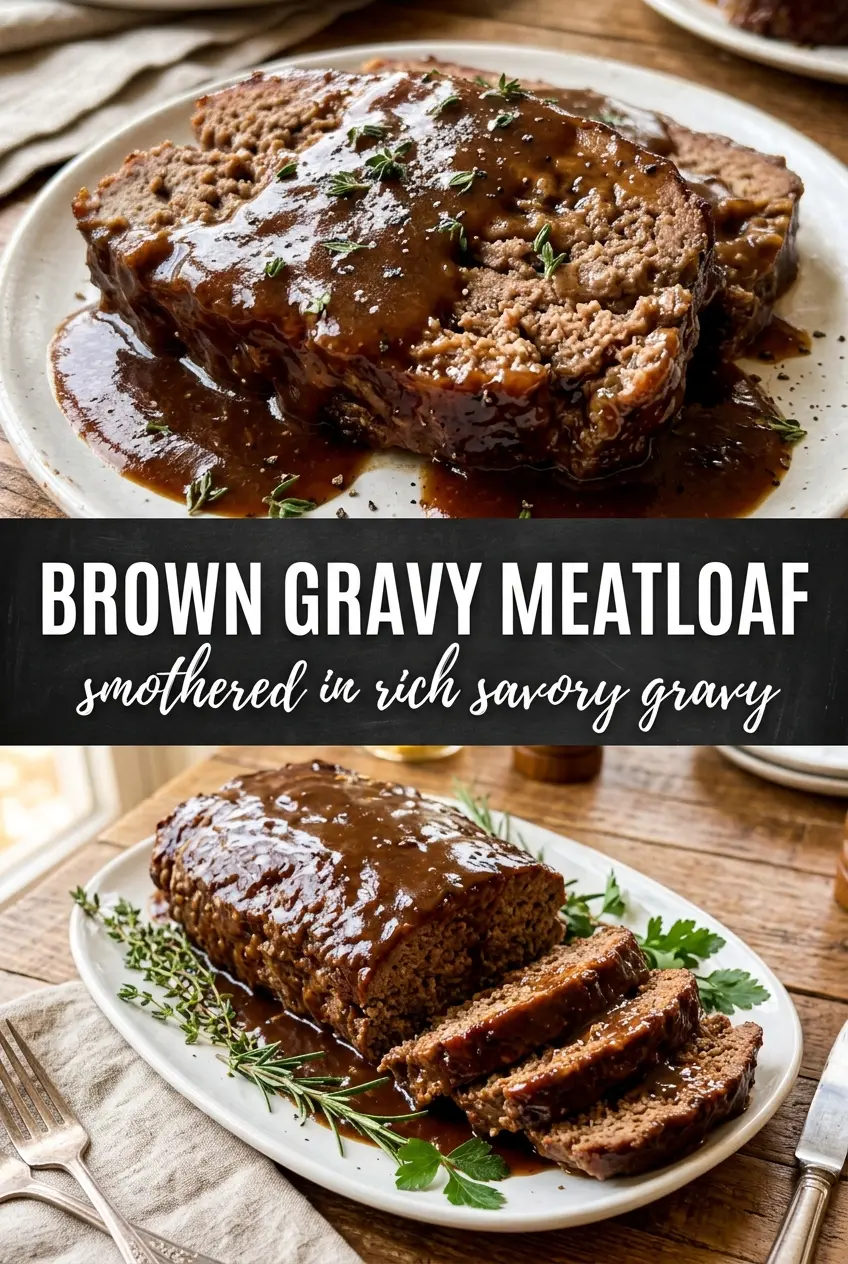
Brown Gravy Meatloaf
Ingredients
Equipment
Method
- Preheat the oven to 350°F and grease a loaf pan, leaving it ready for the mixture. You should see a clear nonstick coating so the loaf releases easily.
- Mix together ground beef, breadcrumbs, eggs, milk, grated small onion, minced garlic, Worcestershire, and salt and pepper until evenly combined. The mixture should look uniform with no dry breadcrumb pockets.
- Press the meatloaf mixture into the greased loaf pan and smooth the top. Pack it firmly so it slices cleanly after baking.
- Bake for 60–70 minutes at 350°F until the internal temperature reaches 160°F. The loaf should look set in the center with browned edges.
- Rest the meatloaf for 10 minutes, then reserve any pan drippings. A short rest helps the slices hold together while you start the gravy.
- Melt butter in a saucepan over medium heat, then whisk in flour and cook for 1–2 minutes until golden. The roux should smell nutty and turn a deeper golden color.
- Whisk in beef broth, Worcestershire sauce, garlic powder, and any reserved drippings, then season with salt and pepper. The sauce should start smooth and loosen from the roux as you whisk.
- Simmer the gravy for 5 minutes, whisking occasionally, until thickened. It should coat the back of a spoon and look glossy and dark brown.
- Slice the meatloaf and serve it covered in brown gravy. The gravy should pool slightly on the mashed-potatoes style plate so every bite gets sauce.