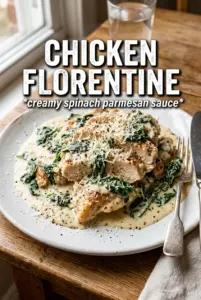
Golden chicken breasts tucked into a silky Parmesan cream sauce are the kind of dinner that makes a weeknight feel pulled together without much fuss. Chicken Florentine earns its place because the sauce clings instead of pooling thinly, the spinach stays fresh and green, and the whole dish lands with that restaurant-style balance of richness and brightness.
What makes this version work is the order. The chicken gets a hard sear first, which builds flavor in the pan, and the garlic only cooks for a few seconds before the wine goes in so it doesn’t turn bitter. The lemon juice and zest matter here too; they cut through the cream and keep the sauce from tasting heavy. If you’ve ever had a cream sauce turn dull or grainy, the fix is usually heat management and patience, not more flour or more cheese.
Below you’ll find the small details that keep the sauce smooth, the spinach tender instead of soggy, and the chicken juicy all the way through. The variation notes at the end cover easy swaps and what to do if you want to make it a little lighter.
The sauce turned out smooth and glossy, and the lemon kept it from feeling too rich. I served it over pasta, and even the leftovers reheated without breaking.
Save this Chicken Florentine for the nights when you want golden seared chicken and a silky spinach cream sauce without a long ingredient list.
The Sauce Breaks When the Heat Stays Too High
The most common problem in Chicken Florentine is rushing the cream sauce after the wine goes in. If the pan is still raging hot, the dairy can tighten unevenly or separate, especially once the Parmesan hits the pan. Lowering the heat before the cream goes in gives you time to reduce the liquid gently and keep the sauce smooth.
Another detail that matters is the chicken fond left in the skillet. Those browned bits from searing are what give the sauce its depth, so don’t wipe the pan clean. The wine loosens everything stuck to the bottom, and that is where the flavor starts.
What Each Ingredient Is Actually Doing in Chicken Florentine

- Chicken breasts — Boneless, skinless breasts cook quickly and slice neatly for serving. If yours are thick on one end, pound them to an even thickness so they sear at the same rate and stay juicy.
- Dry white wine — This lifts the browned bits from the pan and adds acidity that keeps the sauce from tasting flat. Use something dry enough to drink, not sweet cooking wine.
- Heavy cream — This is what gives the sauce its body and glossy finish. Half-and-half will work in a pinch, but it won’t thicken as smoothly and it has a better chance of looking thin.
- Parmesan — Freshly grated Parmesan melts into the sauce more cleanly than the pre-shredded bagged kind, which can make the sauce sandy. If you only have the packaged version, add it off the heat and stir patiently.
- Baby spinach — Fresh spinach wilts fast and keeps the dish bright. Add it at the end so it softens without overcooking into a dark, watery tangle.
- Lemon juice and zest — These are not garnish here. They sharpen the cream sauce and keep the Parmesan from tasting one-note.
How to Build the Chicken Florentine Sauce in the Right Order
Get the Chicken Deeply Golden First
Season the chicken generously, then sear it in olive oil over medium-high heat until the surface is deeply golden and the chicken releases easily from the pan. If it sticks, it needs another minute. Pull it once it reaches 165°F in the center, then set it aside while you build the sauce. Taking it out before making the sauce keeps it from drying out while the cream reduces.
Use the Wine to Lift the Pan
Add the garlic to the same skillet for just 30 seconds, then pour in the wine. It should bubble and steam right away as it loosens the browned bits from the bottom. Let it simmer long enough to lose the sharp alcohol smell and reduce by about half. If you skip this reduction, the sauce can taste thin and boozy instead of rounded and savory.
Finish the Cream Slowly
Stir in the cream and chicken broth, then keep the heat at a gentle simmer until the sauce starts to coat the back of a spoon. Add the Parmesan off a violent boil, or it can turn grainy and stringy. Once the cheese is in, the sauce should look glossy and slightly thicker, not clumpy. Add the spinach last, just until it wilts, then return the chicken and spoon sauce over the top.
How to Adapt Chicken Florentine Without Losing the Soul of It
Make It Lighter With Half-and-Half
Swap the heavy cream for half-and-half if you want a lighter sauce, but keep the heat low and give it a little extra time to thicken. The sauce will taste a touch less plush and won’t cling quite as heavily, but it still works if you want a less rich finish.
Go Gluten-Free Without Changing the Sauce
The recipe is naturally gluten-free as written, so the only thing to watch is what you serve it with. Pair it with rice, mashed potatoes, or gluten-free pasta, and keep an eye on packaged broth and Parmesan to confirm there aren’t any hidden additives.
Use Thighs for a Juicier, Richer Version
Boneless chicken thighs work if you want more flavor and a little more forgiveness on the stove. They take a few extra minutes to cook through, but they stay tender even if you let them simmer briefly in the sauce at the end.
Storage and Reheating
- Refrigerator: Store leftovers in an airtight container for up to 3 days. The sauce thickens as it chills, and the spinach softens a bit more.
- Freezer: I don’t recommend freezing this one. Cream sauces can separate after thawing, and the spinach turns limp.
- Reheating: Warm gently in a skillet over low heat with a splash of chicken broth or cream. High heat is what breaks the sauce, so keep it slow and stir often until the chicken is hot through.
Answers to the Questions Worth Asking
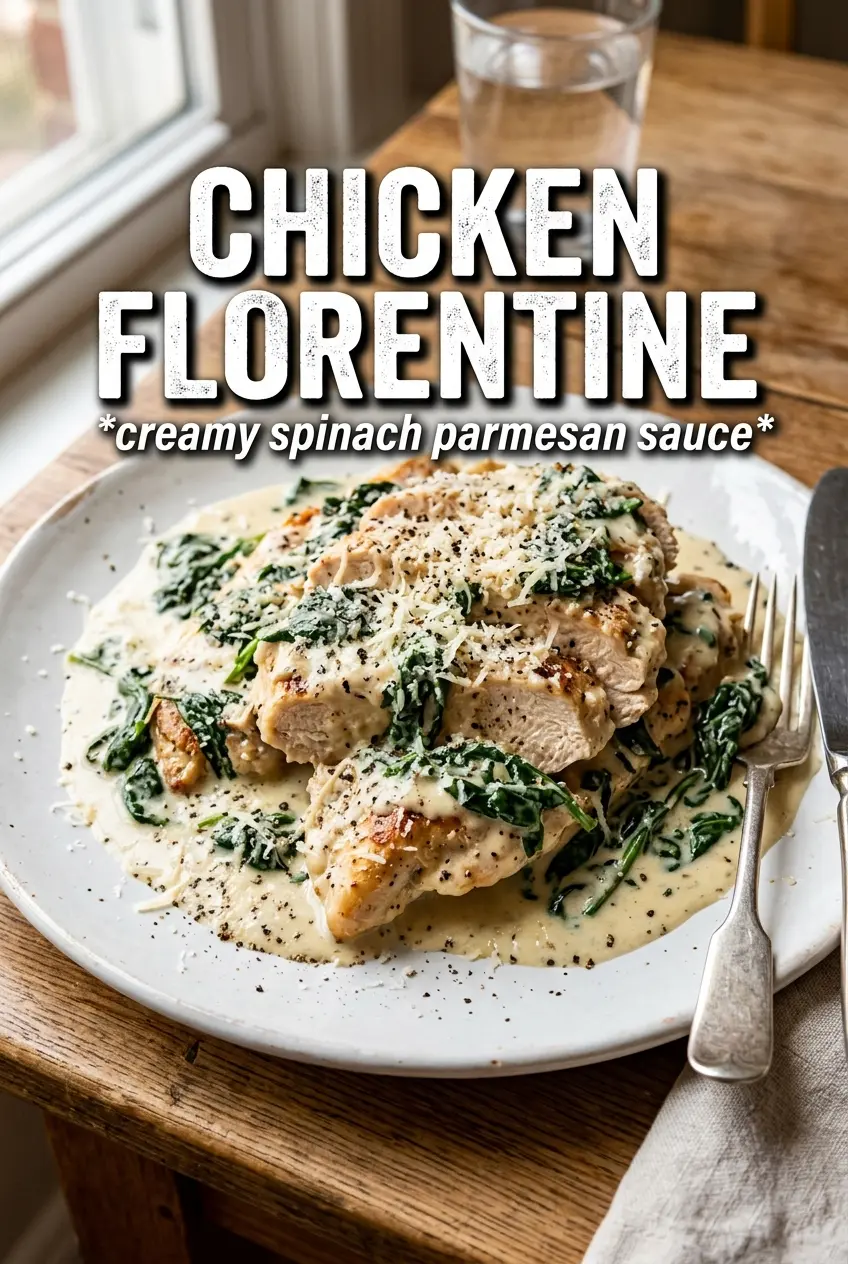
Chicken Florentine
Ingredients
Equipment
Method
- Season boneless skinless chicken breasts generously on both sides with salt, pepper, garlic powder, and Italian seasoning.
- Heat olive oil in a large skillet over medium-high heat and sear the chicken for 5-6 minutes per side, until golden and cooked through to 165°F; remove and set aside.
- Cook minced cloves garlic in the same pan for 30 seconds, until fragrant.
- Deglaze with dry white wine and simmer for 2 minutes, scraping up the browned bits.
- Add heavy cream and chicken broth, then simmer for 4-5 minutes until the sauce is slightly thickened.
- Stir in Parmesan cheese, grated, fresh lemon juice, and lemon zest until smooth and glossy.
- Add fresh baby spinach and stir until wilted.
- Return the chicken to the pan and spoon the pale white wine and cream sauce over each breast.
- Garnish with fresh parsley and lemon and serve over pasta or rice.