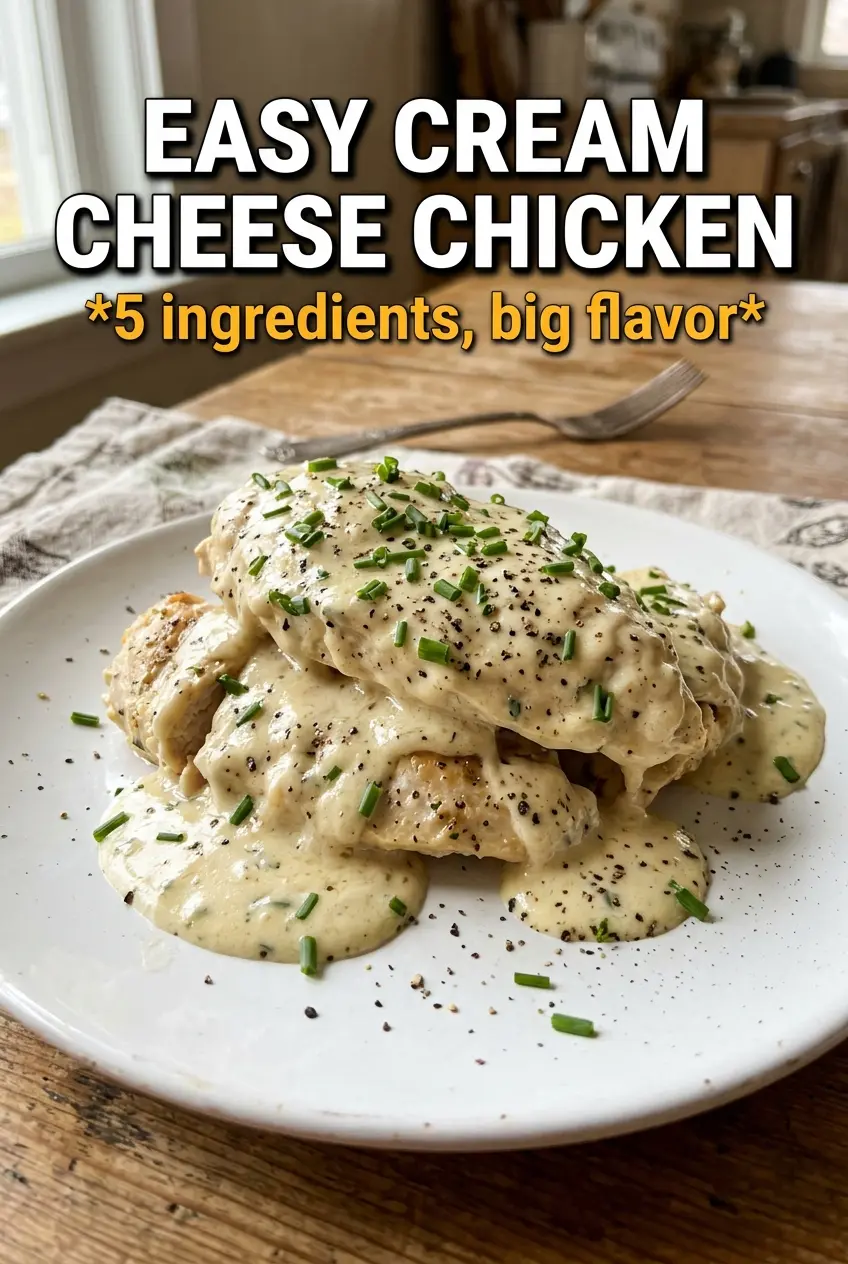
Juicy chicken breasts tucked into a tangy cream cheese sauce make one of those skillet dinners that disappears fast and still feels like a little upgrade from the usual weeknight rotation. The sauce is thick enough to coat the chicken instead of running off the plate, and the lemon juice keeps the richness from turning heavy. Every bite lands creamy, savory, and bright at the same time.
What makes this version work is the order of operations. The chicken gets a good sear first, which gives you browned bits in the pan that become the base of the sauce. Cream cheese melts smoothly once the heat comes down, and sour cream goes in at the end so the sauce stays velvety instead of splitting. That little bit of lemon and Italian seasoning keeps the whole dish tasting balanced rather than flat.
Below, I’ve included the one move that keeps the sauce smooth, plus a few smart swaps if you need to work with what’s in the fridge. If cream sauce chicken has ever turned grainy or bland for you, this version fixes both problems.
The sauce turned out thick and silky, and it clung to the chicken instead of pooling in the pan. I followed the low-heat step for the cream cheese and it never went grainy.
Save this cream cheese chicken for the nights when you want a silky skillet sauce that clings to every bite.
The Reason the Sauce Stays Smooth Instead of Breaking
The biggest mistake with cream cheese chicken is pushing the heat too far after the dairy goes in. Cream cheese can handle a little warmth, but sour cream is touchier, and boiling it hard can make the sauce look curdled or greasy. This recipe keeps the chicken sear separate from the sauce build, then brings everything together over low to medium-low heat so the emulsion stays stable.
The other detail that matters is the broth. It loosens the cream cheese before the sour cream goes in, which helps you get a smooth sauce without overworking it. If you try to melt the cream cheese straight into the pan with no liquid, you end up chasing lumps around the skillet and overcooking the chicken while you do it.
- Chicken breasts — Pound them lightly if one side is much thicker than the other. Even thickness keeps the sear even and gives you a juicier result than trying to cook a thick breast all the way through while waiting for the thinner end to catch up.
- Cream cheese — Softened and cubed cream cheese melts faster and more evenly than a cold block. Full-fat cream cheese gives the sauce the best body; lower-fat versions can work, but the sauce is a little looser and less plush.
- Sour cream — This adds tang and helps the sauce taste bright instead of heavy. Plain Greek yogurt can stand in, but add it off the heat or over very low heat so it doesn’t separate.
- Chicken broth — Broth is the thin, savory backbone of the sauce. Water will work in a pinch, but the sauce loses depth, so use broth if you have it.
- Lemon juice and chives — These are not garnish-only ingredients here. The lemon sharpens the richness, and the chives give the dish a fresh finish that keeps the sauce from tasting one-note.
What Each Ingredient Is Actually Doing in This Recipe

- Primary ingredient (the star) — Quality matters most. Choose the best you can find.
- Cooking medium (oil, butter, or broth) — This carries flavors and prevents dryness.
- Seasonings (salt, pepper, spices, herbs) — Layer flavors so nothing overpowers. Build depth gradually.
- Aromatics (garlic, onion, herbs) — Cook with fat to bloom flavors. Become the foundation.
- Supporting ingredients — Complement the main ingredient without overpowering it.
- Sauce or liquid (if applicable) — Brings flavors together. Balance richness with acid.
- Acid (lemon, vinegar, wine, or other) — Brightens and prevents flat-tasting results.
- Final finish (garnish, glaze, or sauce) — Prevents one-dimensional taste and adds visual appeal.
Building the Skillet Sauce Without Losing the Sear
Sear the Chicken Until It Releases Cleanly
Season the chicken well, then cook it in hot olive oil until the surface turns deep golden and the meat lifts from the pan without sticking. If it’s fighting you, leave it alone another minute; forcing it too early tears the crust. You’re not cooking it fully through here, just building flavor and color while keeping the juices inside.
Use the Brown Bits as the Sauce Base
After the chicken comes out, add the garlic and let it cook just until fragrant, about 30 seconds. Then pour in the broth and scrape the bottom of the skillet with a wooden spoon to loosen every browned spot. Those bits are what make the sauce taste like it came from the pan instead of from a jar.
Melt the Dairy Over Lower Heat
Add the cream cheese cubes and stir patiently over medium-low heat until the sauce turns smooth. If the heat is too high, the dairy can look grainy before it melts properly. Once the cream cheese is fully blended, stir in the sour cream, lemon juice, and Italian seasoning, then stop at a gentle simmer — no boiling after the sour cream goes in.
Return the Chicken and Finish the Plate
Slide the chicken back into the skillet and spoon sauce over the top so every piece gets coated. Let it warm through for a couple of minutes until the chicken reaches 165°F and the sauce thickens enough to cling. Finish with chives and lemon zest right before serving; they wake up the whole pan and make the sauce taste fresh.
How to Adapt This Creamy Chicken When You Need a Different Route
Swap in chicken thighs for a richer, juicier finish
Boneless skinless thighs work well here and stay tender even if they go a minute long. They bring a deeper chicken flavor, though the sauce will taste a little richer and less lean than it does with breasts.
Make it gluten-free without changing the method
This recipe is naturally gluten-free as written as long as your broth is certified gluten-free. The texture and cooking method stay the same, so there’s no special adjustment needed.
Use Greek yogurt instead of sour cream
Plain Greek yogurt brings the same tang with a little extra protein, but it’s less forgiving under heat. Stir it in off the burner or over the lowest heat possible so the sauce stays smooth.
Turn it into a lighter skillet dinner
Use less cream cheese and add a splash more broth if you want a thinner sauce that still coats the chicken. The result won’t be as luxurious, but it keeps the same tangy, savory balance with a lighter feel.
Storage and Reheating
- Refrigerator: Store leftovers in an airtight container for up to 3 days. The sauce will thicken as it chills.
- Freezer: I don’t recommend freezing this one. Cream cheese and sour cream sauces can turn grainy after thawing.
- Reheating: Warm gently in a covered skillet over low heat with a splash of broth to loosen the sauce. High heat is what usually makes the dairy separate, so go slow and stir often.
Answers to the Questions Worth Asking
Easy Cream Cheese Chicken
Ingredients
Equipment
Method
- Heat olive oil in a large skillet over medium-high heat until shimmering. Season chicken breasts with salt, pepper, garlic powder, and onion powder, then sear for 5-6 minutes per side until golden and internal temperature reaches 165°F; remove to a plate.
- In the same pan, cook minced garlic for 30 seconds until fragrant. Pour in chicken broth and scrape up the browned bits from the bottom of the skillet.
- Add cubed cream cheese and stir over medium-low heat until fully melted and smooth.
- Stir in sour cream, fresh lemon juice, and Italian seasoning until the sauce is creamy and well combined; do not boil after adding sour cream.
- Return the chicken breasts to the pan and spoon the tangy cream sauce over each piece. Garnish with fresh chives and lemon zest before serving.