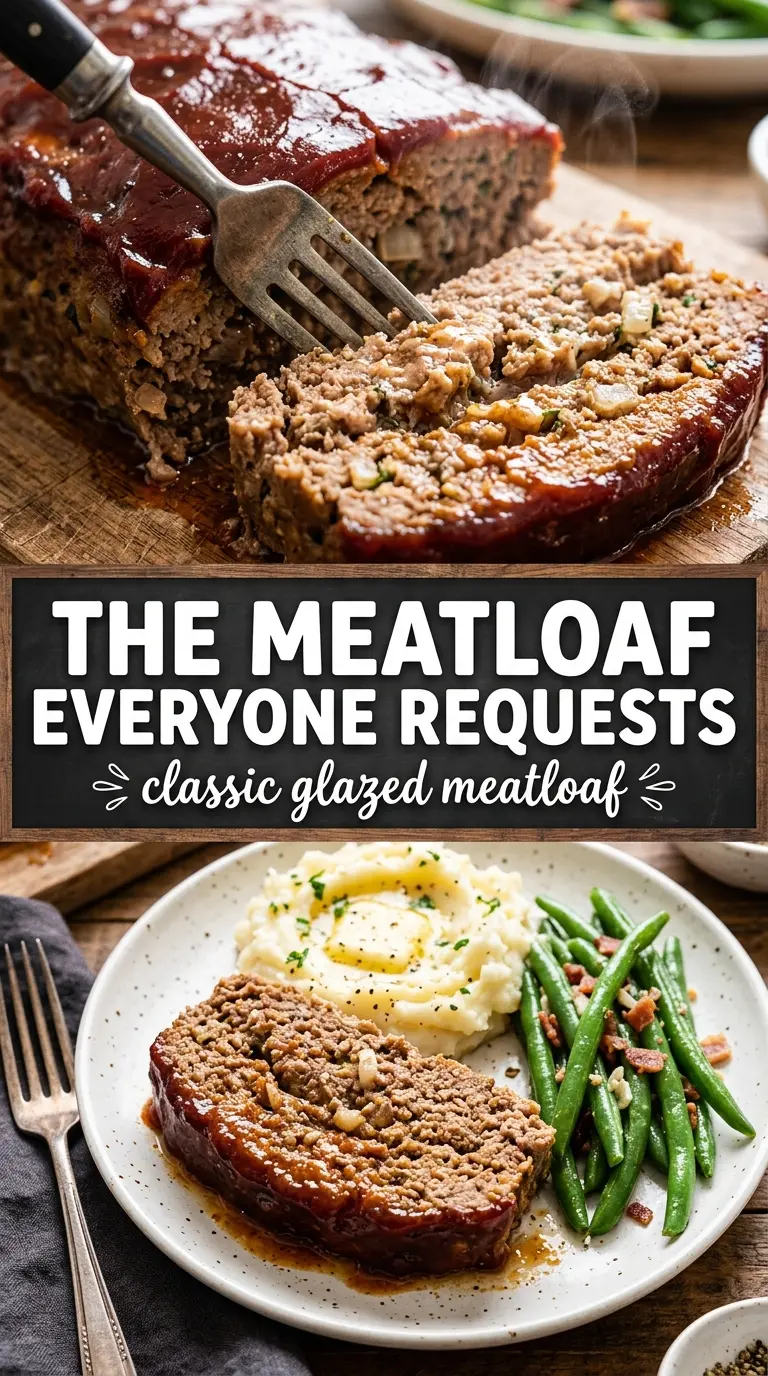
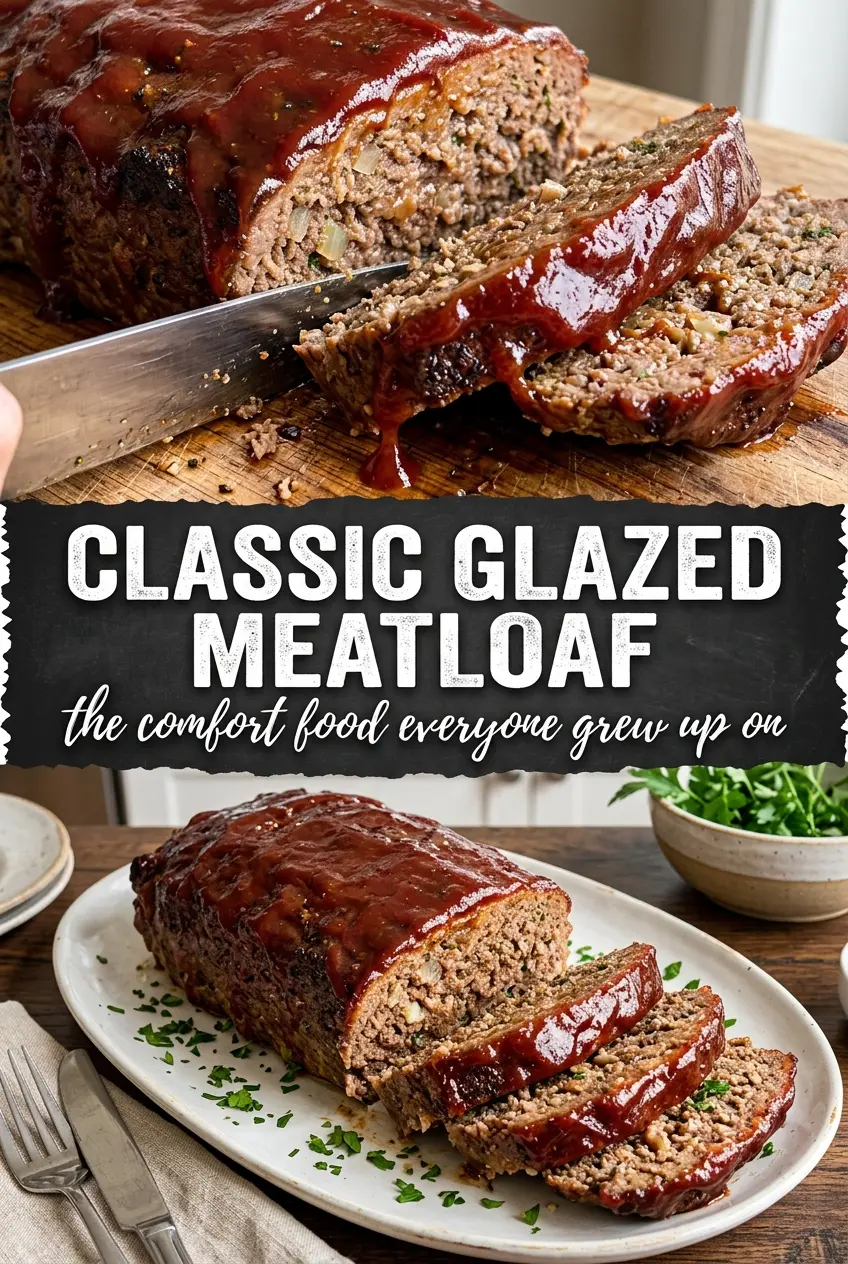
Classic glazed meatloaf earns its place in the regular dinner rotation because it slices cleanly, stays moist in the middle, and comes out with that sticky ketchup glaze that turns a simple pan of ground beef into something people actually look forward to. The texture matters here: a good meatloaf should hold together without feeling dense or bouncy, and the glaze should set into a shiny, caramelized cap instead of sliding off in a thin red layer.
This version gets there by keeping the mix gentle and using enough moisture to soften the breadcrumbs without making the loaf wet. Grated onion does the work of adding flavor and moisture at the same time, and the Worcestershire gives the beef a deeper, savory edge that ketchup alone can’t carry. The result is familiar in the best way, but not bland or heavy.
Below, I’ll show you how to keep the loaf tender, how to judge when the glaze is ready to go back on, and what to change if you need to work with leaner beef or want to make the whole thing ahead.
The glaze thickened up beautifully and the loaf sliced without crumbling. Grating the onion made a big difference — it stayed moist all the way through, even the leftovers the next day.
Save this ketchup-glazed meatloaf for a dependable dinner with a tender middle and a caramelized brown sugar topping.
The Mistake That Makes Meatloaf Dense Instead of Tender
The biggest problem with meatloaf is overworking it. Once the beef goes from loose and crumbly to sticky and packed, you’ve gone too far and the finished loaf will eat like a brick. The breadcrumbs and milk need time to hydrate, but the mixing itself should stay brief enough that the meat still looks a little rough before it goes into the pan.
The other trap is baking it in a tight loaf pan without enough drainage. That can trap grease and steam the sides before the top has a chance to caramelize. A foil-lined baking sheet gives you better browning and a firmer crust, while still letting the center stay juicy.
- Ground beef 80/20 — This fat level keeps the loaf moist and flavorful. Leaner beef works, but you lose some of the tenderness and may need to add a little more milk or accept a drier slice.
- Grated onion — Grating instead of chopping gives you onion flavor that disappears into the loaf and helps keep the texture soft. Minced onion won’t melt in the same way.
- Breadcrumbs and milk — This is the binder that keeps the meatloaf from falling apart. The milk needs to soak into the breadcrumbs before baking, so don’t rush the mixing and shaping.
- Worcestershire sauce — It adds the savory depth that makes the beef taste seasoned all the way through. There isn’t a perfect substitute, but soy sauce can stand in if that’s what you have.
What Each Ingredient Is Actually Doing in This Recipe
- Primary ingredient (the star) — Quality matters most. Choose the best you can find.
- Cooking medium (oil, butter, or broth) — This carries flavors and prevents dryness.
- Seasonings (salt, pepper, spices, herbs) — Layer flavors so nothing overpowers. Build depth gradually.
- Aromatics (garlic, onion, herbs) — Cook with fat to bloom flavors. Become the foundation.
- Supporting ingredients — Complement the main ingredient without overpowering it.
- Sauce or liquid (if applicable) — Brings flavors together. Balance richness with acid.
- Acid (lemon, vinegar, wine, or other) — Brightens and prevents flat-tasting results.
- Final finish (garnish, glaze, or sauce) — Prevents one-dimensional taste and adds visual appeal.
Building the Loaf and Glaze in the Right Order
Mixing the Meat Just Enough
Start by combining everything in one bowl and use your hands or a fork to mix until the ingredients are evenly distributed. Stop as soon as you no longer see dry breadcrumbs or streaks of egg. If the mixture feels tight and paste-like, it’s already overmixed and the loaf will bake up heavy.
Shaping for Better Browning
Form the mixture into a loose loaf on the prepared baking sheet or press it lightly into a loaf pan if that’s what you’re using. A baking sheet gives the glaze more surface area to cling to and lets the edges brown better. If the loaf is packed too firmly, it won’t release steam well and the center can turn chewy.
Glazing in Two Layers
Mix the ketchup, brown sugar, vinegar, and Worcestershire until smooth, then spread half over the loaf before it goes into the oven. That first layer sets and starts to caramelize while the meatloaf bakes. Add the second layer partway through so it stays glossy instead of burning; if you put it on at the start, the sugar can darken too fast.
Knowing When It’s Done
Bake until the center reaches 160°F and the top looks lacquered and slightly sticky at the edges. If you don’t have a thermometer, the loaf should feel firm but still give a little when pressed in the middle. Let it rest for 10 minutes before slicing so the juices settle back into the meat instead of running onto the cutting board.
What to Change When You Need a Different Version of Meatloaf
Dairy-Free Meatloaf
Swap the milk for an unsweetened plain non-dairy milk, or use beef broth if you want a slightly deeper savory flavor. The loaf will still bind and stay tender because the breadcrumbs are carrying most of the moisture.
Leaner Beef Version
If you only have 90/10 beef, add a tablespoon of olive oil or an extra splash of milk to help keep the loaf from drying out. The texture won’t be quite as rich, but the glaze still gives it plenty of comfort-food appeal.
Gluten-Free Meatloaf
Use a gluten-free breadcrumb or crushed gluten-free crackers in the same amount. The structure stays the same, but choose a brand that isn’t heavily seasoned so the Worcestershire and glaze still stand out.
Make-Ahead Dinner Prep
Shape the loaf and mix the glaze up to a day ahead, then keep them separate in the refrigerator. Bring the loaf off the cold a bit before baking so it cooks more evenly; a stone-cold center takes longer and can overbake the edges.
Storage and Reheating
- Refrigerator: Store sliced meatloaf for up to 4 days in an airtight container. It stays moist, and the glaze often tastes even better the next day.
- Freezer: Freeze cooked slices or a whole cooled loaf tightly wrapped for up to 3 months. Slice first if you want easy portions later.
- Reheating: Warm slices covered in a 300°F oven with a splash of water or broth to keep them from drying out. The microwave works in a pinch, but use short bursts so the edges don’t turn rubbery.
Questions I Get Asked About This Recipe
Classic Glazed Meatloaf
Ingredients
Equipment
Method
- Preheat the oven to 350°F and line a loaf pan or baking sheet with foil for easy cleanup.
- Combine the ground beef, breadcrumbs, beaten eggs, whole milk, grated onion, minced garlic, Worcestershire sauce, dried thyme, garlic powder, salt, and black pepper, and mix just until combined—do not overmix.
- Shape the mixture into a loaf on the baking sheet or press into a loaf pan, forming an even top for a uniform glaze.
- Mix the glaze ingredients (ketchup, brown sugar, apple cider vinegar, and 1 tsp Worcestershire sauce), then spread half over the top of the meatloaf.
- Bake at 350°F for 45 minutes, watching for the glaze to start setting and turning glossy.
- Spread the remaining glaze over the meatloaf, then bake 15–20 minutes more until the internal temperature reaches 160°F and the top looks caramelized.
- Rest the meatloaf for 10 minutes before slicing so the juices settle and the interior stays moist.