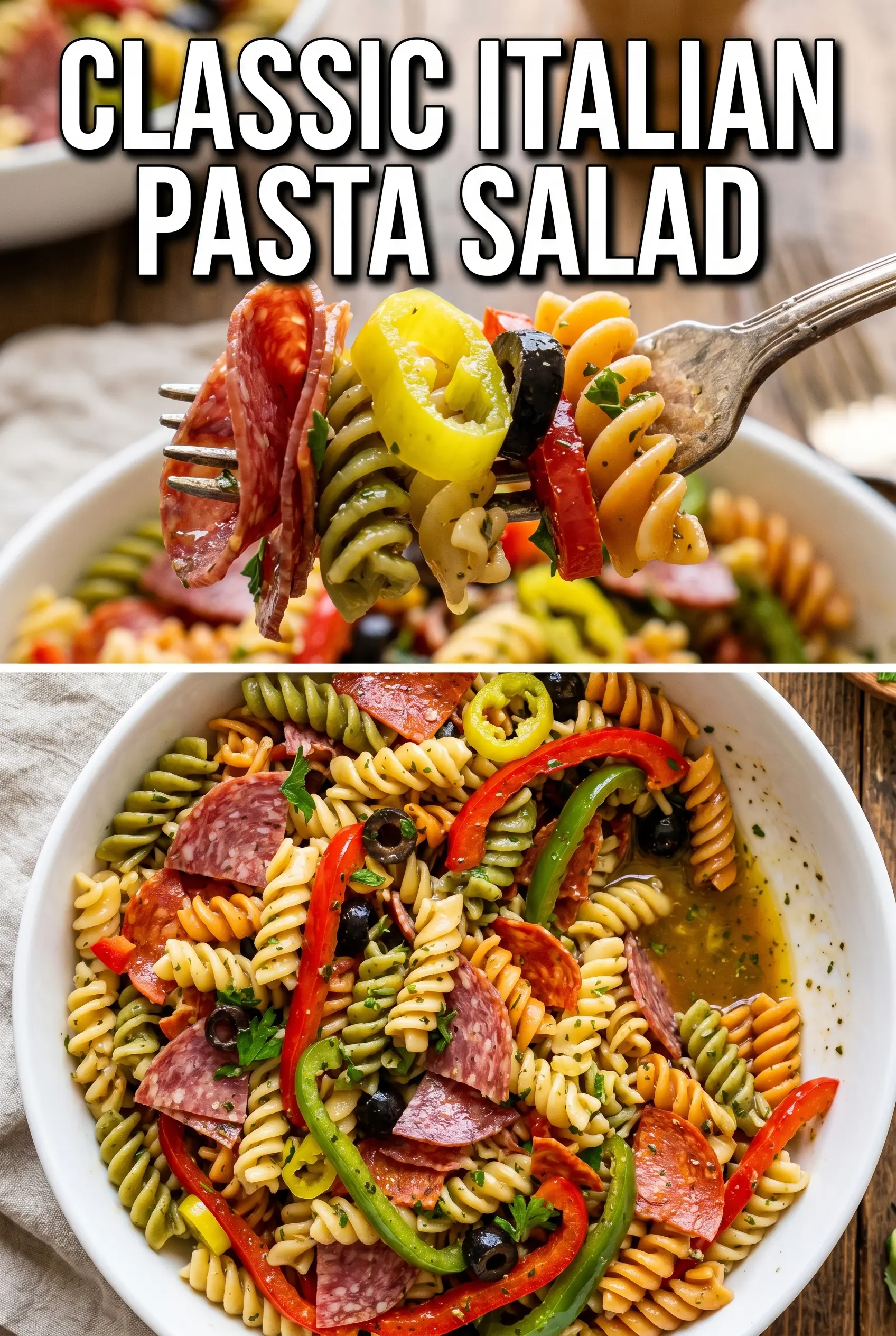
Classic Italian pasta salad earns its place at the table because it holds onto its texture and gets better as it sits. The rotini catches the dressing, the pepperoni brings a little salty richness, and the mozzarella stays pleasantly chewy instead of disappearing into the bowl. Every bite has that cold, tangy, savory balance that keeps people going back for one more forkful.
The trick is simple: rinse the pasta well so it stops cooking and cools fast, then dress it while it still has some surface moisture. That helps the Italian dressing cling instead of sliding off. The other thing that matters is the rest time. Three hours gives the onions time to mellow, the pasta time to absorb flavor, and the whole salad time to stop tasting like separate ingredients tossed together.
Below, I’ve included the small details that make this salad work in real life — what to do if it dries out in the fridge, which ingredient swaps still keep the same classic feel, and how to avoid the bland, underdressed bowl that happens when everything gets mixed too early.
I made this for a cookout and the pasta stayed coated and flavorful even after sitting out awhile. The pepperoni and mozzarella made it hearty, and the dressing soaked in just enough after chilling overnight.
Love the pepperoni, mozzarella, and tri-color pasta in this classic Italian pasta salad? Save it to Pinterest for cookouts, picnics, and make-ahead side dishes.
The Part That Keeps Pasta Salad from Turning Flat
Most pasta salads go dull because the pasta gets dressed once, chilled, and then served dry. Rotini helps here because the spirals trap dressing in the ridges, but it still needs a second toss after chilling. That last toss wakes the whole bowl back up and keeps the salad from tasting like cold noodles with toppings scattered through it.
The other mistake is overcooking the pasta. If it turns soft before it hits the dressing, it’ll keep absorbing liquid and go mushy by the time you serve it. Cook it just to al dente, then rinse until it’s fully cool so the texture stays firm and the dressing doesn’t get watered down.
What Each Ingredient Is Doing in the Bowl
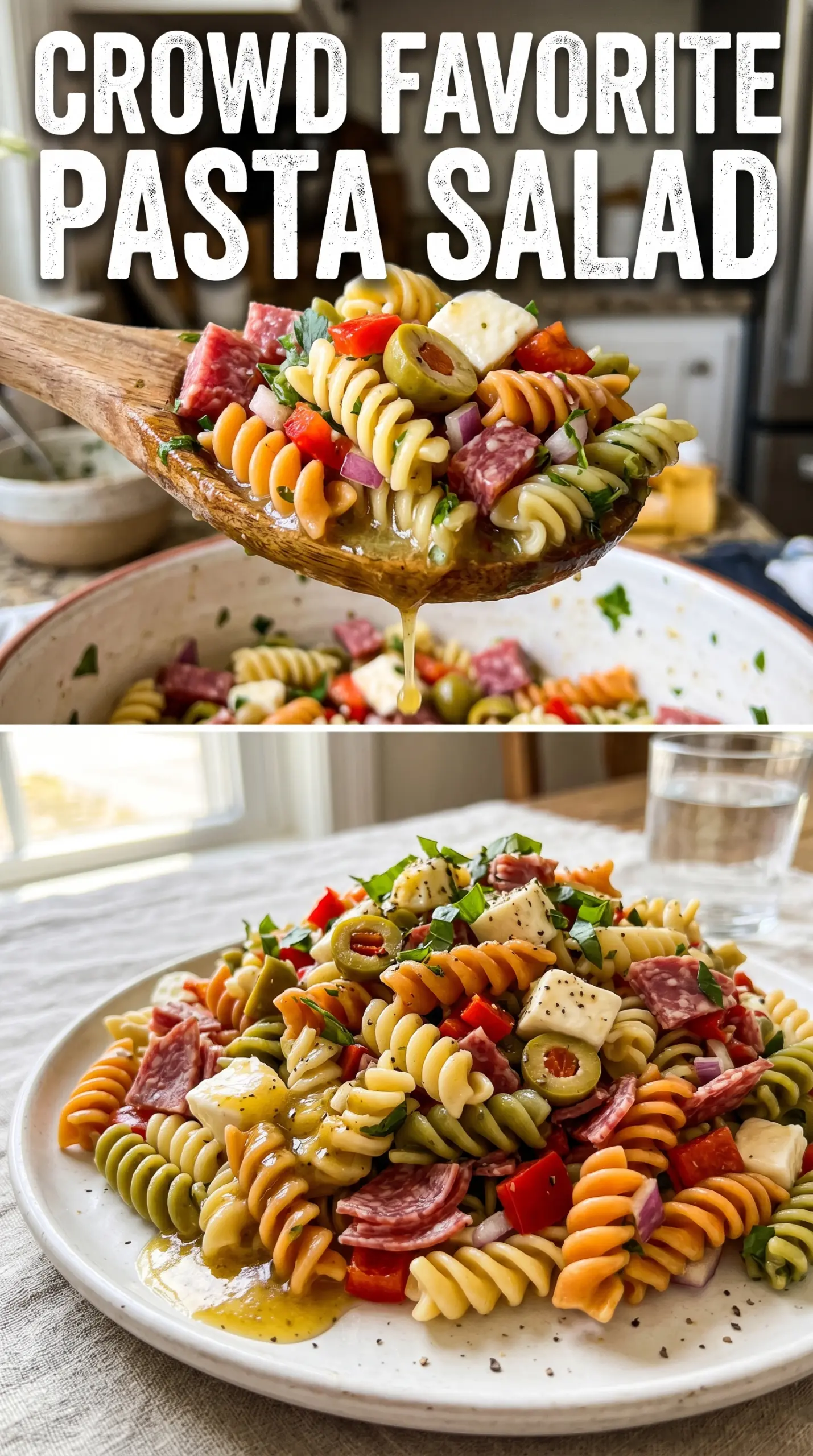
- Tri-color rotini — The shape matters more than people think. Those spirals grab the Italian dressing and keep every bite coated, which is why this salad tastes better than one made with smooth pasta.
- Pepperoni — This is the salty, savory anchor. Halving the slices gives you little curved bites that spread through the salad instead of clumping together.
- Mozzarella — Cubed mozzarella gives the salad a soft, creamy chew that balances the sharp dressing. Fresh mozzarella is lovely, but a low-moisture block is sturdier and holds up better after chilling.
- Italian dressing — This does the heavy lifting, so use one you actually like. A bottled dressing is fine here, but if it tastes too sharp on its own, the salad will taste sharp later too.
- Parmesan and Italian seasoning — Parmesan adds a little salty depth, while the seasoning reinforces the herb notes already in the dressing. Neither one should dominate; they just round out the bowl.
- Bell pepper, tomatoes, onion, and olives — These are the crunch, acidity, and briny bite that keep the salad from feeling heavy. Dice the onion small so it softens in the dressing instead of landing in aggressive chunks.
Building the Salad So It Tastes Better After Chilling
Cooking the Pasta Just Right
Boil the rotini in well-salted water until it’s al dente with a little bite in the center. Drain it, then rinse under cold water until the pasta is no longer warm. If you skip the rinse, the pasta keeps cooking and drinks up too much dressing before the salad even has a chance to chill.
Mixing the Components Without Bruising Them
Combine the cooled pasta, pepperoni, mozzarella, tomatoes, bell pepper, olives, and onion in a large bowl so everything can move freely. Add the dressing, Parmesan, and Italian seasoning, then toss until every spiral looks glossy. If the bowl feels crowded, the dressing won’t distribute evenly and you’ll end up with dry pockets at the bottom.
The Chill That Makes It Taste Finished
Refrigerate the salad for at least 3 hours, and overnight is even better. Stir it once or twice during that time if you can, because the pasta on the edges tends to absorb more dressing than the center. Before serving, taste again and add a splash more dressing if it looks tight or dry.
Make It Meatless Without Losing the Classic Feel
Skip the pepperoni and add extra olives, roasted red peppers, or marinated artichokes for more savoriness. The salad will still taste balanced, but it’ll lean lighter and more vegetable-forward instead of meaty and hearty.
How to Make It Gluten-Free
Use a sturdy gluten-free rotini that holds its shape after chilling. Some GF pastas soften faster than wheat pasta, so stop at true al dente and chill it with a little extra dressing to keep the texture from drying out.
Swapping the Dressing for a Homemade Version
A homemade Italian dressing works well if you want more control over the acidity and garlic. Use a version with enough oil to coat the pasta, or the salad will taste sharp instead of rounded and familiar.
Turning It Into a Bigger Crowd-Pleaser
Double the batch and add the dressing in two stages: most of it right away, then the rest after chilling. Pasta salad always looks more seasoned straight from the bowl than it does after a few hours in the fridge, so that second dressing hit keeps it from tasting sparse at serving time.
Storage and Reheating
- Refrigerator: Store covered for up to 4 days. The pasta will absorb more dressing as it sits, so expect a slightly softer texture on day two and three.
- Freezer: Don’t freeze this one. The pasta, tomatoes, and mozzarella all change texture after thawing and the salad turns watery.
- Reheating: Not needed. Serve it cold or let it sit at room temperature for 15 to 20 minutes before serving so the dressing loosens up and the flavors come forward.
Questions I Get Asked About This Recipe
Classic Italian Pasta Salad
Ingredients
Equipment
Method
- Cook the tri-color rotini pasta according to package directions until tender, then drain and rinse with cold water to stop the cooking.
- Spread the rinsed pasta on a sheet pan in a single layer for a few minutes to cool, then let it come back to room temperature before assembling.
- In a large bowl, combine the pasta, pepperoni slices, mozzarella cheese, cherry tomatoes, green bell pepper, black olives, and red onion.
- Add Italian dressing, Parmesan cheese, and Italian seasoning, then toss until every piece is coated and looks evenly distributed.
- Season with salt and pepper to taste, then toss again so the seasoning is mixed throughout.
- Cover and refrigerate for at least 3 hours or overnight, tossing occasionally so the dressing soaks in evenly.
- Right before serving, toss again and add more Italian dressing if needed for the right moisture and flavor balance.