Rich, slow-simmered beef stew is the kind of dinner that turns a regular night into something worth sitting down for. The beef gets tender enough to fall apart with a spoon, the potatoes soak up the broth, and the carrots and celery keep just enough texture to give every bite some shape. What makes this version stand out is how the broth builds depth without becoming muddy or heavy.
The trick is layering the vegetables underneath the beef so they cook in the juices instead of drying out on top. Red wine and tomato paste add a deeper, rounder base, while Worcestershire and herbs give the stew that long-cooked taste even if it’s the first time you’ve made it. The cornstarch goes in at the end, after the meat is already tender, so the sauce thickens without turning pasty.
Below, I’ve included the one slow-cooker move that keeps the beef from tasting flat, plus a few swaps that still give you a hearty, spoonable stew.
The beef came out fall-apart tender and the broth thickened up beautifully at the end. I loved that the potatoes held their shape and didn’t turn to mush after all those hours in the slow cooker.
Save this Crock Pot Beef Stew for the nights when you want tender beef, thick gravy, and a one-pot dinner that cooks itself.
The Slow Cooker Order That Keeps the Vegetables from Going Flat
Most stew problems start with the order of the ingredients. If the beef sits on the bottom, it can overcook against the hotter base of the slow cooker before the vegetables ever get a chance to soften evenly. Putting the potatoes, carrots, celery, and onion underneath lets them braise in the broth while the beef stays lifted just enough to cook gently and flavor the whole pot.
The other thing that matters is restraint. A crock pot doesn’t reduce liquid the way a stovetop pot does, so the broth needs help building body. That’s why tomato paste, diced tomatoes, and the cornstarch slurry each have a job: one deepens the broth, one adds savory acidity, and one finishes the texture at the end instead of watering it down.
What Each Ingredient Is Actually Doing in This Stew

- Beef chuck — This cut has the collagen that melts into the broth during a long cook. Leaner beef turns stringy and dry before it gets tender, so chuck is the one worth using here.
- Baby potatoes — They hold their shape better than russets and give the stew that soft, creamy bite without dissolving. Halving them helps them cook through on the same timeline as the beef.
- Red wine or extra beef broth — Wine adds depth and a little edge that keeps the stew from tasting one-note. If you skip it, use more broth, but know the finished pot will taste rounder and less complex with wine.
- Tomato paste and diced tomatoes — The paste brings concentrated savoriness, while the tomatoes add acidity that sharpens the broth. Don’t leave out both, or the stew can taste heavy instead of balanced.
- Worcestershire, thyme, rosemary, and bay leaves — These are the backbone of the stew’s flavor. Fresh herbs aren’t necessary here; dried herbs work well because they have time to bloom and soften in the slow cooker.
How to Layer the Pot So the Stew Tastes Like It Simmered All Day
Start with the vegetables
Put the potatoes, carrots, celery, and onion in the bottom of the slow cooker first. They act as a bed for the beef and prevent it from sitting directly on the hot insert, which can make the bottom layer tougher. The vegetables will release moisture as they cook, and that keeps the stew from tasting thin or scorched.
Season and nestle the beef
Season the beef generously before it goes in. Once it’s in the pot, don’t stir everything together; just nestle the chunks into the broth so they’re partially submerged. That keeps the beef from breaking apart too early and helps the flavor stay concentrated on each piece instead of washing out into the liquid.
Cook until the beef gives way easily
Low and slow is the right move here. After 8 to 10 hours on Low, the beef should pull apart with almost no resistance, and the potatoes should be tender at the center without crumbling. If you rush it on High, the meat can tighten before the connective tissue fully softens, which is how you get beef that looks done but still eats chewy.
Thicken at the end, not before
Remove the bay leaves, then stir in the cornstarch slurry and cook on High for 20 to 30 minutes. The stew should go from brothy to lightly glossy and spoon-coating, not heavy and gluey. If it still looks loose after that, give it a few more minutes with the lid off for the last bit of steam to escape.
How to Adapt This Stew When You Need a Different Bowl on the Table
Gluten-Free Thickening
The stew is already close to gluten-free if your Worcestershire sauce is certified gluten-free, but check the label. Cornstarch is a good thickener here and keeps the broth silky without any floury taste.
No Wine Version
Use the extra beef broth instead of wine if you want a family-friendly pot with a softer, less acidic broth. You’ll lose a little depth, so the tomato paste and Worcestershire become even more important for balance.
More Vegetable-Forward Stew
Add mushrooms, parsnips, or turnips with the base vegetables if you want a more rustic pot. Mushrooms deepen the broth, while parsnips add a gentle sweetness that plays well with the beef.
Storage and Reheating
- Refrigerator: Store covered for up to 4 days. The broth will thicken as it chills, and the potatoes soften a little more.
- Freezer: This freezes well for up to 3 months, though the potatoes can become slightly grainy after thawing. For the best texture, freeze in portions and reheat gently.
- Reheating: Warm it on the stovetop over low heat or in the microwave at medium power. Add a splash of broth if needed, and don’t boil it hard or the beef can dry out and the potatoes can fall apart.
Answers to the Questions Worth Asking
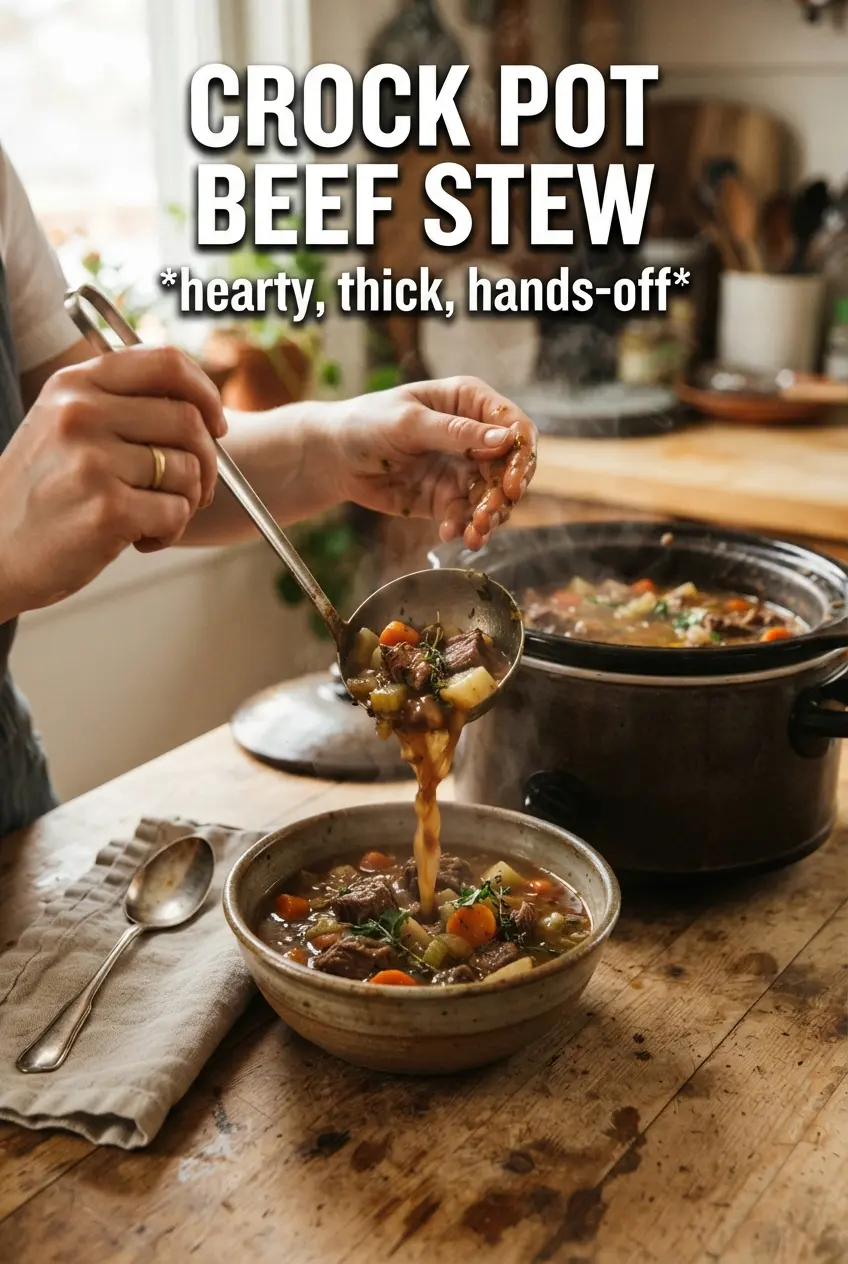
Crock Pot Beef Stew
Ingredients
Equipment
Method
- Season the beef chuck generously with salt and pepper, coating all sides for better flavor. Set aside while you prepare the slow cooker.
- Place the potatoes, carrots, celery, and onion in the bottom of the slow cooker. Spread into an even layer so everything cooks through at the same pace.
- Nestle the seasoned beef on top, then add the garlic, beef broth, red wine, diced tomatoes, tomato paste, Worcestershire sauce, dried thyme, dried rosemary, and bay leaves. Distribute everything so the beef sits mostly in the liquid and vegetables stay partially exposed.
- Cook on Low for 8-10 hours until the beef is fall-apart tender, or cook on High for 4-5 hours for a faster finish. The stew is ready when the beef pulls apart easily when prodded.
- Remove the bay leaves from the stew and stir once to redistribute the vegetables. Keep the stew hot as you prepare to thicken it.
- Stir the cornstarch slurry into the stew until smooth and evenly combined. You should see the surface start to look slightly thicker almost immediately.
- Cook on High for 20-30 minutes until the broth thickens to a stew-like consistency. The liquid should cling lightly to a spoon.
- Season with salt and pepper to taste, then serve hot. Adjust seasoning after thickening so the flavor matches the final texture.