Glossy cucumber rounds, juicy cherry tomatoes, and a sharp little vinaigrette make this cucumber tomato salad the kind of side dish that disappears before the main course even hits the table. The cucumbers stay crisp, the tomatoes soften just enough to leak into the dressing, and the herbs wake everything up at the end with a clean, fresh finish.
What makes this version work is the balance. English cucumbers keep things snappy without turning watery, red wine vinegar gives the dressing enough bite to season the vegetables, and just a little honey rounds off the sharp edges without making it sweet. The 15-minute rest matters because it lets the salt pull out a bit of juice from the tomatoes and onions, which turns the dressing into something more vivid and cohesive.
Below, I’ve included the one marinating step that keeps the salad bright instead of soggy, plus a few swaps for when you need to adjust the herbs, onion, or vinegar.
The dressing soaked into the tomatoes just enough without making the cucumbers limp, and the dill at the end made it taste fresh from the garden.
Save this cucumber tomato salad for the no-cook side dish with crisp cucumbers, juicy tomatoes, and a tangy dill vinaigrette.
The Reason This Salad Stays Crisp Instead of Turning Watery
The problem with a lot of cucumber and tomato salads is timing. Salt hits the vegetables too early, the cucumbers start shedding water, and the dressing gets diluted into something flat. Here, the vegetables get enough time to marinate for flavor, but not long enough to collapse.
English cucumbers help because they have thinner skins and fewer seeds, which means less excess liquid in the bowl. The other key is the finish: taste after the rest, then add the herbs right before serving so they stay bright instead of sinking into the dressing.
What Each Ingredient Is Actually Doing in the Bowl
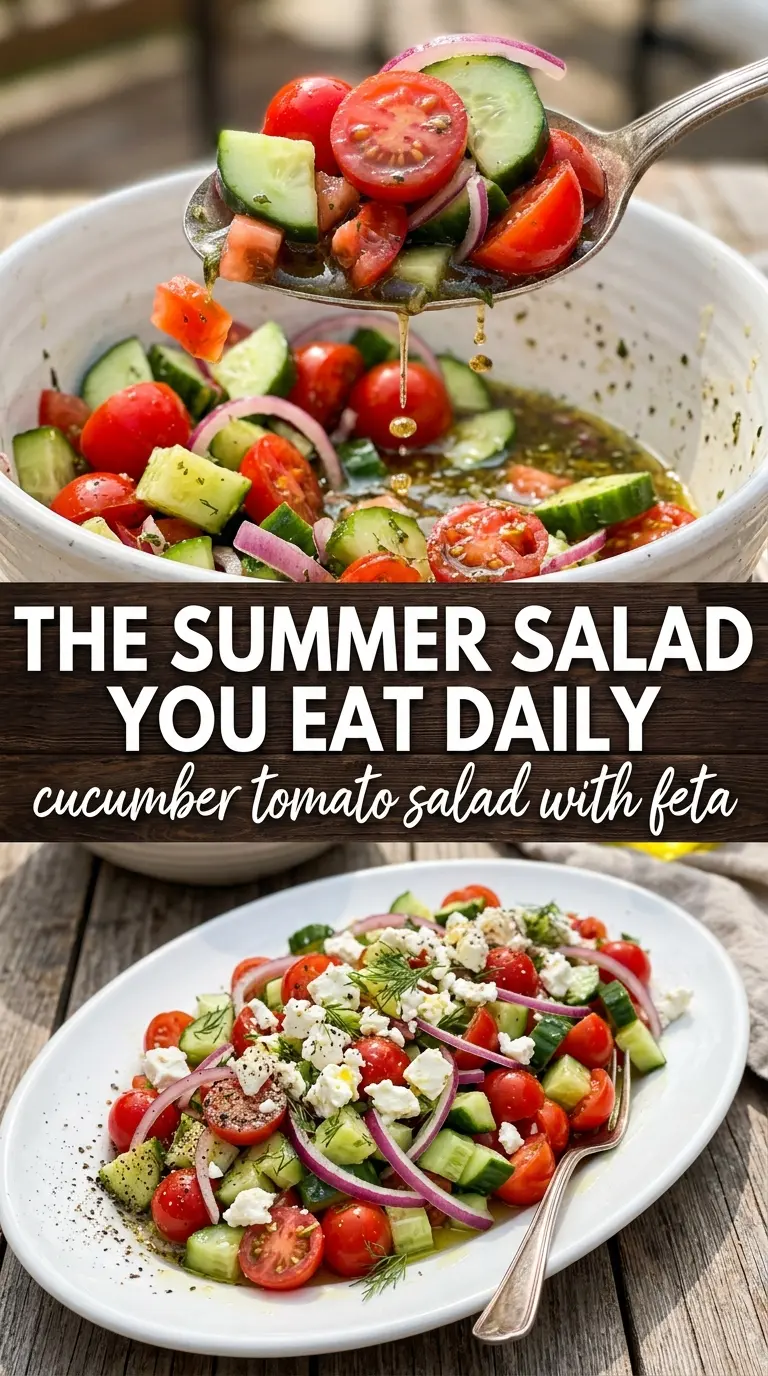
- English cucumbers — These stay firm and clean-tasting after they’re dressed. If you use standard cucumbers, peel them and scoop out the seeds so the salad doesn’t get sloshy.
- Cherry tomatoes — Halved cherry tomatoes hold their shape better than chopped slicers and release just enough juice to flavor the dressing. Grape tomatoes work too, but they’re a little firmer and slightly less juicy.
- Red onion — Thin slices give the salad bite without taking over. If your onion is sharp, soak the slices in cold water for 10 minutes, then drain well before adding them.
- Red wine vinegar — This gives the salad its backbone. Apple cider vinegar works in a pinch, but it reads a little fruitier and softer.
- Honey — Just enough to smooth the vinegar and pull the dressing together. Leave it out if you want a sharper salad, but the dressing will taste more angular.
- Fresh dill and parsley — Add these at the end so they stay fragrant. Dried herbs won’t give the same fresh finish here.
The 15-Minute Marinate That Makes the Flavor
Building the Dressing First
Whisk the olive oil, vinegar, honey, garlic powder, salt, and pepper until the dressing looks slightly cloudy and cohesive. If the honey is sitting in a streak at the bottom, keep whisking; a broken dressing won’t coat the vegetables evenly. The garlic powder should disappear into the liquid, not sit in dusty little clumps.
Tossing the Vegetables Without Bruising Them
Add the cucumbers, tomatoes, and onion to a large bowl before the dressing goes in. A bigger bowl gives you space to toss without smashing the tomatoes, which is where a lot of salads get messy and watery. Use a wide spoon or clean hands and turn everything gently until every piece is glossed over.
Letting the Salt Work for You
Let the salad stand at room temperature for 15 minutes. That short rest pulls out enough juice to season the dressing without draining the cucumbers dry. If you leave it much longer, the vegetables soften too much and the bowl turns puddly, so this is a case where timing matters.
Finishing With Herbs and Adjustments
Toss the salad again before serving, then taste it. This is the point where you decide if it needs another pinch of salt, a little more pepper, or a splash more vinegar to brighten it up. Add the dill and parsley right at the end so the salad tastes freshly made instead of wilted.
How to Adapt This Salad for Different Tables
Make it dairy-free and naturally gluten-free
This salad already fits both diets as written, which is one reason it’s such a useful side dish. Just keep an eye on the vinegar and honey you buy if you’re cooking for someone with strict dietary needs, since flavored or specialty versions can sometimes include additives.
Swap the dill if that’s not your herb
Basil gives the salad a softer, sweeter edge, and mint makes it taste cooler and brighter. Parsley is the safe backbone herb, so if you’re only swapping one thing, keep the parsley and change the dill.
Use it as a heartier side
Add feta, chickpeas, or sliced avocado if you want this to eat more like a light lunch salad. Feta adds salt and tang, chickpeas add heft, and avocado adds creaminess, but all three soften the clean snap of the original.
Storage and Reheating
- Refrigerator: Store leftovers in an airtight container for up to 2 days. The cucumbers soften as they sit, but the flavor gets more seasoned.
- Freezer: Don’t freeze this salad. The cucumbers and tomatoes lose their texture and turn watery after thawing.
- Reheating: No reheating needed. If the salad has been chilled, let it sit at room temperature for 10 to 15 minutes and drain off any excess liquid before serving.
Answers to the Questions Worth Asking
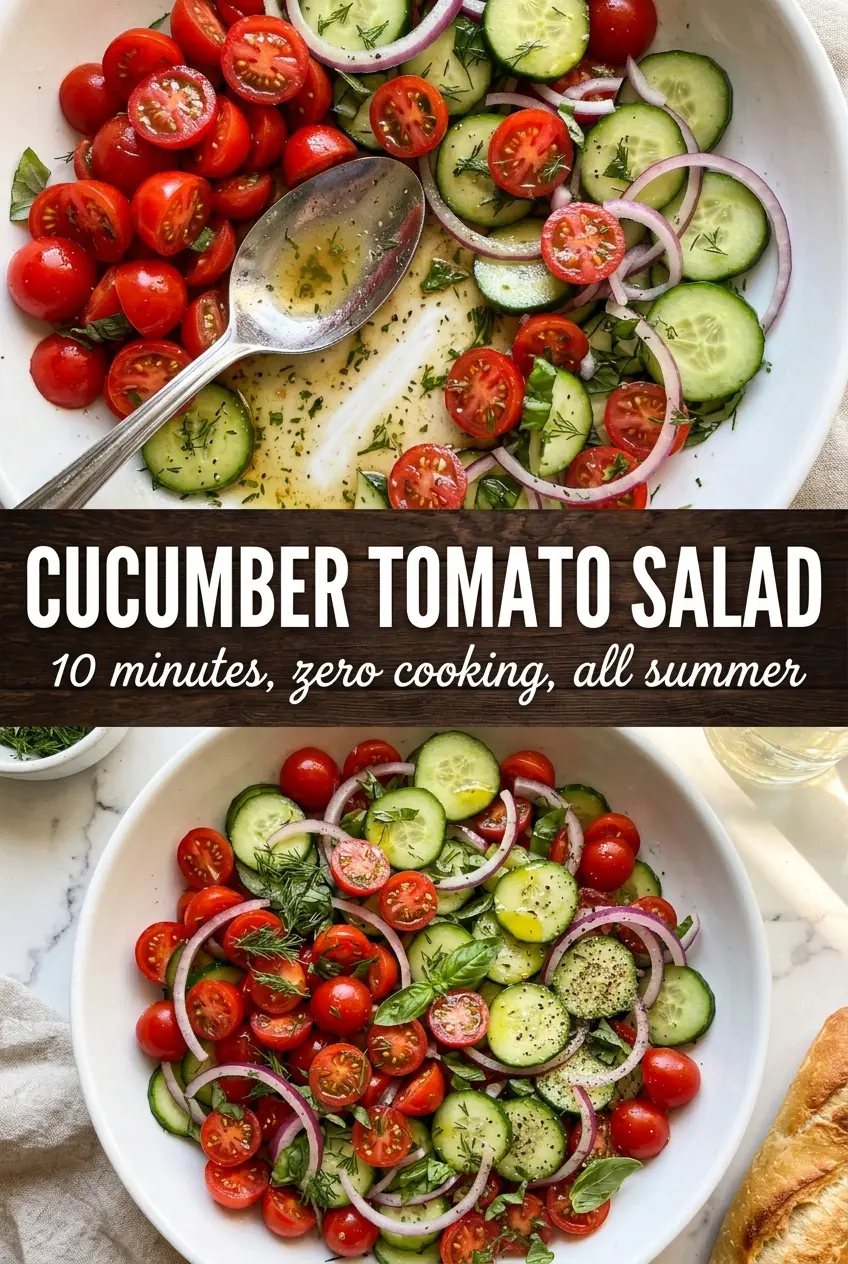
Cucumber Tomato Salad
Ingredients
Equipment
Method
- Add the cucumber rounds, halved cherry tomatoes, and thinly sliced red onion to a large bowl.
- Spread the vegetables out so they can be evenly coated by the dressing.
- Whisk olive oil, red wine vinegar, honey, garlic powder, salt, and black pepper together in a small bowl until combined.
- Check the vinaigrette by tasting it and adjusting salt and pepper if needed.
- Pour the vinaigrette over the vegetables and toss well to coat, until the cucumber looks glossy and the tomatoes look lightly coated.
- Let the salad marinate at room temperature for 15 minutes to allow flavors to develop.
- Toss again, taste, and adjust seasoning as needed for balance.
- Top with chopped fresh dill and fresh parsley right before serving for a fresh, green finish.