Greek chicken kabobs come off the grill with charred edges, juicy centers, and that bright lemon-garlic bite that keeps you reaching for one more skewer. The vegetables soften just enough to pick up the marinade, while the chicken stays tender instead of turning dry and stringy. Served with cool tzatziki, they hit that perfect balance of smoky, fresh, and savory that makes them feel like more than just another grilled chicken dinner.
The marinade does the heavy lifting here. Lemon juice brings the Greek flavor, but olive oil and a little Dijon keep the garlic, oregano, and salt from tasting sharp or one-note. Four hours of marinating is the sweet spot for this recipe: long enough for flavor to move into the chicken, not so long that the lemon starts to work against the texture. Cutting the chicken into even cubes matters too, because uneven pieces always give you a few dry bits before the rest are done.
Below, I’ve included the timing details that keep the kabobs juicy on the grill, plus the small ingredient choices that make the biggest difference when you want real souvlaki-style flavor at home.
The chicken stayed juicy and the lemon-oregano marinade gave it that classic Greek restaurant taste. I grilled them for six minutes per side and the onions still had a little bite, which my family loved.
Greek Chicken Kabobs with lemon, oregano, and tzatziki are the kind of grill dinner you’ll want to keep on repeat.
The Marinade Is Doing More Than Adding Flavor
The biggest mistake with chicken kabobs is treating the marinade like a coat of paint. Lemon juice, oil, garlic, and oregano all matter, but the timing matters just as much. Four to eight hours is enough to season the meat and keep it tender; overnight can push the lemon too far and make the texture a little soft on the outside.
The other trap is crowding the skewers. Leave a little space between the pieces so the heat can move around them. If you pack chicken and vegetables too tightly, you end up steaming the kabobs instead of getting those browned edges that make them taste grilled.
What Each Ingredient Is Actually Doing In These Kabobs
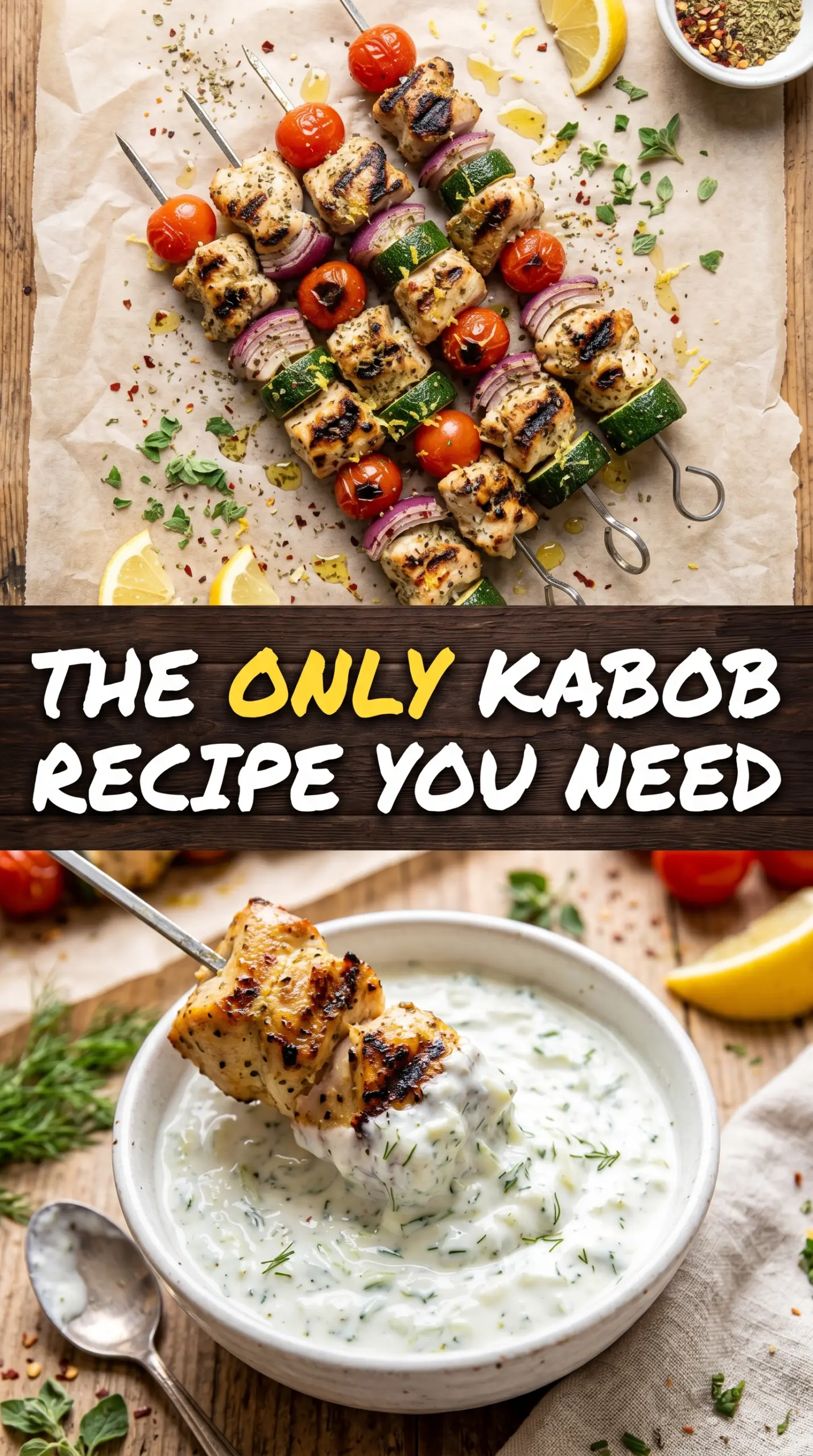
- Chicken breasts — Breasts stay clean and lean here, and they pick up marinade quickly because they’re cut into cubes. Thighs work too if you want a little more forgiveness on the grill, but they’ll taste richer and cook a touch longer.
- Olive oil — This carries the lemon and garlic across the chicken and helps the kabobs brown instead of drying out. Use a decent olive oil, but you don’t need your best finishing bottle for this.
- Lemon juice — This gives the kabobs their Greek backbone. Fresh lemon makes a noticeable difference here; bottled juice tastes flatter and can turn the marinade harsh.
- Fresh oregano — Fresh oregano brings a greener, more fragrant flavor than dried. If you only have dried, use about one teaspoon instead of two tablespoons so it doesn’t overpower the marinade.
- Dijon mustard — This is the quiet ingredient that helps the marinade stay blended and cling to the chicken. You won’t taste mustard, but you will notice if it’s missing because the marinade feels thinner and less rounded.
- Cherry tomatoes, red onion, and bell pepper — These give the skewers the classic souvlaki feel and break up the chicken with sweetness and acidity. Cut them into sturdy, even pieces so they hold up over high heat.
- Tzatziki sauce — The cool yogurt and cucumber sauce is what makes the kabobs taste complete. It cuts the salt and char, and it’s worth using a thick version so it doesn’t slide off the skewers.
Building The Kabobs So They Grill Cleanly
Mixing The Marinade
Whisk the olive oil, lemon juice, garlic, oregano, Dijon, salt, and pepper until the mixture looks cohesive and a little cloudy. If the oil and lemon separate immediately, keep whisking for a few more seconds; Dijon helps hold everything together. This matters because a blended marinade clings to the chicken more evenly, which means better seasoning on every bite.
Marinating The Chicken
Let the chicken sit in the marinade for at least four hours in the refrigerator. Less time and the flavor won’t get into the meat; much longer and the lemon starts to soften the outside too much. Stir the chicken once halfway through if you can, because the pieces on top and bottom don’t marinate evenly on their own.
Threading And Grilling
Thread the chicken and vegetables onto soaked wooden skewers with a little space between each piece. Grill over medium-high heat for 5 to 6 minutes per side, turning once, until the chicken is cooked through and the edges have a little char. If the grill is too hot, the outside will scorch before the center is done, so keep an eye on flare-ups and move the kabobs to a cooler spot if needed.
Serving With The Right Finish
Let the kabobs rest for a few minutes after grilling, then serve them with tzatziki, pita, and lemon wedges. That short rest keeps the juices where they belong instead of running onto the platter. A squeeze of fresh lemon right at the end wakes everything up and makes the oregano taste brighter.
How To Adapt These Kabobs Without Losing The Greek Character
Swap In Chicken Thighs For A Richer Kabob
Boneless, skinless thighs work well if you want more juiciness and a little more margin on the grill. They take on the marinade beautifully and stay tender even if the heat runs a bit high, but they bring a darker, richer flavor than breasts.
Make It Dairy-Free Without Changing The Kabobs
The kabobs themselves are already dairy-free, so the only thing to watch is the tzatziki. Use a dairy-free yogurt version or serve the skewers with a cucumber-herb sauce made from olive oil, lemon, garlic, and chopped dill. You’ll keep the cooling element without losing the Greek-style finish.
Turn Them Into Low-Carb Kabobs
Skip the pita and serve the skewers with extra tzatziki, a cucumber-tomato salad, or cauliflower rice. The chicken and vegetables already fit a low-carb meal, so this is mostly about the sides. The flavor stays the same; you just lose the bread to soak up the juices.
Storage and Reheating
- Refrigerator: Store leftovers in an airtight container for up to 4 days. The vegetables will soften a bit, but the flavor holds up well.
- Freezer: Freeze the cooked chicken and vegetables separately from the tzatziki for up to 2 months. The chicken freezes better than the vegetables, which can go soft after thawing.
- Reheating: Warm the kabobs gently in a 300°F oven or in a skillet over medium-low heat until just heated through. High heat dries the chicken fast, so don’t blast it in the microwave unless you’re fine with a tougher texture.
Questions I Get Asked About This Recipe
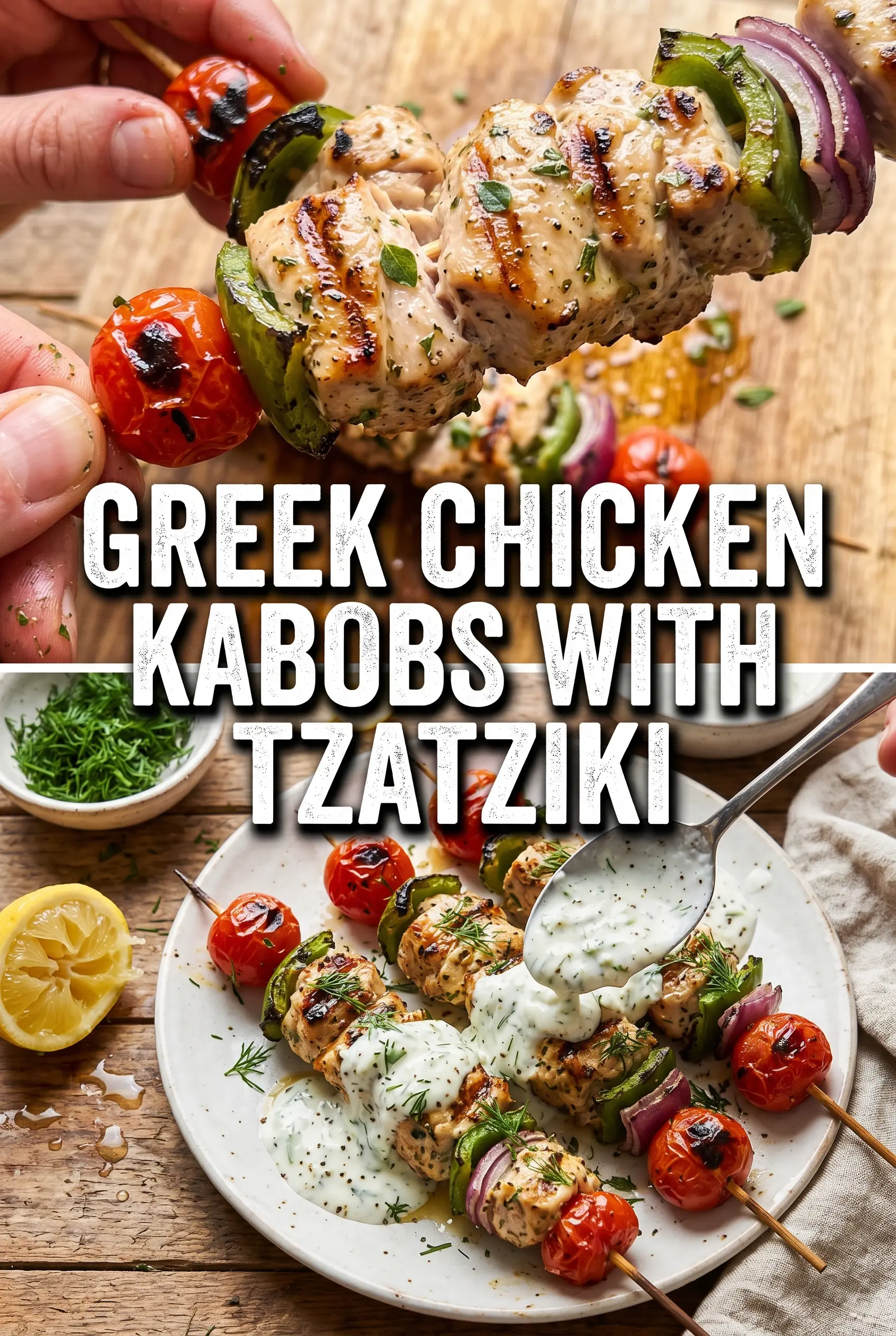
Greek Chicken Kabobs
Ingredients
Equipment
Method
- Whisk together olive oil, lemon juice, garlic, fresh oregano, Dijon mustard, salt, and pepper until smooth and fragrant.
- Preheat the grill to medium-high heat so it’s ready for quick cooking after marinating.
- Marinate the chicken for 4-8 hours, keeping it covered and refrigerated; the surface should look well coated before skewering.
- Thread chicken and vegetables onto soaked wooden skewers, leaving small gaps so they cook evenly and char nicely.
- Grill the kabobs over medium-high heat for 5-6 minutes per side, turning once, until the chicken is cooked through and the vegetables show grill marks.
- Serve the Greek chicken kabobs with tzatziki sauce, pita bread, and lemon wedges for squeezing over the top.