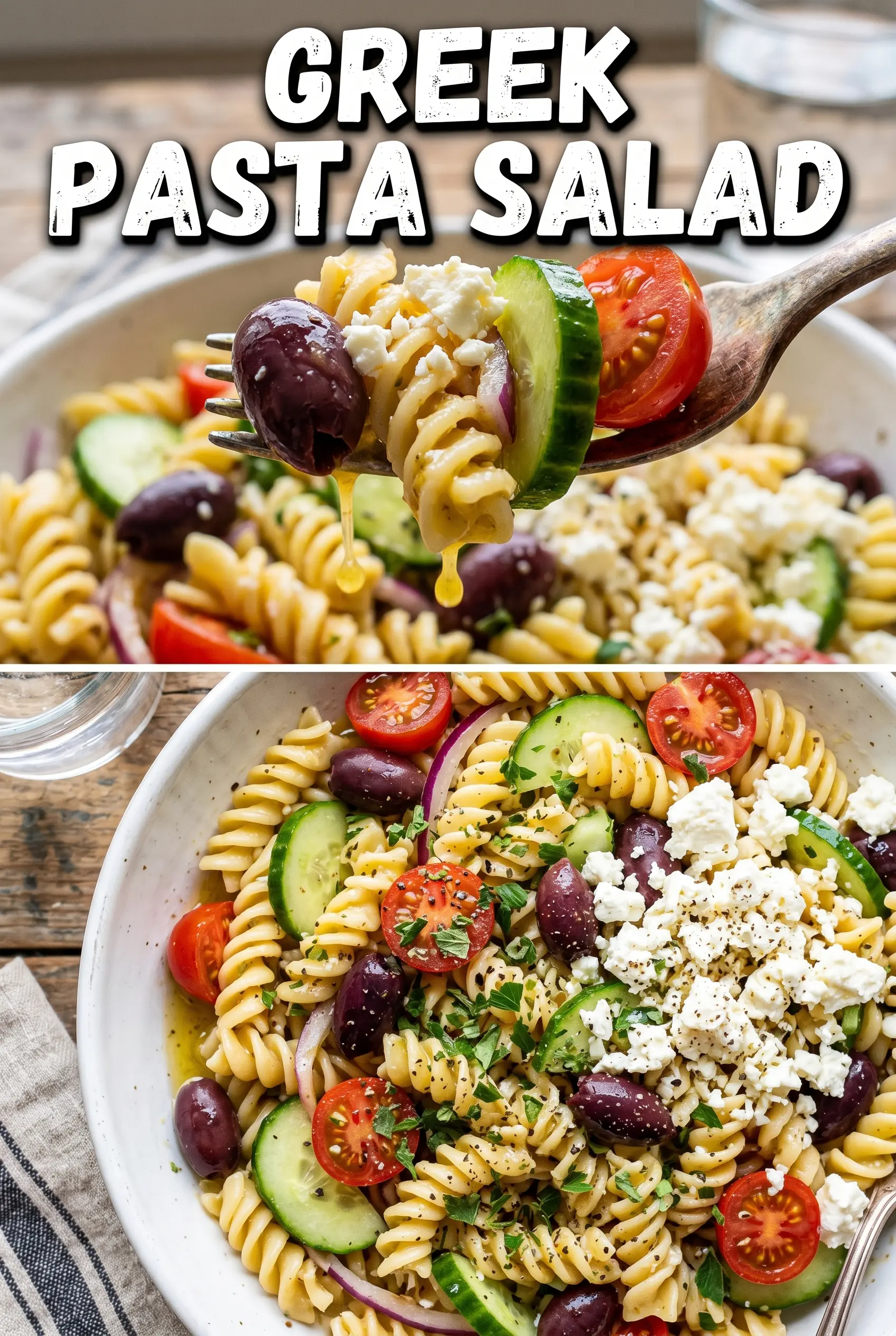
Pasta salad only works when the dressing gets into every ridge and hollow, and this Greek version does that without turning watery or bland. The cold pasta holds onto the lemon-oregano dressing, the cucumber stays crisp, and the feta gives you those salty little pockets that keep every bite interesting. It’s the kind of side dish that disappears fast because it tastes bright, not heavy.
The trick is in two places: rinsing the pasta so it stops cooking and chills quickly, and letting the finished salad rest long enough for the dressing to sink in. If you toss it and serve it right away, it tastes fine. Give it a couple of hours in the fridge and it turns into the kind of pasta salad people actually go back for.
Below, I’ve included the detail that matters most for keeping the vegetables fresh, plus a few smart swaps if you want to adjust the salad for what you have on hand.
The lemon dressing soaked into the pasta after chilling, and the cucumber still had a clean crunch. I made it the night before a cookout, and the feta stayed nice and crumbly instead of disappearing into the bowl.
Save this Greek pasta salad for potlucks, cookouts, and make-ahead lunches when you want bold lemon-oregano dressing and crisp vegetables in every bite.
The Reason This Pasta Salad Tastes Better After It Rests
The biggest mistake with pasta salad is treating it like a last-minute toss-together dish. Cold pasta needs time to absorb dressing, and the vegetables need enough room to stay crisp instead of soaking in a puddle. That’s why this version improves after chilling instead of getting soggy.
Using a sharp dressing with both lemon juice and red wine vinegar keeps the salad lively after the pasta cools. The feta is added in two stages for a reason: some melts into the salad as you toss, and the rest stays visible on top so you still get those salty crumbles when you serve it.
- Rinsed pasta — This stops the cooking and washes off surface starch, which helps the dressing cling instead of turning gummy. Penne or rotini both work well because they catch bits of onion, feta, and herbs.
- Kalamata olives — Their briny, rich flavor is part of what makes this taste Greek instead of just like plain pasta with vegetables. Regular black olives will work in a pinch, but the flavor gets milder and less layered.
- Feta — Buy a block and crumble it yourself if you can. Pre-crumbled feta is drier and often less creamy, so it doesn’t blend into the salad as nicely.
- Fresh oregano — Fresh gives the dressing a greener, sharper edge. Dried oregano is fine if that’s what you have, but use less because it blooms fast in the acid and can take over.
What Each Ingredient Is Doing in the Bowl
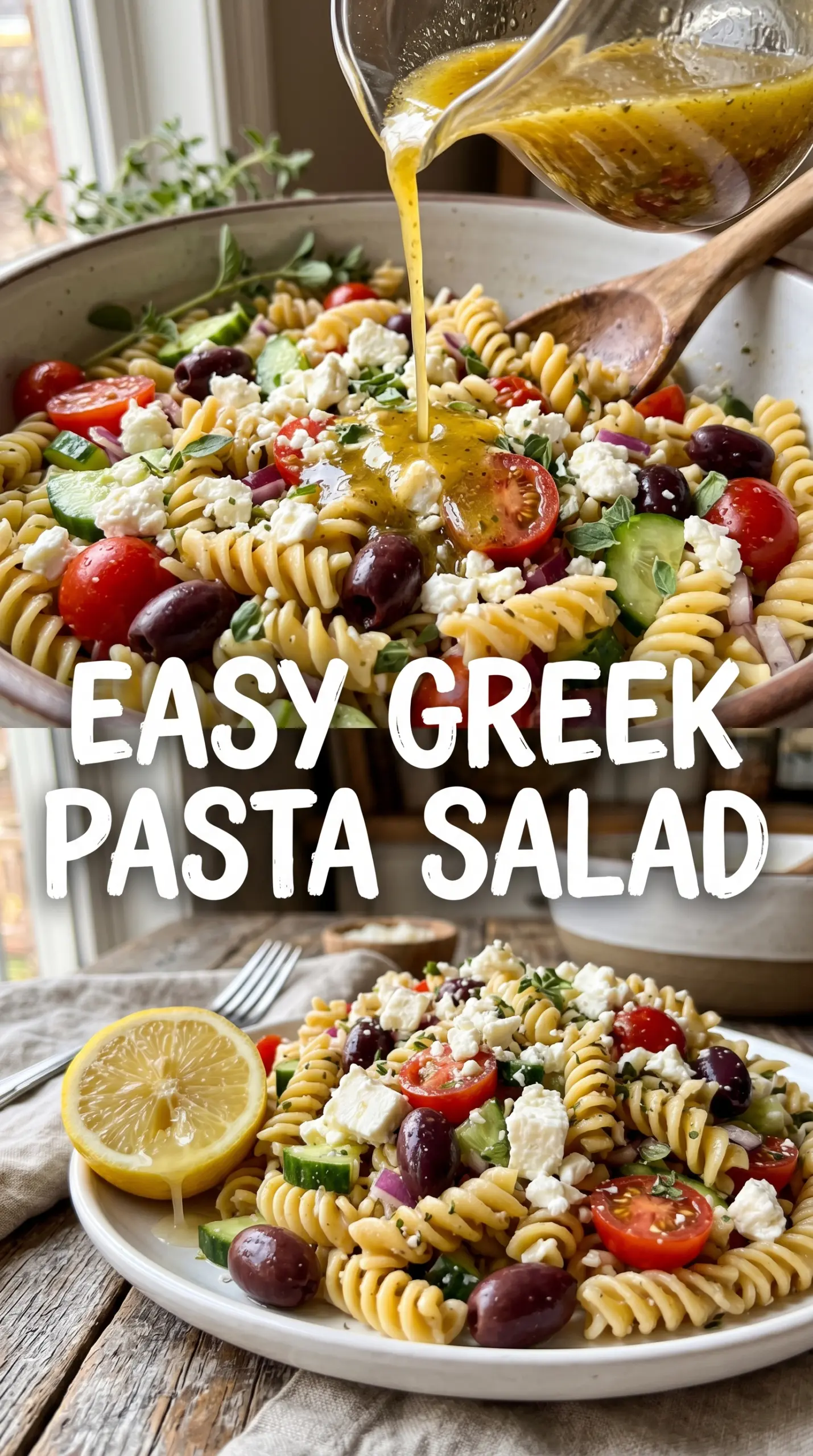
The pasta is the base that carries the dressing, but it also sets the texture of the whole dish. Short shapes with ridges or curves hold onto the oil and acid better than long noodles or very smooth pasta. If you overcook it, the salad loses structure fast once it chills.
The tomatoes, cucumber, red onion, olives, and feta are classic Greek salad ingredients, but each one plays a different role. Tomatoes bring sweetness, cucumber brings crunch, red onion brings bite, olives bring salt, and feta brings creaminess without turning the whole thing heavy. The dressing ties them together, so it should taste a little bolder than you think before it hits the bowl.
- Olive oil — Use a decent extra-virgin olive oil here because the dressing isn’t cooked. A harsh or flat oil will show up immediately.
- Lemon juice and red wine vinegar — The two acids make the salad taste bright after chilling. If you only use lemon juice, the flavor can flatten in the fridge.
- Garlic — Mince it finely so it disperses evenly. Big pieces can turn sharp and aggressive after resting.
- Cucumber — Dice it small enough to mix evenly, and scoop out the seeds if it’s especially watery. That helps keep the salad from thinning out.
How to Keep the Dressing Bright and the Vegetables Crisp
Cooking the Pasta to the Right Point
Boil the pasta until it’s just tender, then drain it and rinse it under cold water right away. You want it cooled through and no longer steaming before it meets the vegetables, or the heat will soften the cucumber and start melting the feta. If the pasta feels slick but still has a little bite, you’re in the right place.
Whisking the Dressing Until It Tastes Sharp
Whisk the olive oil, lemon juice, vinegar, garlic, oregano, salt, and pepper until it looks fully combined and slightly cloudy. Taste it before adding it to the salad; it should seem a touch stronger than you’d want on its own because the pasta will pull some of that flavor in. If the garlic tastes harsh, let the dressing sit for five minutes before using it.
Tossing Without Crushing the Feta
Combine the pasta with the tomatoes, cucumber, olives, red onion, and most of the feta in a large bowl, then pour the dressing over and toss gently. Use a wide spoon or your hands and lift from the bottom instead of stirring hard, because rough mixing breaks the tomatoes and turns the feta into paste. The salad should look coated, not wet.
Letting It Chill the Right Way
Refrigerate the salad for at least two hours so the dressing can move into the pasta and the flavors can settle. Give it one more toss before serving, then add the remaining feta on top for a fresh finish. If it seems a little dry after chilling, drizzle in a spoonful of olive oil and a squeeze of lemon rather than flooding it with more dressing.
How to Adapt This Greek Pasta Salad for Different Needs
Make It Gluten-Free
Use your favorite gluten-free short pasta and cook it just to tender, since many gluten-free shapes soften quickly once chilled. Rinsing matters even more here, because it helps stop the cooking and keeps the pasta from turning gummy in the dressing.
Make It Dairy-Free
Leave out the feta and add a handful of chopped artichoke hearts or extra olives for more savory depth. You’ll lose the creamy, salty finish that feta gives, but the lemon-oregano dressing still carries the salad well.
Add More Protein for a Main Dish
Toss in grilled chicken, chickpeas, or diced salami if you want this to eat like lunch instead of a side. Chickpeas keep it vegetarian, while chicken makes it more filling without changing the flavor balance much.
Storage and Reheating
- Refrigerator: Store in an airtight container for up to 4 days. The pasta will keep absorbing dressing, so the salad tastes even better on day two, though the cucumber softens a little over time.
- Freezer: Don’t freeze this salad. The vegetables lose their texture and the feta turns crumbly in the wrong way after thawing.
- Reheating: This salad is meant to be served cold or at cool room temperature, not reheated. If it’s been in the fridge overnight, let it sit out for 15 to 20 minutes so the dressing loosens and the flavors open back up.