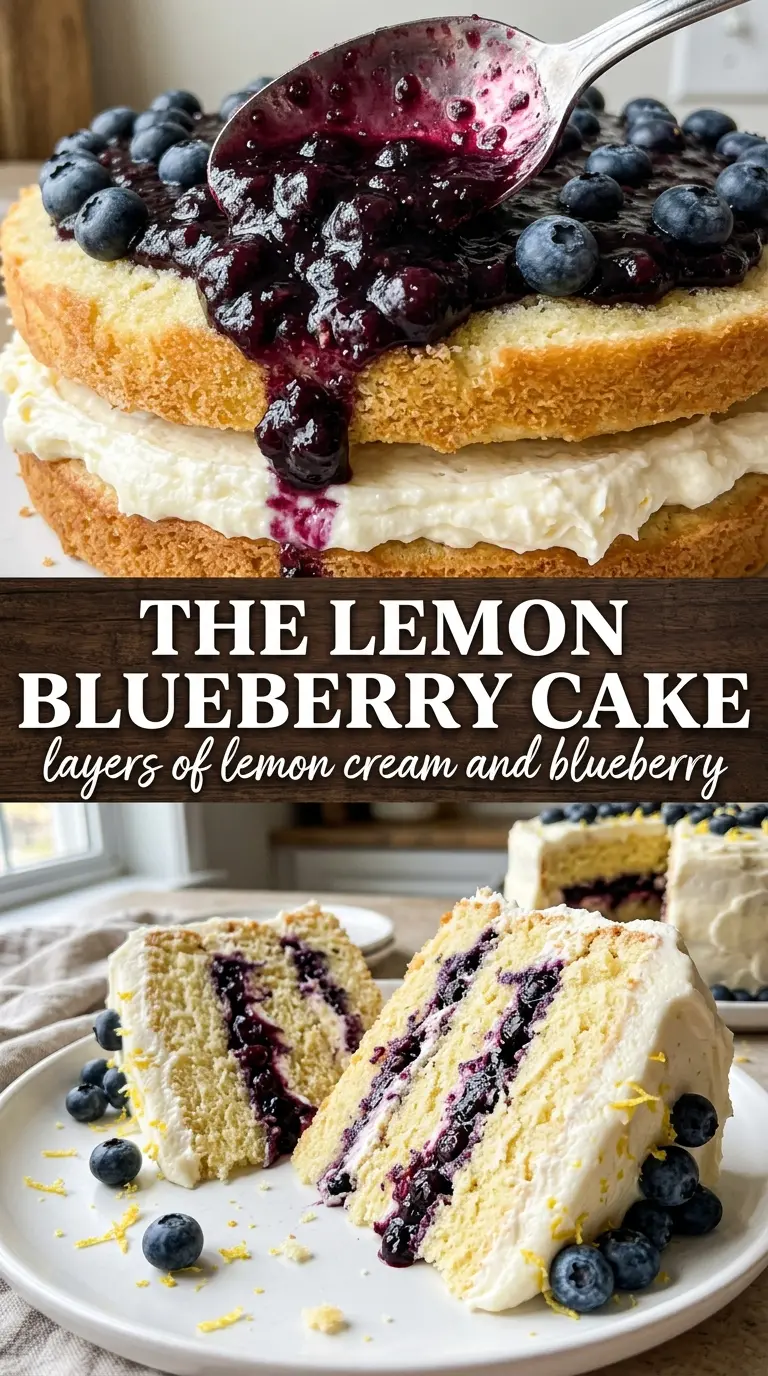
Bright lemon cake and juicy blueberries make a tall layer cake that never stays on the stand for long. The crumb bakes up tender and moist, the berries hold their shape instead of bleeding through the batter, and the cream cheese frosting gives each slice a cool, tangy finish that keeps the cake from feeling too sweet.
What makes this version work is the balance. Lemon zest goes into the batter and the frosting, so the citrus flavor runs all the way through instead of sitting on top as an afterthought. Tossing the blueberries with a little flour helps them stay suspended in the cake, which means fewer berries sinking to the bottom and a cleaner slice when you cut it.
Below, I’ll show you how to keep the layers even, how to avoid a frosting that turns loose, and how to switch up the garnish if you want a more polished finish or a more casual one.
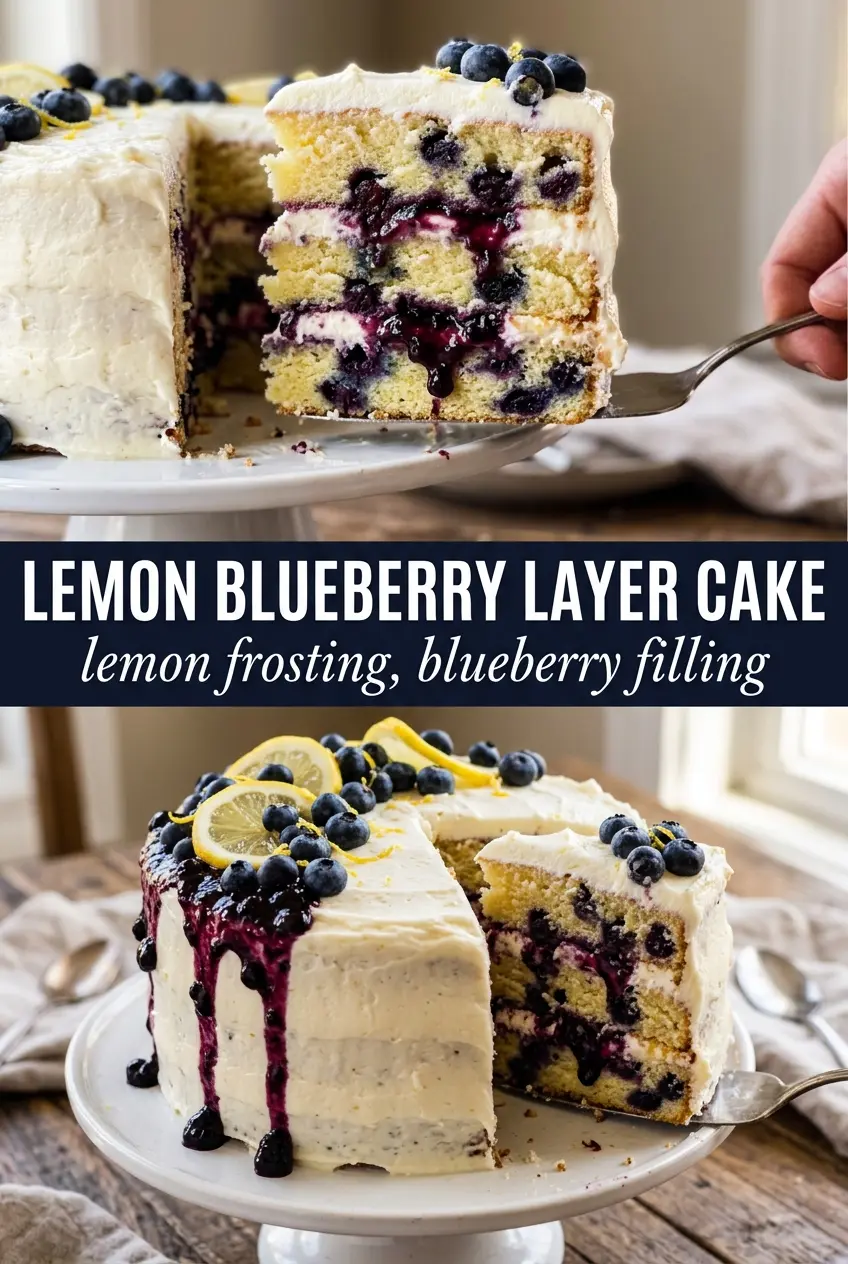
The blueberries stayed evenly distributed and the frosting set up thick enough to hold clean slices. I used buttermilk and the cake came out extra tender with just the right lemon flavor.
Love a tall lemon blueberry layer cake? Save this one for the next time you want moist crumb, thick cream cheese frosting, and fresh berries on top.
The Trick to Keeping Blueberries from Sinking to the Bottom
The most common failure in blueberry cake is a dense band of fruit at the base of the pan. That happens when the berries are too heavy for the batter or when the batter is too loose to support them. Tossing the blueberries in flour gives them a little grip, and starting with properly creamed butter and sugar gives the batter enough structure to hold them in place while it bakes.
Room-temperature butter and eggs matter here. If the butter is too cold, the sugar won’t beat in enough air. If the eggs are cold, the batter can curdle and turn uneven before you add the flour. The goal is a smooth, fluffy batter that looks thick enough to mound briefly on a spoon.
- Blueberries — Fresh berries give the cleanest result here. Frozen berries can work, but don’t thaw them first or the batter will turn streaky and loose.
- Lemon zest — This carries more flavor than the juice alone. The oils in the zest are what make the cake taste bright instead of simply sour.
- Buttermilk — This keeps the crumb tender and adds a subtle tang that plays well with the cream cheese frosting. Whole milk works in a pinch, but the cake will taste a little rounder and less sharp.
- Cream cheese — Use full-fat cream cheese for the frosting. Low-fat versions tend to make the frosting softer and less stable, especially once the cake sits at room temperature.
What Each Ingredient Is Actually Doing in This Recipe
- Primary ingredient (the star) — Quality matters most. Choose the best you can find.
- Cooking medium (oil, butter, or broth) — This carries flavors and prevents dryness.
- Seasonings (salt, pepper, spices, herbs) — Layer flavors so nothing overpowers. Build depth gradually.
- Aromatics (garlic, onion, herbs) — Cook with fat to bloom flavors. Become the foundation.
- Supporting ingredients — Complement the main ingredient without overpowering it.
- Sauce or liquid (if applicable) — Brings flavors together. Balance richness with acid.
- Acid (lemon, vinegar, wine, or other) — Brightens and prevents flat-tasting results.
- Final finish (garnish, glaze, or sauce) — Prevents one-dimensional taste and adds visual appeal.
How to Build the Batter and Frosting Without Losing Structure
Creaming the Butter and Sugar
Beat the butter and sugar until the mixture looks pale and fluffy, not just combined. This is where the cake gets its lift, so stop only when the texture looks airy and a little increased in volume. If the mixture stays dense and yellow, the finished cake will bake up tighter and heavier. Scrape the bowl well so the butter at the bottom doesn’t stay behind and throw off the texture.
Adding the Eggs and Citrus
Add the eggs one at a time and let each one disappear before adding the next. The batter should look smooth and glossy after the lemon zest, lemon juice, and vanilla go in. If it starts to look curdled, don’t panic; once the flour and milk are added, it comes back together. The only real mistake here is rushing ahead before the eggs are fully incorporated.
Bringing in the Flour and Milk
Alternate the dry ingredients with the milk or buttermilk, beginning and ending with flour. That keeps the batter from breaking and helps the gluten stay under control, which means a softer crumb. Stop mixing as soon as the flour disappears. Overmixing at this stage is what makes a cake turn chewy instead of tender.
Folding in the Blueberries and Baking
Fold the floured blueberries in by hand so they stay whole and don’t stain the batter purple. Divide the batter evenly between the pans and bake until the tops spring back when touched and a toothpick comes out with only a few moist crumbs. If the center still looks wet, give it a few more minutes and check again. Pulling the cake too early is the fastest way to end up with a gummy middle that sinks as it cools.
Buttermilk for a Tangier Crumb
Swap the whole milk for buttermilk if you want a softer, slightly more tangy cake. It reacts nicely with the baking powder and gives the crumb a finer texture. If you don’t have buttermilk, use whole milk mixed with 1 tablespoon lemon juice, then let it sit for 5 minutes before adding it.
Frozen Blueberries in a Pinch
Frozen blueberries work if fresh ones aren’t available, but keep them frozen until the last second. Toss them with flour while still cold and fold them in quickly. They can tint the batter a little more than fresh berries, but the cake still bakes up well.
Cupcake Version
Bake the batter in lined muffin tins for about 18 to 22 minutes for a hand-held version. The crumb stays tender, but you’ll lose the dramatic layer-cake look and the frosting-to-cake ratio changes. Pipe the frosting after the cupcakes are completely cool or it will slide off.
Storage and Reheating
- Refrigerator: Store covered for up to 4 days. The frosting stays stable, but the cake crumb tightens a little in the fridge.
- Freezer: Freeze unfrosted layers tightly wrapped for up to 2 months. Frosting freezes separately, but the finished cake is best enjoyed fresh because the berries can weep after thawing.
- Reheating: Let refrigerated slices sit at room temperature for 20 to 30 minutes before serving. Warming it in the microwave makes the frosting soft and can turn the berries mushy.
Questions I Get Asked About This Recipe
Lemon Blueberry Cake
Ingredients
Equipment
Method
- Preheat the oven to 350°F and grease two 9-inch round pans. Ensure the pans are evenly coated so the layers release cleanly.
- Beat the butter and granulated sugar until fluffy. Stop and scrape the bowl so the batter looks lighter in color with a smooth texture.
- Add the eggs, lemon zest, lemon juice, and vanilla extract. Mix until fully incorporated and the batter looks glossy.
- Alternate adding the flour mixture and the whole milk or buttermilk. Mix just until smooth after each addition so the crumb stays tender.
- Fold in the fresh blueberries that were tossed in flour. Mix gently so the blueberries stay whole and don’t streak too much.
- Divide batter between the pans and bake for 32-35 minutes at 350°F. The layers are done when a toothpick in the center comes out clean or with a few moist crumbs.
- Cool completely in the pans, then remove and cool fully before frosting. This usually takes about 1 hour so the frosting doesn’t melt.
- Beat the cream cheese and butter until smooth. The mixture should look silky with no lumps.
- Add powdered sugar, fresh lemon juice, and lemon zest, then beat until fluffy. Scrape the bowl and beat again briefly if needed for a thick, spreadable texture.
- Fill and frost the cake with lemon cream cheese frosting. Spread it thick between layers and keep the sides evenly coated.
- Pile fresh blueberries on top of the frosted cake. Let them cascade slightly so you get visible berries in the finished look.
- Drizzle a simple lemon glaze (powdered sugar plus lemon juice) over the blueberries. Finish with a glossy drizzle so it catches the light.
- Scatter extra lemon zest over the top and serve. Add the zest right before serving for the brightest aroma.