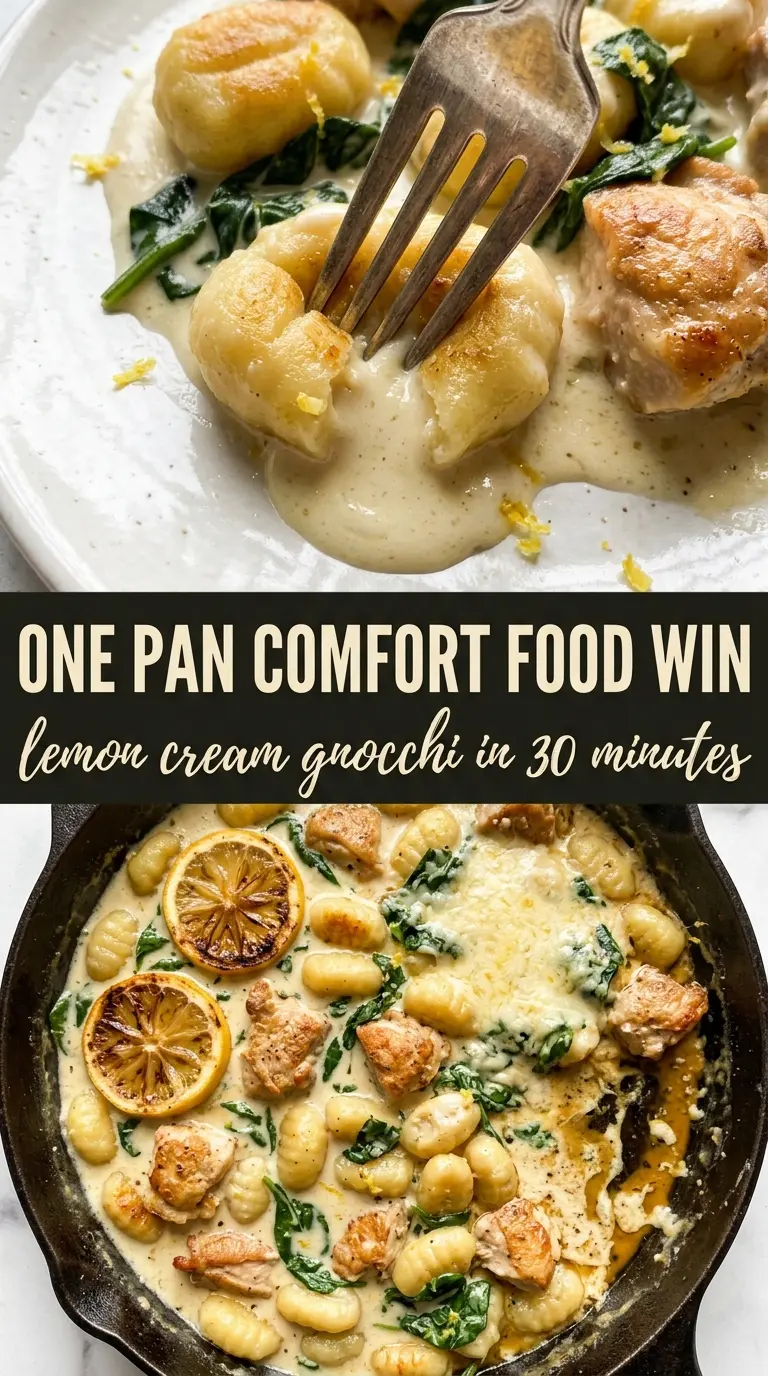
Pillowy gnocchi, golden chicken, and a bright lemon cream sauce make this skillet dinner the kind of meal that disappears fast. The gnocchi cooks right in the sauce, so it picks up flavor instead of tasting like an afterthought, and the spinach melts down just enough to weave everything together without turning the pan heavy or muddy.
What makes this version work is the order. The chicken gets proper color first, then the same skillet builds the sauce from the browned bits left behind. The lemon goes in at the end, after the cream and Parmesan have had time to thicken, which keeps the sauce fresh and lively instead of flat. If you’ve ever had a cream sauce break or taste muted, the timing here fixes both problems.
Below, I’ve included the cue that tells you the gnocchi is done, the ingredient choices that matter most, and a few swaps for making it fit what’s in your kitchen. It’s the kind of dish that looks like more work than it is, which is exactly why it ends up in the weeknight rotation.
The sauce thickened right up and the gnocchi stayed tender instead of turning gummy. My husband kept going back for “just one more spoonful” until the pan was empty.
Save this one pan lemon chicken gnocchi for the nights when you want a creamy skillet dinner with bright lemon, tender gnocchi, and almost no cleanup.
The Part Most People Get Wrong: Cooking the Gnocchi in the Sauce
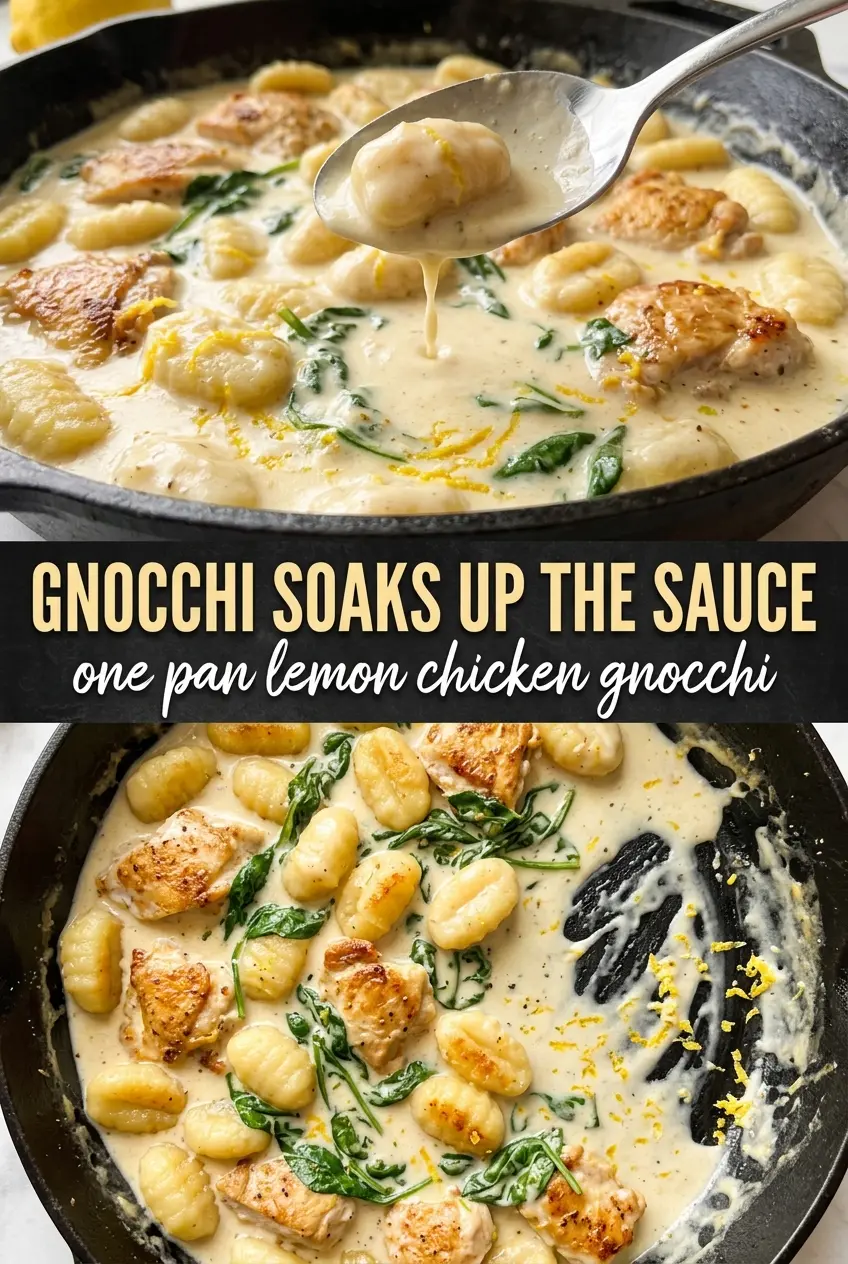
The gnocchi doesn’t need a separate pot here, and that matters more than it sounds. When it simmers directly in the cream and broth, it releases just enough starch to help the sauce thicken naturally, which gives you that glossy, clingy finish instead of a loose, split-looking pan sauce. If the sauce seems thin at first, let it keep bubbling gently; the gnocchi needs those few minutes to finish and do its job.
The other mistake is crowding the pan with chicken that hasn’t browned. You want color on the meat before the sauce goes in, because those browned bits are the backbone of the flavor. If the chicken steams instead of sears, the whole dish tastes flatter, even if everything else is done right.
- Chicken breasts — Bite-size pieces cook quickly and stay tender if you pull them as soon as they hit 165°F. Thighs work too, and they bring a little more richness, but they need a minute or two longer.
- Shelf-stable gnocchi — This is the right kind to simmer straight in the sauce. Fresh gnocchi can work, but it softens faster, so watch the texture and stop cooking when the dumplings are just tender.
- Dry white wine or chicken broth — Wine adds a sharper, more layered base; broth gives you a milder sauce. If you skip the wine, use broth and add an extra squeeze of lemon at the end to keep the sauce bright.
- Heavy cream — This is what gives the sauce body without needing a flour roux. Half-and-half can work in a pinch, but the sauce will be thinner and needs a little more time to reduce.
- Parmesan — Grate it fresh if you can. Pre-grated Parmesan often has anti-caking agents that can make the sauce a little grainy instead of silky.
- Lemon juice and zest — Both matter. The juice lifts the cream, while the zest gives you the lemon aroma that makes the dish taste clean instead of heavy.
What Each Ingredient Is Actually Doing in This Chicken Dish
- Chicken (pat dry for browning) — Room temperature cooks more evenly. Even pieces ensure uniform doneness.
- Oil or butter (the browning medium) — High-heat oil essential for proper searing. Creates pan flavor.
- Seasonings (salt, pepper, spices) — Apply generously. Chicken carries the entire flavor profile.
- Aromatics (garlic, ginger, herbs) — Cook with fat to bloom flavors. Become the foundation.
- Sauce or braising liquid (if using) — This keeps chicken moist. Balance richness with acid.
- Vegetables (if using) — Layer by cooking time so everything finishes together.
- Acid (vinegar, wine, lime, or pineapple) — This brightens and prevents one-dimensional flavor.
- Proper doneness (165°F internal temperature) — Use thermometer for accuracy. Overcooked is dry.
Building the Sauce Without Losing the Bright Lemon Finish
Getting Color on the Chicken
Season the chicken before it hits the skillet, then cook it in a hot pan until the edges are deeply golden and the center is just cooked through. Don’t stir constantly; let the pieces sit long enough to develop color, or you’ll end up with pale chicken and less flavor in the pan. Once the chicken is done, move it out right away so it doesn’t overcook while the sauce comes together.
Pulling Flavor From the Pan
Add the butter and garlic to the same skillet and keep the heat moderate. Garlic burns fast, and once it does, the whole sauce tastes harsh, so thirty seconds is enough. Pour in the wine or broth and scrape the bottom well; those browned bits dissolve into the liquid and carry the savory base of the dish.
Letting the Gnocchi Finish in the Cream
Stir in the cream and broth, bring the sauce to a simmer, then add the gnocchi straight into the pan. Keep the heat at a gentle bubble, not a hard boil, and stir just enough to keep the gnocchi from sticking. When the dumplings turn tender and the sauce coats the back of a spoon, it’s ready for the Parmesan, lemon, and spinach.
Finishing With Lemon and Spinach
Stir in the cheese first so it melts into the hot sauce, then add the lemon juice and zest. Finish with the spinach and return the chicken to the skillet, tossing only until the greens wilt and the chicken is warmed through. If you add the lemon too early, it can dull the cream; at the end, it stays sharp and fresh.
How to Adapt This Skillet for What’s in Your Kitchen
Make It Gluten-Free Without Changing the Method
Use certified gluten-free gnocchi and keep everything else the same. The sauce doesn’t rely on flour, so the texture stays creamy and stable as long as you simmer the gnocchi gently instead of boiling it hard.
Swap in Chicken Thighs for a Richer Pan
Boneless skinless thighs bring a little more juiciness and a deeper chicken flavor. They take a touch longer to cook, but they’re forgiving if you want a richer result and don’t mind a slightly more rustic look.
Make It Dairy-Light, Not Dairy-Free
You can use half-and-half instead of heavy cream for a lighter sauce, but reduce the heat and give it a few extra minutes to thicken. It won’t coat quite as luxuriously, but the lemon and Parmesan still keep it satisfying.
Add More Vegetables Without Weighing the Sauce Down
A handful of peas, chopped asparagus, or mushrooms fits nicely here. Mushrooms should be browned before the garlic goes in, while quick-cooking vegetables can go in with the spinach so they stay bright and don’t turn the sauce watery.
Storage and Reheating
- Refrigerator: Store leftovers in an airtight container for up to 3 days. The sauce will thicken as it chills, and the gnocchi will soften a bit more.
- Freezer: I don’t recommend freezing this one. Cream sauces and gnocchi both change texture after thawing, and the result usually turns grainy or mushy.
- Reheating: Warm it gently in a skillet over low heat with a splash of broth or cream, stirring often. High heat is what breaks the sauce and makes the gnocchi tough on the outside while the center turns pasty.
Answers to the Questions Worth Asking
One Pan Lemon Chicken Gnocchi
Ingredients
Equipment
Method
- Season the chicken with salt, pepper, and garlic powder. Heat olive oil in a large skillet over medium-high heat and cook the chicken for 5-6 minutes, turning once, until golden and cooked through to 165°F.
- Remove the cooked chicken from the skillet and set aside. Keep it warm while you build the sauce.
- Melt butter in the same skillet over medium heat. Add the minced garlic and cook for 30 seconds until fragrant, then immediately deglaze with white wine (or chicken broth) and cook for 2 minutes, scraping up browned bits.
- Pour in heavy cream and chicken broth. Bring the mixture to a simmer, watching for steady small bubbles across the surface, then add the shelf-stable gnocchi directly to the sauce.
- Cook the gnocchi for 5-6 minutes, stirring gently, until the gnocchi are tender. Continue until the sauce thickens enough to lightly coat the gnocchi.
- Stir in Parmesan, fresh lemon juice, lemon zest, and baby spinach. Keep the sauce at a gentle simmer and stir until the spinach wilts throughout, about 1-2 minutes, then return the chicken and toss to combine.
- Turn off the heat and garnish with fresh parsley and extra lemon. Serve right away while the gnocchi stay pillowy and the sauce looks glossy.