Golden salmon over creamy lemon orzo hits that sweet spot between weeknight simple and dinner-party polished. The salmon stays crisp on top, the orzo turns silky instead of gluey, and the tomatoes and spinach give the skillet enough brightness that every bite feels balanced, not heavy.
The trick here is treating the orzo like a risotto-style pasta. It needs steady stirring and just enough broth to loosen into a sauce as it cooks, while the Parmesan and lemon go in near the end so the finish stays smooth and fresh. The salmon is seared first for color and texture, then nestled back in just long enough to warm through without drying out.
Below, I’ll walk through the one detail that keeps the orzo creamy, the ingredient swaps that still work, and the timing that keeps the salmon tender instead of overdone.
The salmon skin crisped up beautifully, and the orzo stayed creamy all the way to the last bite. I was nervous about the lemon curdling the cheese, but it came together perfectly once I took the pan off the heat first.
Save this one skillet salmon with lemon orzo for the nights when you want crisp salmon, creamy pasta, and one pan to wash.
The Part Where the Orzo Turns Creamy Instead of Starchy
The biggest mistake with skillet orzo is treating it like plain pasta and walking away. Orzo releases starch fast, which is exactly what gives you that silky finish, but it also means the pan can go from pleasantly thick to cement-like if you let it dry out. Stir often and keep the simmer active, not aggressive, so the liquid absorbs gradually and the texture stays loose enough to coat a spoon.
Another thing that matters here is when the lemon and Parmesan go in. Add them after the orzo has turned tender and the heat is lower, or the cheese can seize and the lemon can taste sharp instead of bright. The skillet should look glossy, with just enough liquid left to move around the salmon, not a puddle at the bottom.
What the Salmon, Lemon, and Cheese Are Each Doing Here
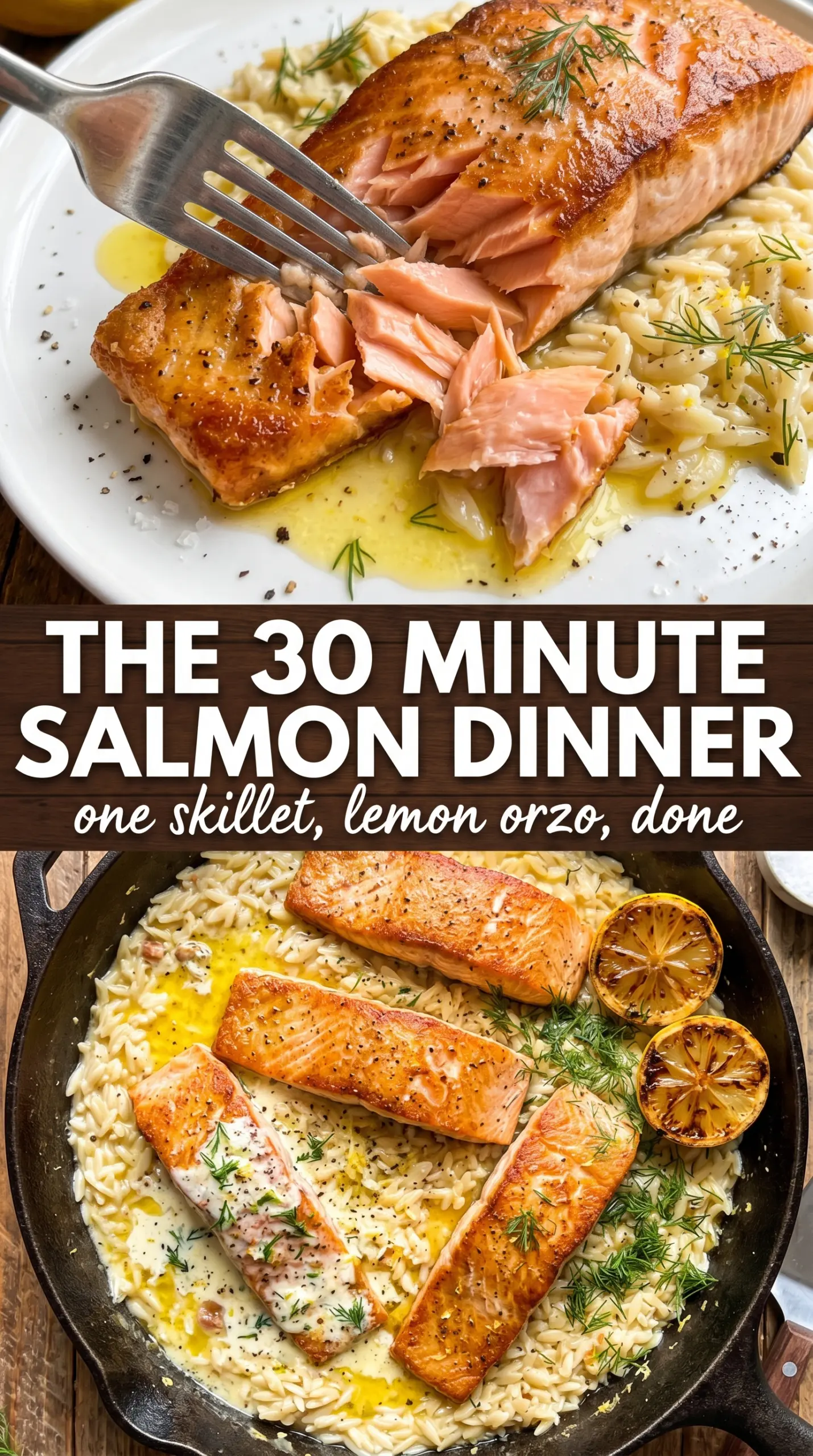
- Skin-on salmon fillets — Skin-on fillets hold together better in the skillet and give you that crisp, savory top layer if you sear them skin-side down first. If you only have skinless salmon, it still works, but the sear will be more delicate and you’ll lose that built-in protection from overcooking.
- Orzo — Orzo is the backbone of the dish because it thickens the broth into a creamy sauce without needing cream. You can use acini di pepe in a pinch, but the texture will be smaller and less substantial; it won’t give you the same silky bite.
- Chicken broth — Broth seasons the pasta as it cooks, which is a big part of why this tastes complete without a long sauce. Use a low-sodium broth if you can, because the Parmesan adds salt at the end and it’s easier to finish seasoning than to fix an over-salted skillet.
- Parmesan, lemon juice, and zest — Parmesan gives the sauce body, while the lemon lifts the whole dish so the salmon doesn’t taste heavy. Fresh lemon is worth using here; bottled juice can taste flat and it misses the fragrant oil from the zest.
- Spinach and cherry tomatoes — These aren’t just garnish. The spinach melts into the orzo and the tomatoes burst enough to add little pockets of acidity. If your tomatoes are large, halve them; if they’re very sweet, add the lemon before the cheese so the sauce keeps its balance.
How to Sear the Salmon Before the Orzo Starts Thickening
Crisping the Skin
Season the salmon generously, then place it skin-side down in hot oil and leave it alone long enough to build a crust. You should hear a steady sizzle, not a harsh pop, and the fillets should release easily when the skin is ready. If they stick, they’re not done searing yet. Pulling too early tears the skin and steals the texture that makes this dish feel finished.
Toasting the Orzo
After the salmon comes out, cook the garlic just until fragrant, then stir in the dry orzo for a minute. That quick toast gives the pasta a slightly nutty edge and helps it hold its shape instead of bloating right away. If the garlic browns, the skillet is too hot and it will turn bitter, so keep that part brief.
Simmering to Creaminess
Pour in the broth and bring it to a lively simmer, then stir often as the liquid drops and the orzo swells. The bottom of the skillet should stay wet enough that the pasta moves freely. When it looks almost tender but still has a little bite in the center, that’s the moment for tomatoes, spinach, lemon, and Parmesan. Waiting until it’s fully soft before adding the finish leaves you with a thick, pasty pan.
Bringing the Salmon Back
Set the salmon back on top skin-side up so the crisped skin stays out of the sauce. Cover the skillet just long enough to warm the fish through without cooking it past juicy and opaque in the center. If your fillets are thin, check them early. The carryover heat in the skillet does more work than people expect.
What to Change When You Need a Different Version
Dairy-Free Swap
Skip the Parmesan and finish the skillet with an extra drizzle of olive oil plus a little more lemon zest. You’ll lose some of the creaminess and salty depth, but the broth and orzo still build a good body, and the lemon stays front and center.
Gluten-Free Version
Use a gluten-free orzo-style pasta and watch the simmer closely, because some brands soften faster than wheat orzo. Stir a little more often and keep extra broth nearby in case the pan tightens before the pasta is done.
No Skin on the Salmon
Skinless fillets still work, but they need a little less time in the first sear and a gentler hand when flipping. The flavor stays the same, but you won’t get that crisp top layer, so serve them straight over the orzo as soon as they’re just cooked through.
Storage and Reheating
- Refrigerator: Store leftovers for up to 3 days. The orzo will thicken as it sits, and the salmon skin won’t stay crisp.
- Freezer: Not my first choice. The salmon and orzo both change texture after freezing, and the sauce can turn grainy when thawed.
- Reheating: Warm gently in a skillet over low heat with a splash of broth or water. Reheat just until hot; high heat dries out the salmon and tightens the orzo into a paste.
Answers to the Questions Worth Asking

One Skillet Salmon with Lemon Orzo
Ingredients
Equipment
Method
- Season salmon with salt, pepper, and smoked paprika. Heat olive oil in a large skillet over medium-high until shimmering, then place salmon skin-side down and sear for 4-5 minutes until the skin is crispy.
- Flip the salmon and cook 2 more minutes until the second side is lightly browned. Remove salmon from the skillet and set aside.
- In the same skillet, cook minced garlic over medium-high for 30 seconds until fragrant, stirring as needed. Add uncooked orzo and toast for 1 minute, stirring to coat.
- Pour in chicken broth and bring to a simmer. Cook uncovered for 8-10 minutes, stirring often, until orzo is almost tender.
- Stir in cherry tomatoes, baby spinach, Parmesan cheese, lemon juice, and lemon zest. Cook until the spinach wilts and the orzo turns creamy.
- Nestle salmon fillets skin-side up into the orzo. Cover and cook for 3-4 minutes until the salmon is just heated through.
- Garnish with fresh dill and lemon slices, then serve straight from the skillet.