Rotini pasta salad with Italian dressing is the kind of side dish that disappears fast because it holds up on the table and still tastes good after it sits. The dressing clings to every twist of pasta, the vegetables stay crisp, and the whole bowl gets better after a couple of hours in the fridge instead of turning soggy.
The trick is starting with properly cooled pasta and using enough dressing to coat the noodles all the way through. Rinsing the pasta under cold water stops the cooking and keeps the salad from going gummy, while the Parmesan and Italian seasoning give the bottled dressing a little more backbone. This version uses simple, familiar ingredients, but the order you mix them in matters more than people think.
Below, I’ve included the one step that makes the biggest difference in texture, plus a few smart swaps if you want to change up the vegetables or make it dairy-free.
I made this for a potluck and the pasta stayed coated and fresh-tasting even after sitting out for hours. The cucumber and bell pepper stayed crisp, and it needed almost no extra dressing before serving.
Love how this pasta salad stays crisp and coated? Save it to Pinterest for easy lunches, cookouts, and make-ahead side dishes.
The Reason This Salad Stays Good Instead of Going Soft
The biggest mistake with pasta salad is dressing it while the noodles are still warm enough to drink up the liquid unevenly. That gives you patches that taste dull and patches that taste heavy. Rinsing the pasta cold and letting it drain well keeps the texture springy, and the dressing can cling to the outside instead of disappearing into the center of the noodles.
The second part people miss is the rest time. Two hours in the fridge sounds like a waiting game, but it’s when the seasoning settles into the pasta and the vegetables give off just enough moisture to loosen everything into a true salad. If you serve it right after mixing, it tastes sharp and a little disconnected. After chilling, it eats like one dish instead of a bowl of separate parts.
- Cold rinsed pasta — Stops the cooking fast and keeps the rotini from getting sticky. Rotini works especially well because the spirals grab dressing better than smooth pasta.
- Italian dressing — Bottled dressing is the backbone here, so use one you actually like. If it tastes flat straight from the bottle, it’ll taste flat in the salad.
- Parmesan — Adds salt and a little savory depth. Grated Parmesan blends in better than shredded, which can clump on the cold noodles.
- Italian seasoning — This wakes up the bottled dressing and gives the salad a more homemade finish. If your dressing is already heavily herb-forward, cut this back a little.
What Each Ingredient Is Doing in the Bowl
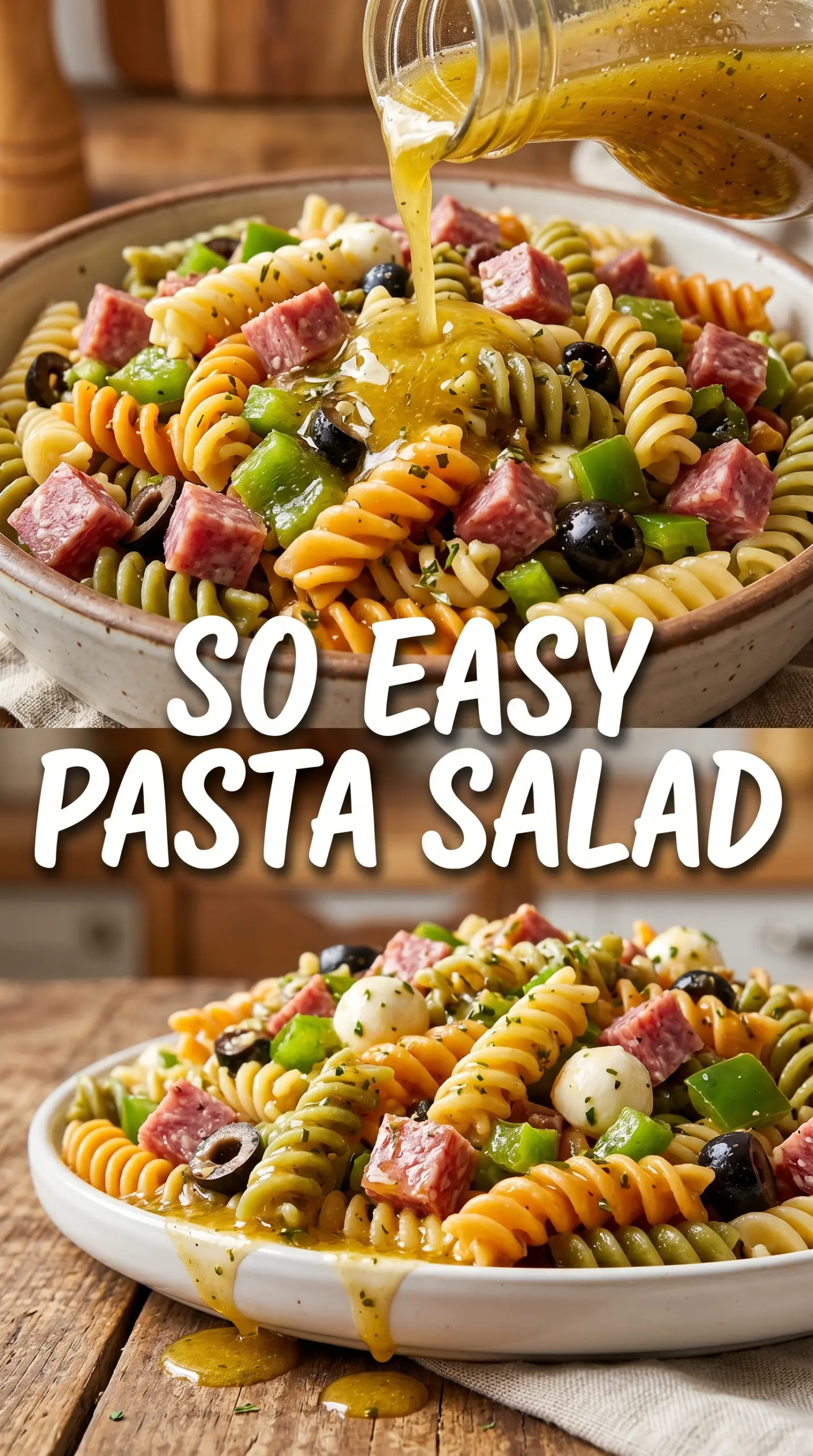
The pasta is the structure, so choose a shape that can catch the dressing instead of letting it slide off. Rotini gives you those little ridges and curls that hold onto every bit of seasoning. If you swap in penne or bowties, the salad still works, but it won’t carry dressing quite as evenly.
The vegetables are what keep this from tasting like plain dressed noodles. Tomatoes add juiciness, cucumber brings crunch, bell pepper gives sweetness, and red onion adds bite. Black olives and Parmesan push it toward that classic Italian-American deli flavor, which is why the salad tastes complete even with a short ingredient list.
- Rotini pasta — Best for catching dressing in all the twists. If you use a different pasta, pick one with texture or curves.
- Italian dressing — Store-bought is the easy win here because it already has oil, acid, and seasoning balanced. A homemade vinaigrette can work, but it needs enough salt and body or the salad tastes thin.
- Cucumber — Adds freshness and crunch, but seedless or lightly seeded cucumbers hold up best. If yours is watery, scoop out the seeds before dicing.
- Red onion — Gives the salad some sharpness. Dice it small so it doesn’t overpower a bite; if raw onion is too strong for you, soak it in cold water for 10 minutes first.
- Parmesan cheese — Adds a salty finish that makes the dressing taste richer. Freshly grated melts into the salad better than the shelf-stable powdered kind.
How to Keep the Pasta from Drinking Up All the Dressing Too Soon
Cooking the Pasta to the Right Point
Boil the rotini until just tender, then drain it right away. Overcooked pasta turns soft once it sits in dressing, which is why this salad can get mushy fast if you start with noodles that are already on the edge. Rinse under cold water until the pasta feels cool all the way through, then drain it well so extra water doesn’t dilute the dressing.
Building the Salad in the Right Order
Combine the pasta with the vegetables first so the dressing has something to cling to besides bare noodles. Then add the Italian dressing, Parmesan, and seasoning and toss until everything looks evenly coated. If the salad seems dry after chilling, add a small splash more dressing and toss again rather than flooding the whole bowl at once.
The Chill That Ties It Together
Refrigerate the salad for at least 2 hours before serving. That resting time lets the pasta absorb flavor and softens the edge of the raw onion. If you skip the chill, the dressing sits on the surface and the salad tastes less integrated, especially the first day.
Make It Dairy-Free
Skip the Parmesan or use a dairy-free grated alternative. You’ll lose a little salty depth, so taste the salad after chilling and add a pinch of extra salt or a spoonful more dressing if it needs more punch.
Swap the Vegetables Without Changing the Method
Broccoli florets, diced celery, chopped zucchini, or jarred roasted red peppers all work here. Keep the pieces small and crisp so the salad stays easy to scoop and the dressing still coats every bite.
Use a Tangier Dressing for a Brighter Finish
If your bottled Italian dressing is oilier than you like, add a small splash of red wine vinegar before tossing. That sharpens the flavor and helps the salad taste fresher after it’s been chilled, but don’t overdo it or the dressing will thin out too much.
Storage and Reheating
- Refrigerator: Keeps well for 3 to 4 days in a covered container. The pasta will absorb more dressing as it sits, so expect the salad to soften a little by day two.
- Freezer: Not a good freezer recipe. The vegetables lose their crunch and the dressing separates after thawing.
- Reheating: This salad is meant to be served cold. If it has been in the fridge for a while, let it sit at room temperature for 10 to 15 minutes and toss with a spoonful of dressing before serving. Don’t microwave it or the vegetables will go limp.
Answers to the Questions Worth Asking
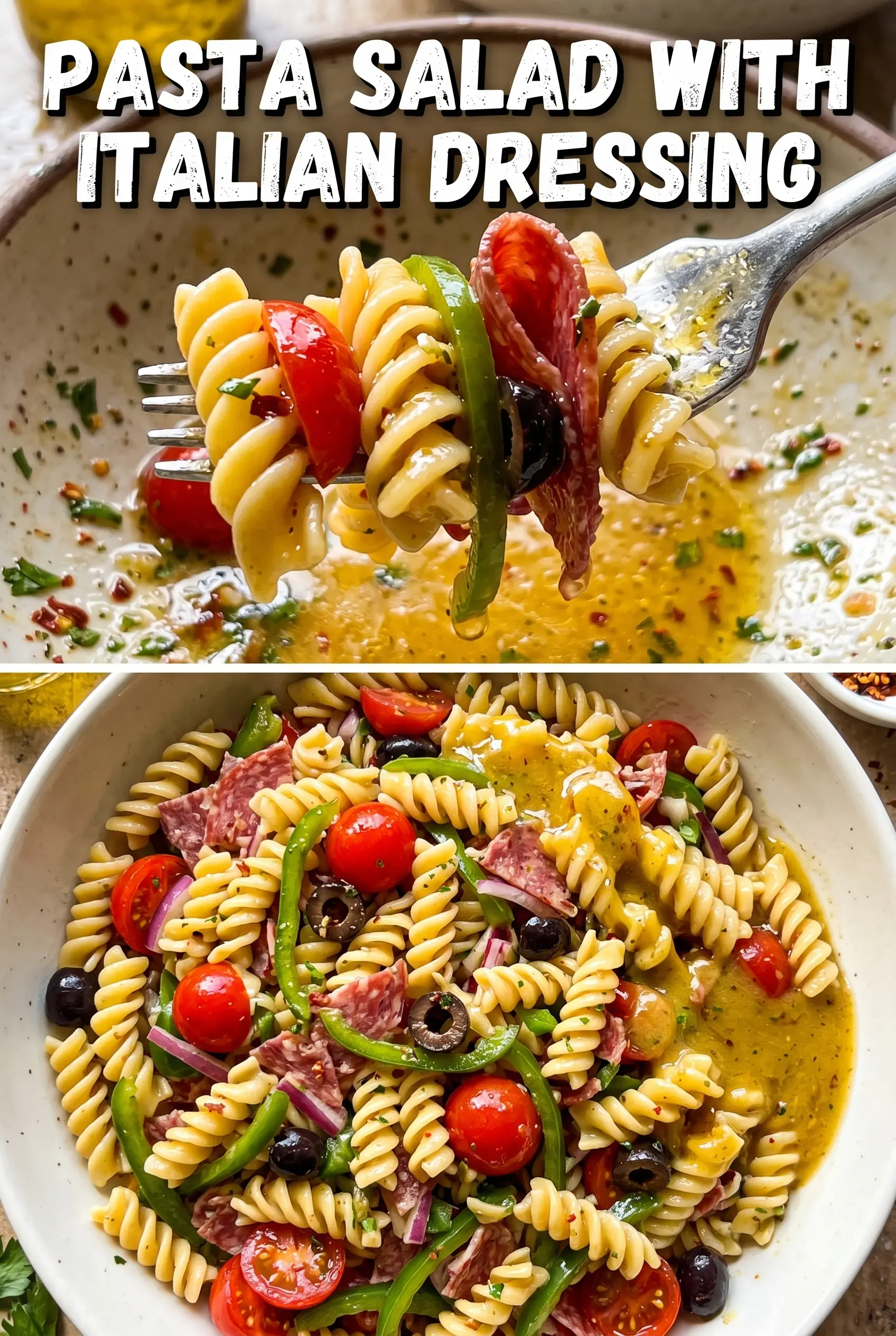
Pasta Salad With Italian Dressing
Ingredients
Equipment
Method
- Cook rotini pasta according to package directions until al dente, then drain and rinse with cold water to stop the cooking; the pasta should be firm and not mushy (no boiling water visible at the end).
- Spread the rinsed pasta on a sheet pan in an even layer to cool briefly so it doesn’t steam in the bowl (look for dry, separated curls).
- Add rotini pasta, cherry tomatoes, cucumber, green bell pepper, red onion, and black olives to a large bowl and stir so vegetables are evenly distributed (vegetables should be visible throughout).
- Pour in Italian dressing, then add Parmesan and Italian seasoning and toss until every piece looks coated with a light sheen (no dry pasta spots).
- Refrigerate for at least 2 hours to allow flavors to develop; cover the bowl and chill until cold throughout (you should see condensation minimal on the lid).
- Toss again before serving and add more Italian dressing if needed; serve chilled with a glossy coating and visible vegetables.