Pesto pasta salad lands in that sweet spot between fresh and satisfying: the pasta soaks up the basil pesto, the tomatoes stay bright, and the mozzarella gives each bite a cool, creamy pause. It’s the kind of side dish that disappears fast at cookouts, but it’s just as useful in the fridge for lunches or a no-fuss dinner alongside grilled chicken or fish.
The key is tossing the pasta with pesto while it’s still a little warm. That helps the sauce cling instead of sitting in greasy streaks at the bottom of the bowl. A splash of lemon juice wakes everything up, and the hour in the fridge matters more than it looks on paper — the flavors settle in, the pasta firms up slightly, and the whole salad tastes more pulled together.
Below, I’ve included the small details that keep this salad from turning heavy or bland, plus a few easy variations if you need to work with what’s in your kitchen.
The pesto coated the pasta evenly instead of pooling, and after an hour in the fridge the tomatoes had picked up the basil flavor without getting mushy. I served it with grilled chicken and there wasn’t a bite left.
Save this pesto pasta salad for a chilled side dish with bright basil, juicy tomatoes, and a creamy mozzarella finish.
The Trick That Keeps Pesto Pasta Salad Green, Not Dull
Pesto can go flat fast if it’s treated like a hot sauce. The color and flavor are best preserved when you toss it with warm pasta, not boiling-hot pasta straight from the pot. That little pause after draining keeps the basil from tasting cooked and the oil from separating into a slick at the bottom of the bowl.
The other thing that matters here is balance. This salad has enough richness from pesto, mozzarella, and pine nuts, so the lemon juice isn’t optional garnish-level acid — it keeps the whole dish from tasting heavy. If your pasta salad seems oily, it usually means the pesto was thinned out too much or the pasta was rinsed but still wet enough to dilute the seasoning.
What Each Ingredient Is Doing in This Salad
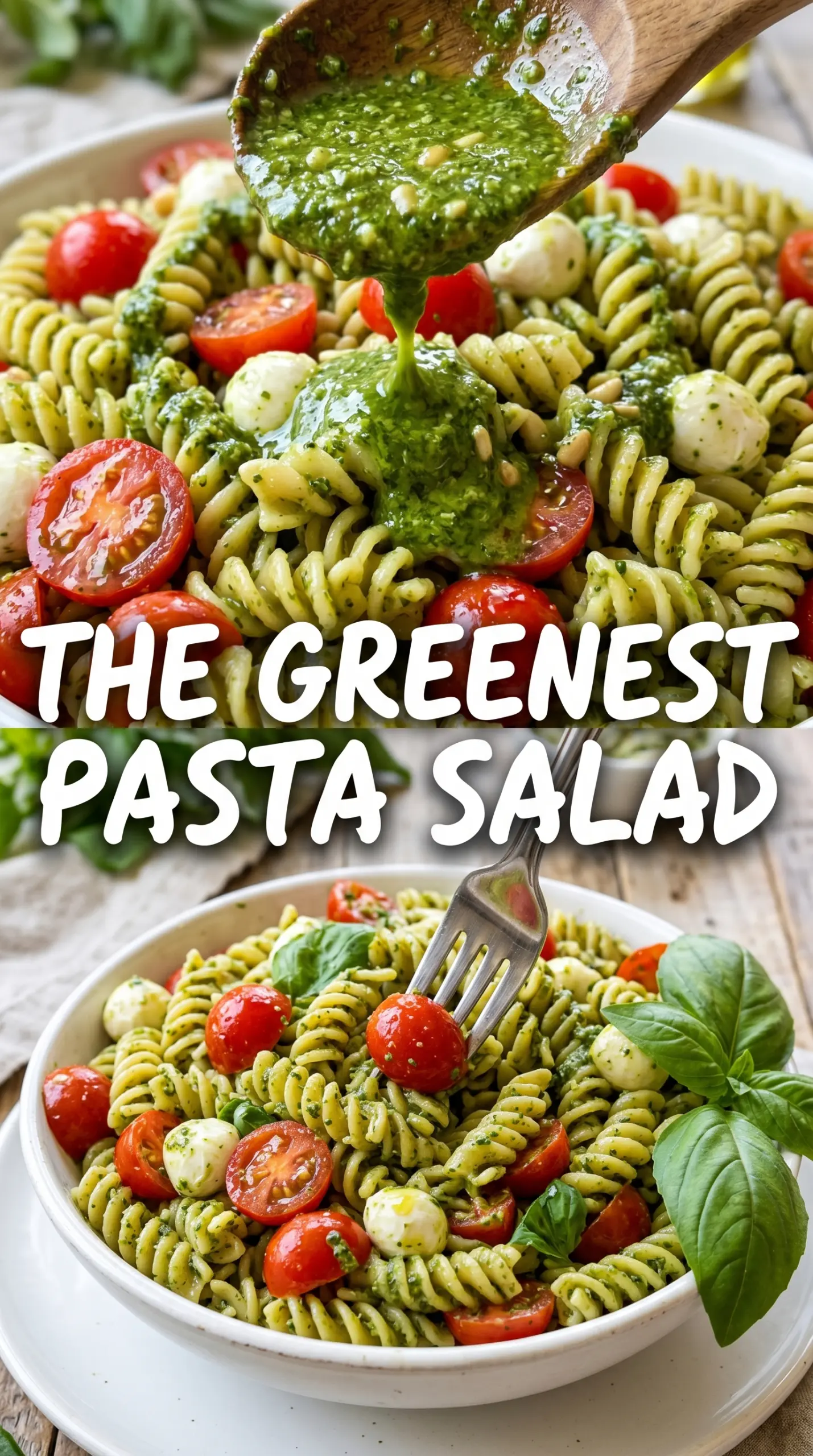
- Fusilli or penne — These shapes hold pesto in the ridges and curves. Long noodles don’t work as well here because the salad needs bite-sized pieces that scoop cleanly from a bowl.
- Basil pesto — This is the backbone of the dish, so use the best one you can get. Store-bought works fine, but if it tastes flat on its own, the salad will taste flat too; a little extra lemon helps, but it won’t fix weak pesto completely.
- Cherry tomatoes — Halving them gives you juices that mingle with the pesto without turning the salad watery. Bigger tomatoes release too much liquid and make the bowl sloppy by the next day.
- Fresh mozzarella pearls — They bring softness and a cool dairy note that balances the herb intensity. If you can’t find pearls, tear a ball of fresh mozzarella into small pieces instead of using low-moisture mozzarella, which eats like rubber in this salad.
- Pine nuts — Toasting them is worth the extra few minutes because it brings out their buttery flavor and keeps them from tasting dusty. If pine nuts are pricey, chopped walnuts or slivered almonds work, but the flavor shifts a little earthier.
- Lemon juice — This sharpens the pesto and keeps the salad from feeling heavy after chilling. Bottled lemon juice works in a pinch, but fresh tastes cleaner and brighter.
How to Build the Salad So It Stays Fresh After Chilling
Toss the Pasta While It’s Still Warm
Drain the pasta, rinse it under cold water, and let it sit for a minute so the surface steam fades. Then toss it with the pesto right away. Warm pasta absorbs the sauce better, which means you get an even green coating instead of a patchy salad with pesto clumps stuck to the bottom of the bowl.
Fold in the Delicate Ingredients Last
Add the tomatoes, mozzarella, pine nuts, Parmesan, and lemon juice after the pasta is coated. Stir gently so the mozzarella stays intact and the tomatoes don’t crush into the dressing. If you mix too aggressively, the cheese breaks down and the salad starts to look messy before it ever hits the table.
Let the Fridge Do the Final Work
Chill the salad for at least an hour before serving. That rest gives the pasta time to absorb some of the pesto and lets the salt, lemon, and herbs settle into one flavor. If it tastes a little muted straight from the bowl, that usually means it needs a touch more salt or a squeeze of lemon after chilling, not more pesto.
Make It Dairy-Free Without Losing the Herb Punch
Use a dairy-free pesto and skip the mozzarella and Parmesan. The salad will be a little sharper and less creamy, so add a handful of olives or avocado right before serving if you want more richness without dairy.
Gluten-Free Pasta That Doesn’t Fall Apart
Use a sturdy gluten-free fusilli or penne and cook it just to al dente. Gluten-free pasta can go soft fast after rinsing and chilling, so pull it from the water one minute early and toss it with pesto while it still has enough structure to hold up in the fridge.
Turn It Into a Heartier Main Dish
Add grilled chicken, shrimp, or white beans after the salad has chilled. Beans keep it vegetarian and make it more filling, while chicken and shrimp turn it into a full meal without changing the basic texture of the salad.
Storage and Reheating
- Refrigerator: Keeps for 3 days in a covered container. The pasta absorbs more pesto as it sits, so expect the salad to look a little drier on day two.
- Freezer: I don’t recommend freezing this salad. The mozzarella changes texture and the tomatoes turn watery after thawing.
- Reheating: This salad is meant to be served cold or cool, not reheated. If it seems stiff straight from the fridge, let it sit at room temperature for 10 to 15 minutes and toss with a teaspoon of olive oil or lemon juice.
Questions I Get Asked About This Recipe
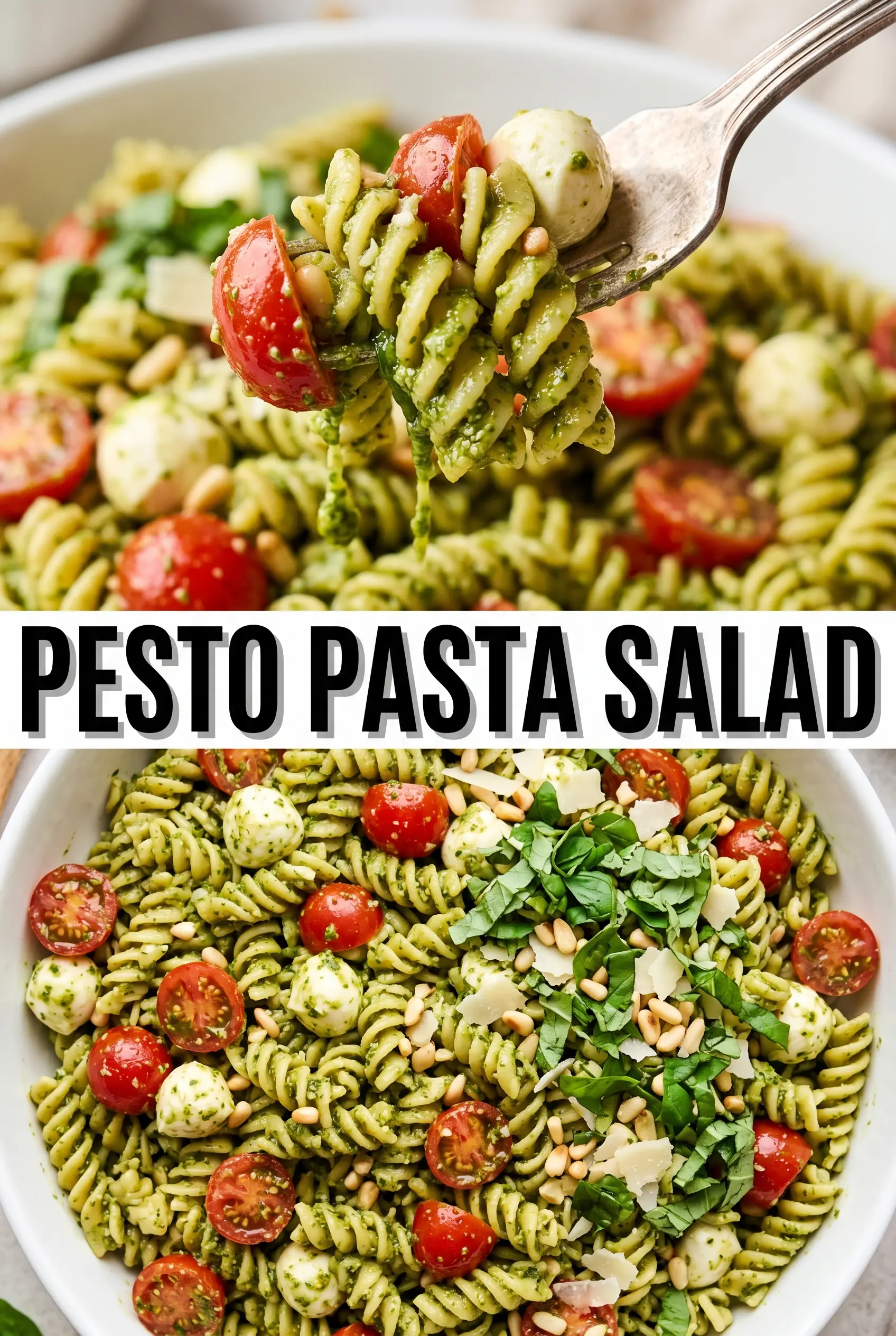
Pesto Pasta Salad
Ingredients
Equipment
Method
- Cook the fusilli or penne pasta according to package directions until al dente, then drain. Rinse under cold water to stop cooking and cool quickly.
- Toast the pine nuts on a sheet pan at 350°F (175°C) for 5-7 minutes, shaking once, until lightly golden. Let them cool while you assemble the salad.
- In a large bowl, toss the warm pasta with the basil pesto until evenly coated. Keep the pasta warm so the pesto clings and coats every spiral.
- Add the halved cherry tomatoes, fresh mozzarella pearls, toasted pine nuts, Parmesan cheese, and lemon juice. Toss gently to avoid breaking up the mozzarella pearls.
- Season the salad with salt and pepper to taste, then toss gently again. Taste once more and adjust before chilling.
- Refrigerate the pesto pasta salad for at least 1 hour to allow the flavors to develop. Cover to prevent the basil garnish from wilting.
- Right before serving, garnish with fresh basil leaves. Add them at the end so the leaves stay bright and fragrant.