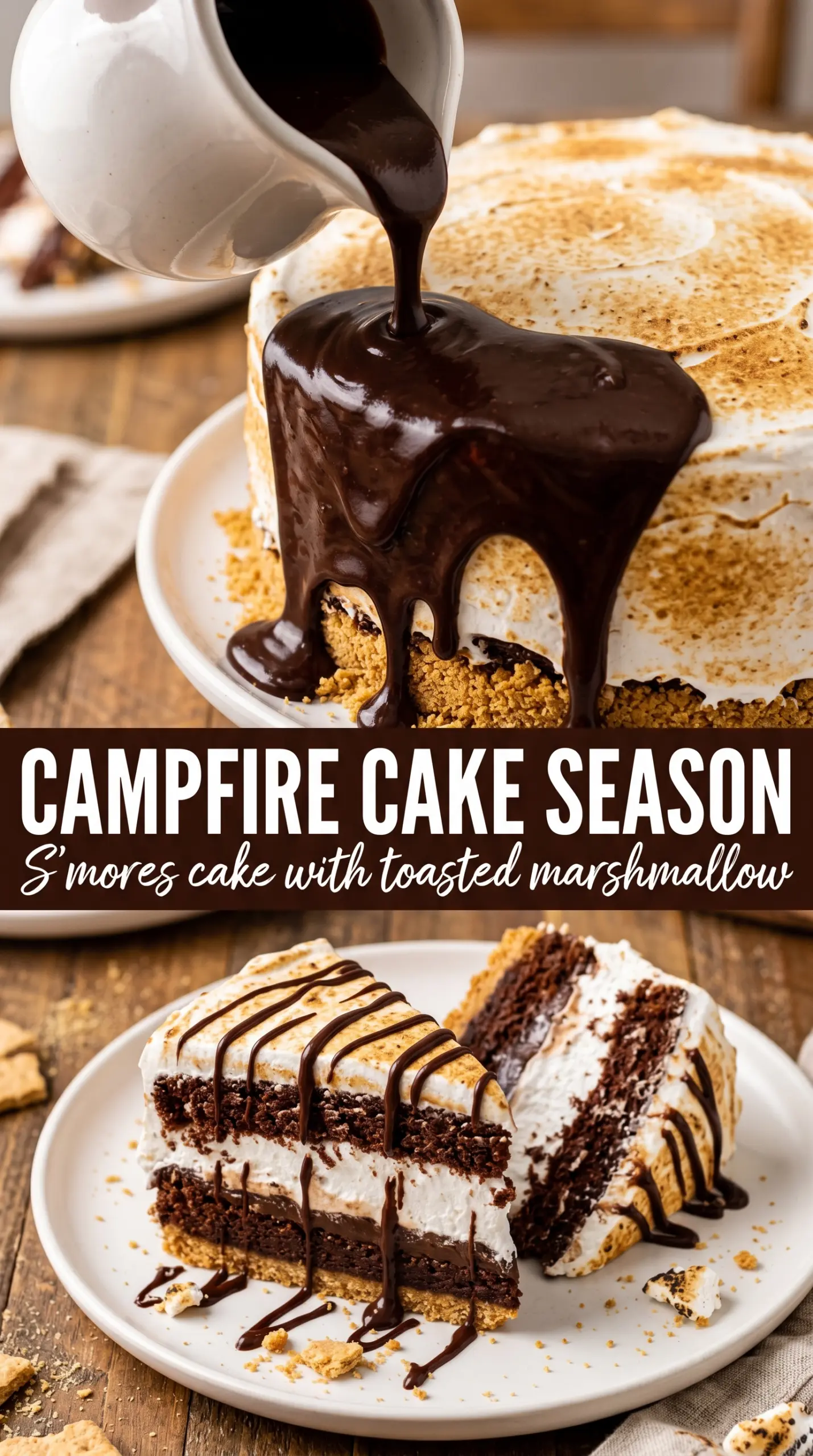
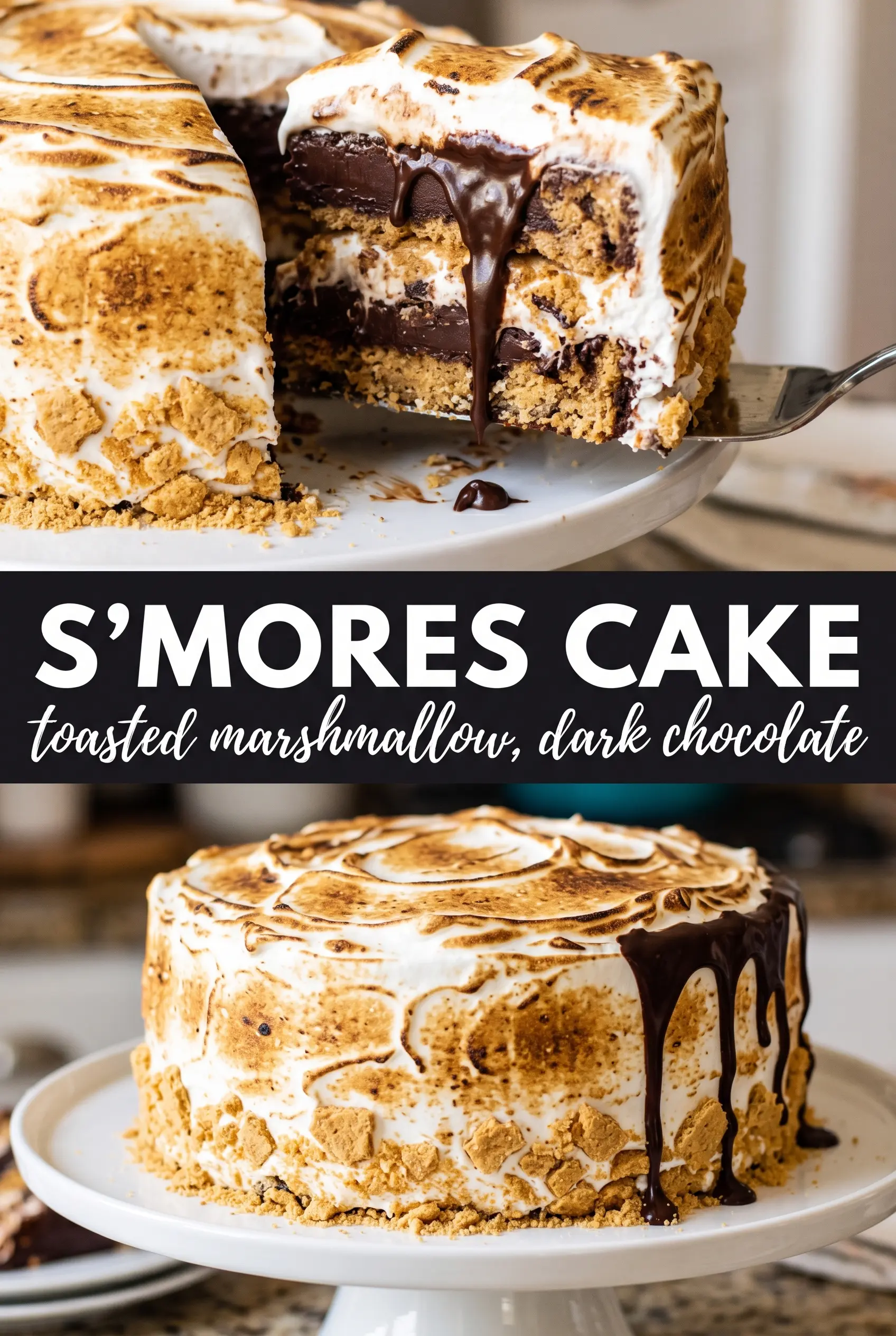
S’mores cake takes everything people love about the campfire version and turns it into a layered dessert that actually slices cleanly. You get a tender chocolate crumb, a smooth layer of ganache, graham cracker crunch at the base, and a marshmallow meringue that toasts into golden peaks instead of melting into a puddle.
The cake batter leans on buttermilk, oil, and coffee for a deep chocolate flavor and a soft, moist crumb that holds up under filling. The ganache needs to cool until it is still pourable but no longer hot, and the meringue is cooked over a double boiler before whipping, which gives you a more stable frosting with a glossy finish and less risk of weeping later.
Below, I’ve added the small details that matter most: how to keep the meringue from turning grainy, when the ganache is the right texture for layering, and the one step that makes the torched top look dramatic instead of messy.
The ganache set up just enough to stay between the layers, and the meringue held its shape beautifully after torching. My kids kept picking off the graham cracker crumbs from the plate.
Love the toasted marshmallow meringue and ganache drip? Save this S’mores Cake for your next celebration dessert.
The Part That Keeps the Layers Clean Instead of Slipping Apart
The common problem with a s’mores cake is that it can turn soft in all the wrong places. Too-warm ganache slides out, and frosting that hasn’t been properly cooked can loosen as soon as it hits the cake. The fix is timing: bake and cool the layers completely, then let the ganache thicken until it ribbons off the spoon instead of running like glaze.
The other thing that matters here is the meringue. Heating the egg whites and sugar over simmering water dissolves the sugar before you whip, which gives you a frosting that holds peaks and toasts beautifully. If you skip that step and start with raw egg whites and sugar, the texture is less stable and the graininess shows up fast once it sits on the cake.
- Buttermilk — This keeps the chocolate cake tender and adds a little tang that balances the sweet frosting. Whole milk can work in a pinch, but the crumb won’t be quite as soft.
- Strong brewed coffee — Coffee doesn’t make the cake taste like coffee; it deepens the cocoa and makes the chocolate taste fuller. Use cooled coffee so it doesn’t curdle the buttermilk.
- Dark chocolate — This gives the ganache enough depth to stand up to the sweet meringue. A 60 to 70 percent bar works well here.
- Egg whites — Fresh whites whip into a brighter, more stable meringue than carton whites. If you’re using carton whites, check that they say they are suitable for meringue or they may not hold the same volume.
- Graham cracker crumbs — These are for the finish, so a fine crumble works better than big chunks. Press them onto the cake while the frosting is still tacky so they stick cleanly.
What Each Ingredient Is Actually Doing in This Recipe
- Primary ingredient (the star) — Quality matters most. Choose the best you can find.
- Cooking medium (oil, butter, or broth) — This carries flavors and prevents dryness.
- Seasonings (salt, pepper, spices, herbs) — Layer flavors so nothing overpowers. Build depth gradually.
- Aromatics (garlic, onion, herbs) — Cook with fat to bloom flavors. Become the foundation.
- Supporting ingredients — Complement the main ingredient without overpowering it.
- Sauce or liquid (if applicable) — Brings flavors together. Balance richness with acid.
- Acid (lemon, vinegar, wine, or other) — Brightens and prevents flat-tasting results.
- Final finish (garnish, glaze, or sauce) — Prevents one-dimensional taste and adds visual appeal.
Building the Cake So the Marshmallow Top Stays Dramatic
Mixing the Chocolate Batter
Whisk the dry ingredients together first so the cocoa and leaveners are evenly distributed, then combine the wet ingredients in a separate bowl before bringing everything together. The batter should look smooth and pourable, not whipped. Once the flour disappears, stop mixing; overworking this batter makes the cake tougher and flatter than it should be.
Baking and Cooling the Layers
Divide the batter evenly between two greased 9-inch pans and bake until the centers spring back when touched and a toothpick comes out with a few moist crumbs. If the tops dome a little, that’s fine; a level cake is less important than a fully baked, soft crumb. Let the layers cool completely before filling them, because even a little trapped heat will thin the ganache and loosen the meringue.
Making the Ganache
Heat the cream until it just starts to simmer, then pour it over the chopped chocolate and leave it alone for two minutes. Stir from the center outward until the mixture turns glossy and smooth. If it looks oily or grainy, the cream was too hot or the chocolate wasn’t chopped finely enough; keep stirring gently and it usually comes together once the temperature drops.
Whipping the Marshmallow Meringue
Set the egg whites, sugar, and cream of tartar over simmering water and whisk until the sugar dissolves and the mixture feels hot to the touch. Then beat it until the bowl feels barely warm and the meringue turns stiff and shiny. If you stop early, the frosting will be soft and harder to torch into those tall golden peaks.
Assembling and Torching
Spread a layer of ganache between the cakes, then finish with the meringue over the top and sides. Press the graham cracker crumbs around the base while the frosting is still fresh so they cling well. Torch the meringue in quick passes; if you hold the flame in one place, the sugar can go from toasted to burnt before the rest of the cake has a chance to catch up.
How to Adapt This Cake for Different Kitchens and Different Occasions
Make it gluten-free with a 1:1 flour blend
Swap the all-purpose flour for a good 1:1 gluten-free baking blend that already includes xanthan gum. The cake will still be tender, though it may bake a touch more fragile, so cool the layers fully before moving them.
Use Swiss-style meringue for a smoother frosting
The recipe already follows a cooked meringue method, but you can take it a step further by warming the whites and sugar to 160°F before whipping. That gives you an even silkier frosting with less risk of graininess and a slightly more stable finish for warm rooms.
Make it less sweet with extra-dark chocolate
Use chocolate closer to 70 percent cacao in the ganache if you want the cake to lean more grown-up and less candy-sweet. The stronger chocolate gives the marshmallow topping a better contrast, but the ganache will firm up a bit more as it cools.
Storage and Reheating
- Refrigerator: Store covered for up to 3 days. The meringue may soften a little, but the cake stays sliceable.
- Freezer: Freeze the unfrosted cake layers tightly wrapped for up to 2 months. I don’t recommend freezing the assembled cake, since the meringue loses its airy texture after thawing.
- Reheating: Bring slices to room temperature before serving. If the ganache feels firm from the fridge, let the slice sit for 20 to 30 minutes so the chocolate softens instead of serving it cold and dense.
Answers to the Questions Worth Asking
S'mores Cake
Ingredients
Equipment
Method
- Preheat the oven to 350°F, grease two 9-inch round pans, and set them aside with a light coating on the sides.
- Whisk together the all-purpose flour, granulated sugar, unsweetened cocoa powder, baking soda, baking powder, and salt in one bowl until evenly combined.
- Whisk together the eggs, buttermilk, strong brewed coffee, cooled, vegetable oil, and vanilla extract in a separate bowl until smooth.
- Combine wet into dry and mix just until the batter is smooth and no dry streaks remain.
- Divide the batter between the two pans and bake for 30-35 minutes, until a toothpick in the center comes out clean and the tops spring back.
- Cool the cake layers completely, leaving them fully set before assembling.
- Heat the heavy cream until simmering, then pour it over the chopped dark chocolate.
- Let the mixture sit for 2 minutes, then stir until completely smooth and glossy.
- Cool the ganache until pourable but still fluid, so it will spread and drip cleanly.
- Combine the egg whites, granulated sugar, and cream of tartar in a double boiler and whisk over simmering water until the sugar dissolves and the mixture is hot.
- Beat the meringue with a mixer until stiff and glossy peaks form, holding their shape when you lift the beaters.
- Fill the cake with ganache and meringue between layers, spreading evenly so the cake stays stable.
- Frost the outside with the marshmallow meringue and press graham cracker crumbs around the base.
- Use a kitchen torch to toast the meringue to golden in dramatic patches, watching for browned tips while keeping the frosting fluffy.
- Drizzle the remaining ganache over the top so it runs slightly down the sides in a visible glossy ribbon.