Golden pound cake with strawberries baked right into the crumb has a way of disappearing slice by slice. The outside gets that deep buttery crust you want from a proper Bundt cake, while the inside stays dense, tender, and dotted with little pockets of berry flavor that don’t turn the whole cake wet. The pink strawberry glaze on top isn’t just for looks, either. It adds the bright finish this cake needs without covering up the rich, old-fashioned base.
The trick is keeping the strawberries small and dry so they fold into the batter instead of sinking or steaming. Sour cream keeps the crumb plush without making it cakey, and the butter-sugar mixture has to get pale and airy before anything else goes in. That’s what gives this pound cake its lift and that smooth, fine texture when you slice it.
Below, I’m walking through the parts that matter most: how to keep the batter from curdling, why the glaze should wait for a completely cool cake, and what to change if you want to use frozen berries or make it ahead for later in the week.
The cake baked up with a tight, moist crumb and the strawberry glaze set beautifully instead of running off the sides. I loved that the berries stayed evenly distributed and didn’t sink to the bottom.
Love the way this strawberry pound cake bakes up with a dense, buttery crumb and glossy pink glaze? Save it to Pinterest for the next time you want a showy Bundt cake with real strawberry flavor.
The Part That Keeps Strawberry Pound Cake from Turning Heavy
Pound cake gets dense on purpose, but dense and tight are not the same thing. The difference usually comes down to how the batter is built. If the butter and sugar never get light enough, the cake bakes up flat and compact. If the flour goes in all at once, the batter turns thick fast and the berries get crushed into streaks instead of staying in pieces.
This version uses the classic creaming method, then a slow alternation of dry ingredients and sour cream. That keeps the batter stable and gives the cake enough structure to hold the fruit. The strawberries go in at the end, after they’ve been patted dry, because extra moisture is the fastest way to get a gummy center or a layer of fruit that sinks to the bottom.
- Butter and sugar — This is where the cake gets its lift. Beat them until the mixture looks pale and fluffy, not just mixed together.
- Sour cream — It adds moisture and a slight tang that balances the sweetness. Full-fat sour cream gives the best texture here.
- Fresh strawberries — Dice them small and dry them well. Big, wet pieces weaken the crumb and make the batter streaky.
- Strawberry extract — It boosts the berry flavor without forcing you to overload the batter with fruit juice. If you skip it, the cake still works, but the strawberry flavor gets quieter.
What Each Ingredient Is Doing in the Batter and the Glaze
- All-purpose flour — This gives the cake enough structure to support the berries and the glaze. Cake flour makes a softer crumb, but it can get too delicate for this style of pound cake.
- Baking soda — Sour cream gives it the acid it needs to react. That small lift keeps the cake from feeling overly compact.
- Vanilla extract — It rounds out the strawberry flavor and keeps the cake from tasting one-note. Use a good vanilla here because there aren’t a lot of competing flavors.
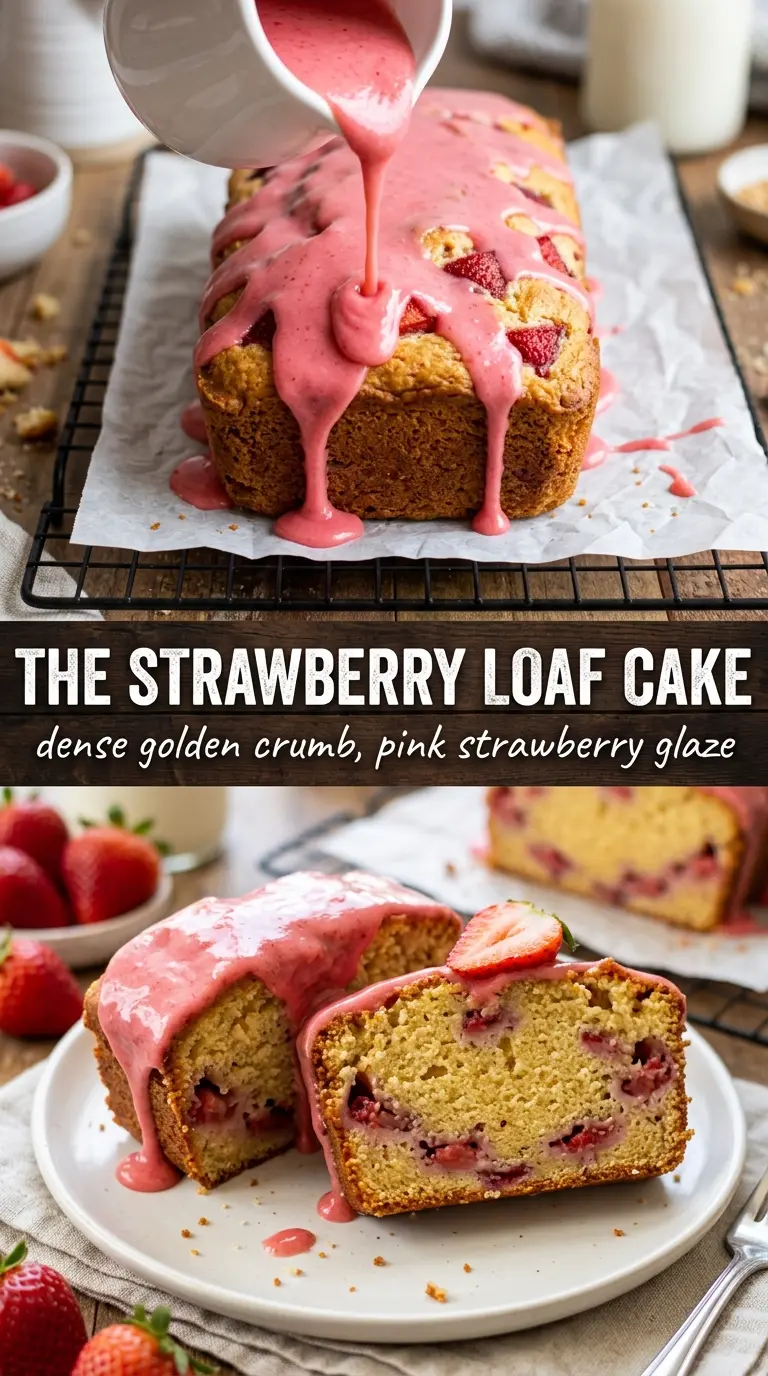
- Powdered sugar, strawberry juice or puree, and lemon juice — This glaze should be pourable, not thin enough to run straight off the cake. The lemon juice sharpens the strawberry flavor and keeps the glaze from tasting flat.
Building the Batter and Baking It Evenly
Creaming the Butter Properly
Start with softened butter that gives slightly when pressed, not melted or oily. Beat it with the sugar until it turns pale and looks almost whipped; that air is part of what keeps the cake from baking up like a brick. If the mixture still looks grainy and heavy, keep going. That step matters more than almost anything else in the recipe.
Adding the Eggs Without Breaking the Batter
Add the eggs one at a time and let each one disappear before the next goes in. If the batter starts to look curdled, it usually means the eggs were too cold or were added too fast. It will often come back together once the flour starts going in, so don’t panic and keep mixing aggressively.
Folding in the Flour, Sour Cream, and Berries
Alternate the dry ingredients with the sour cream in additions, ending with flour. That keeps the batter smooth instead of lumpy and prevents overmixing, which would make the crumb tough. Stir in the vanilla and strawberry extract near the end, then fold the strawberries in with a light hand so they stay whole. Pour into a well-greased and floured Bundt pan and bake until the top is deeply golden and a tester comes out clean from the center, not from a strawberry pocket.
Cooling and Glazing
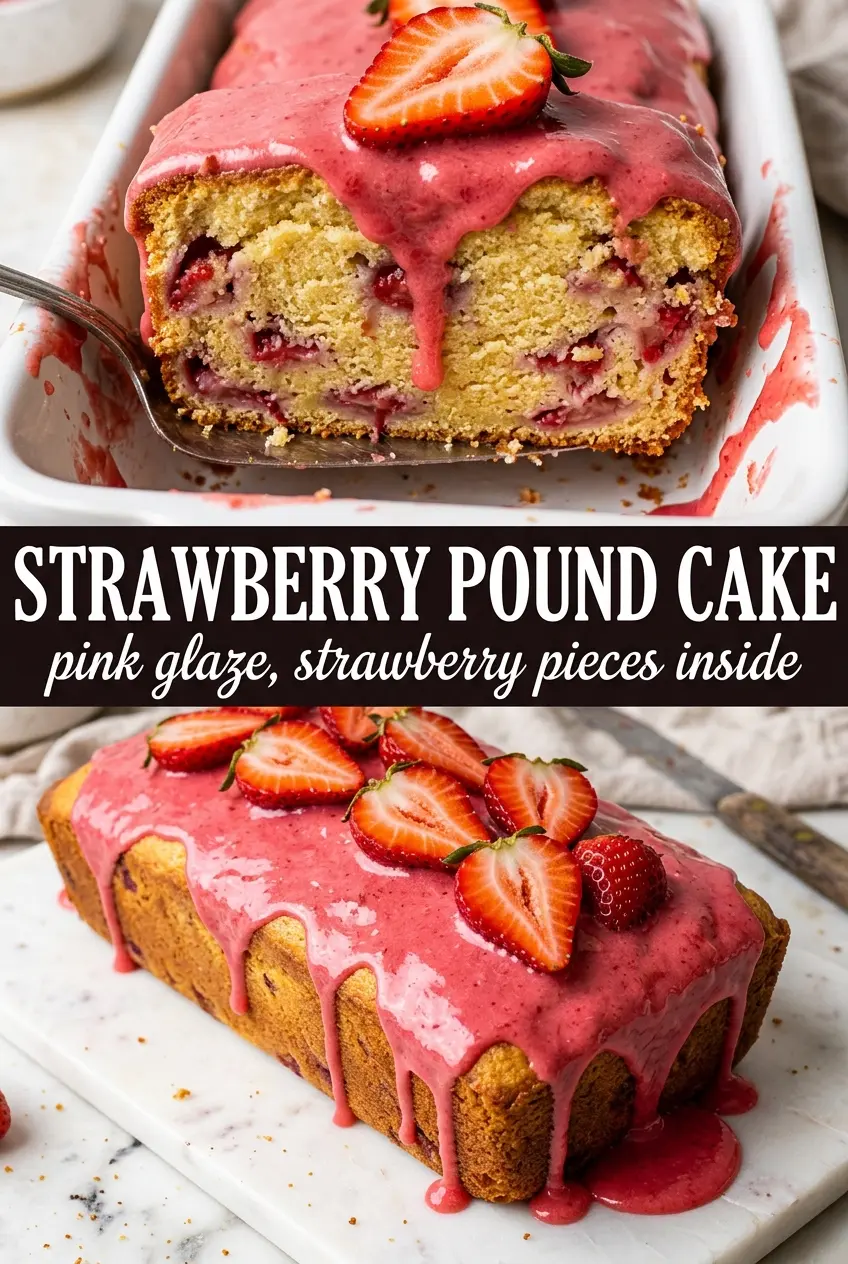
Let the cake rest in the pan for about 15 minutes before turning it out. Any longer and it can stick; any sooner and it may break. Cool it completely before glazing or the pink glaze will slide right off the ridges instead of setting into those pretty drips. Whisk the glaze until smooth, then pour it slowly over the top so it settles naturally down the sides.
How to Adapt This Cake Without Losing the Texture
Using frozen strawberries
Frozen strawberries can work if you thaw them first, drain them well, and pat them dry before dicing. They bring more moisture than fresh berries, so expect a slightly softer crumb and don’t add any extra juice to the batter.
Making it dairy-free
Use a plant-based butter that behaves like sticks of baking butter and swap the sour cream for a thick dairy-free yogurt. The texture will be a little less rich, but the cake still bakes up tender if you don’t overmix the batter.
Turning it into a loaf cake
This batter can be baked in two loaf pans instead of a Bundt pan if that’s what you have. Start checking earlier, since loaf pans bake faster and the center can go from underdone to dry quickly. The glaze still works, but the slices won’t have those dramatic ridges for it to cling to.
Storage and Reheating
- Refrigerator: Store covered for up to 5 days. The crumb stays moist, though the glaze may soften a little.
- Freezer: Freeze the unglazed cake tightly wrapped for up to 2 months. Glaze after thawing for the best texture and appearance.
- Reheating: Warm individual slices in the microwave for 10 to 15 seconds, just enough to take the chill off. Too much heat will make the cake feel greasy and can melt the glaze into a puddle.
Answers to the Questions Worth Asking
Strawberry Pound Cake
Ingredients
Equipment
Method
- Preheat the oven to 325°F and grease and flour a Bundt pan generously so the cake releases cleanly.
- Beat the butter and sugar until very light and fluffy, using a visible pale, airy texture as your cue.
- Add the eggs one at a time, mixing just until each egg disappears into the batter.
- Whisk the all-purpose flour, baking soda, and salt together, then alternate mixing this dry mixture with the sour cream until the batter is just combined.
- Stir in the vanilla extract and strawberry extract, keeping the batter uniform and smooth before adding fruit.
- Fold in the diced fresh strawberries, and look for even strawberry specks throughout the dense batter.
- Pour the batter into the prepared Bundt pan and bake for 60-70 minutes at 325°F until a toothpick comes out clean.
- Cool the cake in the pan for 15 minutes, then invert it and let it cool completely before glazing.
- Whisk powdered sugar, fresh strawberry juice or puree, and lemon juice until smooth, with no visible lumps.
- Pour the glaze over the completely cooled cake, aiming for a vivid pink layer that drips down the ridges.
- Let the glaze set before slicing, then garnish with fresh strawberries for a fresh, bright finish.