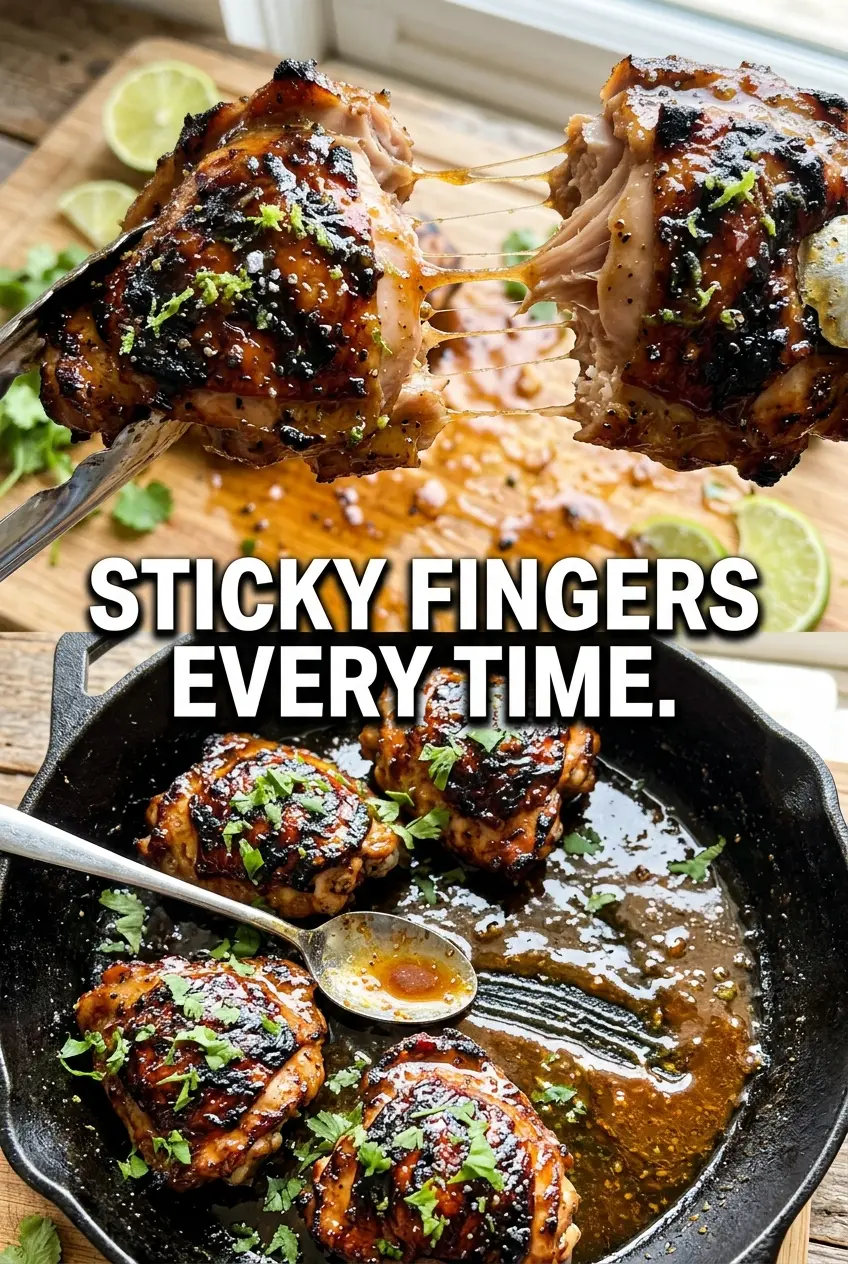
Sticky honey lime grilled chicken gets that sweet-citrusy glaze that clings to the meat instead of sliding off the grates. The best bites have charred edges, a glossy finish, and enough tang from the lime to keep the honey from turning heavy. It’s the kind of chicken that disappears fast because every piece lands somewhere between barbecue and bright citrus marinade.
The trick is in the balance. Honey gives you the lacquered finish, but lime juice and zest keep the flavor sharp, while cumin and chili powder add just enough warmth to make the glaze taste deeper than a basic sweet marinade. Reserving part of the marinade for basting builds that sticky coating in layers, and grilling over medium heat gives the sugars time to caramelize without burning.
Below, I’ve laid out the part that matters most: how to keep the glaze from scorching, how long to marinate for the best flavor, and a few smart swaps if you need to adjust for what’s in your kitchen.
The glaze turned out shiny and sticky instead of burnt, and the lime kept the honey from tasting flat. I basted it the last few minutes like you said and the chicken came off the grill with the best caramelized edges.
Save this sticky honey lime grilled chicken for the nights when you want glossy grilled chicken with bright citrus and a caramelized finish.
The Part That Stops the Glaze From Burning Before the Chicken Is Done
Honey is what gives this chicken its shine, but it’s also the ingredient that burns first. That’s why medium heat matters here. If the grill is too hot, the sugars darken before the meat has time to cook through, and the outside turns bitter while the inside is still catching up.
The other mistake is basting too early and too often. The reserved marinade should go on during the last stretch of grilling, when the chicken is already mostly cooked and the glaze has a chance to tighten on the surface. That’s how you get sticky, lacquered chicken instead of a wet, drippy coating.
- Chicken thighs or drumsticks — Dark meat handles grill heat better than lean cuts and stays juicier while the glaze reduces. Thighs cook a little faster and give you more surface area for browning; drumsticks hold up well if you’re grilling for a crowd.
- Honey — This is the backbone of the sticky finish. A lighter honey keeps the citrus bright, while a darker one adds more depth. Maple syrup can work in a pinch, but it tastes less floral and sets up a little differently on the grill.
- Lime juice and zest — Juice brings the acidity that keeps the glaze from tasting heavy, and zest carries the real lime aroma. Don’t skip the zest; without it, the marinade tastes flatter and less fresh.
- Olive oil — It helps the marinade coat the chicken and keeps the garlic and spices from clumping. Any neutral oil works, but olive oil adds a little extra roundness to the glaze.
Building the Sticky Glaze in Layers, Not All at Once
Whisking the Marinade
Start by whisking the honey, lime juice, zest, olive oil, garlic, cumin, chili powder, salt, and pepper until the honey looks fully loosened and the mixture turns smooth. You want every piece of chicken to pick up both the sweet and the sharp parts of the marinade, not just a slick of oil on top. If the honey seems stubborn, warm it for a few seconds before whisking.
Marinating for Real Flavor
Coat the chicken and let it sit for 1 to 4 hours. One hour gives you a good surface flavor, but closer to 3 or 4 gives the lime, garlic, and spices time to work deeper into the meat. Don’t push it much longer than that, especially with thighs, because too much lime can make the texture a little soft on the outside.
Grilling and Basting at the Right Time
Set the grill to medium heat and lay the chicken on clean grates. Let it pick up color before you start moving it around. Baste with the reserved marinade in the last several minutes of cooking, then keep turning and brushing until the glaze looks shiny and the chicken reaches 165°F at the thickest part. If the glaze starts to darken too quickly, move the pieces to a cooler spot on the grill and finish there.
The Rest Before Serving
Let the chicken rest for a few minutes after it comes off the grill. That gives the juices time to settle and keeps the glaze from sliding off the skin or meat as soon as you cut in. Finish with cilantro and lime wedges right before serving so the herbs stay bright and the lime stays punchy.
What to Change When You’re Out of Limes, Heat, or Dark Meat
Swap in lemons for a softer citrus bite
Lemons work if that’s what you have, but the flavor lands a little rounder and less tropical than lime. Use the same amount of juice and zest, then add a touch more chili powder if you want to keep the glaze from tasting too sweet.
Use chicken breasts for a leaner version
Chicken breasts work, but they need more attention because they dry out faster than thighs or drumsticks. Grill them over medium heat and start checking early; pull them as soon as they hit 165°F so the glaze stays sticky without the meat turning stringy.
Make it dairy-free and gluten-free without changing a thing
This recipe is naturally both dairy-free and gluten-free as written, which makes it easy to serve without special adjustments. Just double-check that your chili powder and other spices are pure and not blended with fillers if you’re cooking for someone with a sensitivity.
Storage and Reheating
- Refrigerator: Store leftovers for up to 4 days. The glaze will firm up in the fridge, and the chicken may look a little darker after sitting.
- Freezer: It freezes well for up to 2 months. Wrap portions tightly and freeze with a little extra sauce or juices if you have them so the chicken doesn’t dry out.
- Reheating: Warm gently in a covered skillet over low heat or in a 300°F oven until heated through. High heat will dry out the chicken and can make the honey glaze turn sticky in the wrong way.
Questions I Get Asked About This Recipe
Sticky Honey Lime Grilled Chicken
Ingredients
Equipment
Method
- Whisk together honey, lime juice, lime zest, olive oil, garlic, cumin, chili powder, salt, and pepper until smooth and fragrant. The mixture should look glossy and evenly combined.
- Reserve 1/3 cup of the marinade for basting. Set it aside so it’s ready when the chicken hits the grill.
- Add chicken to the remaining marinade and toss to coat. Cover and refrigerate for 1-4 hours so the surface absorbs the sweet citrus flavor.
- Preheat the grill to medium heat. Aim for steady heat with a temperature you can hold while keeping the glaze from burning.
- Grill chicken for 7-8 minutes per side, basting frequently with the reserved marinade. Flip once, and keep coating so the glaze turns caramelized and shiny.
- Continue grilling and basting until the internal temperature reaches 165°F and the glaze looks sticky and lacquered. You should see darker caramelized spots and a glossy coating as it reduces.
- Garnish with fresh cilantro and serve with lime wedges. Add them right before serving for bright, fresh color and citrus aroma.