Sticky, tender sweet Hawaiian crockpot chicken is the kind of dinner that earns a permanent spot in the rotation because it gives you that glossy, pineapple-kissed sauce without standing over the stove. The chicken turns pull-apart soft in the slow cooker, then the sauce tightens up at the end into a shiny glaze that clings to every shred.
What makes this version work is the balance. Reserved pineapple juice brings brightness and enough natural sweetness to carry the sauce, while soy sauce, rice vinegar, garlic, and ginger keep it from tasting flat. The cornstarch slurry goes in after the chicken is shredded, which is the part people skip when they want to save time, but that extra uncovered finish is what turns the liquid into something spoonable over rice instead of a thin broth.
Below, I’ve added the small details that matter most: why thighs stay juicier than breasts here, when to add the pineapple, and how to get the sauce thick enough to coat the chicken instead of pooling underneath it.
The sauce thickened into a real glaze after the last 20 minutes, and the pineapple chunks kept their shape instead of turning mushy. I served it over jasmine rice and my husband went back for seconds immediately.
Slow cooker Hawaiian chicken with that sticky pineapple glaze belongs on your Pinterest board for easy rice dinners that taste like you worked much harder than you did.
The Reason the Sauce Turns Glossy Instead of Watery
The biggest mistake with slow cooker pineapple chicken is adding everything and walking away, then wondering why the sauce tastes thin at the end. The chicken releases juice as it cooks, and pineapple adds even more liquid, so the flavor has to be concentrated on purpose. That’s why this recipe waits to thicken until after shredding. You get the moisture needed for tender chicken first, then the glaze is built in the final stretch.
Using chicken thighs helps here because they stay juicy through the long cook and shred into soft, silky strands. Breasts can work, but they dry out faster and don’t give you the same forgiving texture if the slow cooker runs hot. The reserved pineapple juice matters too. It adds the fruit flavor without forcing you to open another can or dilute the sauce with extra liquid.
- Chicken thighs — They hold up to six hours on low without turning stringy or dry. If you use breasts, check them early and pull them as soon as they shred easily.
- Reserved pineapple juice — This gives the sauce body and keeps the pineapple flavor front and center. Canned pineapple in heavy syrup will make the dish overly sweet, so stick with juice-packed fruit.
- Cornstarch slurry — This is what transforms the cooking liquid into a glaze. If you add dry cornstarch straight into the slow cooker, it clumps and leaves you with little starchy bits instead of a smooth sauce.
What Each Ingredient Is Actually Doing in This Dish

- Pineapple chunks — Add them on top so they hold their shape better. If you stir them in at the beginning, they soften too much and disappear into the sauce.
- Soy sauce — This keeps the sweetness in check and gives the glaze its salty backbone. Regular soy sauce is fine; low-sodium works too if you want a lighter hand on salt.
- Brown sugar — It deepens the caramel note and helps the sauce cling. White sugar will sweeten the dish, but it won’t give the same molasses roundness.
- Rice vinegar — This is the sharp edge that keeps the sauce from tasting like pineapple candy. If you substitute apple cider vinegar, use a little less because it reads stronger and rougher.
- Sesame oil — Use a small amount because it’s there for aroma, not as a cooking fat. Too much can take over the whole dish fast.
- Garlic and ginger — These keep the sauce from tasting one-note. Fresh ginger makes the biggest difference here, but in a pinch, ground ginger can work if you use less and accept a softer flavor.
Building the Chicken and Sauce So the Finish Actually Glazes
Starting the Slow Cooker Base
Lay the chicken thighs in an even layer so they cook at the same pace. Whisk the sauce ingredients until the brown sugar is dissolved as much as it can be before it hits the slow cooker. That little bit of mixing now helps the final sauce taste smooth instead of grainy. Pour it over the chicken, then add the pineapple chunks on top so they don’t break down too early.
Cooking Until the Chicken Shreds Cleanly
Cook on low for the full six hours if you can, because that steady heat gives the thighs time to turn tender without drying out. The chicken is ready when it falls apart with a fork and the fibers pull cleanly. If you cook on high, start checking early; slow cookers run differently, and an extra 30 minutes can push the meat past tender into stringy.
Turning the Liquid Into a Glaze
Shred the chicken right in the slow cooker, then stir in the cornstarch slurry. Leave the lid off and let it cook on high until the sauce looks thicker, darker, and glossy around the edges. If it still looks loose after 20 minutes, keep going in short bursts until it coats a spoon. Don’t rush this part, because the sauce thickens as it cools and it should still look slightly looser than the final result when you stop cooking.
Make It with Chicken Breasts
Boneless skinless chicken breasts work if that’s what you have, but they need less time and a closer eye. Start checking around 4 hours on low or 2 1/2 to 3 hours on high, because breasts can go from tender to dry quickly in a slow cooker. The flavor stays the same, but the texture is firmer and a little less silky than thighs.
Lower-Sugar Version
Cut the brown sugar back to 2 tablespoons if you want a less sweet glaze. The dish will still work because the pineapple juice and ketchup bring their own sweetness, but the finished sauce will taste brighter and a little more savory. Don’t remove the sugar entirely or the sauce can taste flat against the soy sauce.
Gluten-Free Adaptation
Use a gluten-free soy sauce or tamari and the rest of the recipe stays the same. The texture won’t change, and the sauce still thickens the same way with cornstarch. Just check your ketchup label if you’re cooking for someone with strict gluten needs, since brands vary.
Storage and Reheating
- Refrigerator: Store in an airtight container for up to 4 days. The sauce thickens as it chills, so it may look even more glazed the next day.
- Freezer: It freezes well for up to 2 months. Cool it completely first, then pack it in freezer containers with a little extra sauce so the chicken stays moist when thawed.
- Reheating: Warm gently on the stove or in the microwave with a splash of water if needed. The common mistake is blasting it on high heat, which tightens the chicken and makes the glaze stick to the pan instead of the meat.
Answers to the Questions Worth Asking
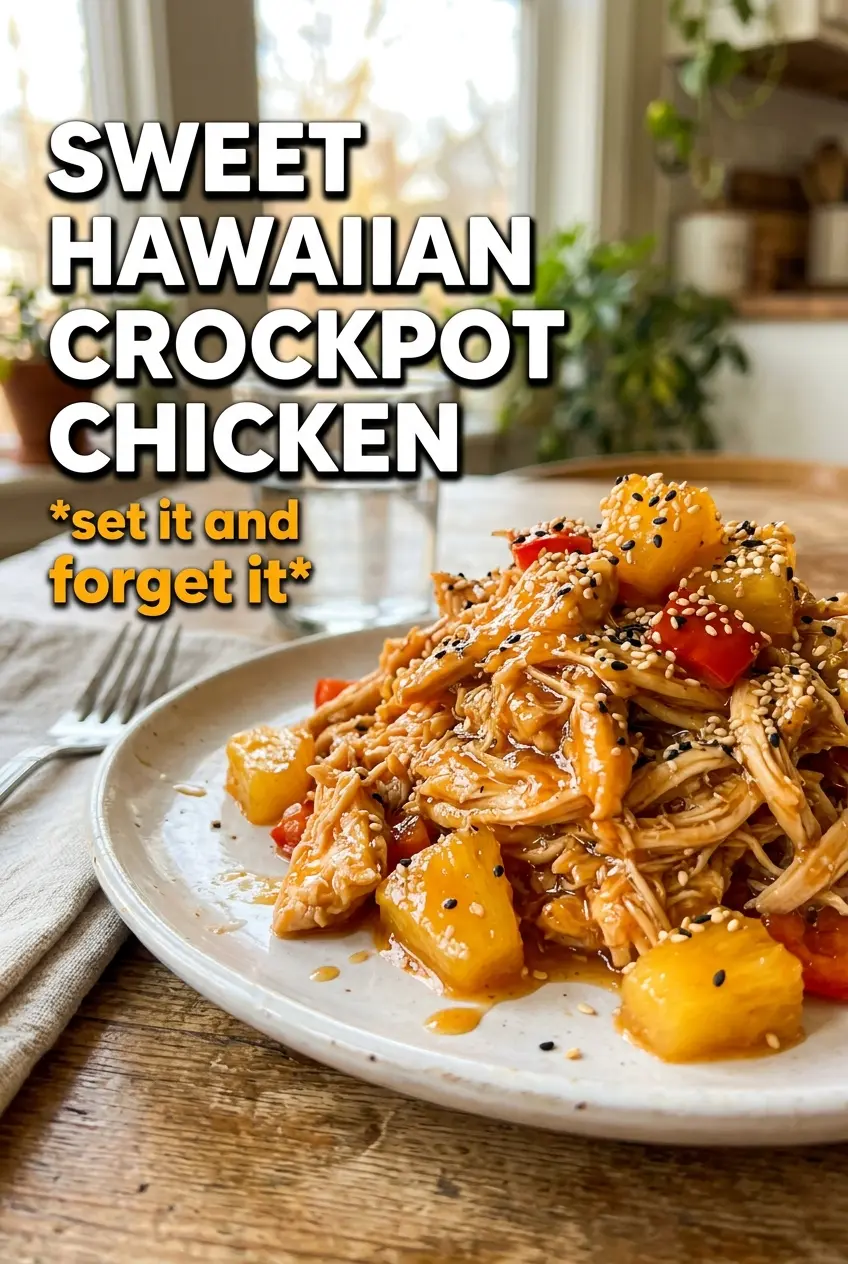
Sweet Hawaiian Crockpot Chicken
Ingredients
Equipment
Method
- Place the chicken thighs in the slow cooker as a single even layer for steady cooking.
- Whisk together the reserved pineapple juice, soy sauce, brown sugar, ketchup, rice vinegar, garlic, ginger, and sesame oil, then pour the sauce over the chicken so the top is fully covered.
- Add the pineapple chunks on top so they stay visible during cooking and create sweet bursts of flavor.
- Cover and cook on LOW for 6-7 hours (or HIGH for 3-4 hours) until the chicken is tender and easily shredded, with the sauce bubbling around the edges.
- Shred the chicken right in the slow cooker, then stir to coat the shreds in the pineapple teriyaki sauce.
- Add the cornstarch slurry and cook on HIGH uncovered for 20-30 minutes until the sauce thickens to a glossy glaze that clings to the chicken.
- Serve the Hawaiian pineapple chicken over steamed rice, then garnish with sesame seeds and sliced green onions for the finishing color and crunch.