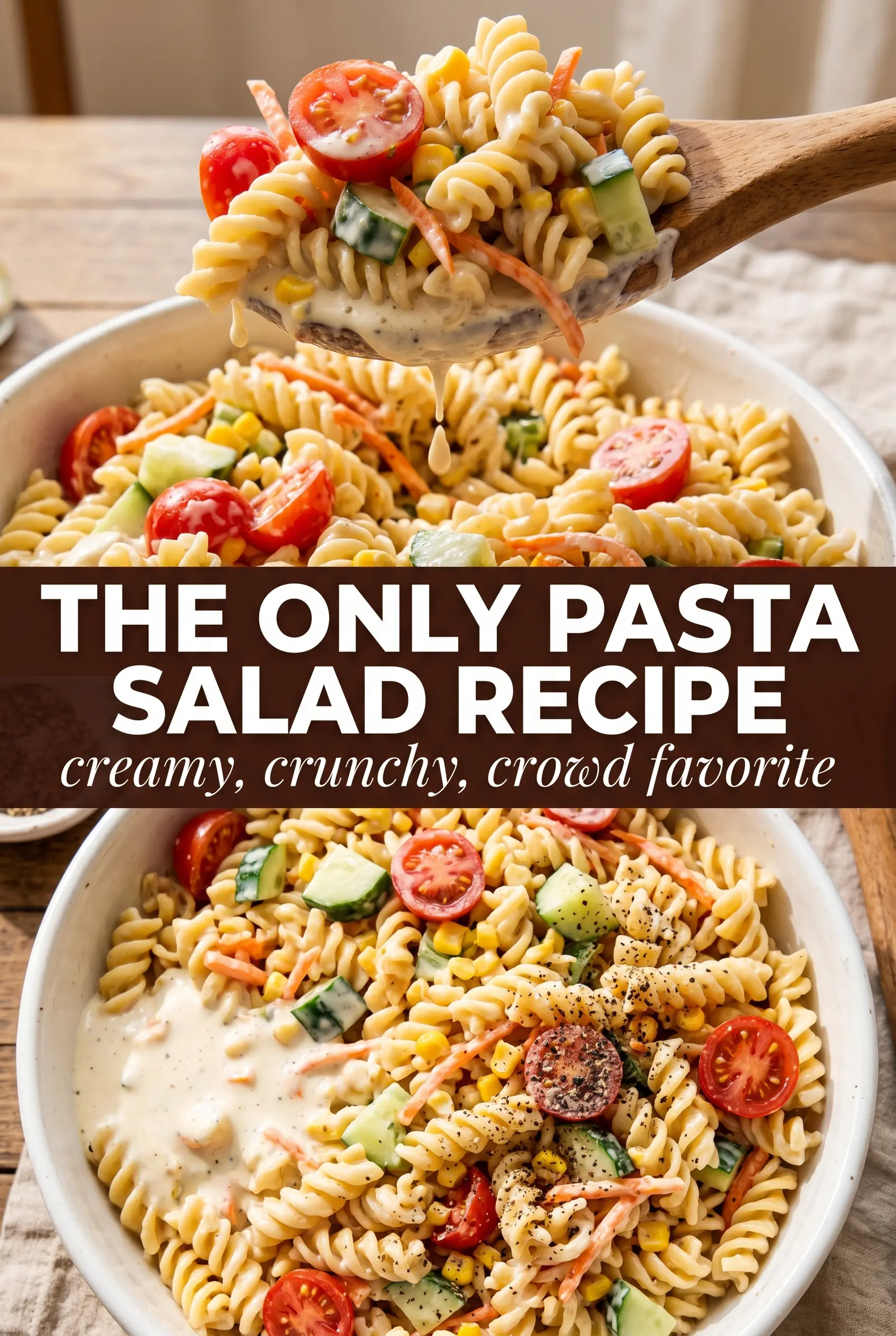
Tender rotini coated in a thick, tangy dressing is what makes this creamy pasta salad disappear at potlucks before the main dishes even get a chance. The pasta holds onto the dressing in every ridge, and the mix of crunchy celery, sweet bell pepper, briny olives, and cheddar gives each bite enough contrast that it never tastes flat or heavy.
The trick here is balance. A little sour cream loosens the mayonnaise and keeps the dressing from turning gluey, while apple cider vinegar and yellow mustard give it the sharp edge that pasta salad needs after chilling. I also like a touch of sugar, not to make it sweet, but to smooth out the vinegar and make the whole bowl taste rounder once it’s cold.
Below, I’m walking through the parts that matter most: how to keep the pasta from drinking up all the dressing, which add-ins give the best texture, and what to do when the salad tightens up in the fridge. It’s the kind of side dish that gets better once you know how to handle it.
The dressing thickened up beautifully after chilling, and the pasta stayed creamy instead of soggy. I added a little extra mayo right before serving like you suggested, and it tasted fresh even the next day.
Save this creamy pasta salad for the next cookout, because the tangy dressing and crisp vegetables hold up beautifully after chilling.
The Trick to Creamy Pasta Salad That Still Feels Light
The biggest mistake with pasta salad is dressing it like it’s finished the second the sauce hits the bowl. Pasta keeps absorbing moisture as it sits, which is why a salad that looks perfect at lunch can turn tight and dry by dinner. This version stays creamy because the dressing is built to be slightly looser than you think it should be, then it gets a second adjustment after chilling if the pasta has soaked up too much.
Rinsing the pasta in cold water matters here. It stops the cooking fast and keeps the dressing from melting off the noodles when you toss everything together. A little extra mayonnaise before serving is not a gimmick; it restores the glossy coating that makes creamy pasta salad taste fresh instead of stiff.
What Each Ingredient Is Actually Doing in the Bowl
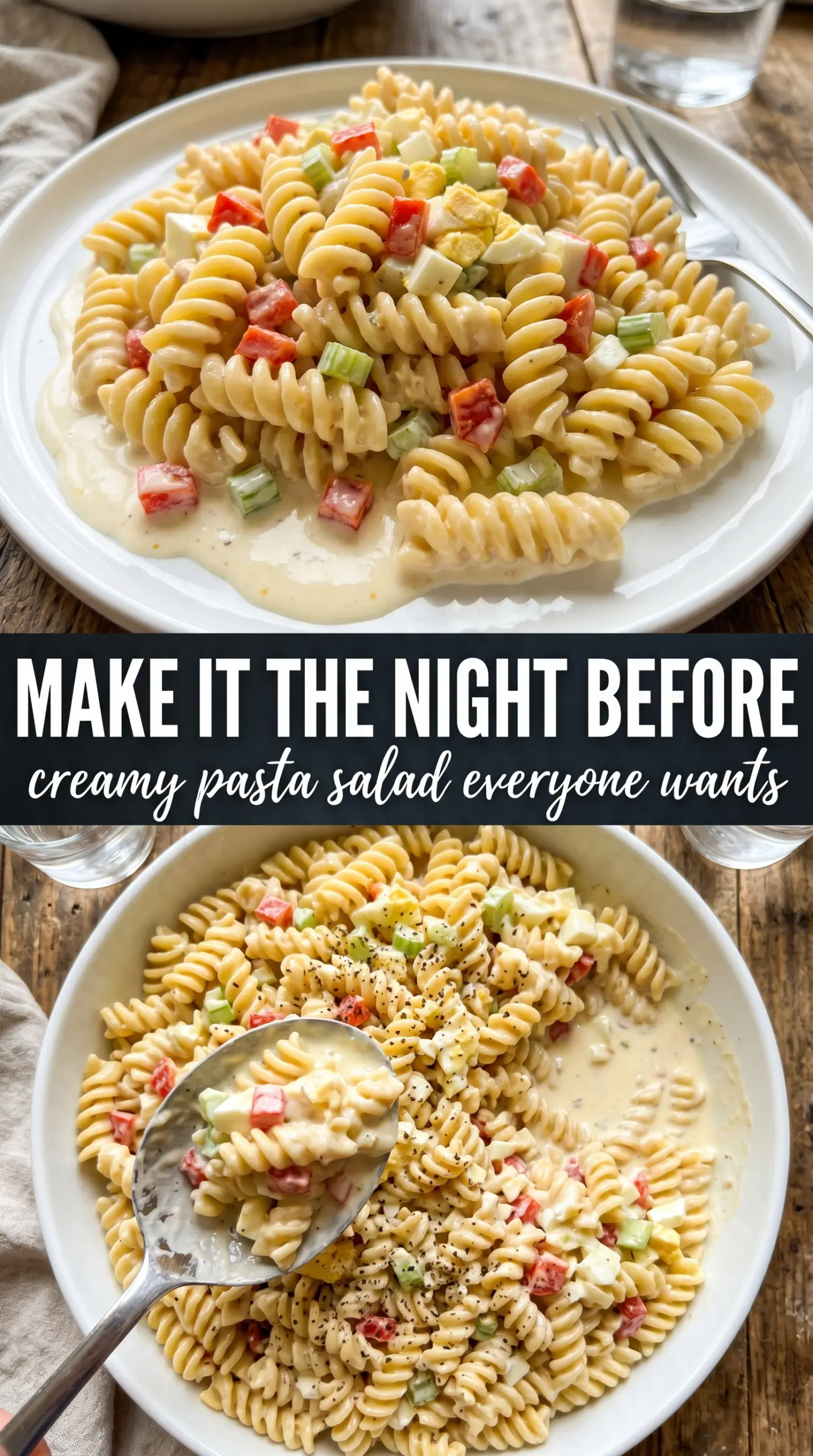
- Rotini or elbow macaroni — Short pasta with curves and ridges holds the dressing best. Rotini gives you more little pockets for the creamy sauce, while elbows make a more classic macaroni salad feel. Use a sturdy shape; long pasta goes limp and clumps once chilled.
- Mayonnaise — This is the backbone of the dressing, so use a brand you actually like. It gives the salad its body and cling. If you swap it out completely, the salad loses that thick, spoon-coating finish.
- Sour cream — This lightens the mayo and adds a clean tang that keeps the salad from tasting heavy. Greek yogurt can work in a pinch, but it adds a sharper bite and a slightly less silky texture.
- Apple cider vinegar and yellow mustard — These are the balance-makers. The vinegar wakes up the dressing, and mustard adds depth without making it taste like mustard. Don’t skip both or the salad will taste flat once chilled.
- Celery, bell peppers, red onion, and olives — These ingredients give the salad its crunch, color, and salty contrast. Dice them small enough that you get a little of everything in each bite. Bigger chunks make the salad awkward to scoop.
- Cheddar cheese — It adds richness and another layer of savory flavor. Shred it yourself if you can; pre-shredded cheese is coated and doesn’t blend into the salad as smoothly.
Building the Dressing Before the Pasta Goes In
Whisk the dressing until it turns smooth and loose
Start with the mayonnaise, sour cream, vinegar, mustard, sugar, garlic powder, onion powder, salt, and pepper in a large bowl and whisk until the mixture looks glossy and completely even. If you see streaks of sour cream or mustard, keep going. The dressing should drip from the whisk in a thick ribbon, not sit in stiff clumps, because it needs to coat the pasta after it chills.
Cook the pasta just past al dente
Boil the pasta in well-salted water and stop when it has a little more bite than you’d want for serving hot. It will firm up slightly as it cools and then soften again after it absorbs the dressing. If you overcook it now, the salad turns soft and heavy by the time it hits the table. Drain it, rinse until completely cool, and let excess water shake off before mixing.
Toss the add-ins while the pasta is fully cooled
Combine the pasta with the peppers, olives, onion, celery, and cheddar only after the pasta feels cool to the touch. Warm pasta can melt the dressing and mute the crunch of the vegetables. Toss gently but thoroughly so the dressing gets into every twist and curve without breaking up the pasta.
Chill, then correct the texture
Cover the bowl and refrigerate for at least an hour. That rest gives the flavors time to settle and lets the pasta absorb some of the dressing. If the salad looks dry after chilling, stir in 2 to 3 tablespoons of mayonnaise right before serving. That final adjustment brings back the creamy finish without making the salad soupy.
How to Change It Without Losing the Creamy Finish
Make it dairy-free
Use a dairy-free mayo and skip the cheddar, or replace it with a dairy-free shredded cheese that melts into the salad a little less firmly. The dressing will still be creamy, but the flavor will be a touch cleaner and less tangy than the original.
Use Greek yogurt for a lighter bowl
Swap half or all of the sour cream for plain Greek yogurt. It makes the dressing tangier and a little leaner, but it also tightens more in the fridge, so keep a spoonful of mayo handy for the final stir before serving.
Turn it into a gluten-free pasta salad
Use a sturdy gluten-free short pasta and cook it just until tender, since many gluten-free shapes soften fast and can fall apart if overcooked. Rinse well and chill as directed, but stir more gently when you mix in the dressing so the pasta keeps its shape.
Add more crunch for a picnic-style version
Fold in diced cucumber, chopped pickles, or a handful of shredded cabbage right before serving. These add freshness and snap, but they also release moisture, so keep them out until the last minute if you want the dressing to stay thick.
Storage and Reheating
- Refrigerator: Store covered for up to 4 days. The pasta will keep absorbing dressing, so it may look thicker on day two.
- Freezer: Don’t freeze this one. Mayonnaise and sour cream separate after thawing, and the vegetables lose their crunch.
- Reheating: This salad is meant to be served cold. If it tightens in the fridge, stir in a little mayonnaise and let it sit at room temperature for 10 to 15 minutes before serving instead of heating it.
Questions I Get Asked About This Recipe
Creamy Pasta Salad
Ingredients
Equipment
Method
- Bring a large pot of well-salted water to a rolling boil and cook the rotini or elbow macaroni until just past al dente, 8-10 minutes. Drain and rinse with cold water until completely cooled, then spread on a sheet pan so it doesn’t steam.
- In a large bowl, whisk mayonnaise, sour cream, apple cider vinegar, yellow mustard, granulated sugar, garlic powder, onion powder, and salt and pepper until smooth, about 1-2 minutes. Scrape the bottom and sides so no streaks remain.
- Add cooled pasta, red bell pepper, green bell pepper, black olives, red onion, and celery to the bowl and toss to distribute the vegetables evenly. Fold in shredded cheddar so it coats lightly with the mixture.
- Pour the dressing over the pasta mixture and toss until everything is evenly coated. Cover and refrigerate for at least 1 hour so the pasta absorbs the tangy creaminess.
- After chilling, check the texture and stir in 2-3 tablespoons extra mayonnaise if it looks too dry. Dust with paprika just before serving for a fresh pop of color.