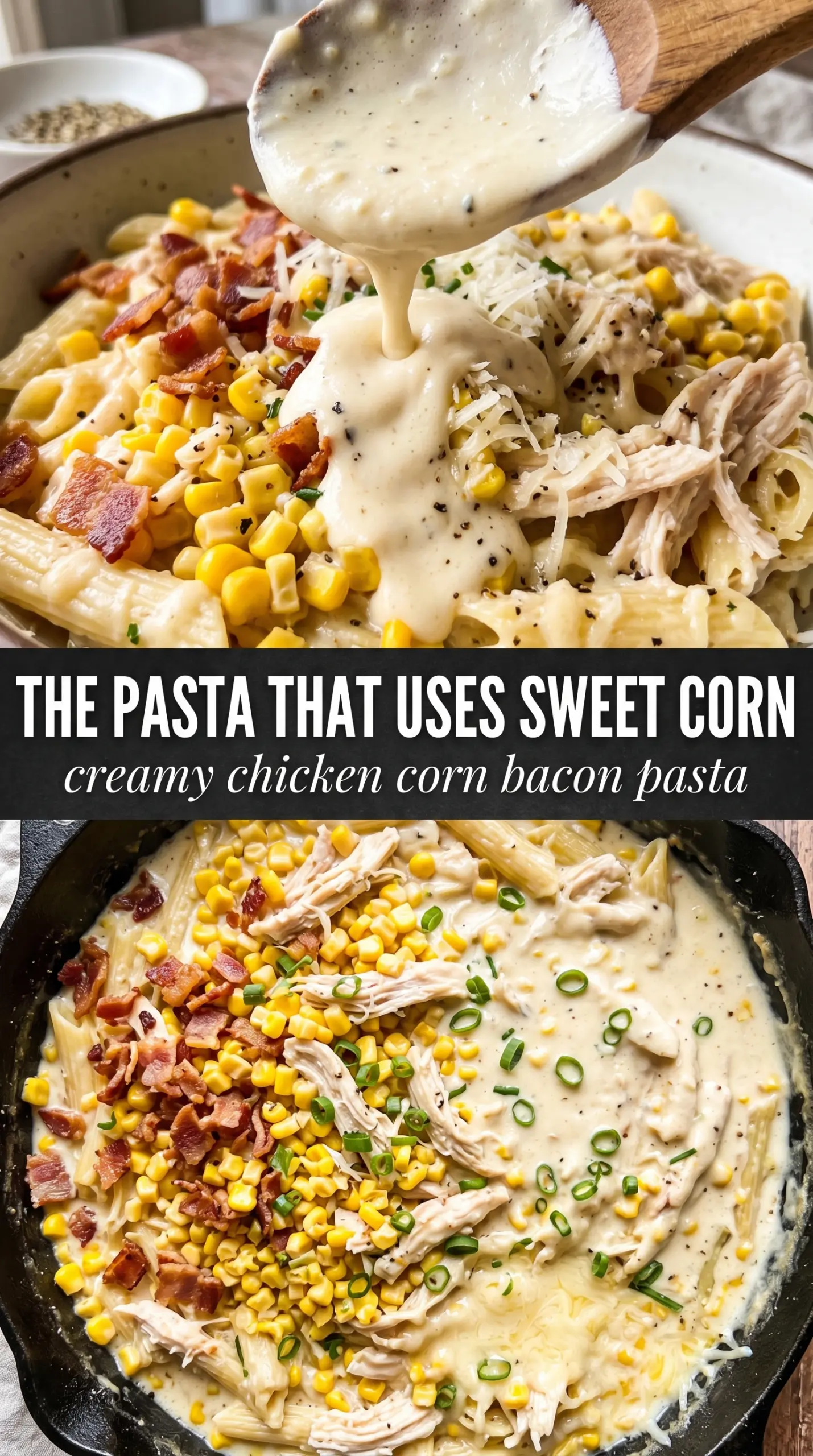
Rigatoni tossed in a sweet corn and bacon cream sauce has a way of tasting like it took much longer than it did. The sauce clings to every ridge of the pasta, the chicken stays tender, and the bacon gives each bite a salty crunch that keeps the whole bowl from feeling heavy. It’s the kind of dinner that disappears fast because every forkful hits creamy, savory, and a little bit sweet all at once.
What makes this version work is the order of the cooking. The bacon leaves behind just enough fat to brown the chicken, then the onion, garlic, and corn pick up all that flavor before the cream goes in. That quick simmer concentrates the sauce instead of thinning it out, and the Parmesan finishes it with body instead of making it gluey. Using rigatoni or penne matters here because the sauce needs something sturdy to hold onto.
Below you’ll find the small details that make this pasta come together cleanly, plus a few smart swaps if you need to adapt it for what’s in your kitchen.
The sauce thickened up beautifully and the corn stayed sweet against the smoky bacon. I made it on a Tuesday and my husband asked if there was enough for lunch the next day.
Love the creamy chicken and corn pasta with bacon? Save it to Pinterest for the nights when you want a rich, one-pan-style pasta with sweet corn and crispy bacon.
The Reason This Cream Sauce Stays Smooth Instead of Turning Heavy
The biggest mistake in creamy pasta with bacon is rushing the sauce once the cream goes in. If the heat is too high, the dairy cooks down too fast and the cheese tightens up before it can melt evenly. Here, the sauce gets a short simmer with the broth first, which gives it time to thicken naturally before the Parmesan joins the pan.
That matters because bacon, chicken, and corn all bring their own texture, and the sauce has to coat them without pooling at the bottom. The goal is a glossy sauce that settles into the pasta, not a thick paste. If it looks loose before the Parmesan goes in, that’s fine. It tightens as it rests for a minute after tossing.
- Bacon fat — Keep one tablespoon in the pan after cooking the bacon. That little bit of rendered fat carries the onion and chicken and gives the sauce a deeper savory base. Drain it all away and the dish tastes flatter.
- Corn — Fresh corn gives the sweetest pop, but frozen kernels work well straight from the freezer. Let them cook long enough to pick up a little color in the skillet; that slight char is what keeps the corn from tasting like an afterthought.
- Heavy cream — This is what gives the sauce body without curdling under normal simmering. Half-and-half can work in a pinch, but the sauce will be looser and you’ll need a little extra Parmesan to help it cling.
- Parmesan — Grate it finely so it melts smoothly. Pre-shredded cheese often brings anti-caking starch with it, which can make the sauce grainy instead of silky.
What Each Ingredient Is Actually Doing in This Chicken Dish
- Chicken (pat dry for browning) — Room temperature cooks more evenly. Even pieces ensure uniform doneness.
- Oil or butter (the browning medium) — High-heat oil essential for proper searing. Creates pan flavor.
- Seasonings (salt, pepper, spices) — Apply generously. Chicken carries the entire flavor profile.
- Aromatics (garlic, ginger, herbs) — Cook with fat to bloom flavors. Become the foundation.
- Sauce or braising liquid (if using) — This keeps chicken moist. Balance richness with acid.
- Vegetables (if using) — Layer by cooking time so everything finishes together.
- Acid (vinegar, wine, lime, or pineapple) — This brightens and prevents one-dimensional flavor.
- Proper doneness (165°F internal temperature) — Use thermometer for accuracy. Overcooked is dry.
Building the Bacon, Corn, and Cream in the Right Order
Crisping the Bacon First
Start the bacon in a cold skillet and let it come up to heat over medium-high. That gives the fat time to render before the edges scorch, so the pieces turn crisp instead of chewy. Pull the bacon when it’s deep golden and leave a thin layer of fat behind. If the pan looks dry, the chicken won’t brown properly and the onion will stick.
Sealing the Chicken
Add the chicken in a single layer and let it sit long enough to pick up color before stirring. You’re looking for golden edges and opaque centers, not pale steamed pieces. Cut the pieces small enough that they cook through in about 5 to 6 minutes. If the pan is overcrowded, the chicken will release liquid and boil instead of sear.
Softening the Onion and Toasting the Corn
The onion goes in after the chicken comes out, into the same flavored skillet. Cook it until it turns translucent and starts to soften at the edges, then add the garlic for just a minute so it doesn’t burn. The corn should stay in the hot pan long enough to pick up a few browned spots. That little bit of color gives the sauce a sweeter, fuller finish.
Finishing the Sauce and Tossing the Pasta
Pour in the cream and broth, then let the sauce simmer until it lightly coats the back of a spoon. Add the pasta, chicken, and most of the bacon while the sauce is still fluid, because the noodles will drink up some of it as they sit. Stir in the Parmesan off the hottest part of the burner so it melts in smoothly. If the pan looks too tight, splash in a spoonful of broth to loosen it.
How to Adapt This Pasta Without Losing What Makes It Good
Make It Gluten-Free
Use a sturdy gluten-free penne or rigatoni and cook it just to al dente. GF pasta softens fast once it hits the sauce, so toss and serve right away. The sauce itself is naturally gluten-free as long as your broth is, and the texture stays close to the original if you don’t overcook the noodles.
Swap in Chicken Thighs for a Juicier Finish
Boneless thighs bring a little more richness and stay tender even if they go a minute long. They also tolerate the high-heat browning step better than breasts. The sauce gets a slightly deeper savory note, which works well with the bacon and corn.
Use Half-and-Half for a Lighter Sauce
Half-and-half will work, but the sauce won’t be as lush and it’s easier to reduce too far. Keep the simmer gentle and add the Parmesan at the end so the mixture doesn’t tighten into a heavy coating. If you want a little insurance, add an extra splash of broth before tossing the pasta.
Storage and Reheating
- Refrigerator: Store leftovers in an airtight container for up to 3 days. The pasta will absorb some sauce as it sits, so it’ll look thicker the next day.
- Freezer: I don’t recommend freezing this one. Cream sauces with pasta tend to separate after thawing, and the corn loses its fresh bite.
- Reheating: Warm it gently in a skillet over low heat with a splash of broth or cream. The common mistake is blasting it in the microwave until the sauce breaks and the chicken dries out.
Answers to the Questions Worth Asking

Creamy Chicken and Corn Pasta with Bacon
Ingredients
Equipment
Method
- Cook the diced bacon in a large skillet over medium-high heat until crispy, 5-8 minutes, and set aside, leaving 1 tablespoon fat in the pan (visual cue: bacon looks deeply browned).
- Season the chicken pieces with salt and pepper, cook in the bacon fat over medium-high heat for 5-6 minutes until golden and cooked through to 165°F, then remove (visual cue: juices run clear and pieces are evenly browned).
- In the same skillet, cook the diced onion over medium heat for 3 minutes until softened (visual cue: onion turns translucent around the edges).
- Add the minced garlic and cook for 1 minute (visual cue: fragrant, not browned).
- Add the corn kernels and cook for 3 minutes until slightly charred (visual cue: some kernels show toasted spots).
- Pour in the heavy cream and chicken broth, then simmer for 4-5 minutes until slightly thickened (visual cue: sauce coats the back of a spoon).
- Add the cooked and drained rigatoni or penne, the chicken, and most of the bacon, then toss until evenly coated (visual cue: pasta looks glossy with sauce).
- Stir in the grated Parmesan until melted and the sauce turns velvety (visual cue: no dry cheese clumps).
- Garnish with the remaining bacon, fresh basil, and extra Parmesan (visual cue: bright basil flecks and a light snowfall of cheese on top).