Golden butter-baked buns, melty provolone, and tender roast beef make French dip sliders the kind of pan of sandwiches that disappears fast. The best part is the contrast: soft rolls on the inside, toasted tops brushed with Dijon butter, and a warm au jus that turns every bite into something richer than it looks.
This version works because the roast beef is warmed just enough to stay juicy, not cooked until it tightens up. The au jus leans on broth, Worcestershire, and soy sauce for deep savory flavor without needing a long simmer, and the butter topping gets brushed on before baking so the rolls brown evenly instead of drying out. A little garlic in both places ties the whole pan together.
Below you’ll find the little details that matter most: how to keep the bottoms from going soggy, why the foil matters for the first part of baking, and a few smart swaps if you need to stretch the filling or change the cheese.
The au jus had that restaurant-style savory depth and the sliders stayed soft underneath without getting mushy. I baked them exactly as written and the provolone melted into the roast beef perfectly.
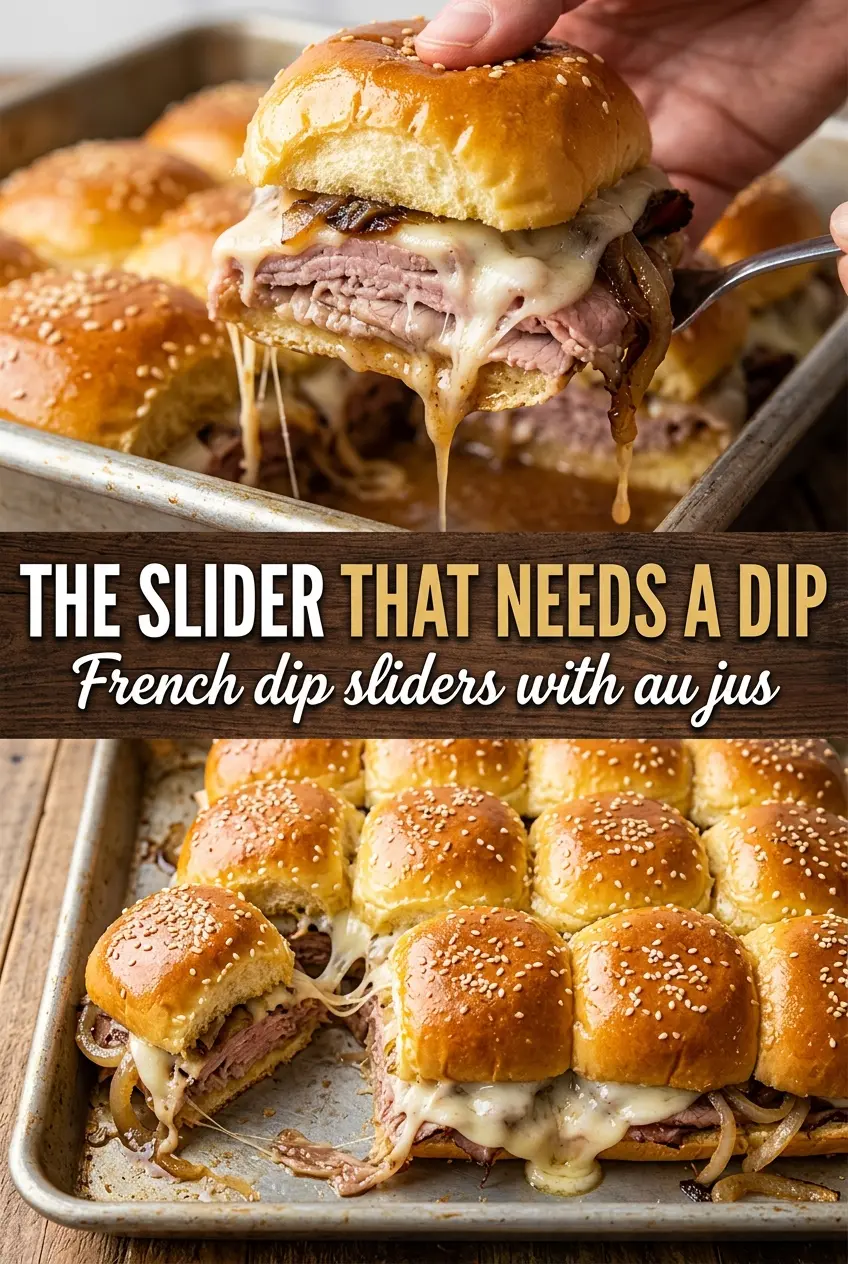
These French dip sliders bake up with buttery tops, melted provolone, and that rich au jus everyone wants a second cup of.
The Trick to Keeping the Bottoms Soft, Not Soggy
The biggest mistake with French dip sliders is building them too wet. If the roast beef goes in dripping or the au jus gets poured anywhere near the pan, the rolls collapse before they’ve had a chance to toast. The fix is simple: warm the filling, brush the tops generously, and keep the dipping sauce on the side instead of trying to bake it into the sandwiches.
Foil does the first job here. It traps heat and melts the cheese without blasting the tops dry, then the final uncovered bake gives you that golden finish. The sliders should feel set in the pan and smell buttery before you cut them apart.
What Each Ingredient Is Actually Doing Here
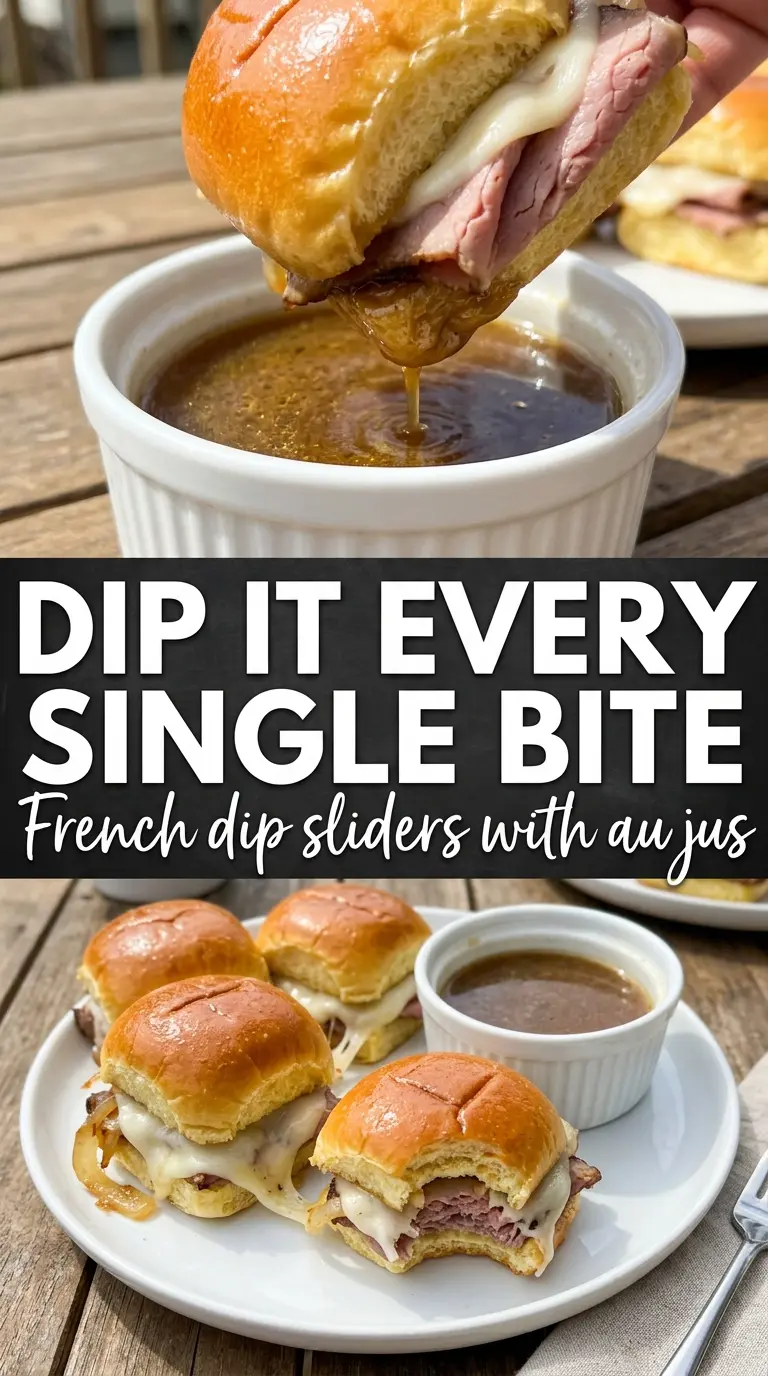
- Slider rolls — Hawaiian rolls bring a little sweetness that works well against the savory beef and sharp au jus. Dinner rolls work too if that’s what you have, but pick something soft and sturdy enough to hold up after baking.
- Deli roast beef — Thin-sliced roast beef warms through quickly and stays tender. If it’s piled too thick, the sliders get bulky and harder to cut cleanly, so separate the slices a bit as you layer them.
- Provolone — This melts smoothly and gives you that classic mild, creamy pull without getting greasy. Swiss is the easiest swap if you want a sharper note, but provolone keeps the flavor balanced.
- Beef broth — Use a broth you’d actually drink; the au jus is only as good as the liquid base. If your broth tastes flat, the sauce will too, so this is the place where a better carton matters.
- Worcestershire and soy sauce — These add the deep, salty, almost meaty edge that makes the dipping sauce taste finished. Don’t skip both and expect the au jus to taste like much; they do the heavy lifting.
- Dijon butter topping — The Dijon cuts through the richness and keeps the top from tasting one-note. Brush it all the way to the edges so every roll gets color and flavor.
Building the Pan So the Cheese Melts and the Bread Browns
Warm the Au Jus First
Simmer the broth, Worcestershire, soy sauce, garlic powder, and onion powder for about 10 minutes until the liquid tastes savory and slightly concentrated. You want it hot when the sliders hit the table, not boiling hard the whole time, or it can reduce too far and taste salty. Keep it warm on very low heat while the sandwiches bake.
Layer the Beef and Cheese with Purpose
Set the bottom halves in a greased 9×13 dish, then spread the roast beef in an even layer so every slider gets a real filling, not one sad shred of meat. Lay the provolone over the beef so it overlaps slightly; that overlap helps seal the filling together as it melts. Put the tops on before brushing the butter, or the rolls will brown unevenly and the filling will dry out.
Brush, Cover, and Bake in Two Phases
Whisk the melted butter, Dijon, Worcestershire, garlic powder, and parsley until smooth, then brush it generously over the tops. Cover the pan with foil for the first 15 minutes so the cheese melts and the heat moves through the center without burning the rolls. Remove the foil for the last 5 minutes and watch for a deep golden top with the cheese fully melted at the edges.
Cut and Serve While They’re Hot
Let the pan sit for just a minute, then cut along the roll seams so the sandwiches stay neat. Serve the au jus in small cups while everything is still steaming. If you wait too long, the bottoms start absorbing too much of the sauce and the sliders lose that soft-but-structured texture.
How to Adapt These French Dip Sliders for Different Crowds
Gluten-Free Sliders
Use gluten-free slider buns and replace the soy sauce with tamari or coconut aminos. The flavor stays savory, but the buns may brown a little faster, so check them a few minutes early and keep the foil on if the tops are coloring too quickly.
Swiss or Havarti Instead of Provolone
Swiss gives the sliders a sharper, more classic deli flavor, while Havarti melts extra smoothly and makes the filling feel richer. Both work, but Havarti is softer and can make the sliders a little more decadent, while Swiss keeps the flavor a touch lighter.
Make Them Stretch a Little Further
If you need to feed more people, add a second layer of cheese over the beef before the tops go on. That helps the meat feel fuller without making the sliders look skimpy, and the extra cheese also helps keep the slices together when you cut them.
Storage and Reheating
- Refrigerator: Store leftovers tightly wrapped for up to 3 days. The buns soften a little, but the flavor stays good.
- Freezer: These freeze best before baking. Assemble, wrap well, and freeze for up to 1 month, then bake from thawed for the best texture.
- Reheating: Reheat in a 325°F oven covered with foil until warmed through. The mistake people make is using the microwave, which turns the rolls chewy and makes the beef dry.
Answers to the Questions Worth Asking
French Dip Sliders
Ingredients
Equipment
Method
- Preheat the oven to 350°F. While it heats, add the beef broth, Worcestershire sauce, soy sauce, garlic powder, and onion powder to a saucepan.
- Simmer the au jus over medium heat for 10 minutes, stirring occasionally, until it tastes well seasoned. Keep the sauce warm so it’s ready for dipping.
- Place the slider roll bottoms in a greased 9x13 baking dish. Layer the thinly sliced roast beef and provolone slices over the rolls, then place the tops back on.
- Whisk together the melted butter, Dijon mustard, Worcestershire sauce, garlic powder, and chopped parsley until smooth. Brush generously over the tops of all the sliders so the buns bake up golden.
- Cover the dish with foil and bake at 350°F for 15 minutes. This helps the cheese melt while the buns heat through.
- Remove the foil and bake at 350°F for 5 minutes more, until the tops are golden and the cheese is fully melted. Let the sliders rest in the pan for 1-2 minutes to set slightly.
- Slice the baked sliders into individual sandwiches so each serving has bun, roast beef, and melted provolone. Serve immediately with the warm au jus in small cups for dipping.