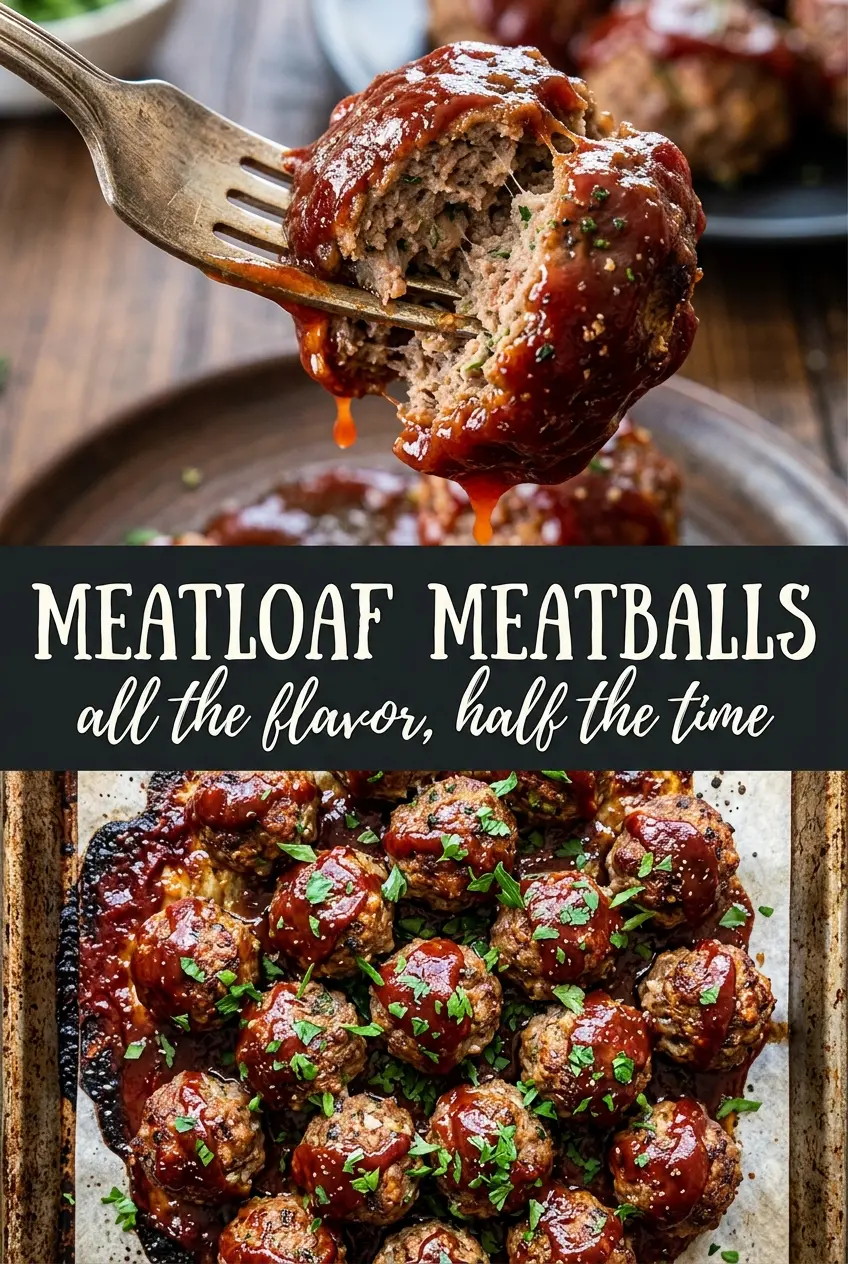
Meatloaf meatballs hit that sweet spot between comfort food and weeknight practicality: all the savory, oniony, ketchup-glazed flavor of classic meatloaf, but in a form that cooks faster and serves up with those sticky browned tops everyone reaches for first. The edges caramelize in the oven while the centers stay tender, and each meatball gets enough glaze to taste like the best part of a meatloaf slice.
This version works because the mix stays light. Grated onion melts into the beef instead of leaving chunky bites, the breadcrumbs and milk keep the texture soft, and the meat gets mixed only until everything is combined. That’s what keeps the meatballs from turning dense. The glaze is simple on purpose: ketchup for sweetness and body, brown sugar for shine and browning, and a little mustard to keep it from tasting flat.
Below, you’ll find the little details that matter most, from why the onions should be grated to how long to bake them so the glaze caramelizes without drying out the meat. I’ve also included a few useful swaps and the reheating method that keeps the leftovers worth eating.
The glaze browned beautifully and the centers stayed tender instead of getting bready. I grated the onion like you said, and the flavor was there without big chunks.
Love the sticky ketchup glaze and tender meatloaf-style centers? Save these meatloaf meatballs for an easy baked dinner that finishes with caramelized tops.
The Trick to Keeping Meatloaf Meatballs Tender Instead of Tight
The biggest mistake with meatloaf-style meatballs is treating the mixture like dough. Once the beef is packed and overmixed, the proteins tighten up and the meatballs bake up springy instead of soft. Stop mixing the moment the breadcrumbs disappear into the meat. The mixture should look cohesive, but still a little rough.
Grated onion matters here because it disappears into the mixture and adds moisture without creating big pockets that can make the meatballs fall apart. The eggs and milk do their job quietly in the background, but they need the breadcrumbs to catch that liquid first. That’s why you mix the dry ingredients and wet ingredients evenly into the meat before shaping. It gives you a tender, even bite all the way through.
- Ground beef — Use an 80/20 blend if you can. Leaner beef works, but the meatballs lose some of that classic meatloaf richness and can bake up a little drier.
- Breadcrumbs — These hold onto the milk and egg and keep the texture soft. Plain breadcrumbs work best; seasoned breadcrumbs can push the flavor too far and make the glaze taste muddled.
- Onion — Grating the onion is the move here. It melts into the mixture and gives you flavor without sharp chunks, and it also adds moisture in a way diced onion won’t.
- Worcestershire sauce — This is the backbone of the savory flavor. There isn’t a perfect substitute, but a small splash of soy sauce can cover some of the same ground if that’s what you have.
What Each Ingredient Is Actually Doing in This Recipe
- Primary ingredient (the star) — Quality matters most. Choose the best you can find.
- Cooking medium (oil, butter, or broth) — This carries flavors and prevents dryness.
- Seasonings (salt, pepper, spices, herbs) — Layer flavors so nothing overpowers. Build depth gradually.
- Aromatics (garlic, onion, herbs) — Cook with fat to bloom flavors. Become the foundation.
- Supporting ingredients — Complement the main ingredient without overpowering it.
- Sauce or liquid (if applicable) — Brings flavors together. Balance richness with acid.
- Acid (lemon, vinegar, wine, or other) — Brightens and prevents flat-tasting results.
- Final finish (garnish, glaze, or sauce) — Prevents one-dimensional taste and adds visual appeal.
Building the Glaze and Baking It Long Enough to Caramelize
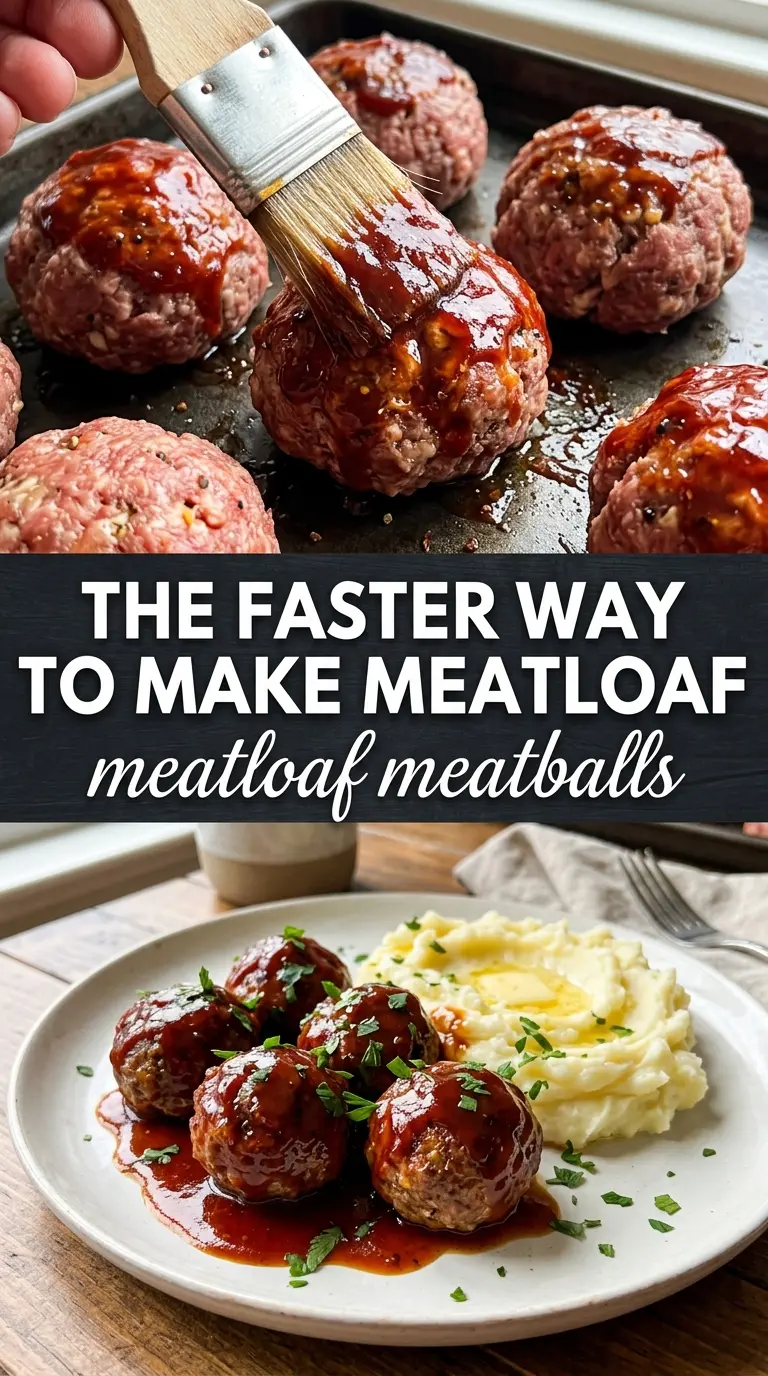
Whisk the glaze until the brown sugar dissolves and it looks glossy, not grainy. That sugar helps the ketchup brown in the oven instead of just drying out on top. Brush it on generously before baking, then give the meatballs enough time in a hot oven for the glaze to bubble and darken at the edges. If they come out pale, they’ll taste flat.
The other key is spacing. Leave a little room around each meatball so the heat can move around them and the glaze can set on the outside. If they’re packed too tightly, they steam instead of caramelize. Pull them when the centers are cooked through and the tops look sticky, deep red-brown, and slightly lacquered.
Mixing the Meatballs Without Overworking Them
Combine the beef, breadcrumbs, eggs, milk, grated onion, garlic, Worcestershire, and seasonings in a large bowl and mix with your hands just until everything is evenly distributed. The mixture should hold together when squeezed but still feel soft. If you keep kneading after that point, the meatballs get dense and the finished texture turns tough. A light touch gives you the meatloaf-like crumb you want.
Shaping for Even Baking
Roll the mixture into golf ball-sized portions, about 1.5 inches across, and place them on a parchment-lined baking sheet. Try to keep the size consistent so they finish at the same time. If your hands are sticking, wet them lightly with cool water. That keeps the mixture from tearing and helps you shape neat rounds without pressing the meat too hard.
Glazing and Finishing in the Oven
Stir together the ketchup, brown sugar, and mustard, then brush a generous layer over each meatball. Bake at 400°F until the tops are caramelized and the centers reach doneness, usually 18 to 22 minutes. The glaze should look tacky and browned in spots, not wet and bright red. If you pull them too early, the glaze won’t set and the flavor stays sharp instead of rounded.
How to Make These Meatloaf Meatballs Work for Different Dinners
Gluten-Free Version
Swap the breadcrumbs for a gluten-free breadcrumb blend or fine crushed gluten-free crackers. The goal is the same: you need something dry enough to absorb the milk and eggs so the meatballs stay tender instead of loose. Don’t use too much, or they’ll turn crumbly and dry.
Turkey Meatloaf Meatballs
Ground turkey works well if you want something lighter, but it needs the moisture from the onion and milk even more than beef does. Use ground turkey with a little fat if you can, and watch the bake time closely. Turkey dries out faster, so pull them as soon as they’re cooked through and the glaze has set.
Extra Sticky Glaze
For a thicker, darker finish, brush on half the glaze before baking and the other half during the last 5 minutes. That gives you a tackier top without burning the sugar. It’s a good move if you’re serving them over mashed potatoes and want more sauce clinging to each bite.
Storage and Reheating
- Refrigerator: Store in an airtight container for up to 4 days. The glaze will thicken and set as it chills, which helps the flavor hold up.
- Freezer: They freeze well. Cool completely, then freeze on a tray before moving to a container or freezer bag so the glaze doesn’t stick them together.
- Reheating: Warm in a 325°F oven, covered loosely with foil, until heated through. The most common mistake is blasting them in the microwave until the edges turn tough while the glaze boils off.
Questions I Get Asked About This Recipe
Meatloaf Meatballs
Ingredients
Equipment
Method
- Preheat the oven to 400°F and line a sheet pan with parchment for easy release and clean edges.
- Combine ground beef, breadcrumbs, eggs, milk, grated onion, minced garlic, Worcestershire sauce, garlic powder, onion powder, salt, and pepper until just mixed—do not overwork the meat.
- Roll the mixture into golf ball-sized balls (about 1.5 inches) and place them spaced apart on the prepared sheet pan.
- Mix ketchup, brown sugar, and mustard to form the glaze.
- Brush the glaze generously over each meatball so the surface is evenly coated.
- Bake at 400°F for 18–22 minutes, until the meatballs are cooked through and the glaze is caramelized and browned on top.
- Serve hot with extra glaze, or over mashed potatoes, for maximum classic meatloaf flavor in each bite.