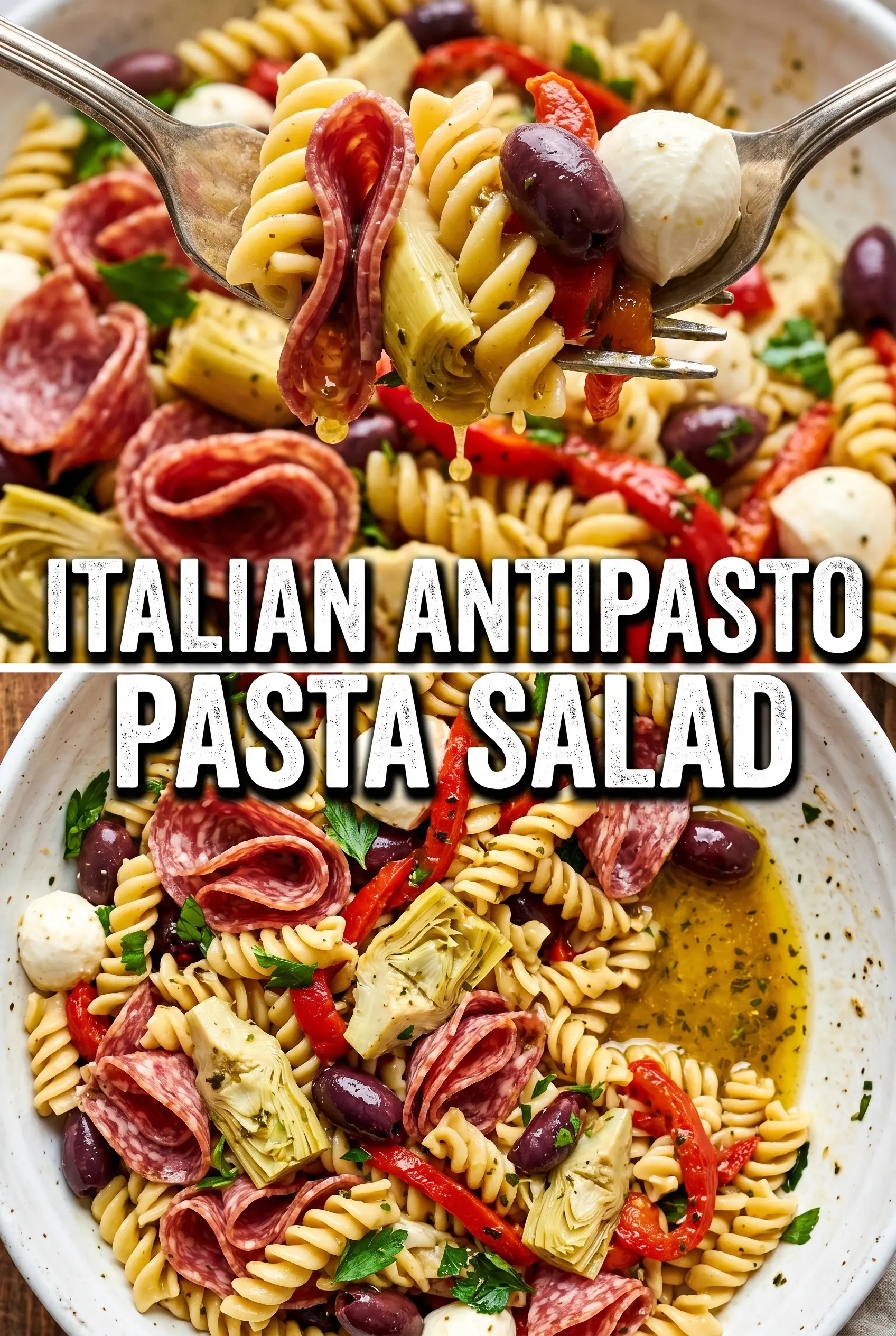
Pasta salad gets a lot better when it stops trying to be plain. This antipasto version eats like a deli platter turned into a chilled side dish: salty salami, pepperoni, two kinds of cheese, briny olives, pepperoncini, and roasted peppers all cling to ridges of rotini so every bite lands with a little bit of everything. It holds up at a party, but it’s just as useful for lunches because the flavors settle in instead of fading after an hour.
The trick is balance. The pasta gets cooked just to tender, then rinsed cold so it doesn’t keep steaming and turn soft. From there, the dressing needs a little time to soak into the pasta and the meats before serving, which is why this salad tastes better after chilling than it does right after mixing. The Parmesan and Italian seasoning help the dressing taste less bottled and more layered, while the mozzarella and provolone keep the texture from feeling one-note.
Below, I’ve included the ingredient swaps that actually matter, plus the one make-ahead step that keeps this salad from drying out in the fridge. If you’ve ever had pasta salad that went heavy, greasy, or bland by the time it hit the table, this version fixes that.
The pasta stayed firm after chilling, and the dressing soaked into everything without making it soggy. I added a little extra pepperoncini at the end and it tasted just like a good antipasto platter.
Love the salty-sour bite of this antipasto pasta salad? Save it to Pinterest for potlucks, cookouts, and make-ahead lunches that need a cold, crowd-pleasing side.
The Bowl Fails When the Pasta Absorbs Too Much Too Soon
The biggest mistake with antipasto pasta salad is dressing it like it’s a hot pasta dish. Warm pasta drinks up the dressing fast, which sounds fine until the salad sits and the noodles go heavy while the cheeses lose their clean bite. Rinsing the pasta under cold water stops the cooking and also cools the surface so the dressing clings instead of disappearing into mush.
The other thing that matters here is shape. Rotini isn’t just convenient; those spirals trap bits of salami, olives, and pepperoncini, so the salad tastes balanced in every forkful. If you use a smooth pasta, the dressing slides off and all the bold ingredients end up settling at the bottom of the bowl.
- Rotini pasta — The twists hold onto the dressing and the chopped antipasto ingredients. Fusilli or penne will work, but avoid long noodles; they don’t mix as evenly and the salad feels less composed.
- Italian dressing — This carries the whole bowl, so use one you’d actually eat on a salad. A thicker bottled dressing gives you better coverage than a thin vinaigrette, and if yours tastes sharp, the Parmesan helps round it out.
- Salami and pepperoni — These bring the deli-style backbone. Cube or quarter them small enough to match the pasta so you get meat in each bite instead of random heavy chunks.
- Fresh mozzarella and provolone — Provolone gives structure, while the mozzarella adds soft contrast. Don’t swap both for only hard cheese or the salad loses the creamy, antipasto-platter feel.
- Marinated artichokes, roasted red peppers, olives, and pepperoncini — These are the briny, sweet, and acidic pieces that keep the salad from tasting flat. Drain them well, then pat them dry a little so the bowl doesn’t get watery.
Building the Salad So It Tastes Better After Chilling
Cooling the Pasta Properly
Cook the rotini just until tender, then drain and rinse it under cold water until it feels cool all the way through. If you leave it warm, the dressing gets absorbed too quickly and the pasta turns soft before the salad even hits the fridge. Shake off as much water as you can, because extra moisture waters down the seasoning and makes the dressing slide off.
Mixing the Antipasto Base
Combine the pasta with the salami, pepperoni, cheeses, tomatoes, artichokes, peppers, olives, and pepperoncini in a large bowl. Stir gently enough to keep the mozzarella intact, but don’t baby it; you want the dressing to coat every ridge and corner. If the bowl looks crowded, it’s the right size for the recipe, because a tight bowl helps everything get distributed evenly without crushing the softer ingredients.
Letting the Dressing Settle In
Add the Italian dressing, Parmesan, and Italian seasoning, then toss until every piece looks lightly coated. The first toss should look a little loose, not soupy; the pasta will absorb some dressing as it chills. Refrigerate for at least two hours, then toss again before serving and add a splash more dressing if the salad seems dry at the edges.
Make It Vegetarian Without Losing the Antipasto Feel
Skip the salami and pepperoni and add more artichokes, roasted peppers, olives, and a handful of chickpeas if you want more body. You’ll lose the cured-meat punch, so add an extra pinch of Italian seasoning and a little more Parmesan to keep the salad savory.
Gluten-Free Pasta That Still Holds Up
Use a gluten-free rotini made from rice or corn, and cook it just to tender because GF pasta can go from firm to fragile fast. Rinse it well and handle it gently when tossing, since overmixing can break the spirals and leave you with a crumbly salad instead of distinct pieces.
A Lighter Dressing Finish
If the bowl tastes too rich after chilling, brighten it with a spoonful of pepperoncini brine or a small squeeze of lemon instead of adding more oil-heavy dressing. That keeps the salad lively without making it greasy or muddy.
Storage and Reheating
- Refrigerator: Store covered for up to 4 days. The pasta will soften a little as it sits, so expect the salad to get denser by day two.
- Freezer: Don’t freeze it. The cheeses turn grainy, the tomatoes break down, and the dressing separates once thawed.
- Reheating: This salad is meant to be served cold. If it has sat in the fridge overnight and looks dry, stir in a tablespoon or two of dressing before serving instead of trying to warm it.
Questions I Get Asked About This Recipe
Easy Italian Antipasto Pasta Salad
Ingredients
Method
- Cook the rotini pasta according to package directions, then drain and rinse with cold water until cool to the touch.
- Let the pasta drain well after rinsing so the salad isn’t watery.
- Combine the pasta, salami, pepperoni, provolone, mozzarella balls, cherry tomatoes, artichoke hearts, roasted red peppers, Kalamata olives, and pepperoncini in a large bowl.
- Add the Italian dressing, Parmesan cheese, and Italian seasoning, then toss until everything is evenly coated.
- Refrigerate for at least 2 hours so the flavors meld, covered for best freshness.
- Toss again before serving and add more Italian dressing if needed for a glossy, well-coated finish.